
Overview
The United States imprisons more people than any other nation, with disproportionate effects on communities of color. Our research explored how design could identify leverage points for systemic change within this complex prison system. Through ethnographic research, systems mapping, and stakeholder interviews, we focused on how privatization and capitalism have fundamentally shaped incarceration in America. By analyzing inmate journeys, correctional officer experiences, and language patterns within the system, we identified critical intervention opportunities that could foster greater equity and humanity in a system designed to break individuals, rather than rehabilitate them.
Research & Design
Design research · Field Ethnography · Systems mapping · Stakeholder interview · Theory of Change · participatory co-design approaches · Criminal justice reform strategy
- Duration: August - December 2019
- Partners: Parsons School of Design
- Team: Fas Lebbie, Theo Walcot
Confidentiality: Names of participants and their specific details have been removed to protect those who shared their experiences within and outside the prison system.

My Role
Led field ethnography, systems mapping, and stakeholder interviews to identify leverage points for criminal justice reform.
Created journey maps, theory of change models, and narrative frameworks, synthesizing and sense-making research data into actionable insights.
Facilitated participatory workshops with policymakers, advocates, and affected communities to identify leverage points for developing interventions towards systemic change.
Problem Context
The American incarceration system represents a profound challenge of justice, equity, and human rights. With 2.3 million Americans behind bars in 2019, the United States maintains the highest incarceration rate globally. This system disproportionately affects communities of color, with Black males incarcerated at a rate of 4,347 per 100,000 residents compared to 678 per 100,000 for white males. The rise of mass incarceration correlates with prison privatization, creating a profit incentive within the justice system. Our research revealed that privatization presents a paradox, as it creates economic opportunities but also incentivizes higher incarceration rates and longer sentences through lobbying and policy influence. The system fails to prepare inmates for successful reentry, resulting in high recidivism rates that perpetuate cycles of incarceration. These vicious cycles devastate families and communities. Despite being labeled correctional facilities, institutions often fail to rehabilitate people who are convicted, instead traumatizing and institutionalizing those who pass through them. This challenge encompasses racial equity, economic justice, mental health, and community well-being issues. Stakeholders range from prisoners and their families to correctional officers, administrators, lawmakers, and the public, as the system prioritizes containment and punishment over rehabilitation and justice.
My Approach
We employed a design-led research approach, incorporating anonymized ethnographic interviews, participatory systems, and documentary and language analysis. This design-led process surfaced leverage points, power dynamics, and recidivism cycles to inform systemic criminal‑justice interventions.
Design Process
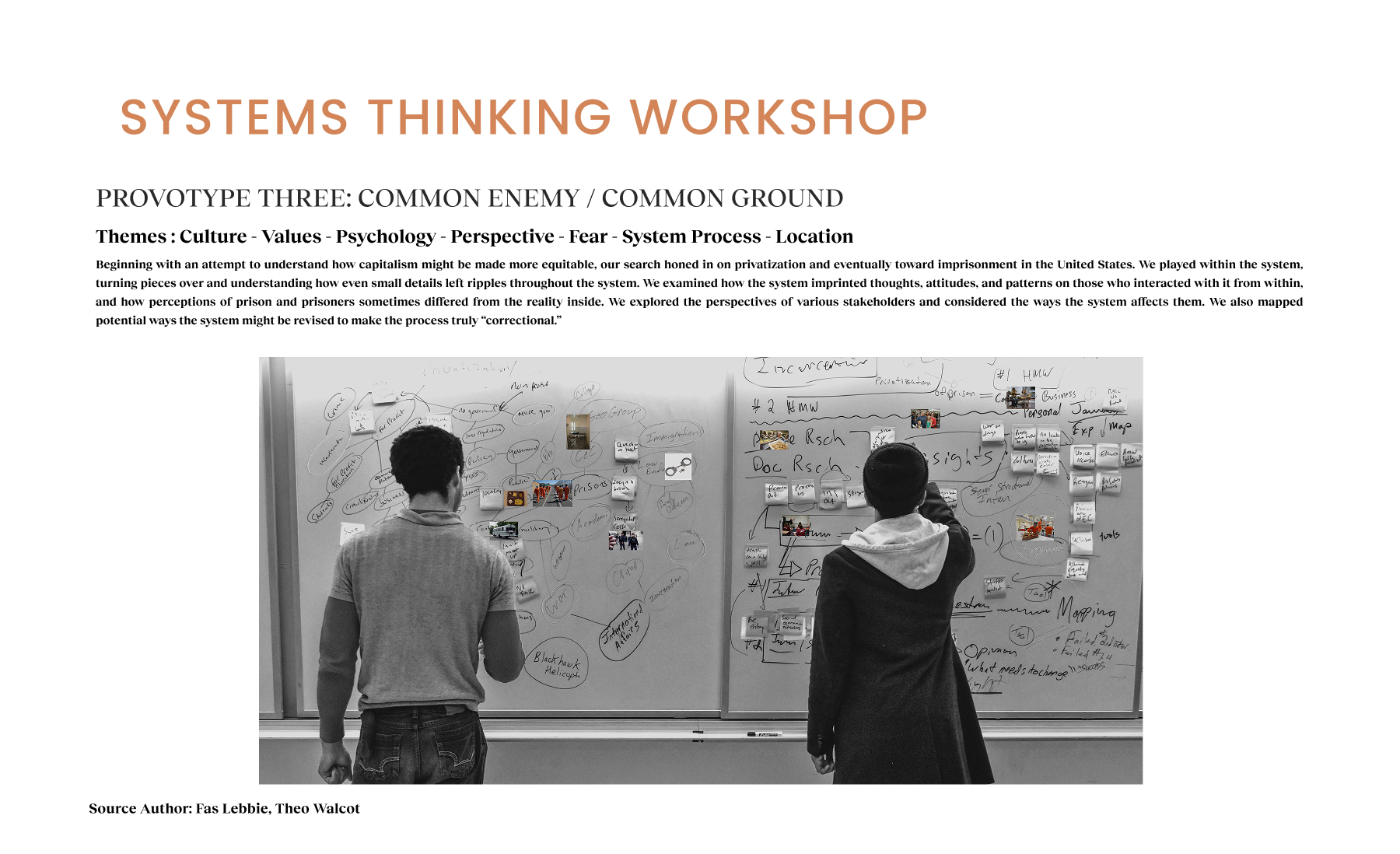
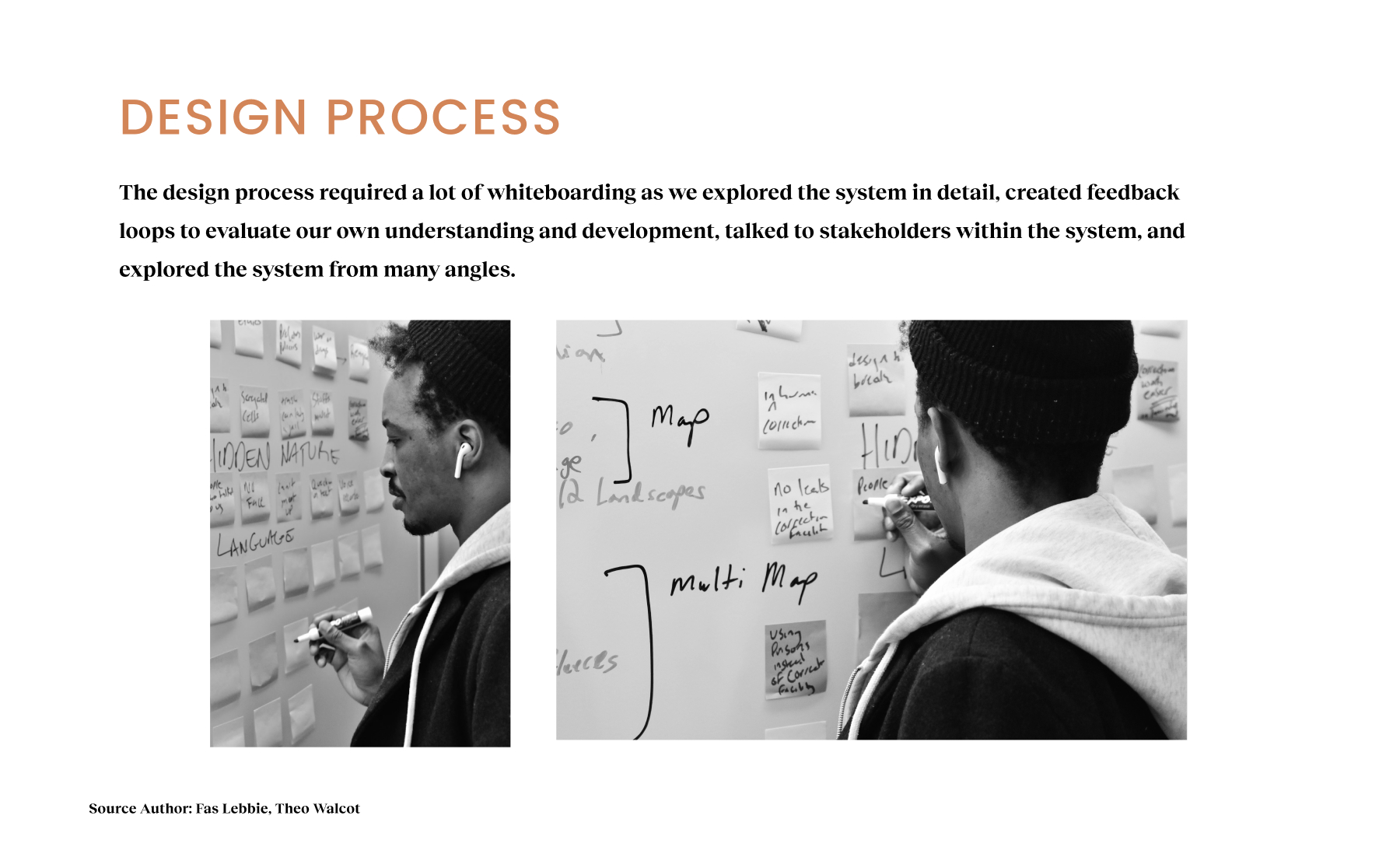
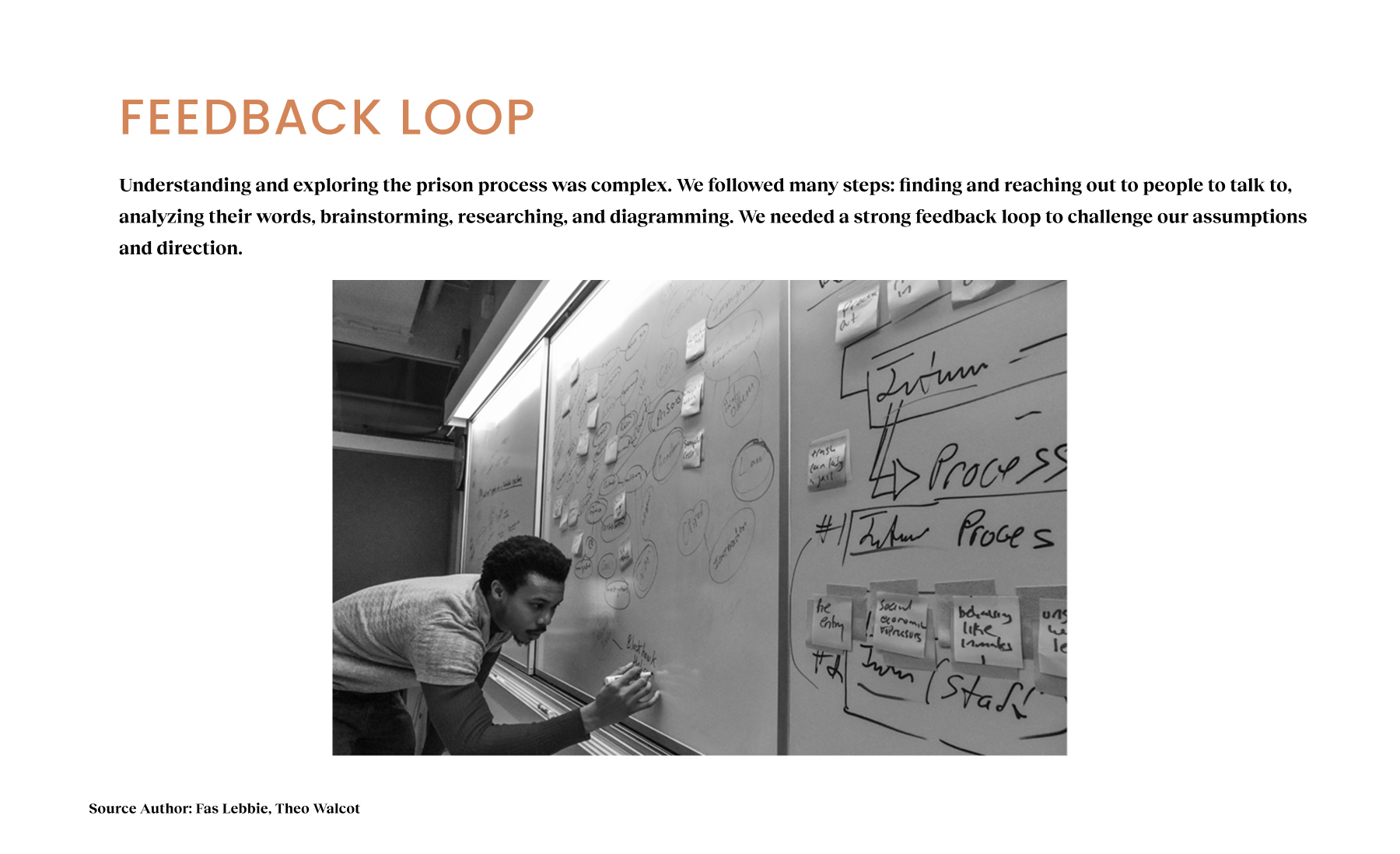
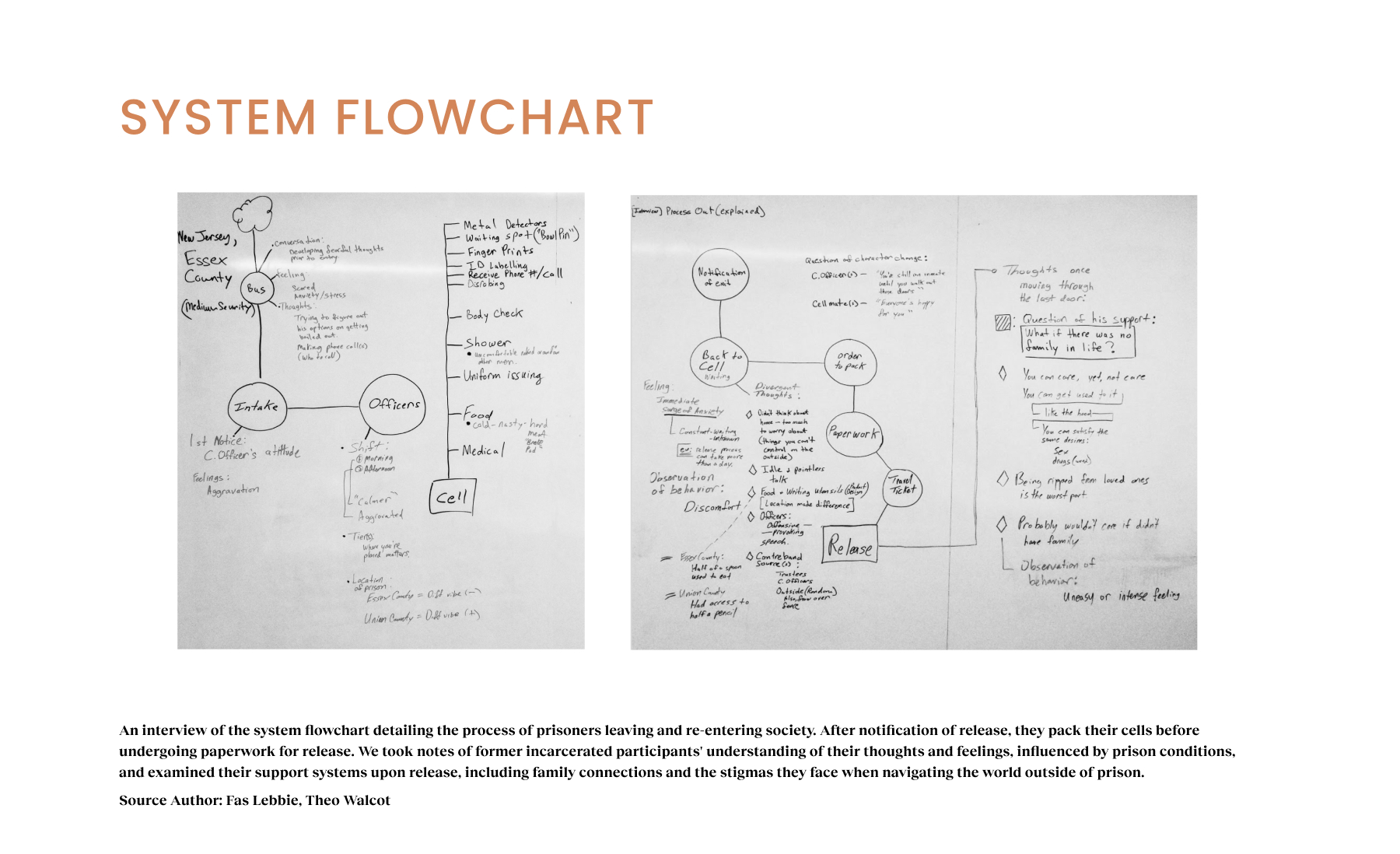
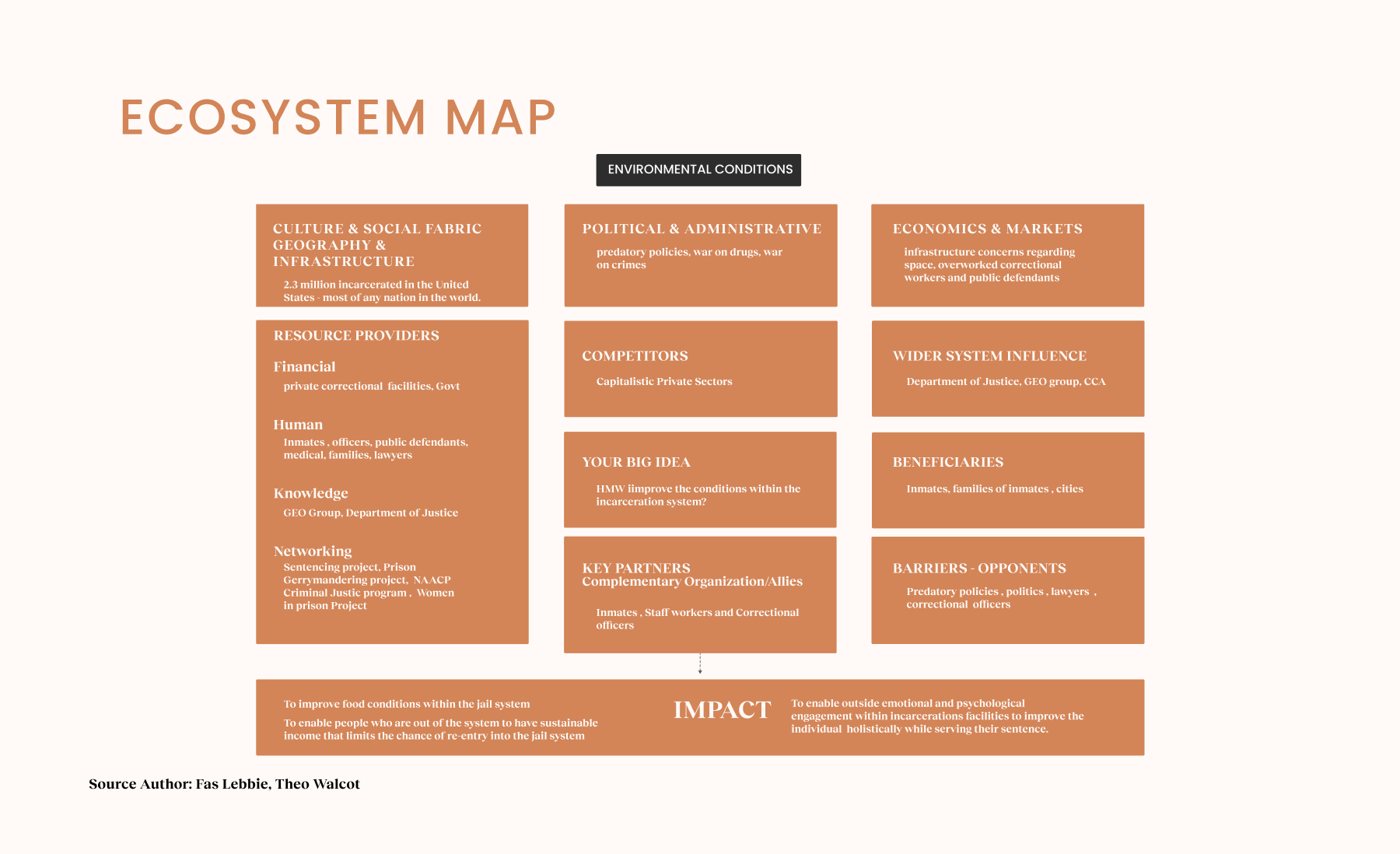
At the beginning of this research, we faced significant challenges in recruiting interview subjects due to stigma and privacy concerns. One inmate represented us and gave us access to his circle of trusted participants. This challenge required adapting our methodology, offering anonymity and alternative interview formats to gain trust and access valuable perspectives. Our ethnographic approach involved comprehensive methods to better understand the corrections system. We conducted in-depth interviews with former inmates, correctional officers, and family members to gather varied perspectives on prison experiences. We utilized systems mapping exercises to visualize complex dynamics, while journey mapping analyzed intake and release processes in detail. To enrich our findings, we conducted a documentation analysis of prison procedures and policies and a language analysis to explore how terminology shapes incarceration and rehabilitation perceptions. Our research approach combined elements of all three of Frayling’s research categories. However, it was primarily anchored in research through design, as we used design methodologies to generate new knowledge about the incarceration system.
Research For Design
We began with extensive documentary analysis, studying films like “Prison in 12 Landscapes” and “13th Amendment” to establish context and understand historical patterns. This preliminary research allowed us to enter the field with informed perspectives and identify key areas for investigation. Statistical analysis of incarceration rates and demographic patterns provided a quantitative foundation for our qualitative exploration. This research served our design process by identifying where to focus our attention and which stakeholders to engage.
Research Through Design
The core of our approach involved using design methodologies as investigative tools. Through systems mapping, journey visualization, and iterative diagramming, we uncovered insights that would have remained hidden through traditional research methods.
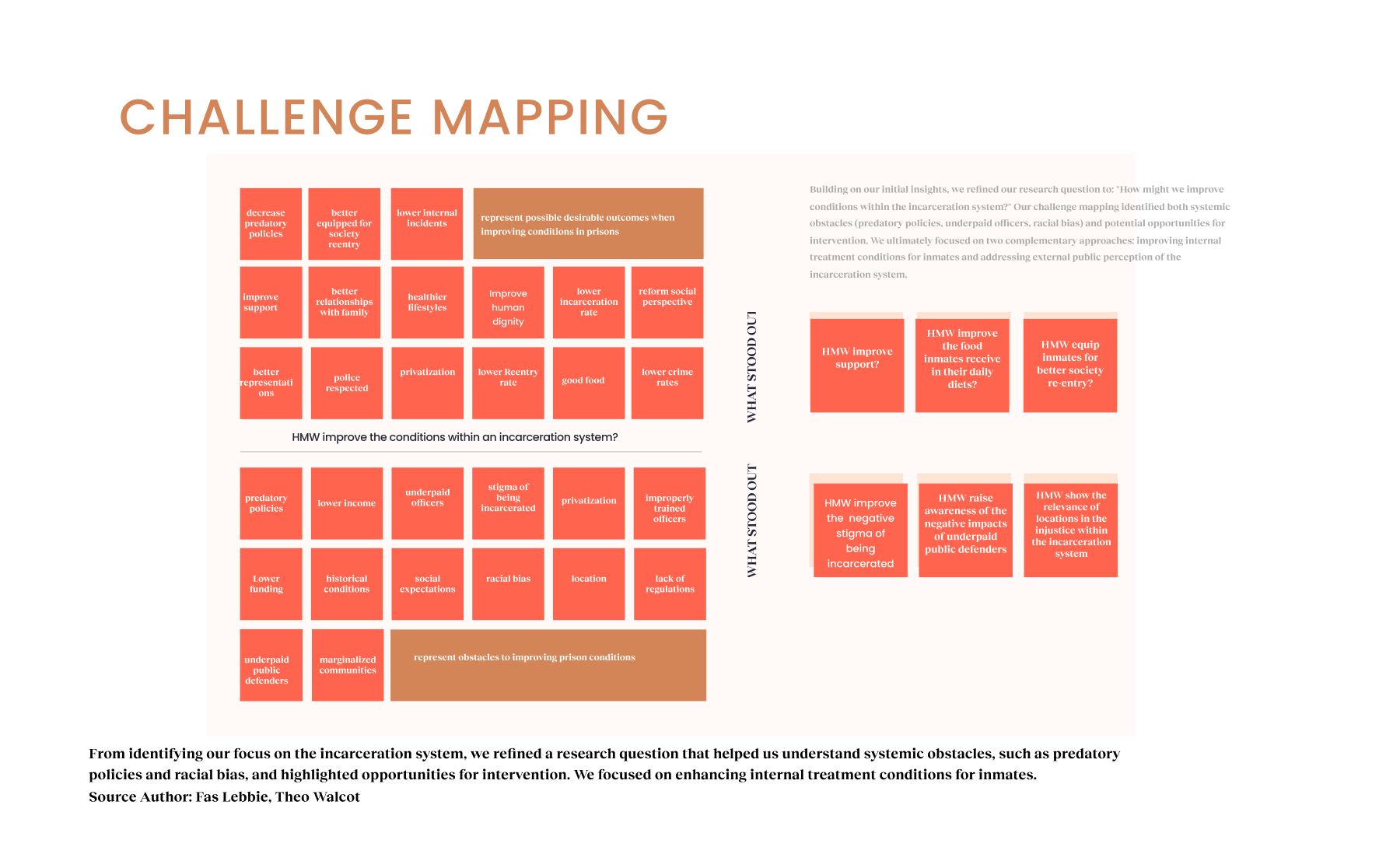
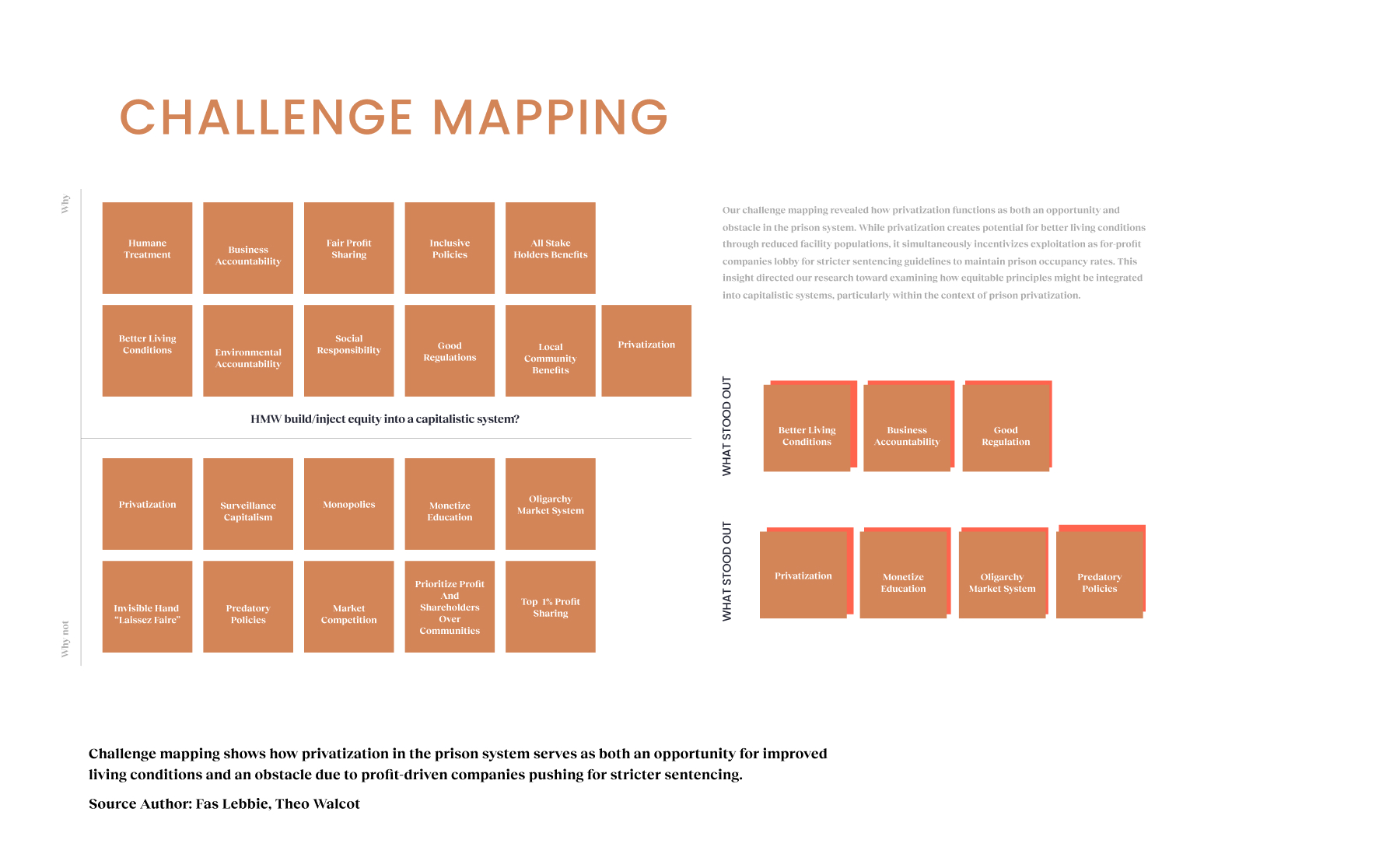
Challenge mapping exercises improved our understanding of how privatization influences the system, revealing how it exists as both an opportunity and an obstacle. Through multiple iterations, we refined our research questions, moving from general inquiries about capitalism to specific questions about improving conditions within the system.
The creation of stock and flow diagrams allowed us to visualize prisoner movement through the system, uncovering the cyclical nature of incarceration and the factors that lead to recidivism.
Research Into Design
We analyzed how the design of prison environments and processes shapes the human experience. Our investigation of the Choreography of Handcuffs examined how physical restraints serve as both practical tools and powerful symbols within the system, reflecting broader power dynamics. By studying intake processes, facility layouts, and release procedures, we gained insights into how intentional and unintentional design decisions impact those within the system. This analysis of design precedents and their effects contributed to our understanding of what would and wouldn’t work in future interventions.
Our early findings revealed the correlation between the rise of private prisons and increasing incarceration rates, which formed the foundation for our initial research questions. Furthermore, ongoing research revealed several key insights:
- The System’s Self-Defeating Cycle: Despite being called correctional, the system frequently fails to correct behavior and often makes individuals more likely to reoffend.
- Staff Transformation: Correctional officers often begin to mirror inmate behaviors due to prolonged exposure without adequate rotation or support.
- Language as Control: Terminology within the system serves to dehumanize and distance, with administrators using euphemisms (correctional facilities) while those inside use more direct terms (prisons).
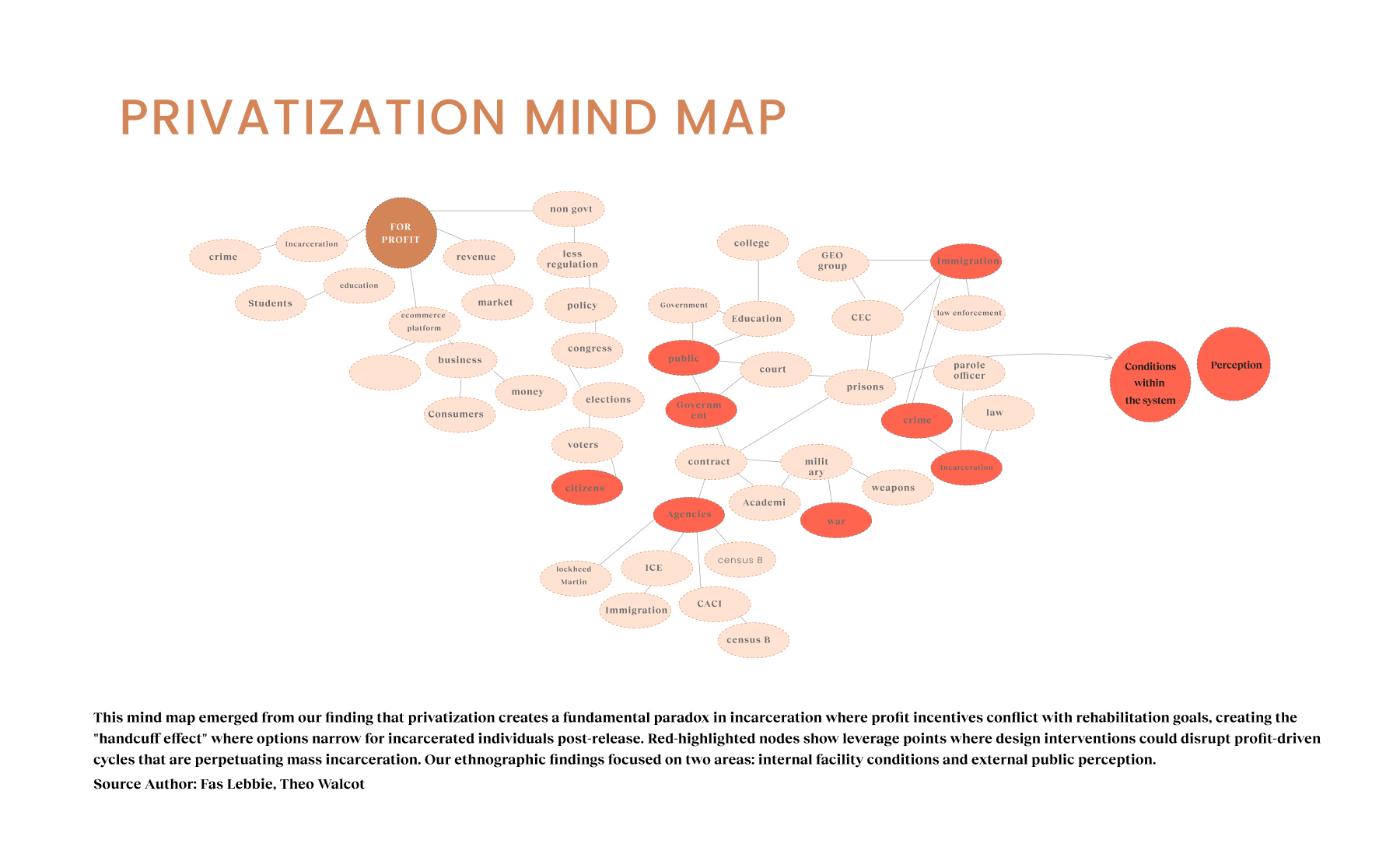
- The Handcuff Effect: Once individuals enter the system, their options continuously narrow like handcuffs that can only get tighter, creating a path dependency that makes escaping the system increasingly difficult.
- Shared Shame: Both staff and inmates experience stigma and shame about their connection to the system, creating a reluctance to discuss experiences and hindering reform efforts.
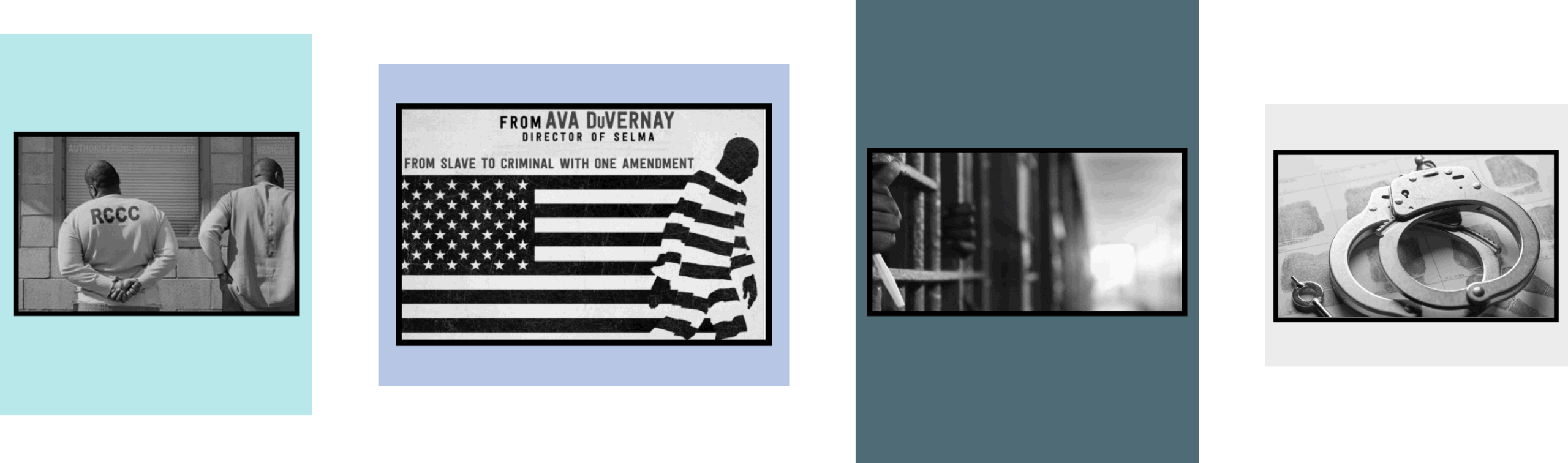
Symbols of Injustice
Prison uniforms, slavery’s legacy, and handcuff constraints highlight systemic inequities impacting 2.3 million incarcerated Americans, disproportionately from marginalized communities.
Design Intervention
We targeted critical points in the incarceration cycle by redesigning the entry process to mitigate dehumanizing intake experiences. A staff well-being framework addressed operational and psychological stressors impacting correctional officers, aiming to reduce harmful behaviors. Additionally, we have developed a reentry support system that begins preparing inmates for release well before their sentence concludes, focusing on reducing recidivism and promoting successful reintegration into society.

Prison phone calls reflect the emotional distance families endure, underscoring the need for design solutions that foster connection and rehabilitation.





Toolkit, Methods & Frameworks
Many of the methods used are embedded in design ethnography principles. They aim to generate insights that deconstruct the complex prison systems in the US. The tools and methods used for synthesis, such as the wheel of reasoning and more, disclosed the capitalist motives and privatization system behind mass incarceration.
Reflections & Impact
My partner and I sent our research to the New York State Department of Corrections and Community Supervision (DOCCS) for evaluation based on feasibility, potential impact, and alignment with broader state goals. Given the short timeframe, we also requested funding to continue our research. The visualization tools we developed have been used in educational contexts to help others understand the systemic nature of incarceration issues. Our findings regarding staff experiences have particular relevance for immediate policy changes, highlighting how working conditions affect the treatment of incarcerated individuals. Similarly, our analysis of intake and release processes offers actionable insights that could improve outcomes in the short term. The long-term impact of this work lies in shifting perspectives on incarceration from a punitive framework to a system that implements design to improve human experiences. Our research highlights the need for cross-disciplinary approaches to systemic problems. These insights could inform policy discussions, architectural decisions for future facilities, and operational protocols within existing institutions. This project has given voice to those within the system whose experiences are often overlooked. We hope that documenting and analyzing these perspectives leads to better justice and rehabilitation systems.