

Overview
What if we could make invisible systemic barriers in education visible and tangible? This question drove my team of four Parsons Transdisciplinary Design students to create a physical model that revealed how educational resources inevitably flow toward privileged communities. By transforming abstract systems into interactive experiences, we demonstrated how institutional influences consistently direct resources away from underprivileged areas, regardless of intervention attempts. Our physical model and speculative digital currency app visualized current inequities and proposed an alternative merit-based system for distributing educational resources, challenging the zip code-determined funding paradigm that perpetuates educational inequality.
Research & Design
Design Research · Speculative design futures · Interactive physical model · Systems mapping & visualization · Research through design
- Duration: August - December 2019
- Partners: Parsons School of Design
- Team: Fas Lebbie, Mohamad Sial, Theo Walcot, Hannah Devries
My Role
I contributed to conducting ethnographic design research and systems mapping initiatives, and sensemaking data into actionable insights.
I helped build interactive physical models and speculative digital prototypes using research-through-design methodologies, enabling stakeholders to engage with systemic challenges through immersive and tangible experiences.
Problem Context
The American education system faces an equity crisis that is largely invisible. Around 53 million students navigate a system where their quality of education depends on their zip codes, not their merit. The funding structure, which relies on local property taxes, perpetuates a cycle where affluent communities funnel more resources to their schools, while under-resourced areas struggle with inadequate funding and support. This inequality is evident: wealthy districts spend up to $10,000 more per student annually than low-income districts. Students in underprivileged areas face challenges such as fewer experienced teachers (with a 31% higher turnover rate), outdated materials, limited access to technology, and fewer extracurricular activities. Disparities extend beyond the classroom. Children in low-income households may receive less homework help, face food insecurity, or need to take time away from their studies to contribute financially. Traditional reforms focus on programs or policy tweaks rather than the fundamental structure of resource distribution. These systemic barriers are embedded in policies and practices, making them hard to address. Our research identified a gap in communicating educational inequality: the abstract nature makes it difficult for stakeholders to grasp, limiting public understanding to statistics rather than a deeper structural comprehension.
My Approach
Leveraging Christopher Frayling’s “research through design” approach, the creation of artifacts generated new knowledge and insights about educational inequality. Our approach positioned design activity as the primary mode of inquiry. Constructing the wooden model was itself a research process. The physical model and speculative app served as tools through which we discovered and articulated new understandings of the system.
Design Process
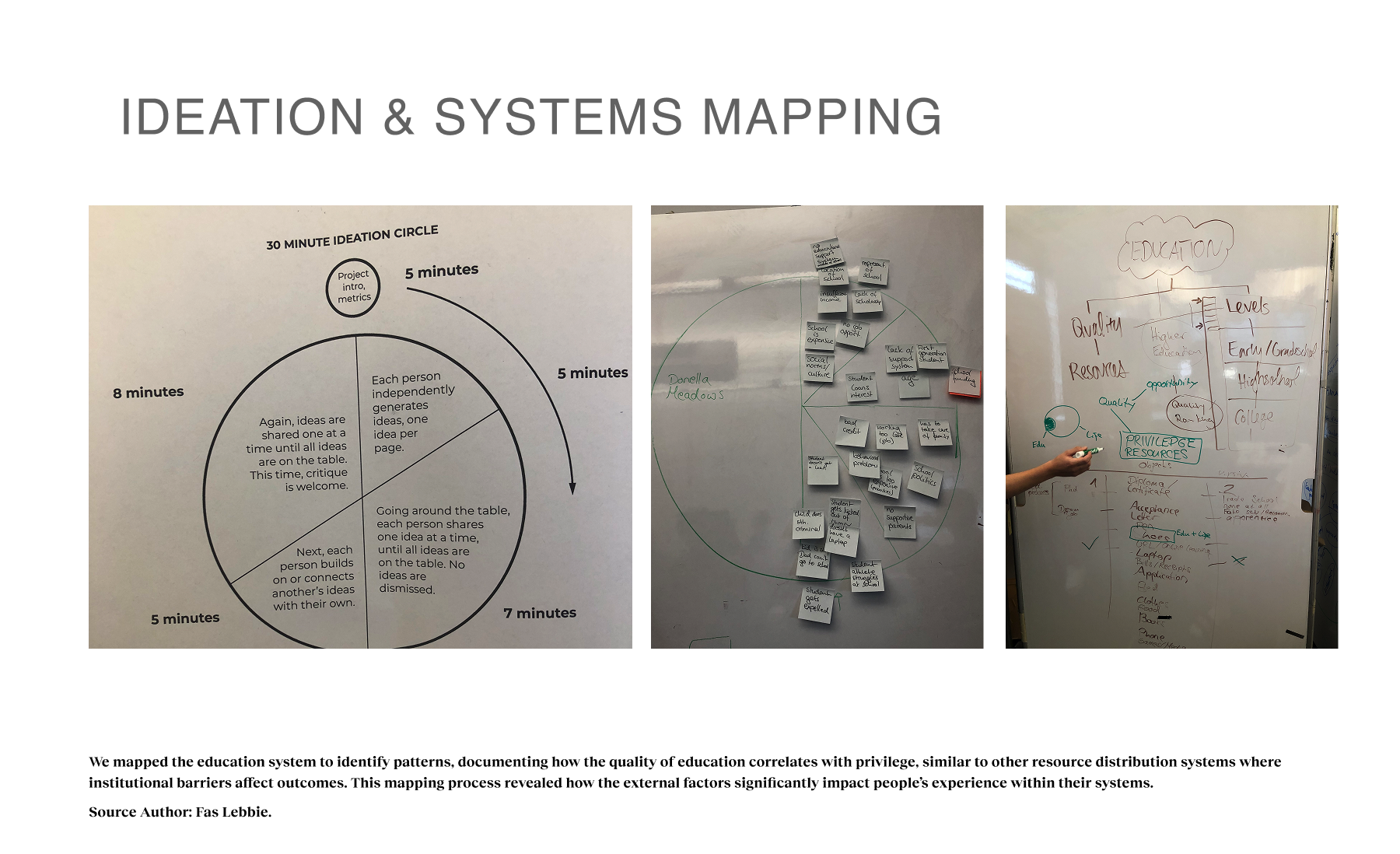
We began by developing a shared understanding of educational inequality through a literature review and mapping personal experiences. Our diverse team brought perspectives from both American and international educational systems, enabling us to challenge assumptions and identify patterns across various contexts. We gathered existing research on educational funding mechanisms, resource distribution patterns, and the relationship between zip code and educational outcomes. Rather than immediately seeking solutions, we deliberately immersed ourselves in systems “play”, a methodical yet creative exploration that allowed us to develop familiarity with educational systems before attempting any interventions. This approach emerged when we recognized that premature solution-seeking often addresses symptoms rather than structural causes.
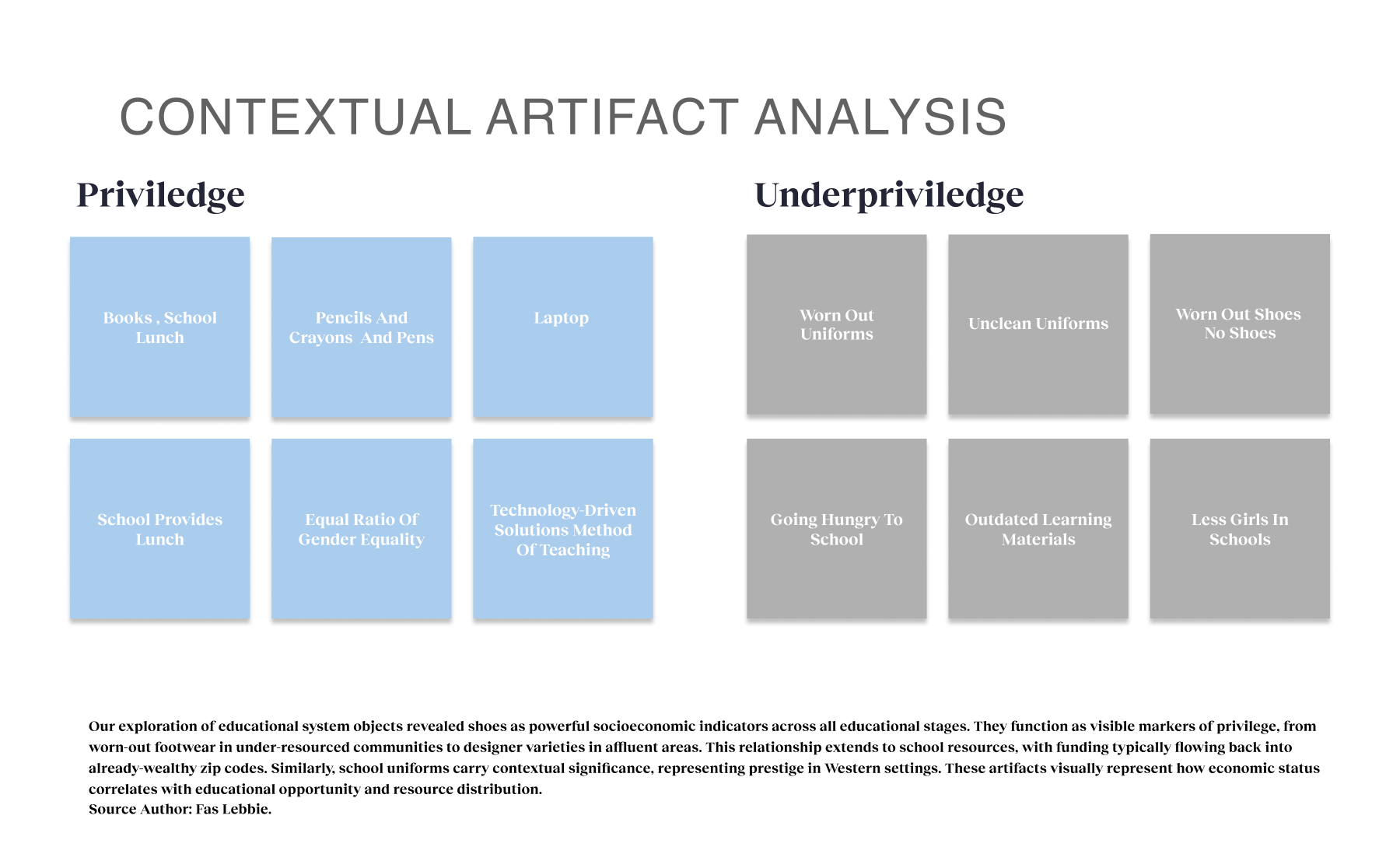
Our primary research employed multiple complementary qualitative methods to gain a deeper understanding of educational inequality. Through brainstorming and ideation circles, we explored potential metaphorical artifacts that could represent this inequality, ultimately selecting shoes as our central metaphor. Team members conducted ethnographic observations across educational environments with varying socioeconomic contexts, documenting visible markers of privilege in learning spaces. Our comparative analysis revealed how seemingly identical artifacts, such as school uniforms, can signal opposite meanings regarding privilege in different cultural systems. To visualize these dynamics, we created systems maps showing resource flows within educational structures, identifying key intervention points and barriers. This methodical approach led us to a critical insight: regardless of individual efforts to redirect resources, educational systems contain institutional structures that consistently channel resources toward areas of existing privilege.
Our research revealed several key patterns:
- Educational quality correlates strongly with zip code and local property values, creating self-reinforcing cycles of advantage or disadvantage.
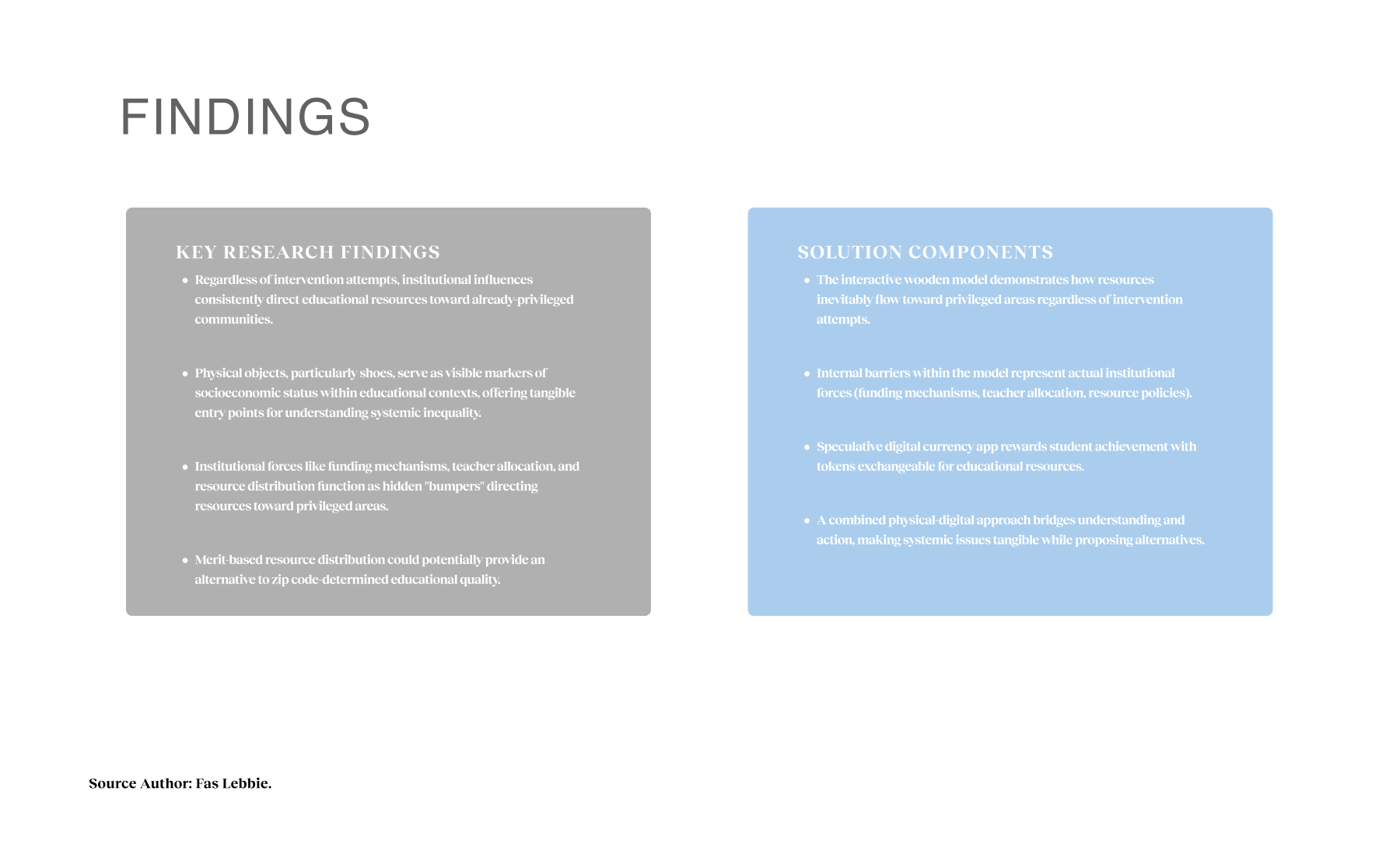
- Institutional influences (funding mechanisms, teacher allocation, resource distribution) function as hidden bumpers that direct resources toward already-privileged communities.
- These systemic forces remain largely invisible to most stakeholders, making intervention difficult.
- Physical objects (particularly shoes) serve as visible markers of socioeconomic status within educational environments, offering a tangible entry point for understanding systemic inequality.
- Merit-based resource distribution could potentially provide an alternative to zip code-determined educational quality.
These insights directly informed our design decisions, from creating the physical model’s internal structure to developing the speculative digital currency concept as an intervention.
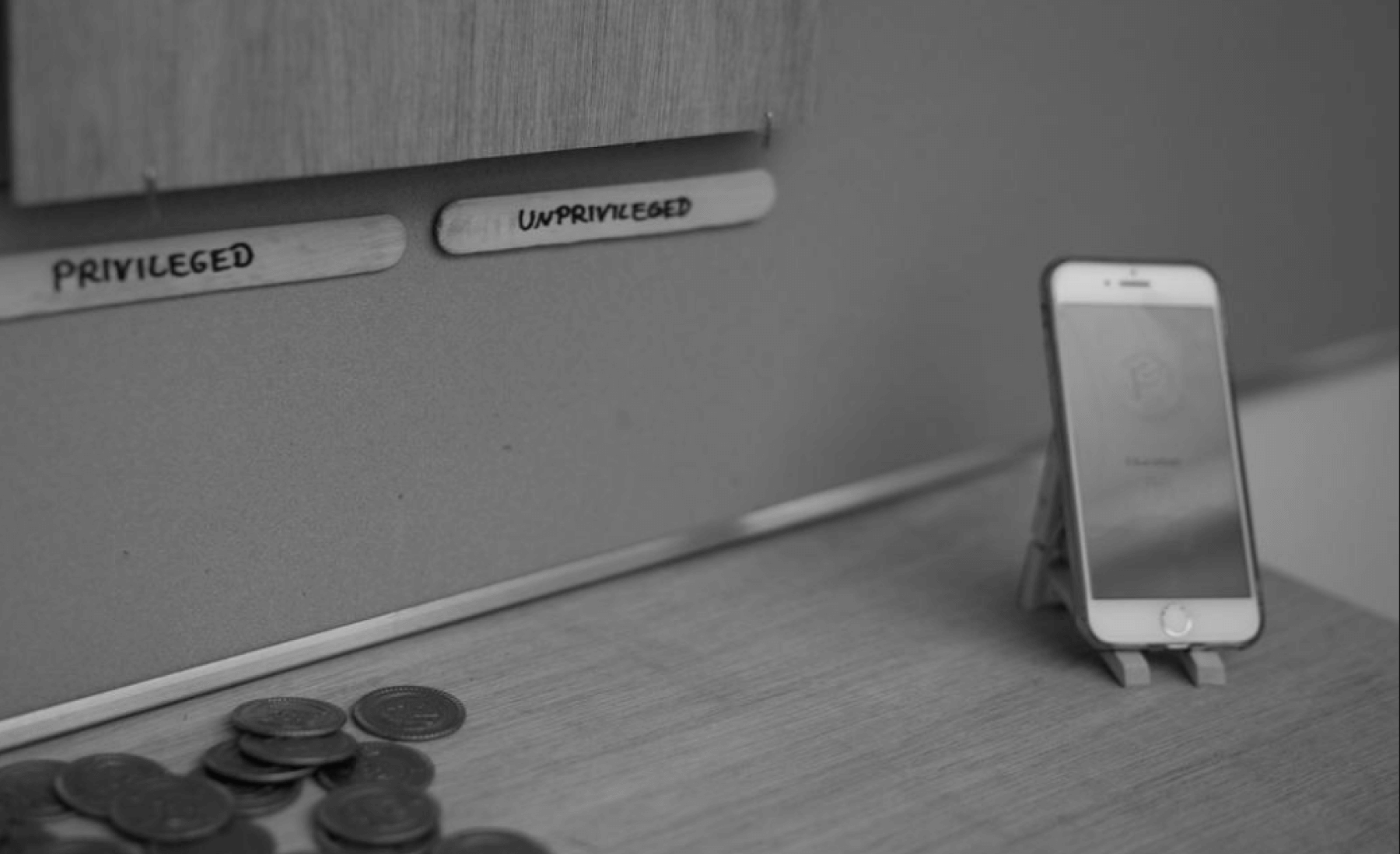
Our prototyping process unfolded across three interconnected phases, beginning with conceptual model development, where we translated our systems research into physical design specifications, determining how institutional influences would appear as barriers within our wooden model. In the physical construction phase, we iteratively built and refined the wooden box design, carefully testing coin trajectories to ensure they accurately represented actual resource flows in education systems. These insights then informed our final phase: designing a speculative digital currency app that would reward student achievement with tokens exchangeable for educational resources. We validated our approach by testing the physical model with faculty, department heads, and the public during a showcase event, where users attempted to influence outcomes by changing coin entry points — efforts that inevitably failed due to internal barriers, creating powerful moments of realization about systemic constraints. After revealing the hidden mechanisms and explaining our digital intervention concept, we collected feedback that confirmed our hypothesis: making invisible systemic forces tangible dramatically increased understanding and engagement with educational inequality issues. Approximately 75% of users reported new insights about resource flow dynamics, and several institutional representatives expressed interest in further developing our concepts.

Zip Code as Destiny
Property-tax funding allows wealthy zip codes to outspend others; a $23 billion gap entrenches inequality, limiting mobility.









Design Interventions
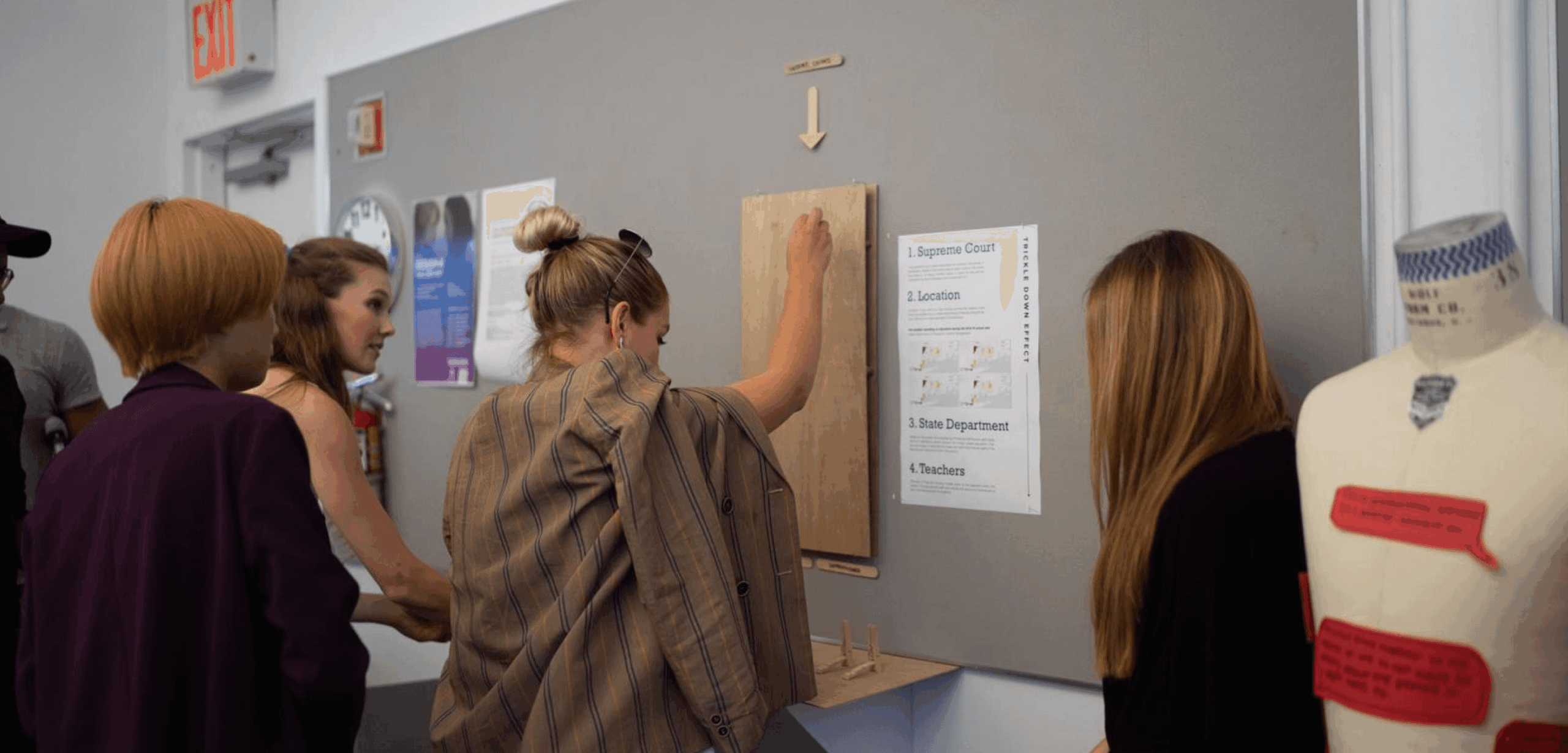
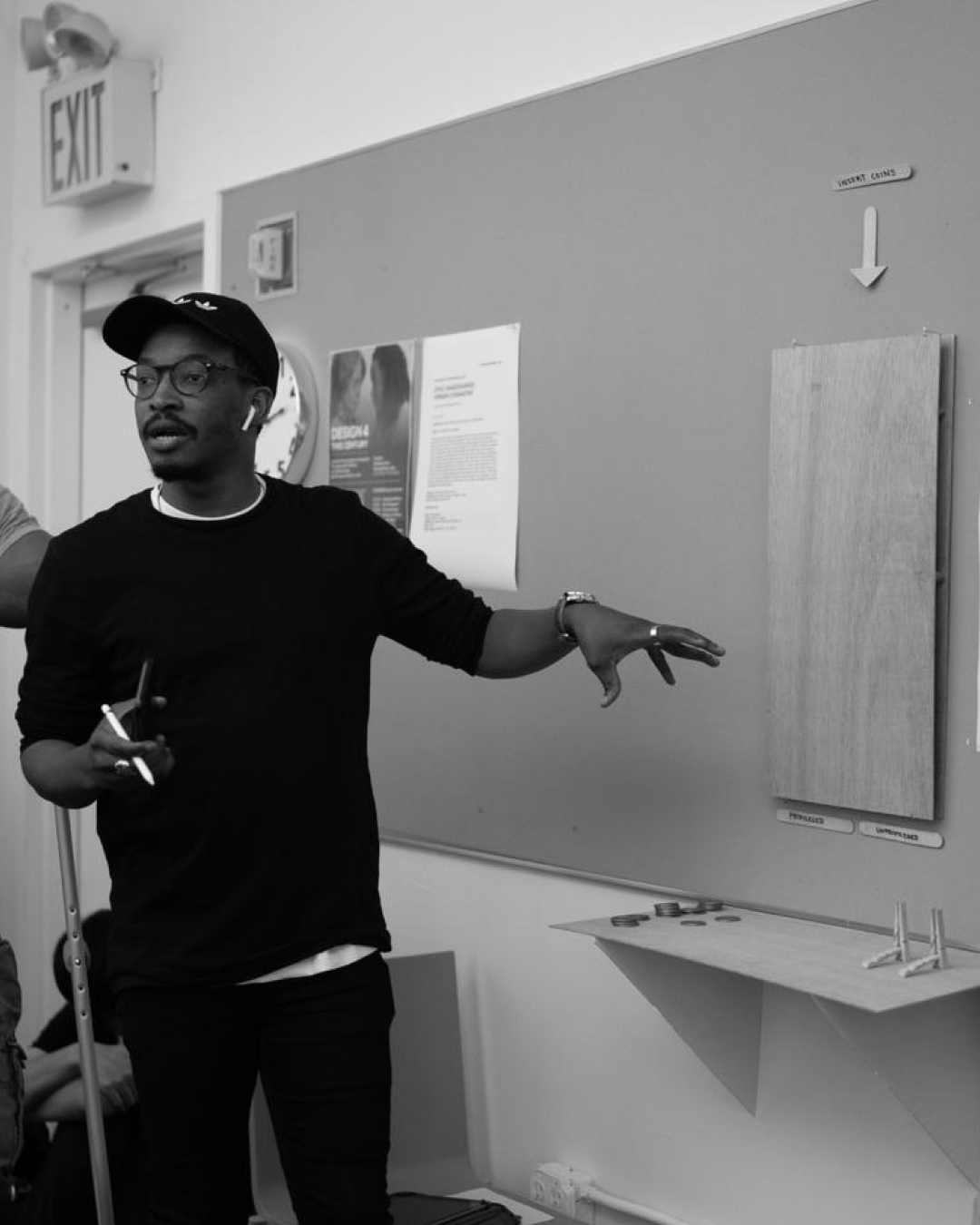
Our design intervention aimed to make educational inequality tangible through two complementary components: a physical model illustrating current resource flow patterns and a speculative digital application proposing an alternative system for resource distribution. The centerpiece of our intervention was a custom wooden box model representing the education system, presented at an exhibition. This interactive installation allowed users to insert coins (representing resources) at the top and observe how, regardless of entry point, hidden internal structures (institutional influences) consistently directed these resources toward the privileged exit.
Toolkit, Methods & Frameworks
Ideation circles, systems mapping, and contextual artifact analysis helped us uncover how privilege shapes access to education. They revealed systemic inequalities and informed speculative solution models that translated abstract institutional forces into tangible, design-led opportunities for leverage points within the system.
Exhibition Reach:
The interactive physical model was featured in 3 major shows, including one at Parsons School of Design, reaching over 500+ peers and faculty.
Academic Engagement:
Invited to guest speak at 2 speculative design workshops and co-developed a curriculum module used in a futures studies
Broader Dissemination:
Included in internal exhibitions, Future Studies forums, and as part of a portfolio review in NYCxDESIGN festival, elevating the visibility of design research as a tool for systemic critique.
Reflections & Impact
During the showcase, as participants interacted with the prototypes, many expressed surprise at their inability to direct resources toward the underprivileged exit despite repeated attempts, a visceral demonstration of how systemic forces override individual intentions.
The physical nature of the interaction created an emotional connection to the issue. This speculative concept generated discussion about alternative funding mechanisms for education. While some questioned its feasibility, many recognized its value in challenging fundamental assumptions about how educational resources must be distributed. The physical model didn’t just illustrate existing knowledge; it generated a new understanding through interaction, embodying Frayling’s concept of “research through design” as a unique activity that facilitates the creation of knowledge and understanding. The model made invisible systemic forces visible and experiential, revealing a myriad of factors, including funding mechanisms tied to local property taxes, teacher salary disparities across districts, unequal distribution of educational resources, and policy decisions favoring already-advantaged communities. Together, they create a predetermined path for resources that reinforces existing inequalities.
Next Steps
- Expand exhibitions and public engagement by showcasing the interactive model at more design shows, educational conferences, and community events.
- Collaborate with academic institutions to integrate the model into design curricula and facilitate discussions on systemic educational inequality.
- Develop a policy dialogue toolkit by converting research insights into visualizations, workshops, and data storytelling for advocacy groups.
- Publish and document research through case studies, academic papers, and design magazines to broaden reach and influence within the design community.