
Overview
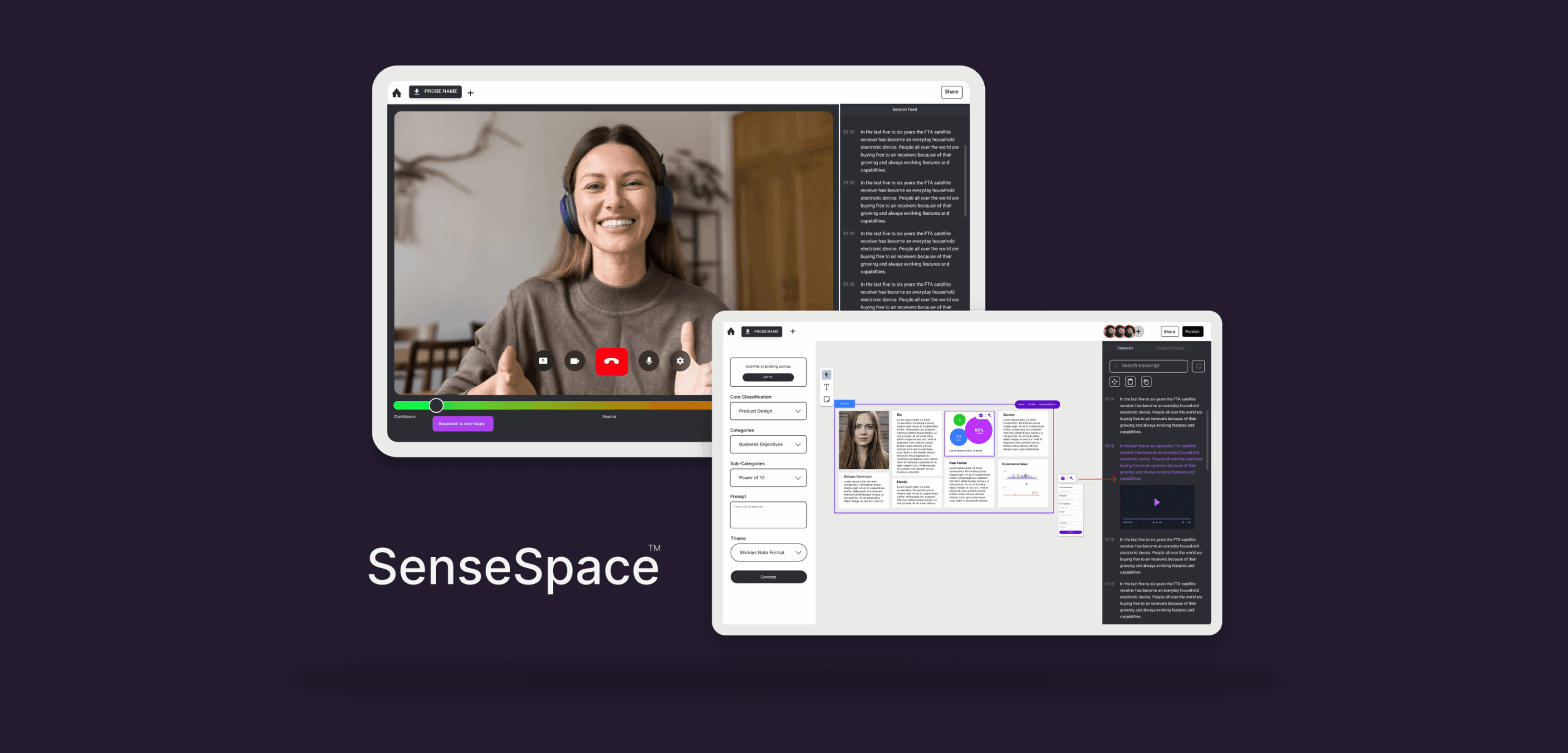
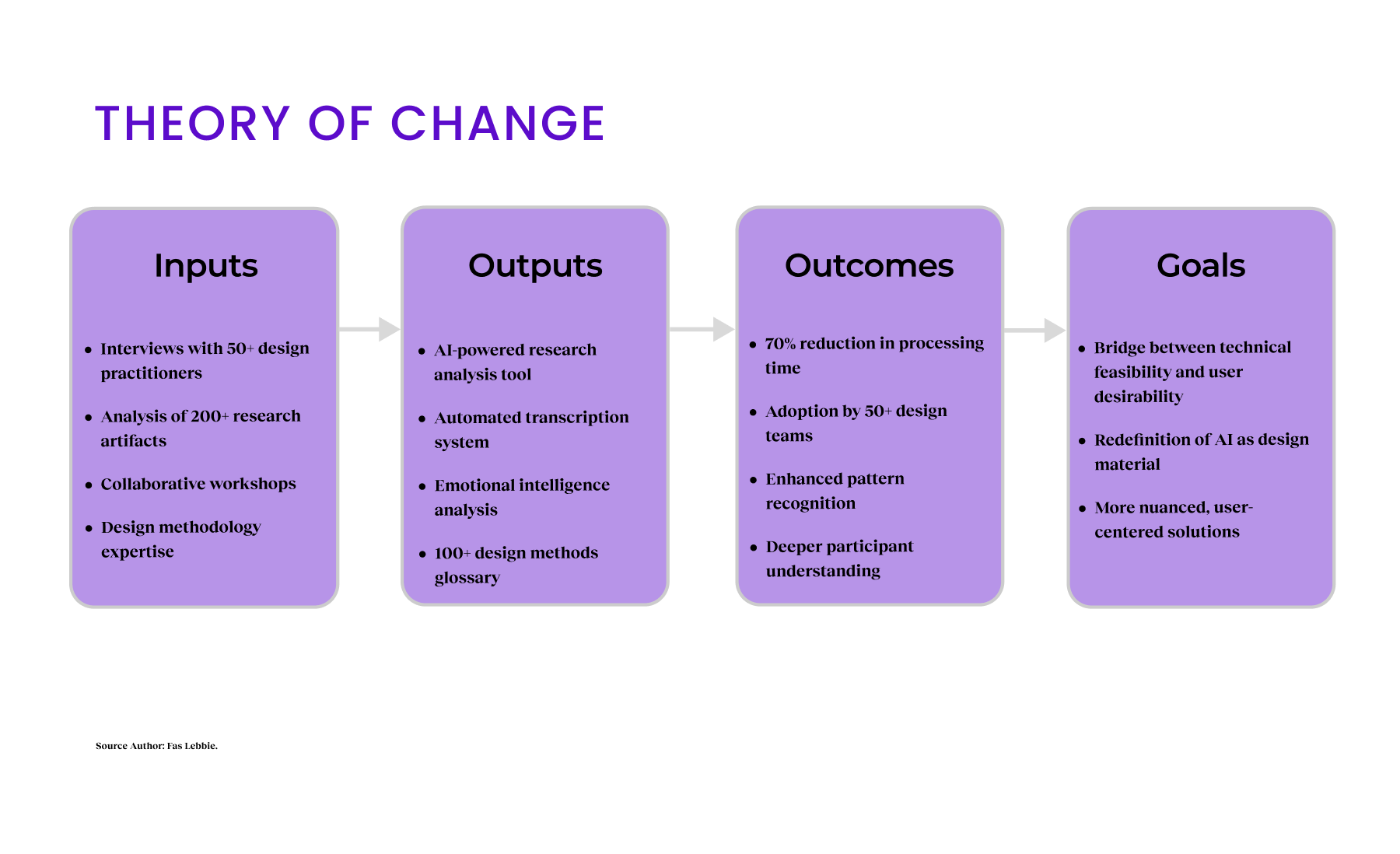
Design research has become fragmented and time-consuming. SenseSpace emerged from recurring observation as a design manager leading design teams in companies like Meta, Western Digital, Consumer Reports, PTC, and more. My designers and researchers were drowning, as we spent long hours attempting to make sense of research data. SenseSpace cuts research processing time by 70% through intelligent automation, but more importantly, it preserves the designer’s craft. Using specific design methodologies, we transformed how 50+ design teams analyze research through our secret source, leading to faster product development cycles and clearer decision-making paths.
Research & Design
Design research · Experience Design · AI-powered research synthesis · Design Methodologies · Human-centered AI methodology · Transition Design · Research ops · Strategic frameworks (Theory of Change, Value Proposition) · Design methods taxonomy
- Duration: May - December 2024
- Partners: Carnegie Mellon University
- Team: Fas Lebbie, Spencer Allred, Hibban Butt, Mohammad Sial
Confidentiality: Although key algorithms and methodological approaches remain confidential, this case study shares our core approach and the lessons we learned from developing Sense Space.
My Role
Led the design vision for SenseSpace, positioning AI as a design material. Merged data science with human-centered design to shape tools that enhance, not replace, creative workflows.
Partnered with researchers to build a usable MVP design, translated insights into seamless features, aligning technical feasibility with design intent.
Championed rapid prototyping and continuous testing. Leveraged AI to automate research synthesis, introduce psycho-portraits, and validate ideas through iterative designer feedback.
Problem Context
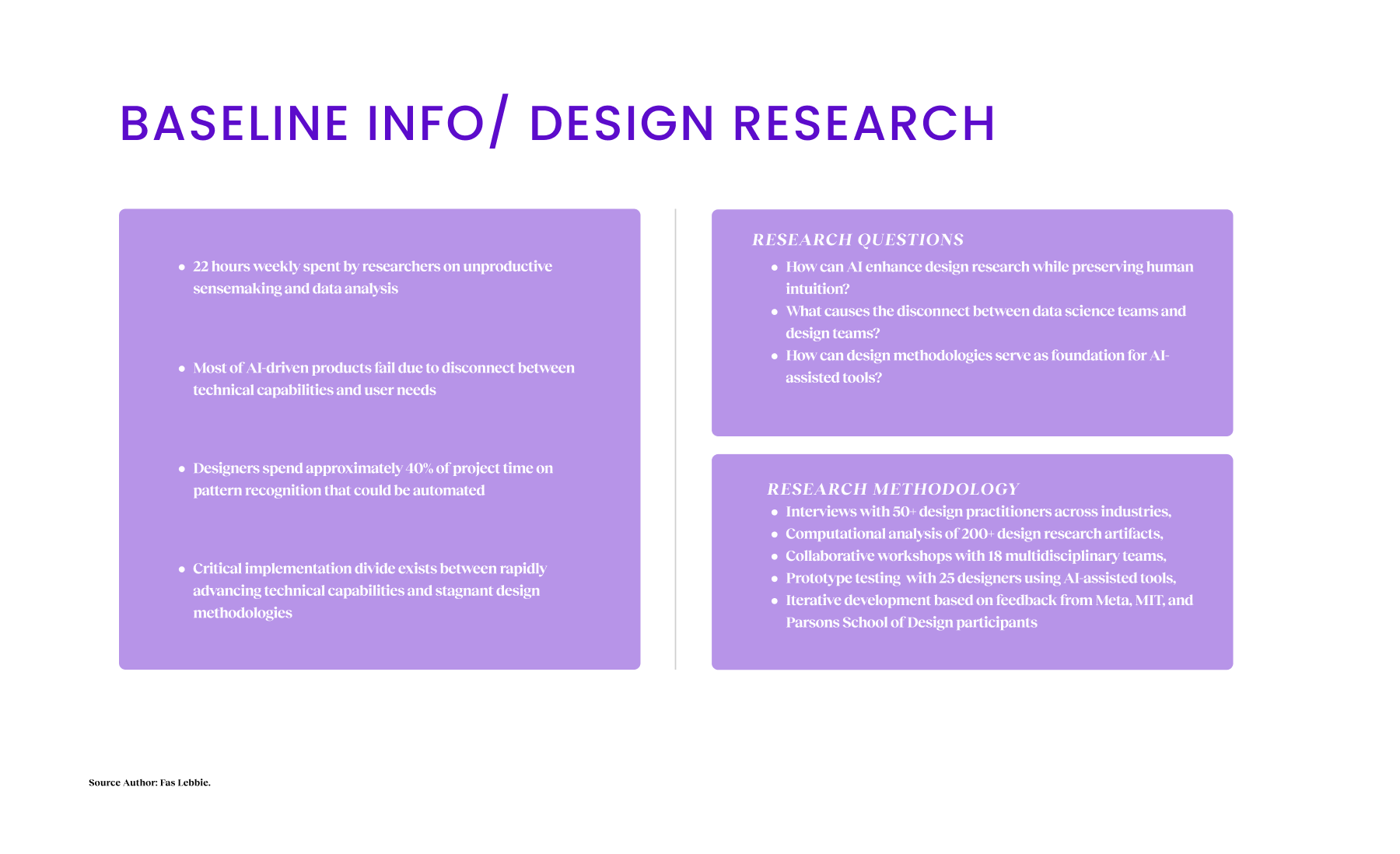
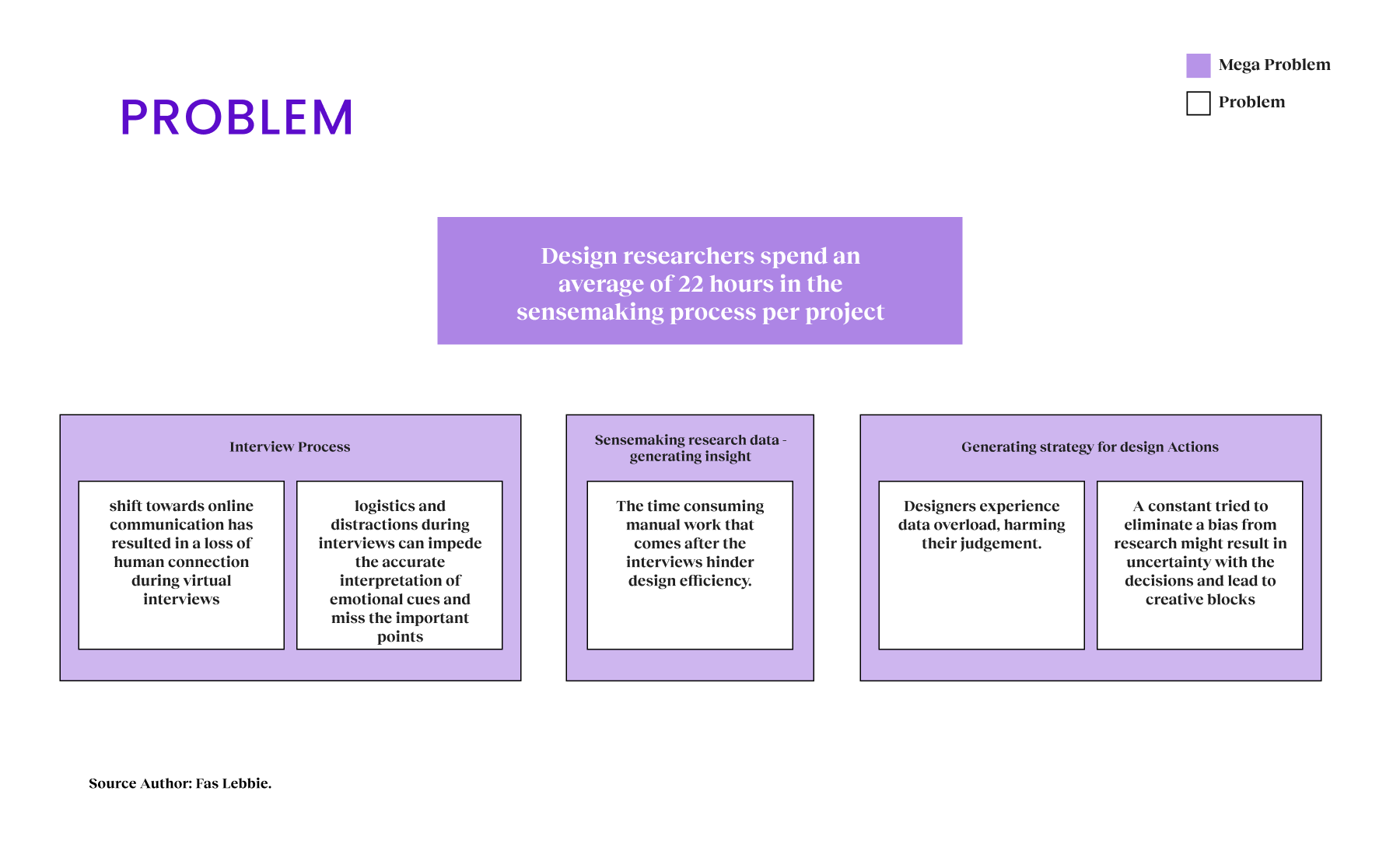
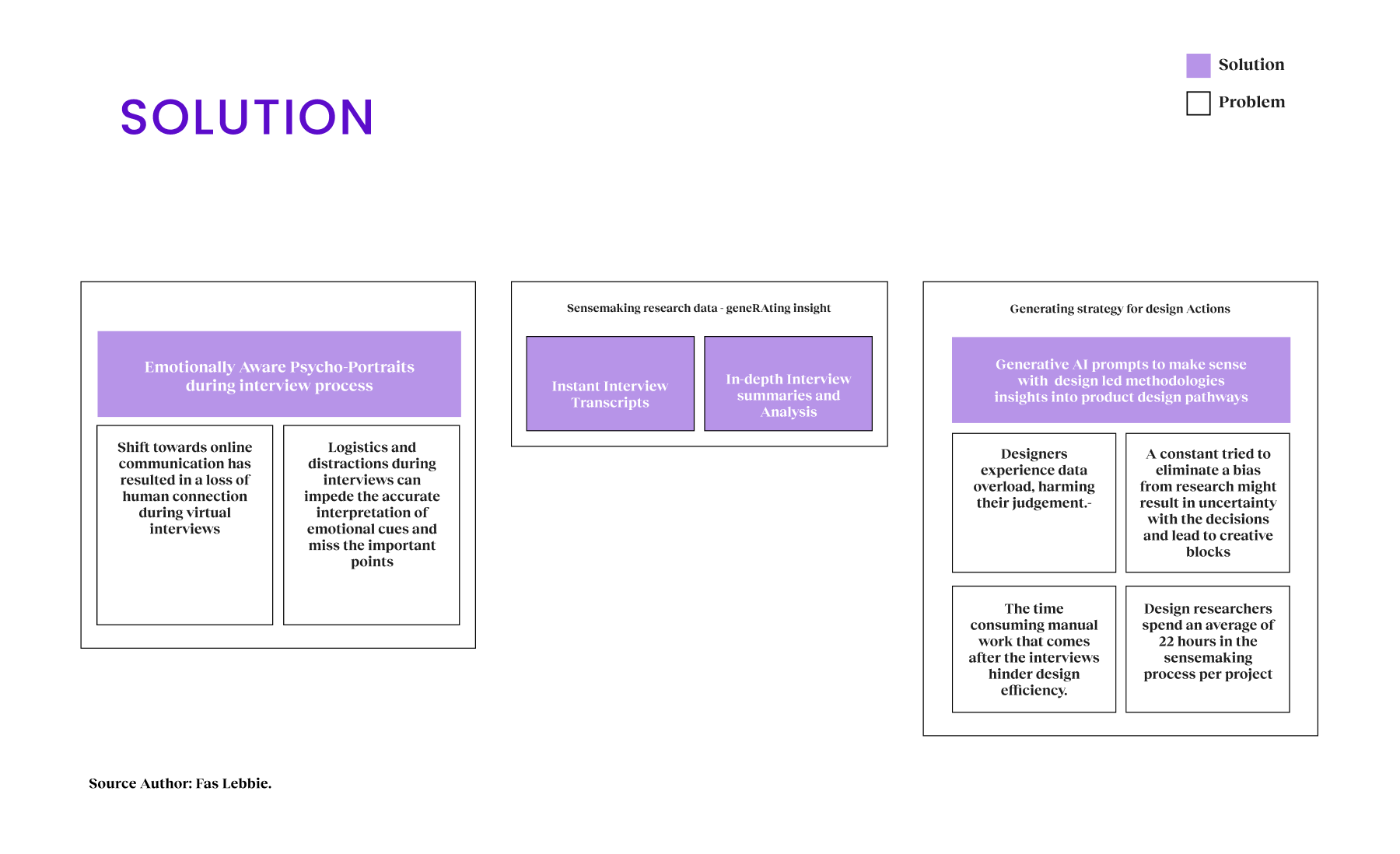
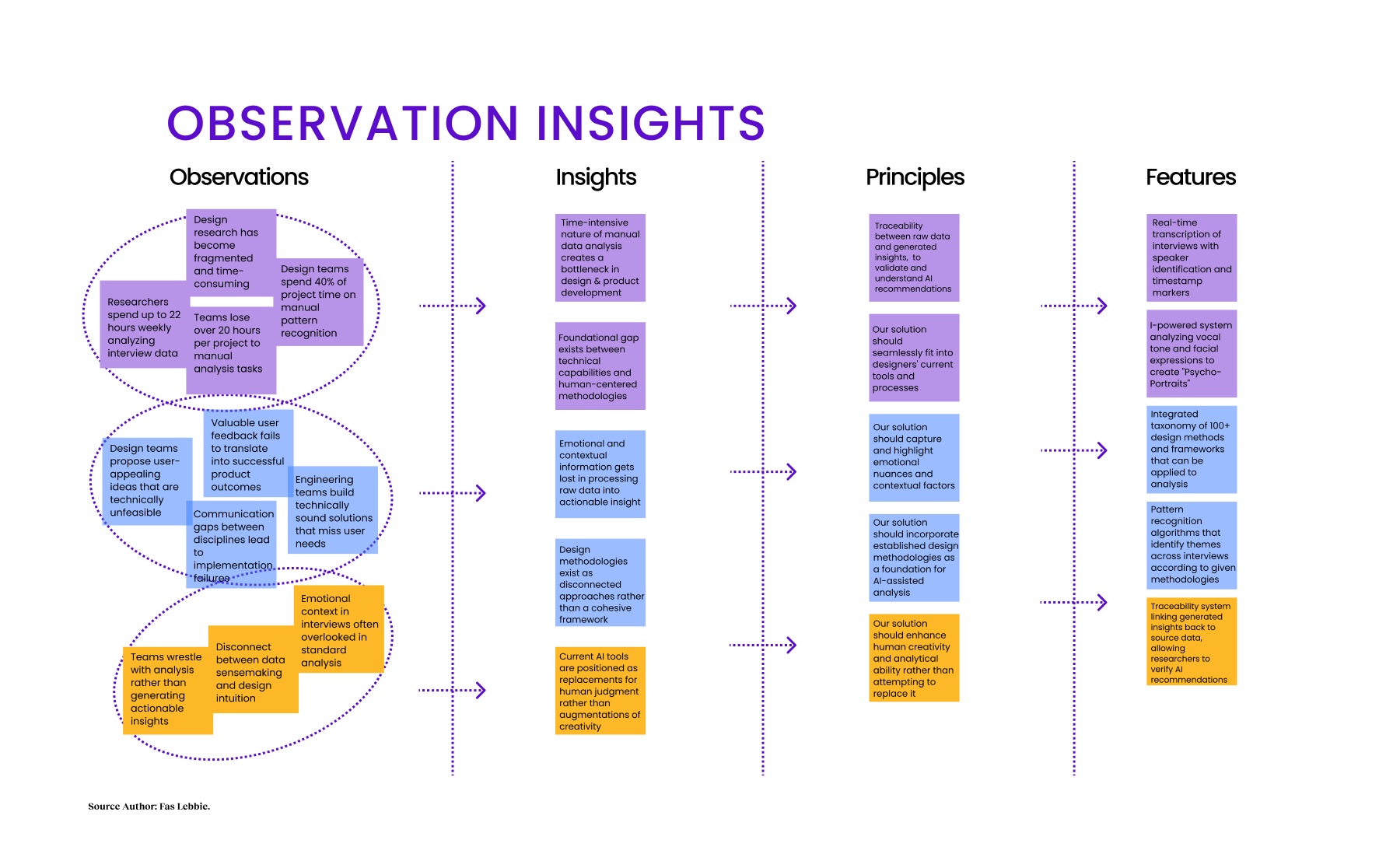
Design researchers face inefficiencies as they try to make sense of the myriad data they gather. Designers spend up to 22 hours weekly analyzing interview data, time that could be better spent generating actionable insights. Our discussions with product teams — including researchers, designers, and product managers — uncovered a concerning pattern: engineering teams frequently build technically sound solutions that misunderstand user needs or create products that users simply don’t want. Meanwhile, design teams propose ideas that, while appealing to users, prove technically unfeasible to implement. The core issue driving this disconnect is the gap between collecting raw data and identifying meaningful patterns that can drive effective design decisions. This challenge creates a fundamental barrier in the product development process, where valuable user feedback exists but fails to translate into successful product outcomes. By addressing these inefficiencies in how teams process and interpret research data, we bridged the gap between technical possibilities and genuine user needs, ultimately leading to products that are both technically sound and eagerly adopted by users.
My Approach
My design philosophy aims to position AI as a new raw material for designers. Instead of seeing AI as a technical tool, I focus on how it can reshape the design research process. My research aimed to bridge the gap between technical capabilities and creative needs by immersing myself in designers’ workflows and challenges. This exploration highlighted the crucial gap between innovations in data science and user-centered design methodologies. My approach aims to enhance analysis while maintaining the intuitive craftsmanship that defines what makes design distinctly human.
Design Process
Our research objective was to understand how AI could enhance the design research process while exploring the divide between technical capabilities and human-centered methodologies. We interviewed over 50 design practitioners across industries, focusing on design research workflows and data collection and analysis pain points. These 60-90 minute sessions explored current research processes, challenges in data analysis, and attitudes toward AI integration. Current analysis processes remain labor-intensive, with designers spending approximately 40% of project time on pattern recognition that AI could automate.
We supplemented qualitative insights with computational analysis of 200+ design research artifacts, identifying patterns in how information transforms from raw data to actionable insights. Collaborative workshops with 18 multidisciplinary teams revealed communication gaps leading to implementation failures. Working prototypes of AI-assisted research tools were tested with 25 designers, who provided feedback on how AI might augment human creativity in the design research process. By mapping this landscape and understanding designers’ approaches to AI integration, we established a foundation for investigating how AI might transform the design research process.
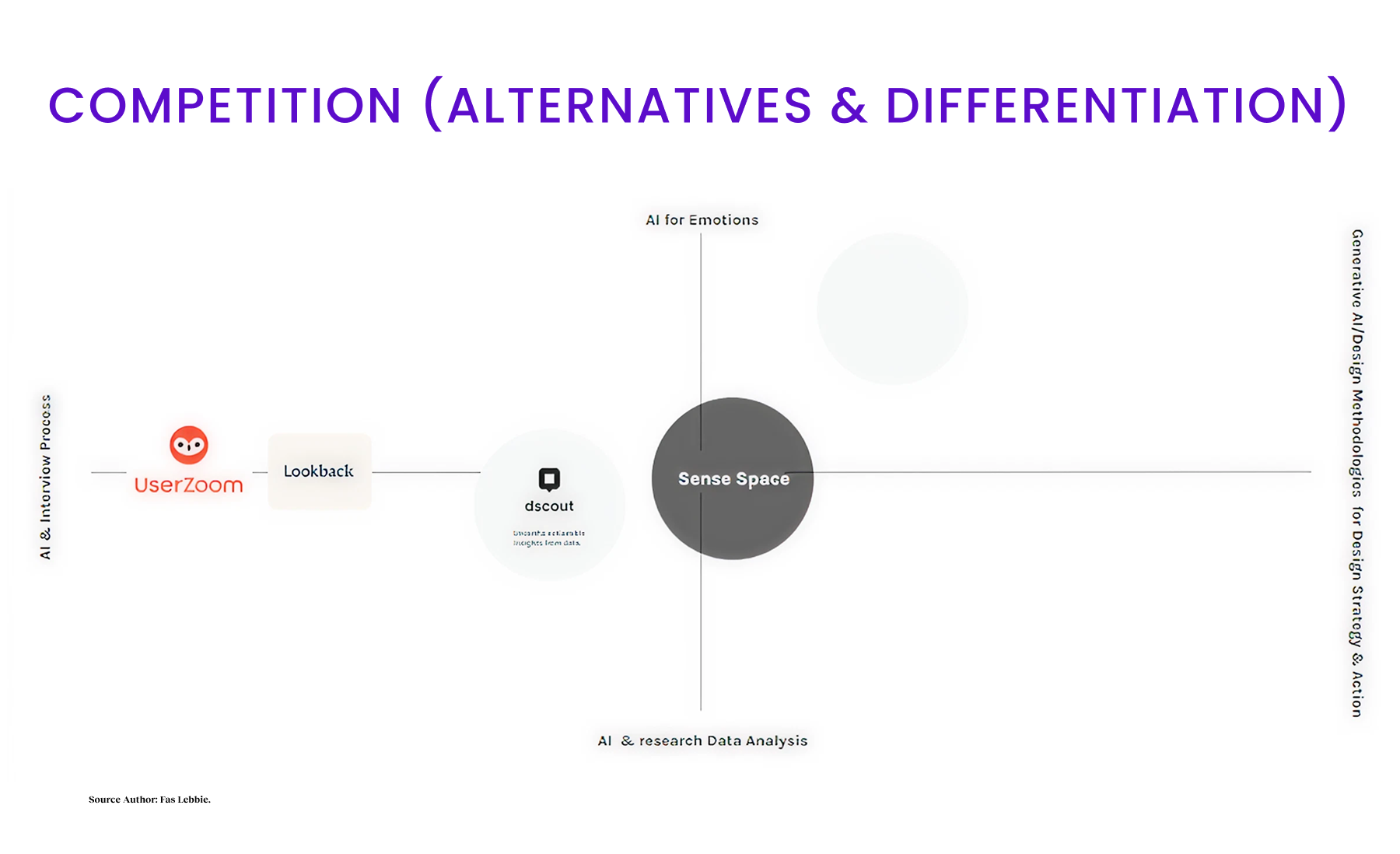
The research revealed that designers value tools that augment their intuitive and creative processes rather than replace them. Design teams spend about 22 hours weekly trying to make sense of the data they gather and lose over 20 hours per project to manual analysis tasks, indicating a disconnect between data sensemaking and design intuition. This gap often results in technically sound but unusable solutions or desirable yet unfeasible ones. Our findings emphasized the need for tools that eliminate time-consuming manual work, such as generating instant interview transcripts and using them to generate insights through specific design methodologies. Discussions with researchers from institutions like Parsons School of Design and MIT highlighted the importance of utilizing design methodologies as distinct elements to ground AI tools within design research. Participants agreed that a tool embedded with specific design methodologies for researchers in gathering and understanding data will improve their likelihood of using it through design research tasks, provided they can validate it. We discussed employing AI to use system design tools and methods like Powers of 10, the transition design approach, and methods to interact with data transcripts. This validates the growing importance of systems thinking in design research and the demand for tools supporting systematic data gathering and mapping. These insights created conditions to develop a taxonomy that documents AI capabilities across design research methodologies and web applications, enabling designers to explore these capabilities and enhance their processes.
The prototyping phase engaged 12 design researchers and 5 product managers from leading innovation hubs like Meta, MIT, and the Parsons School of Design in iterative testing sessions. These interactions shaped our development approach. Three essential components emerged as foundational for an MVP: automated interview transcription, emotional intelligence analysis, seamless integration with existing design tools, and the validate feature, which gives researchers traceability links to where the data pipeline materialized specific insights.
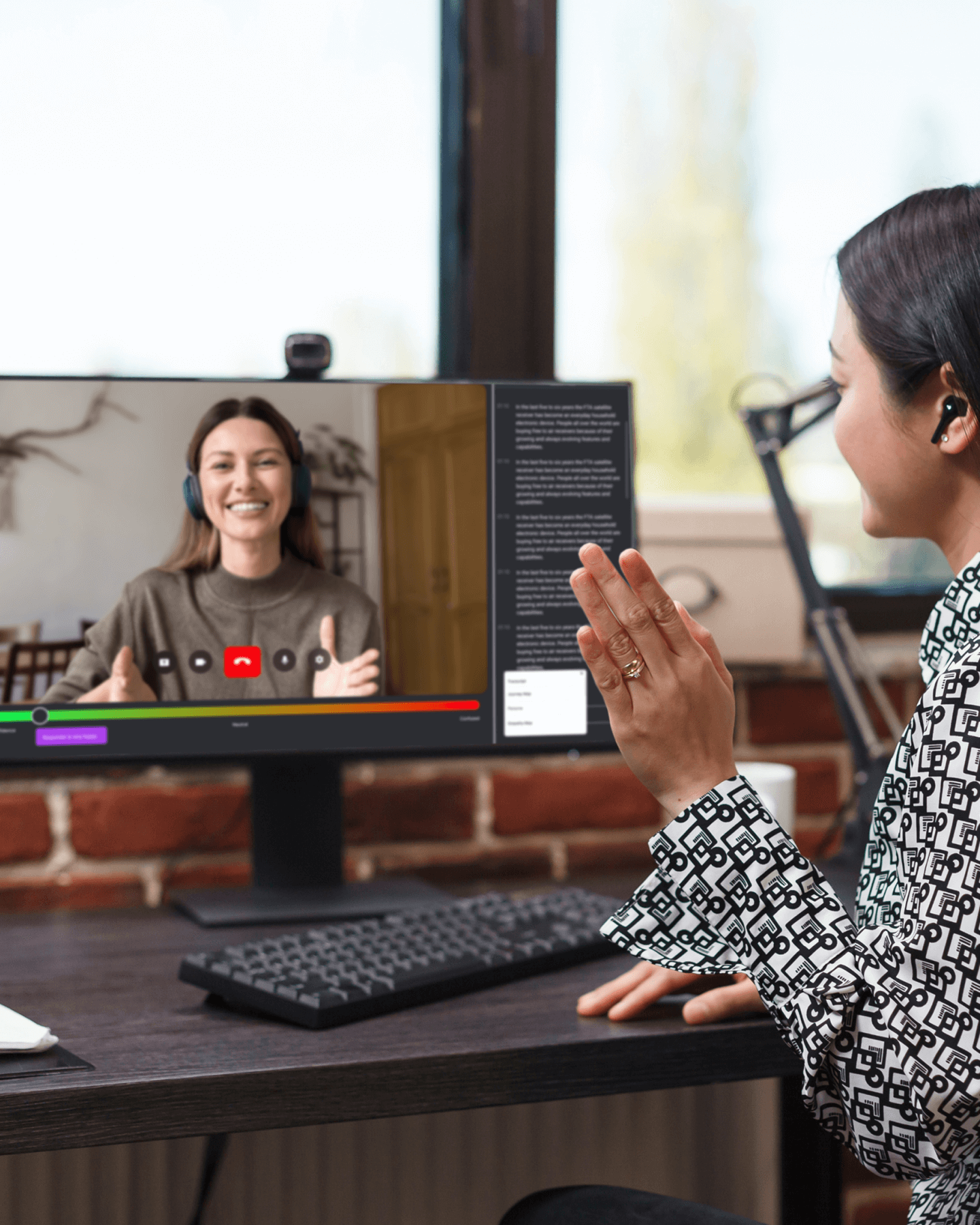
Researchers unexpectedly highlighted the need for psycho-portraits — AI-generated participant profiles capturing emotional patterns and communication styles during interviews. One researcher noted, “Understanding emotional context is often more valuable than the literal transcript.” This insight led to the development of an emotion recognition system to analyze vocal tone and facial expressions, providing deeper participant understanding. Testing revealed that 87% of researchers prioritized workflow integration over standalone functionality, such as integration with Miro and Mural, 79% valued real-time analysis during interviews, and 92% needed flexible export options for team collaboration.
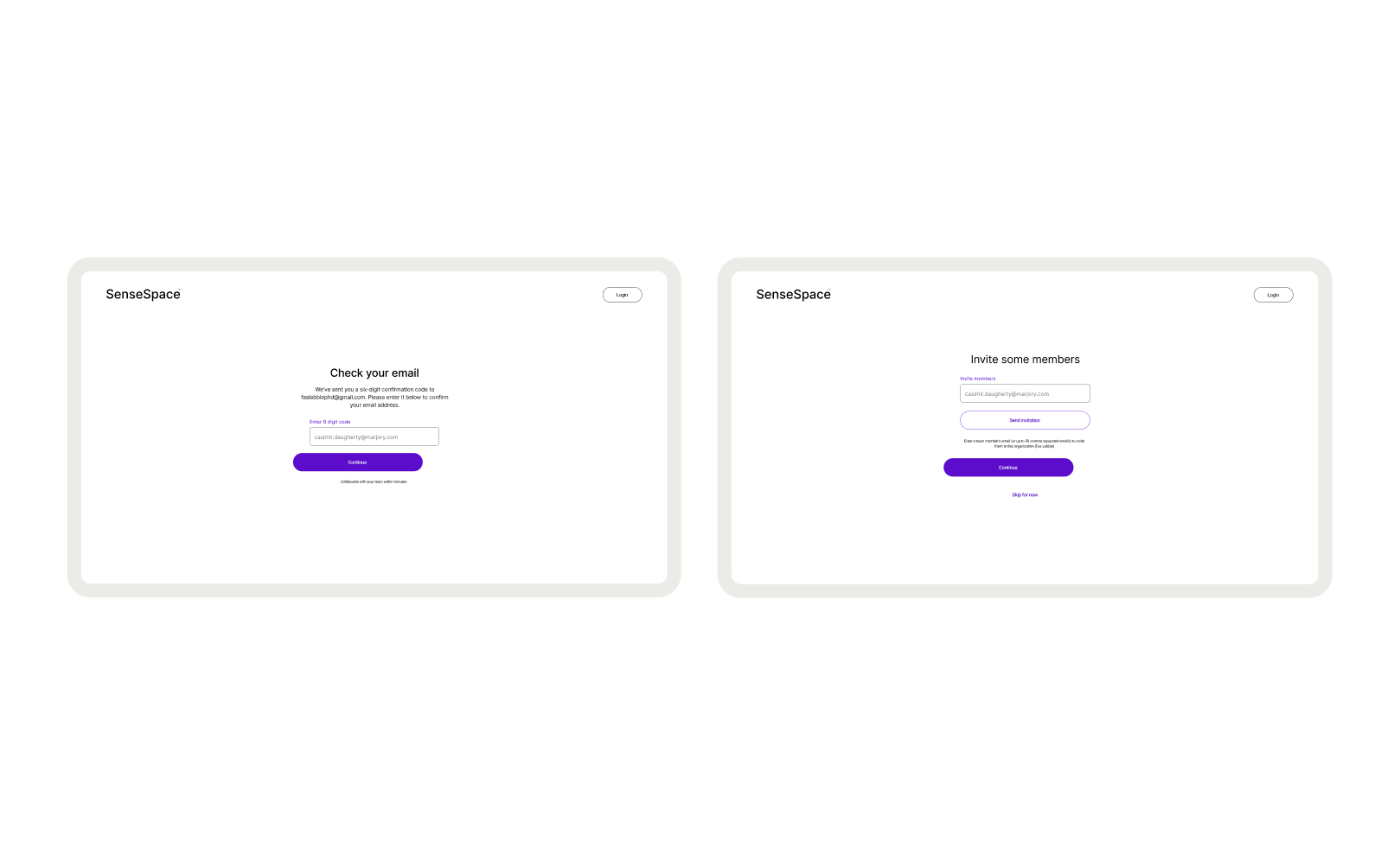
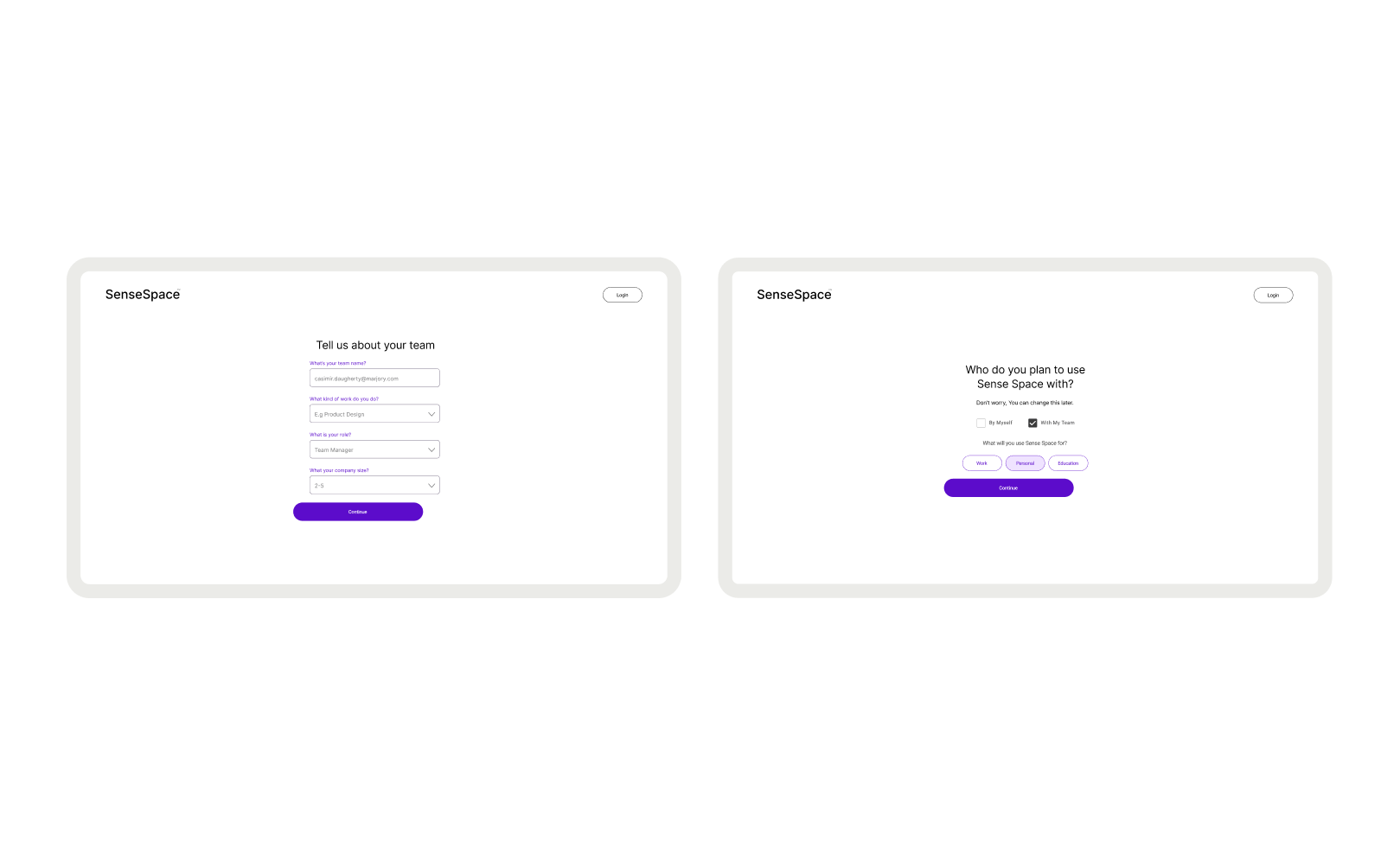
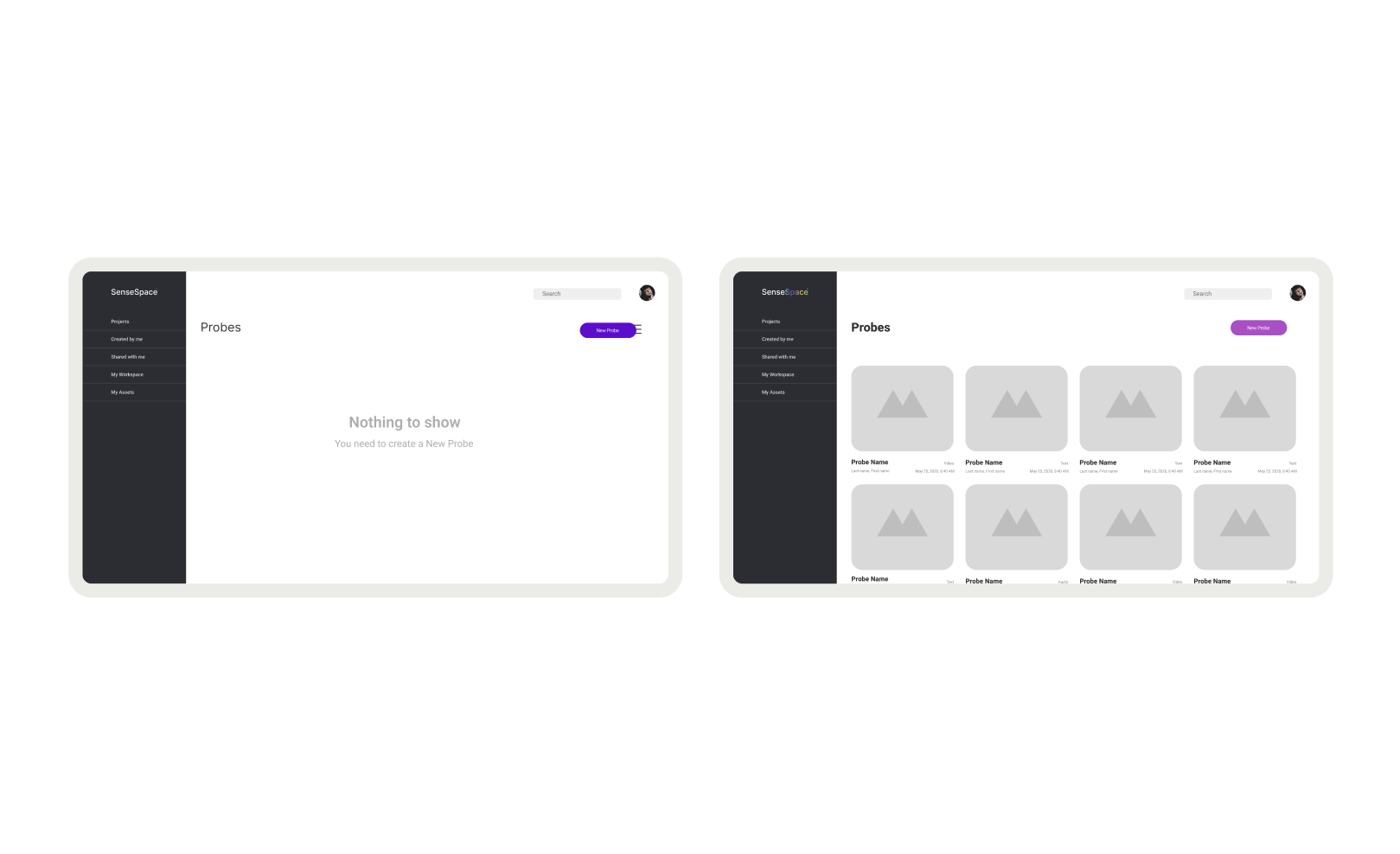


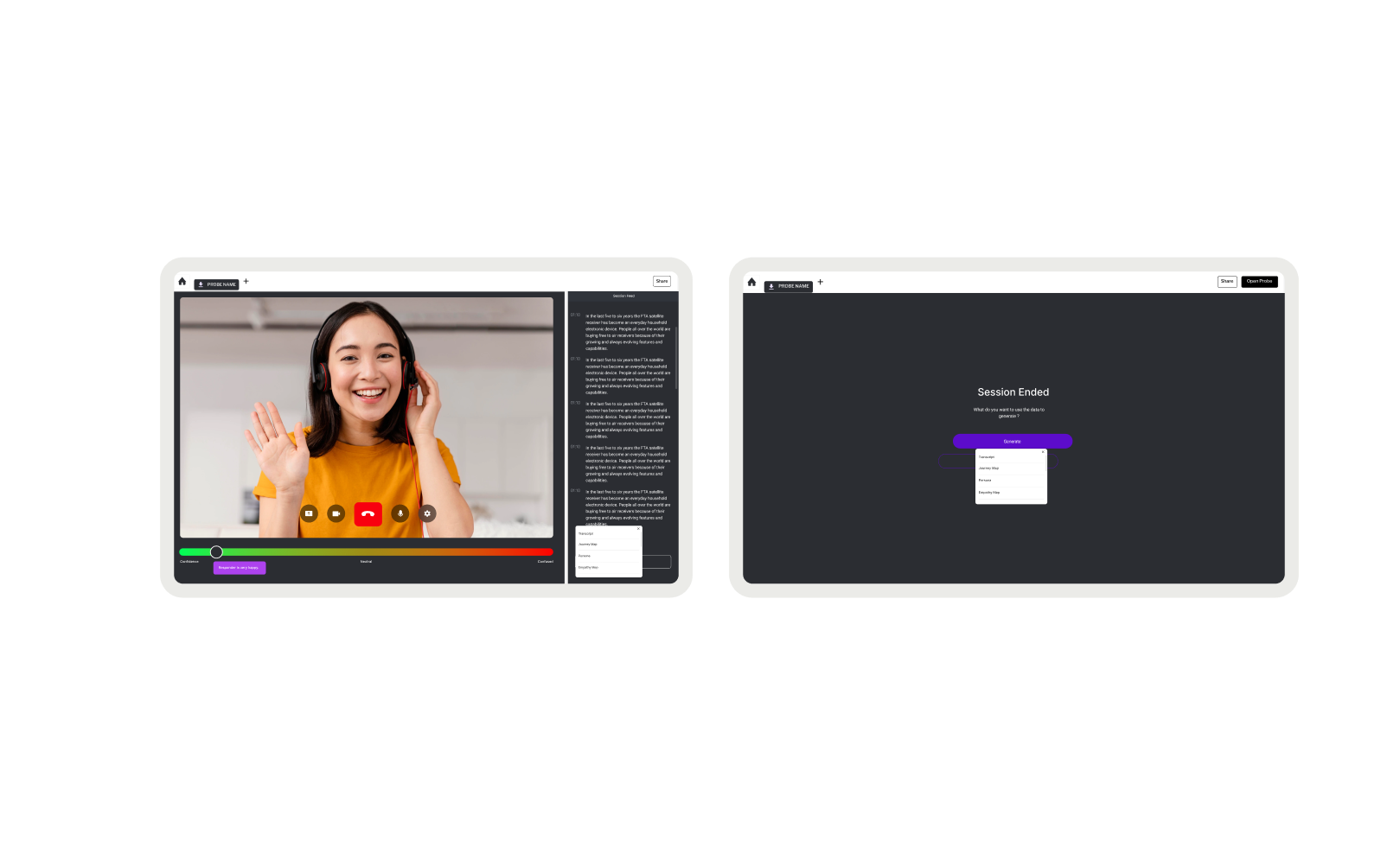

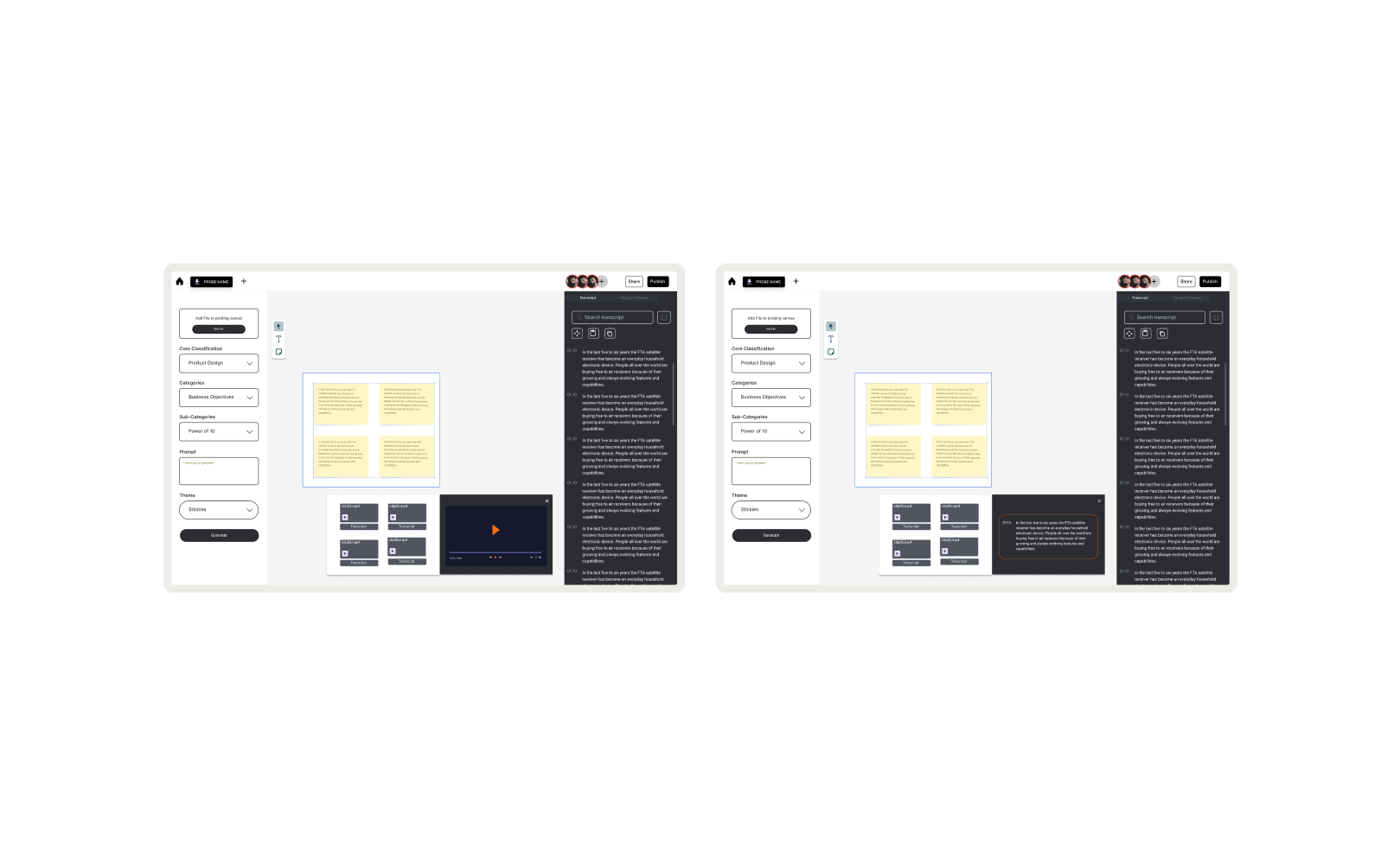
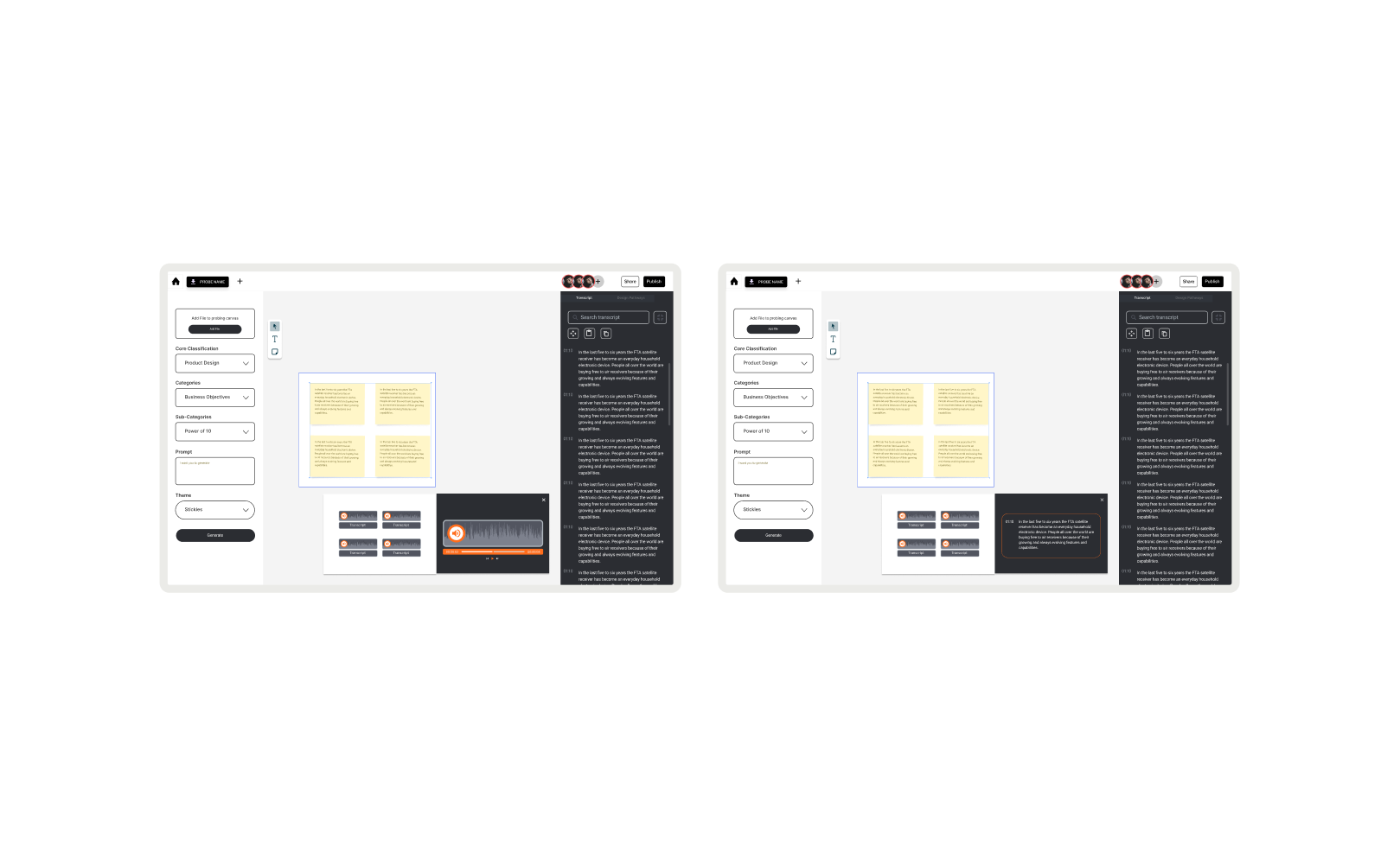
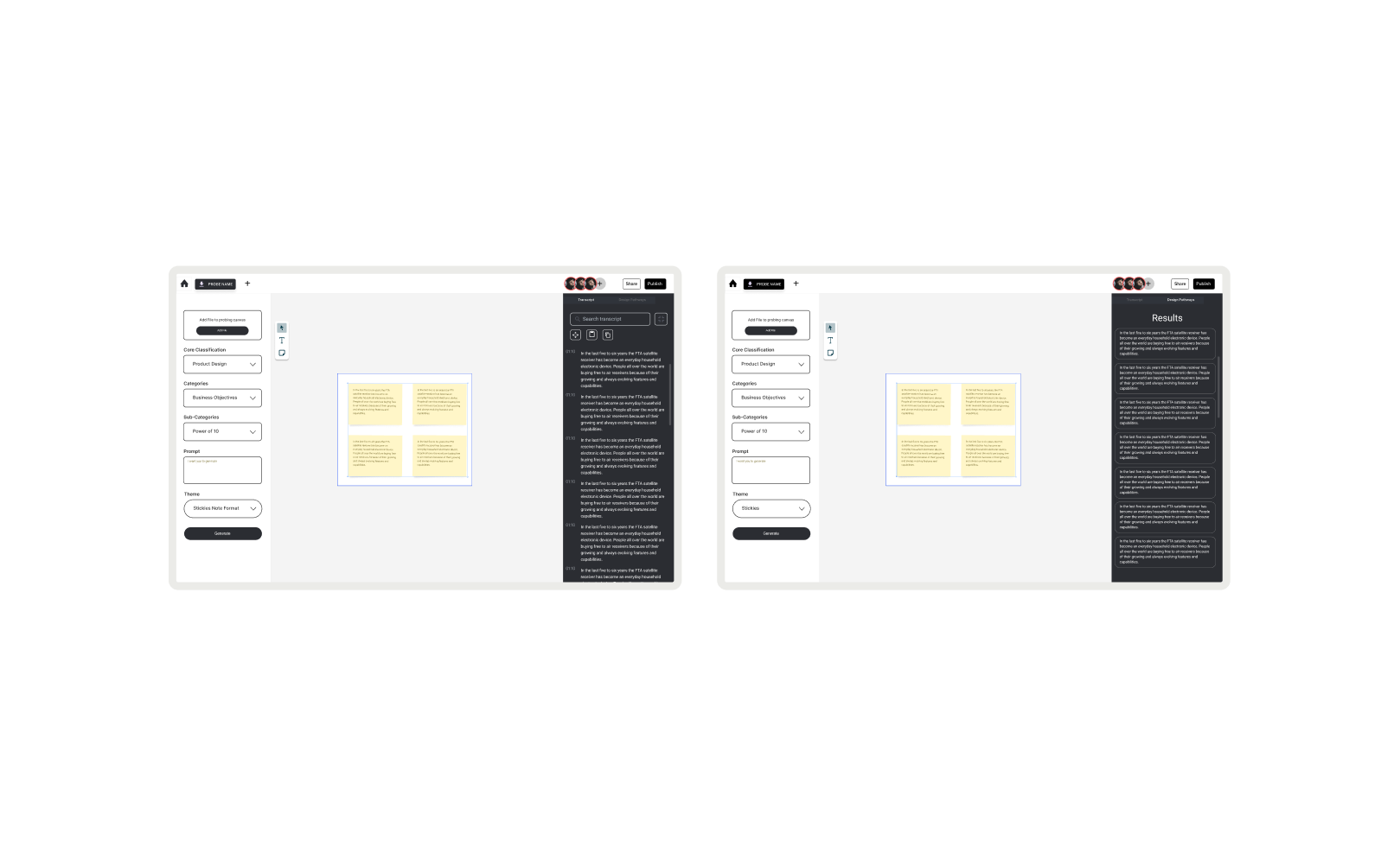
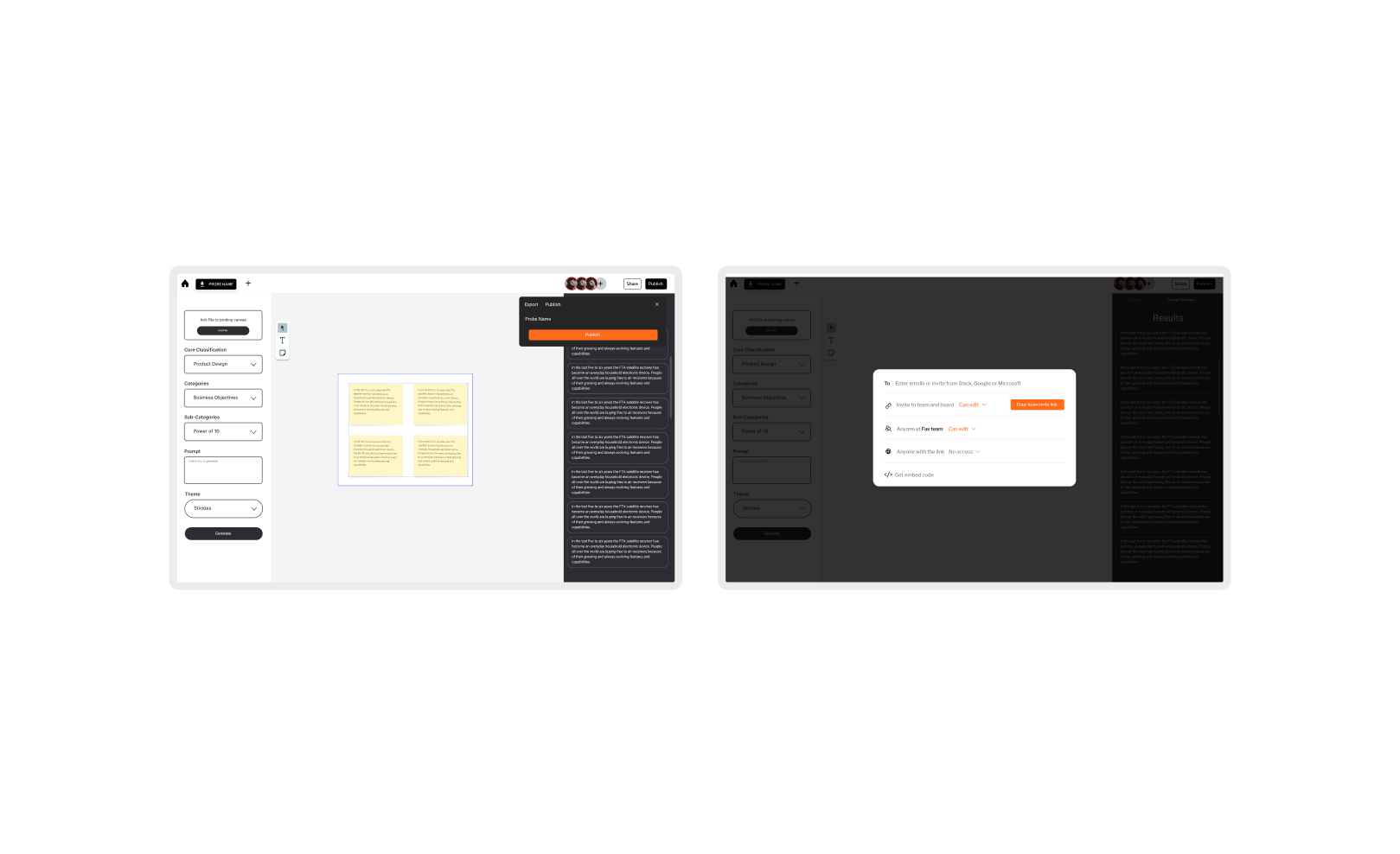
Design Interventions
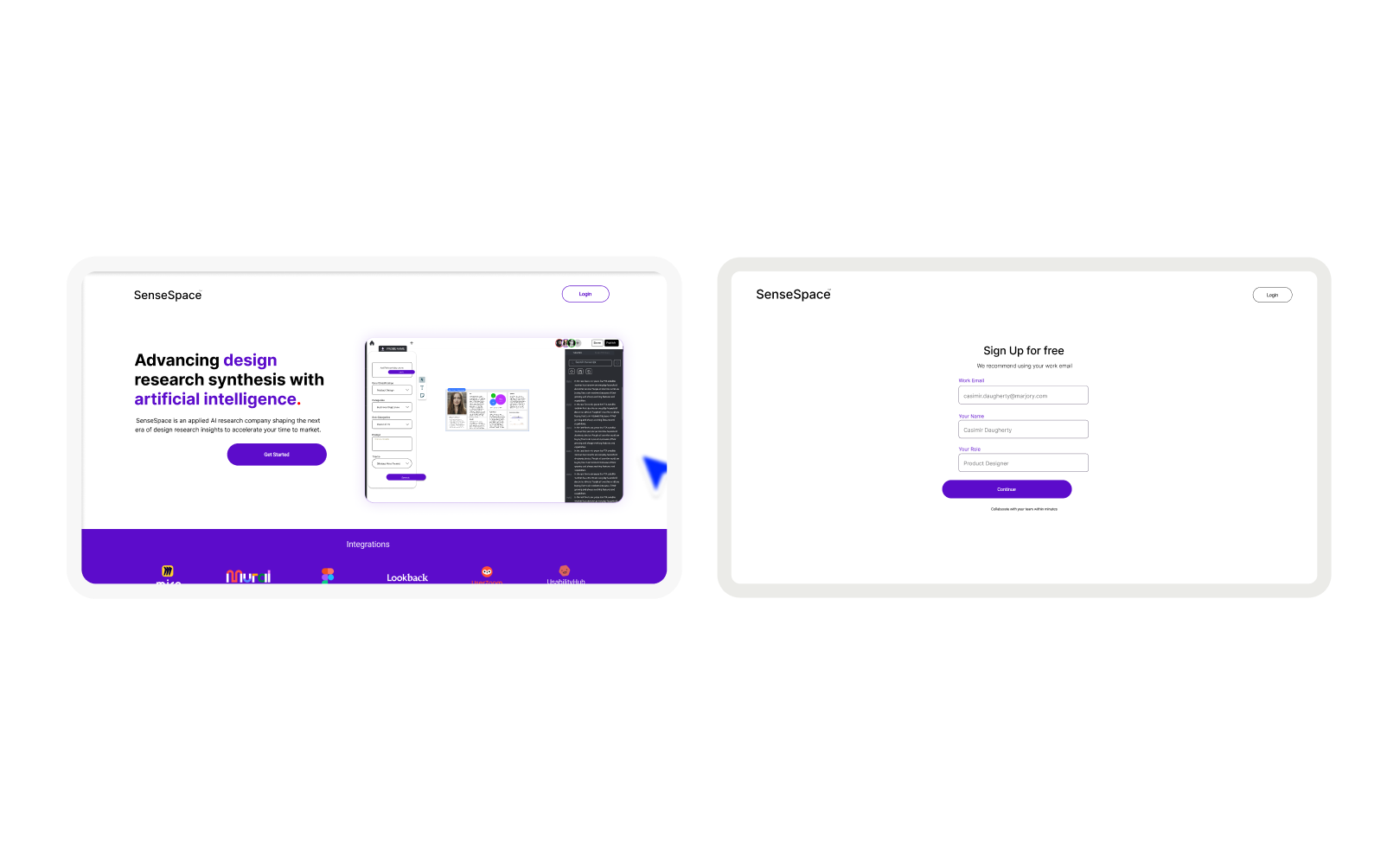
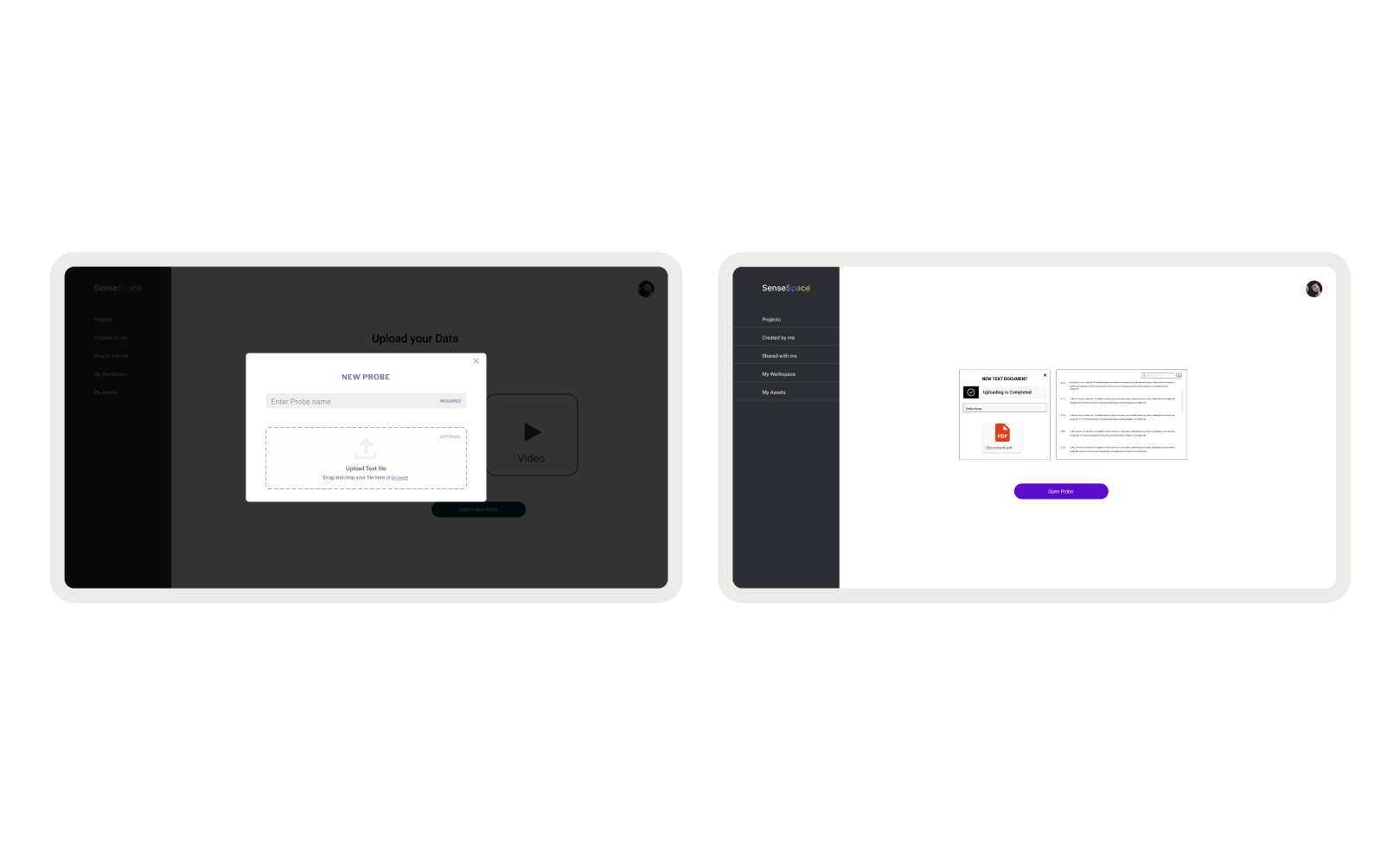
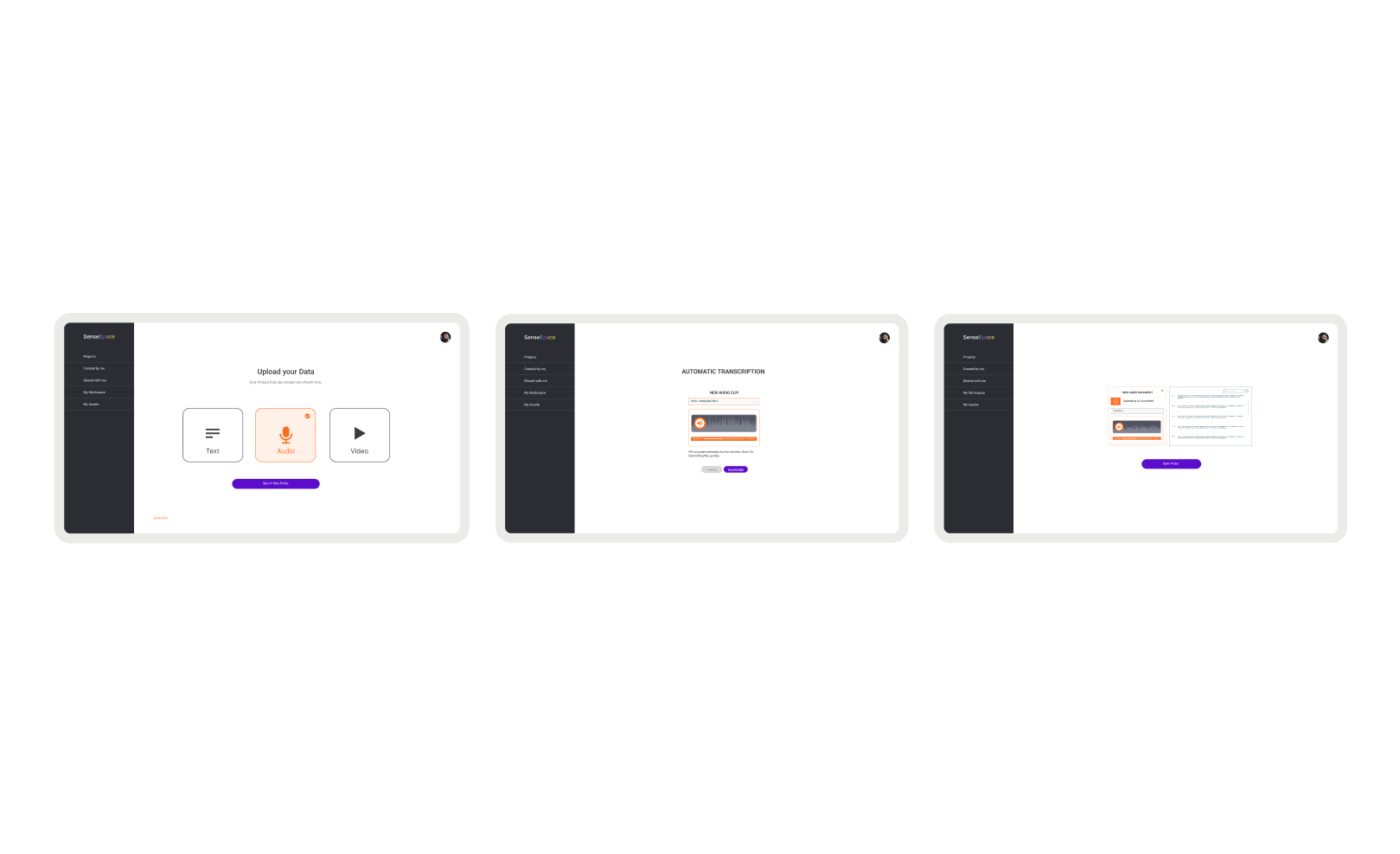
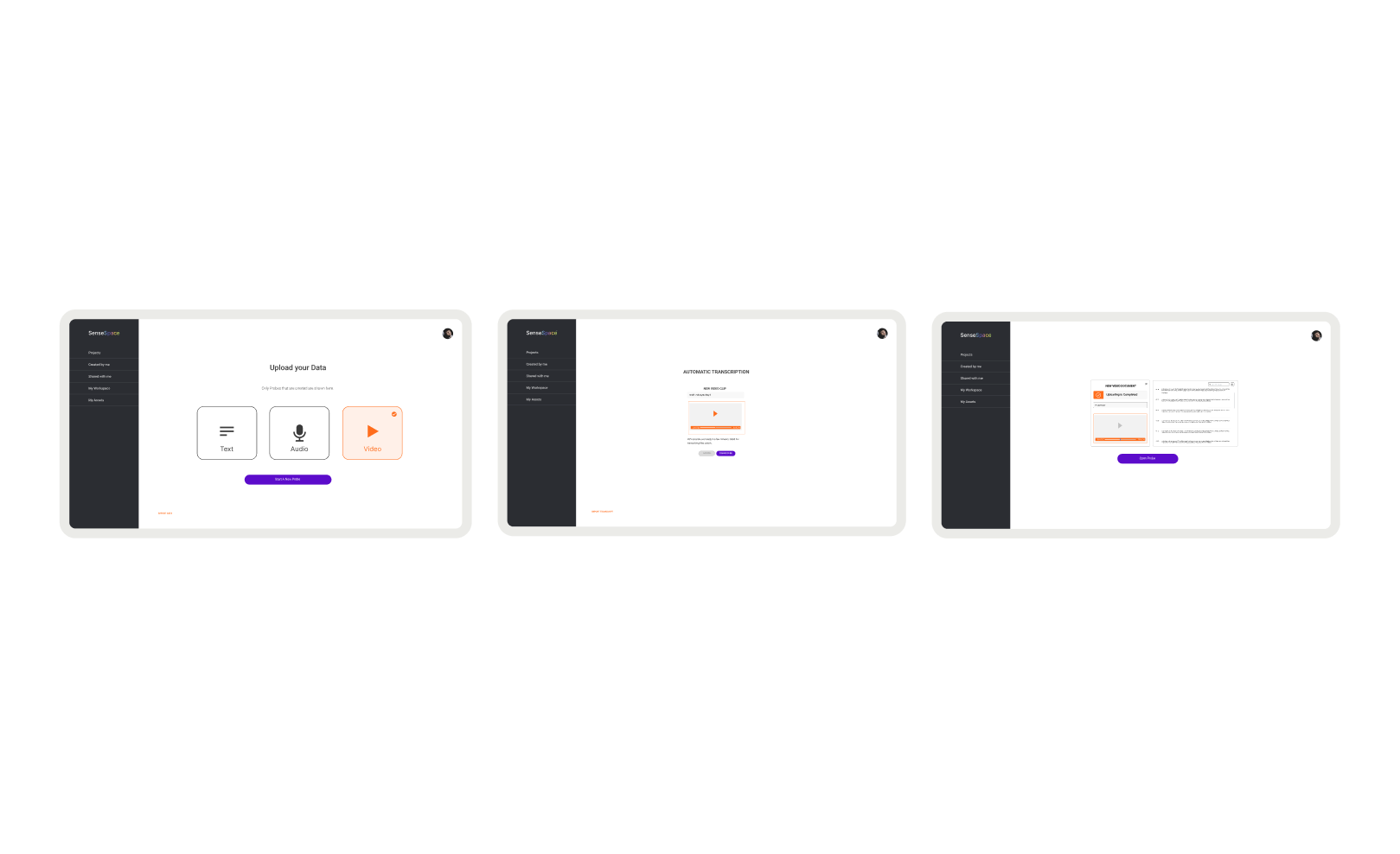
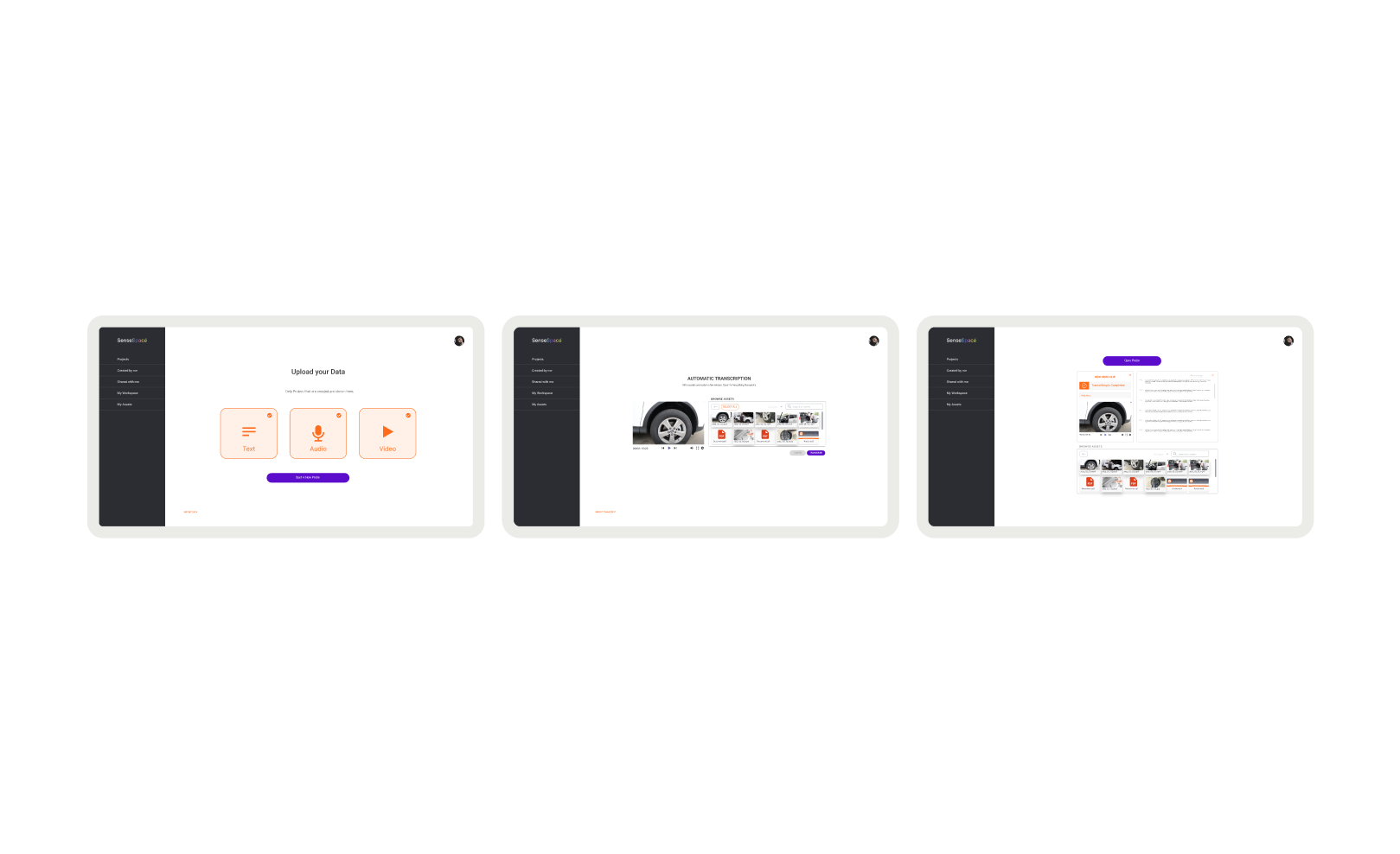
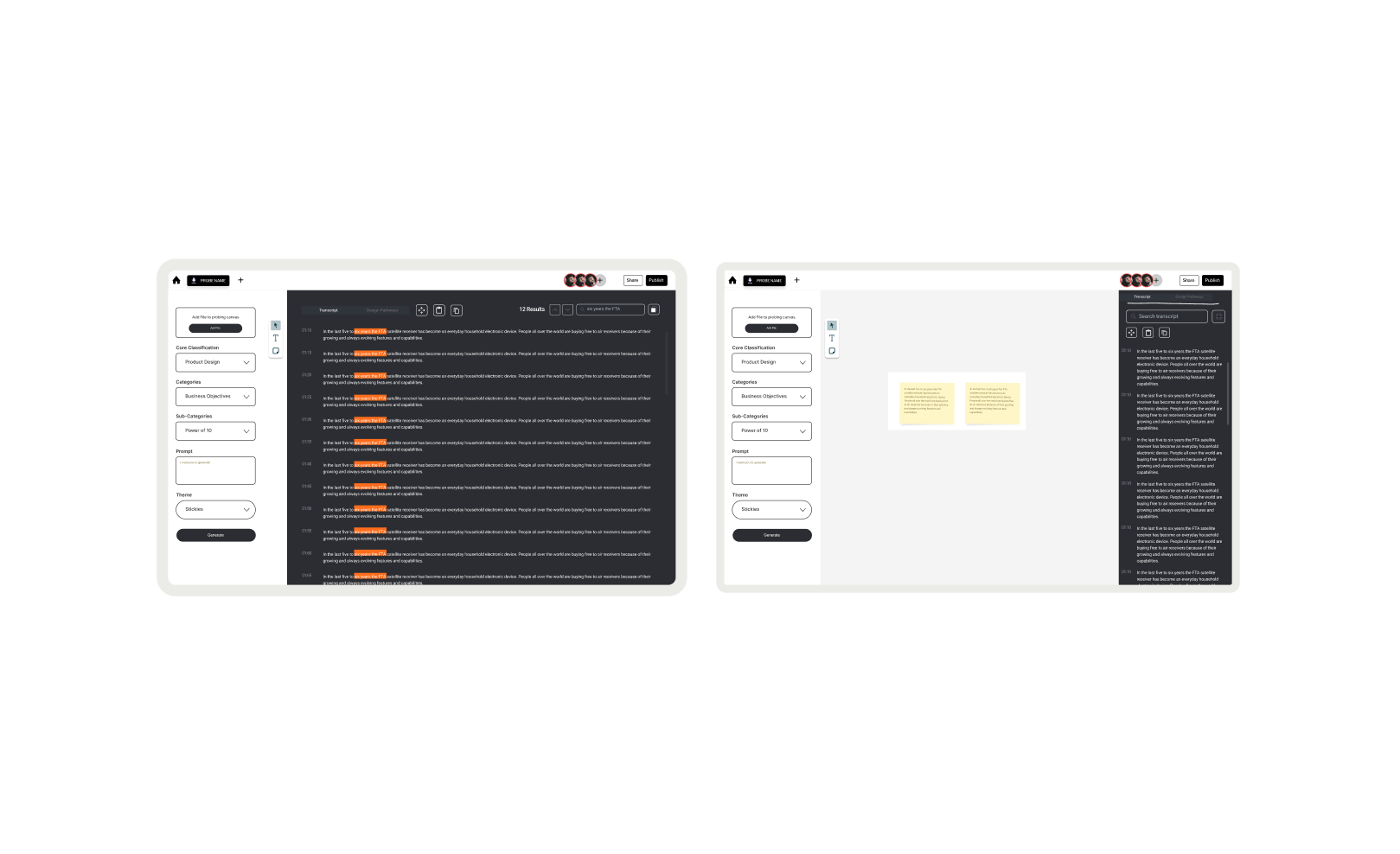
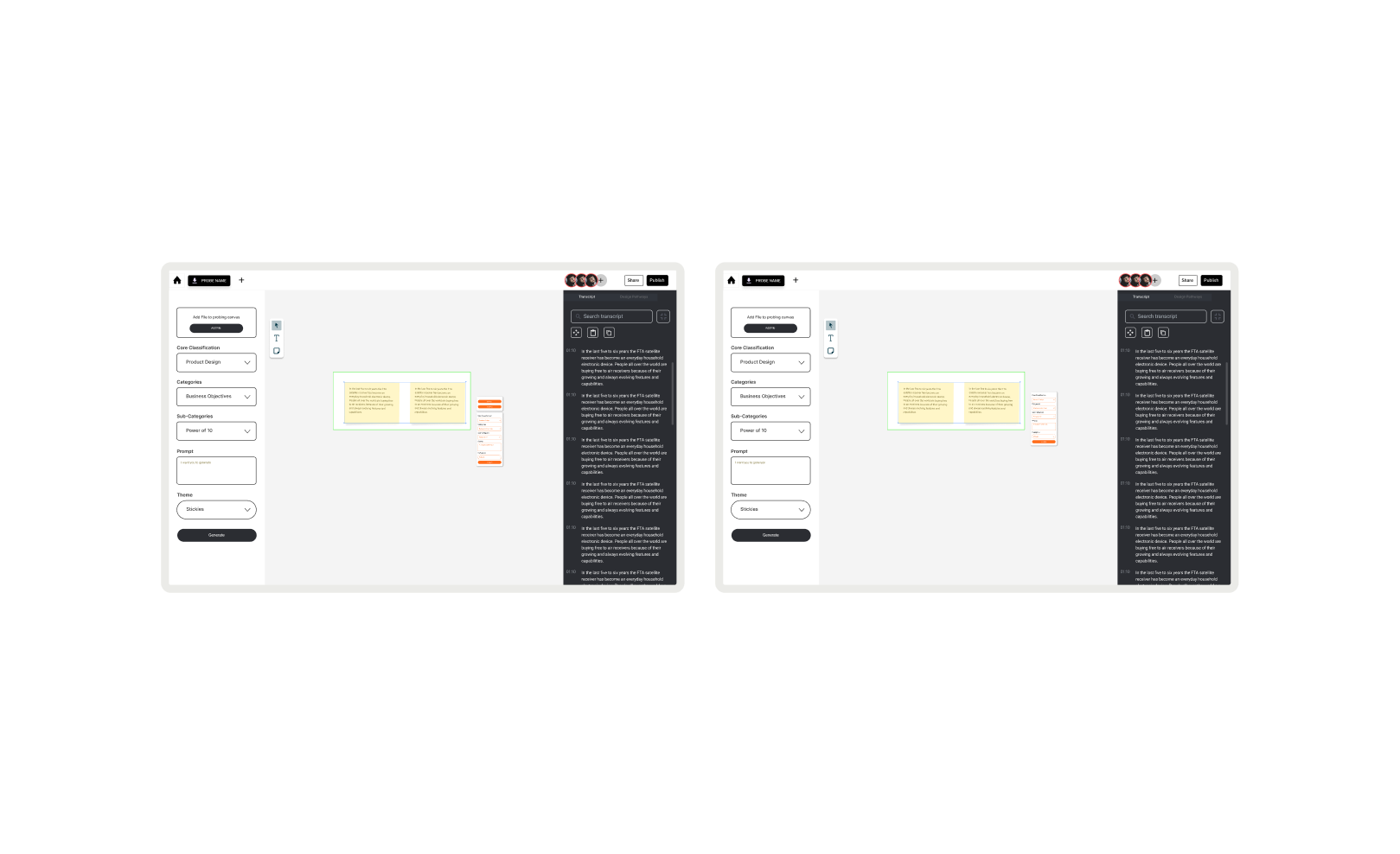
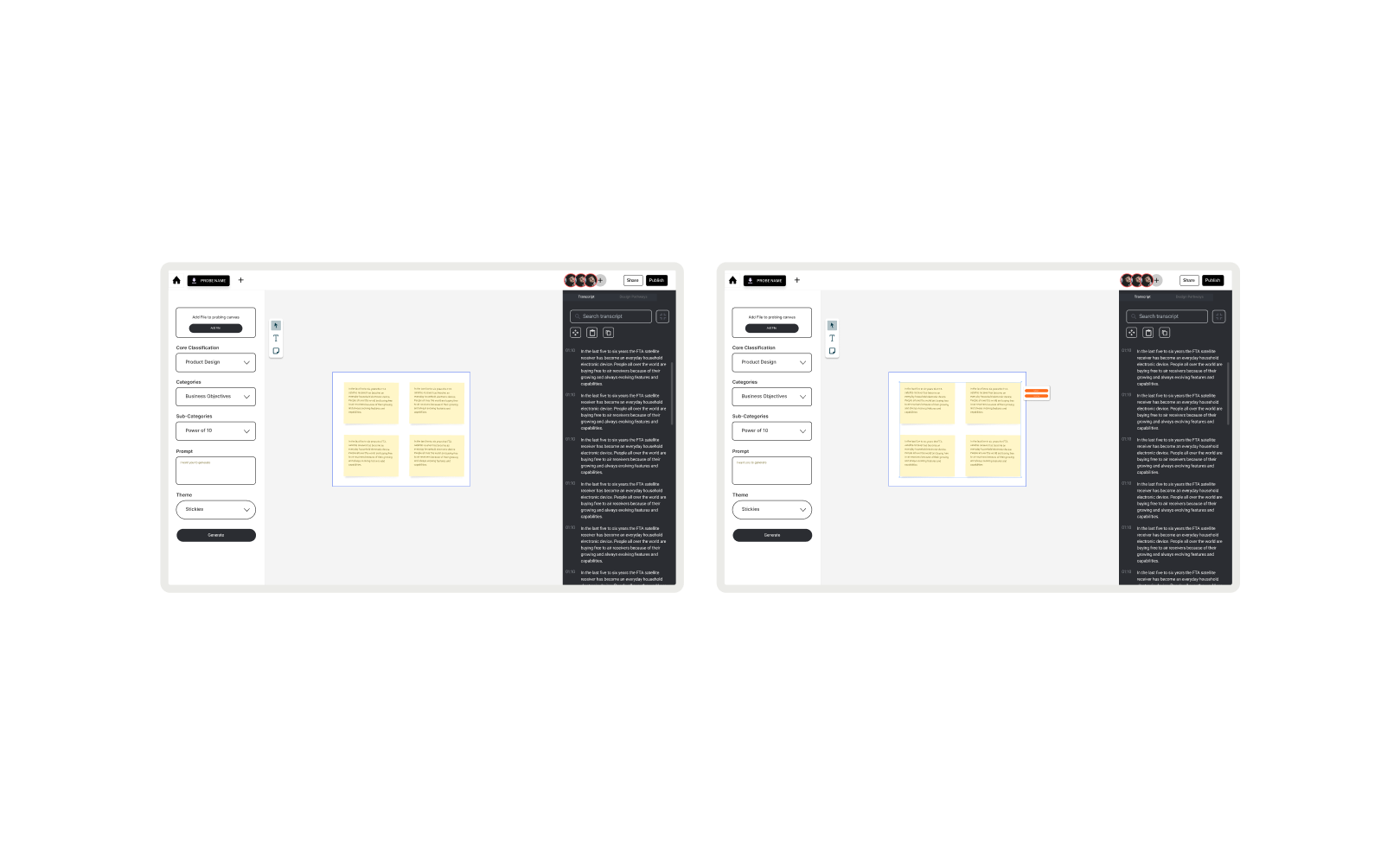
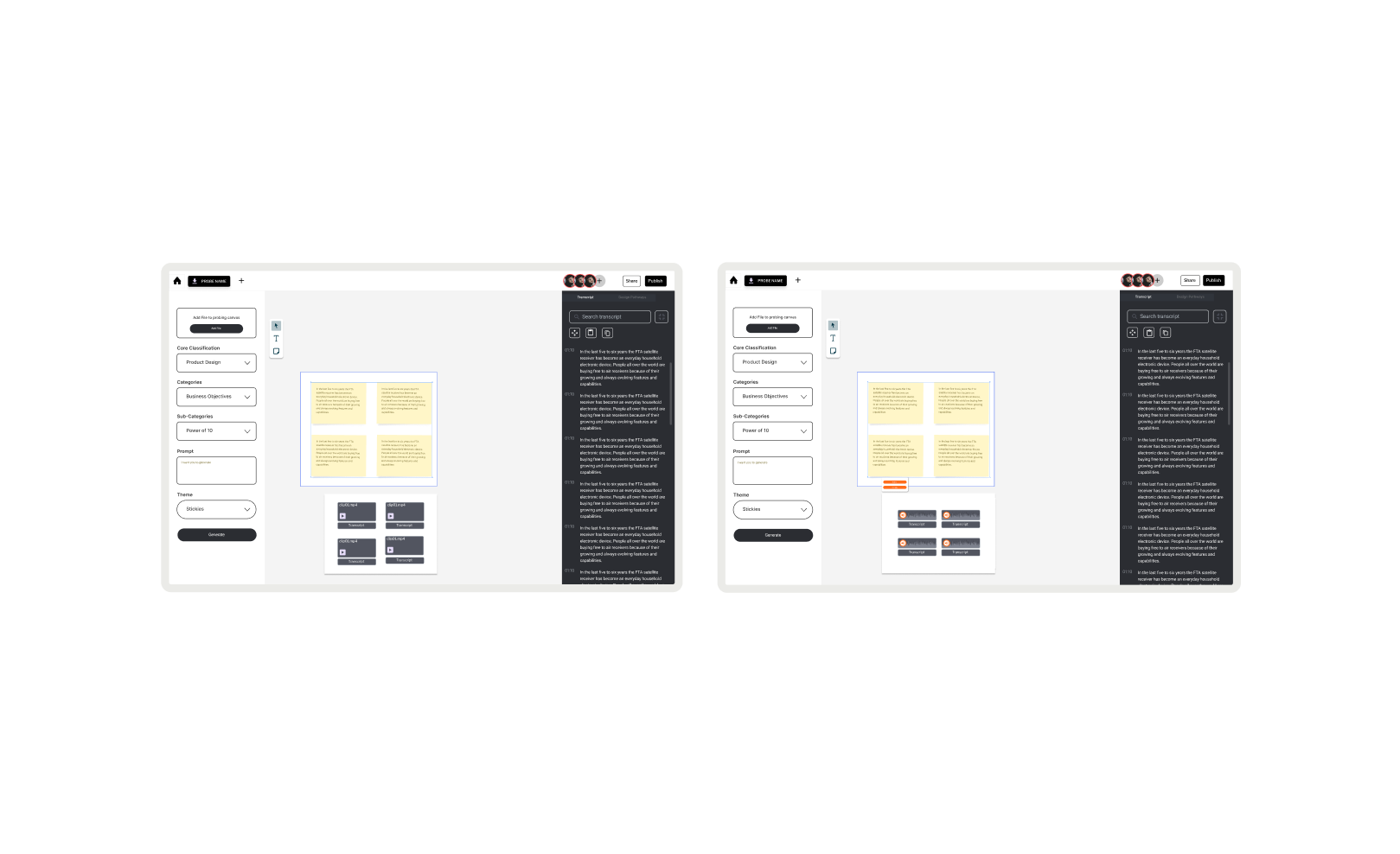
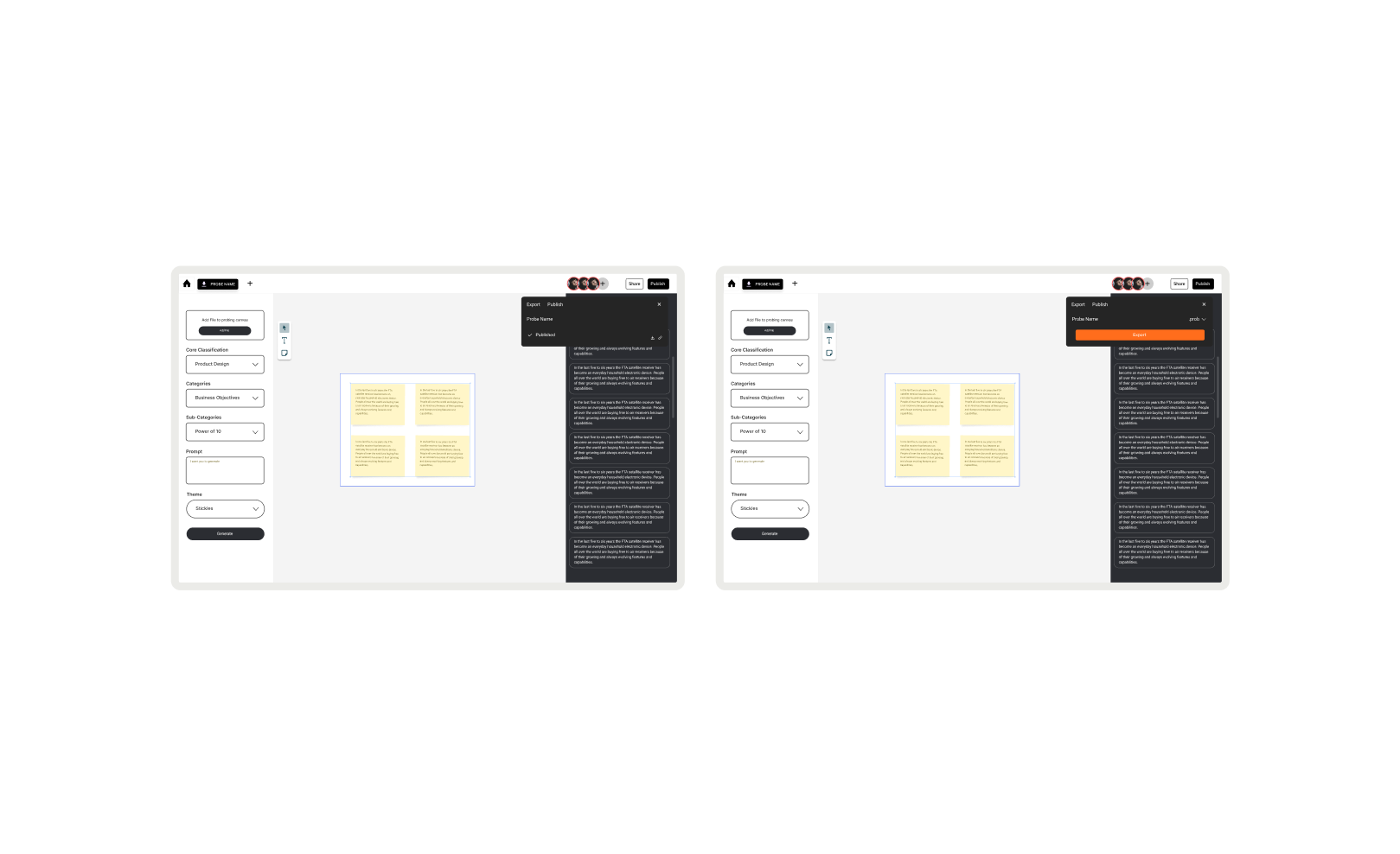
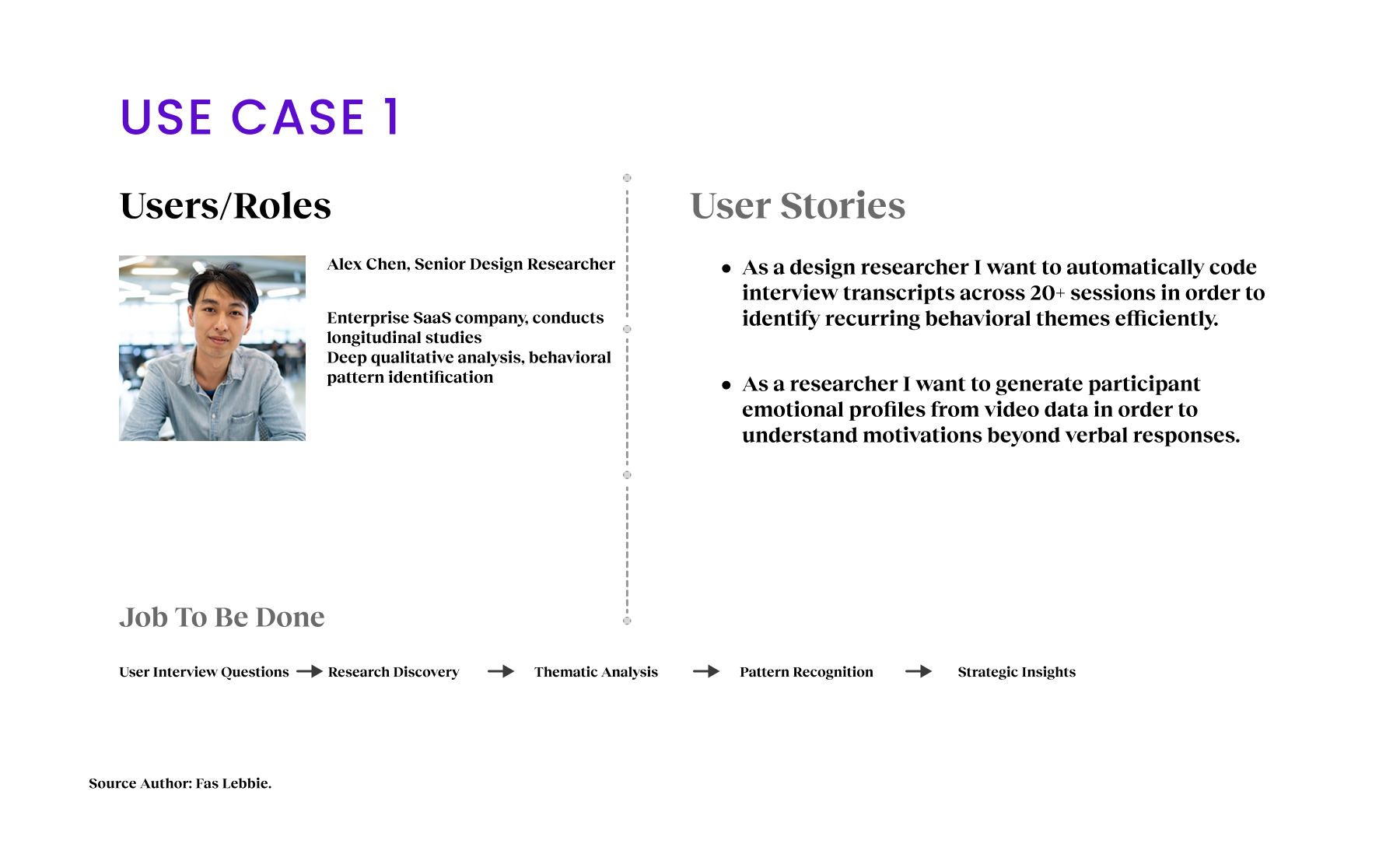
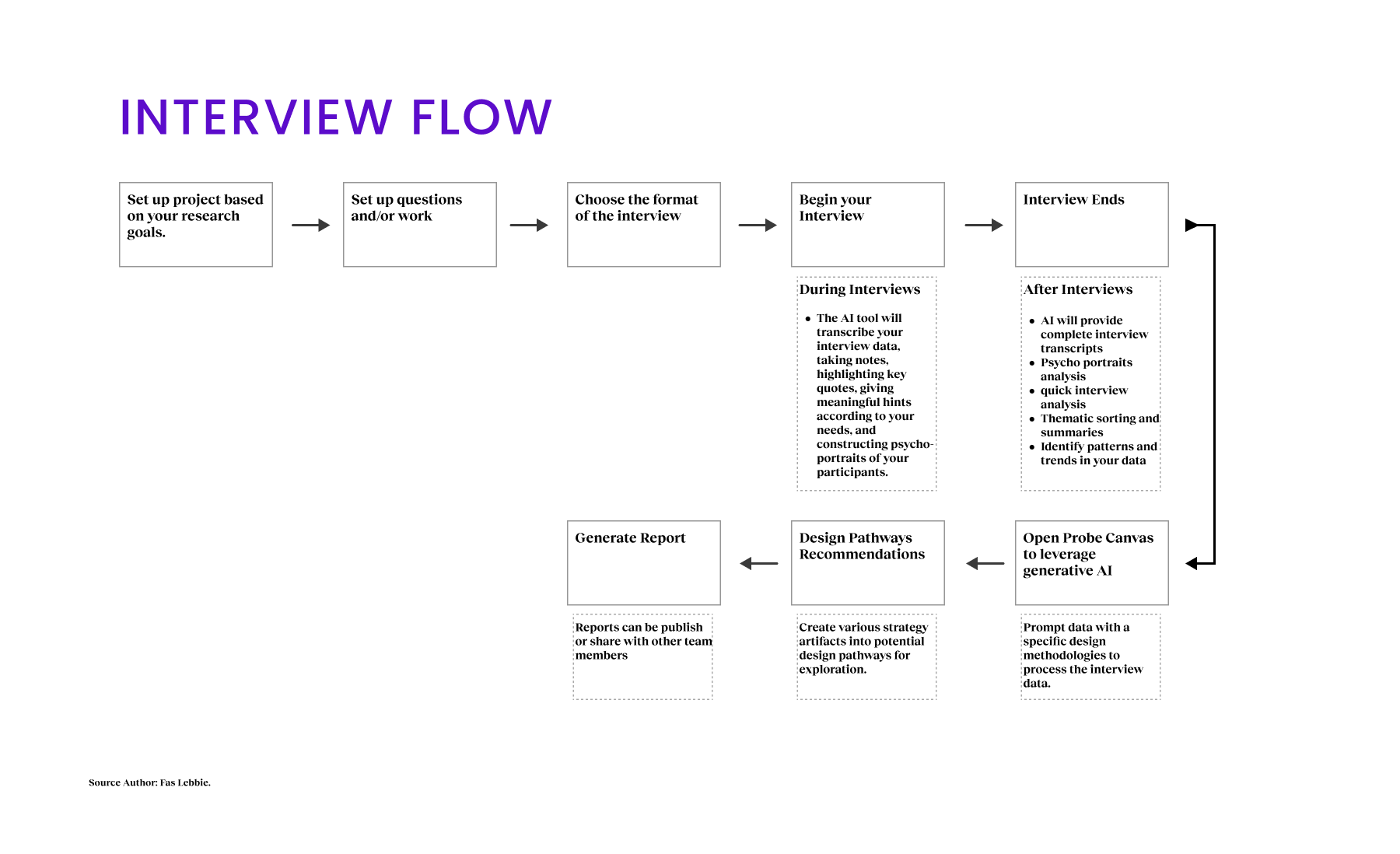
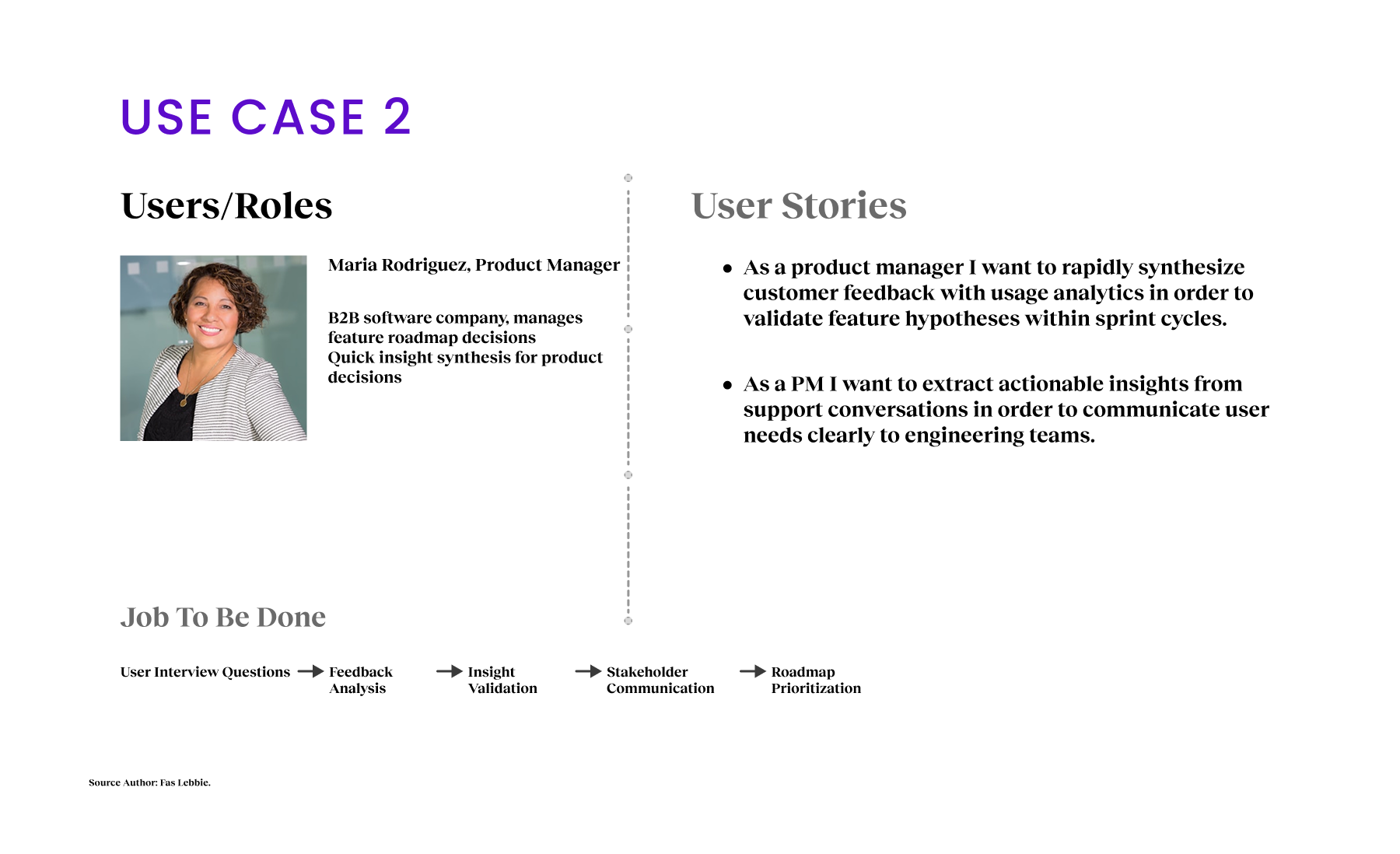
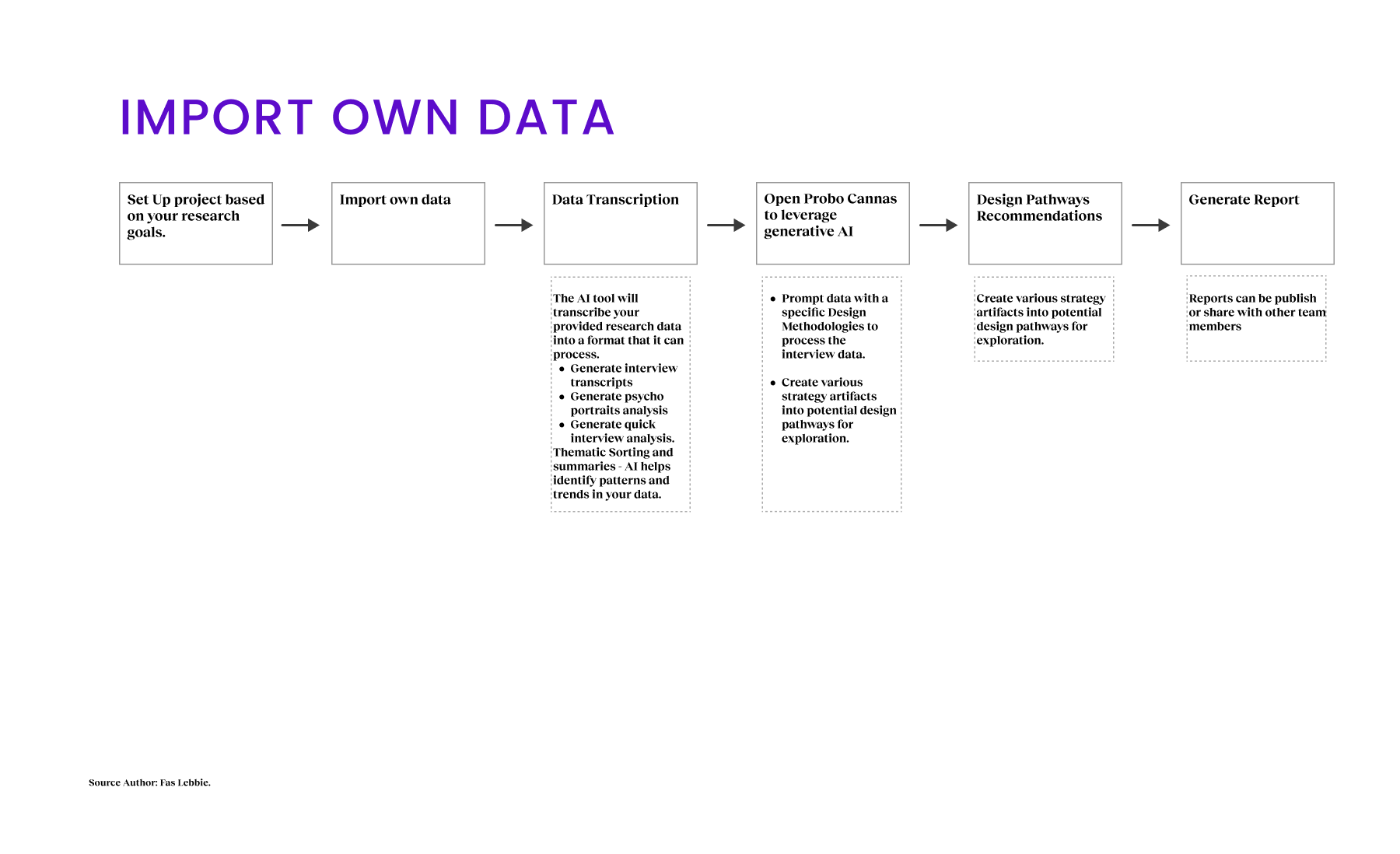
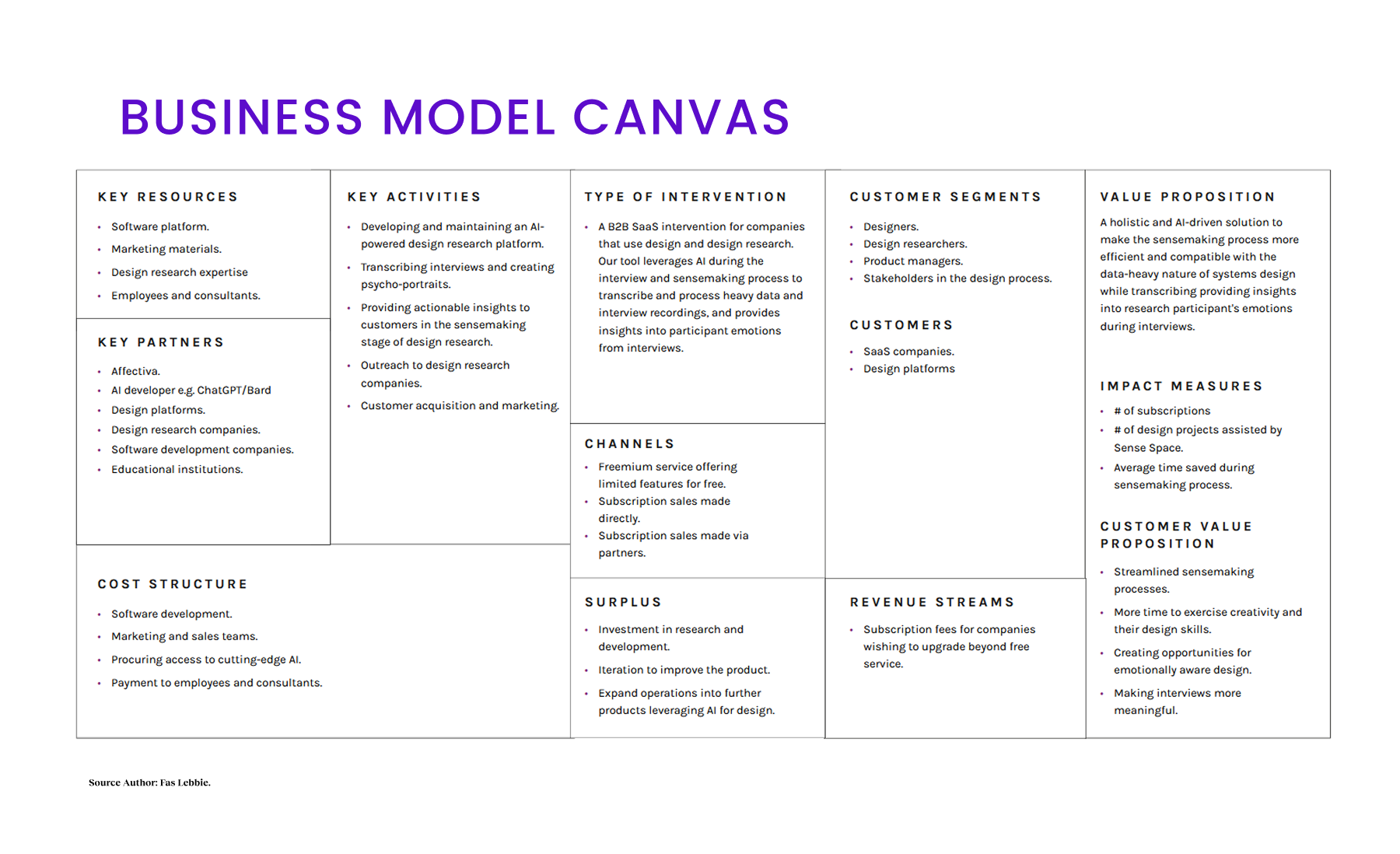
SenseSpace app streamlines the design research process by transforming how teams collect interview data and generate insights. Our intervention accelerates solution development by reducing analysis time from a week to just hours, using various design methodologies to sense make user interview data and generate insights. This approach helps teams move quickly from raw data to meaningful insights, addressing the core disconnect between engineering solutions and user needs. Rather than replacing researchers, SenseSpace augments their capabilities, allowing them to focus on strategic thinking instead of manual analysis.
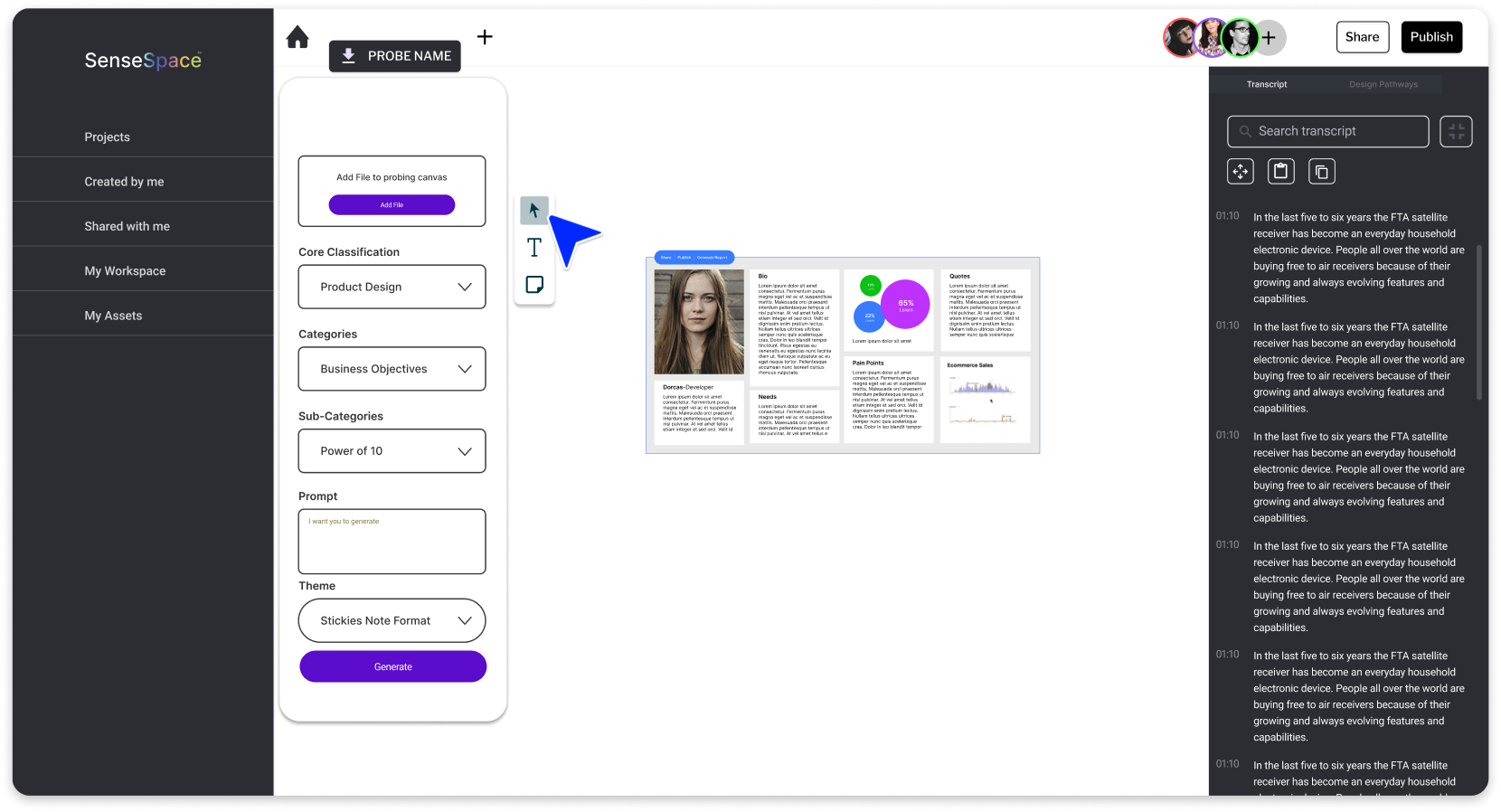
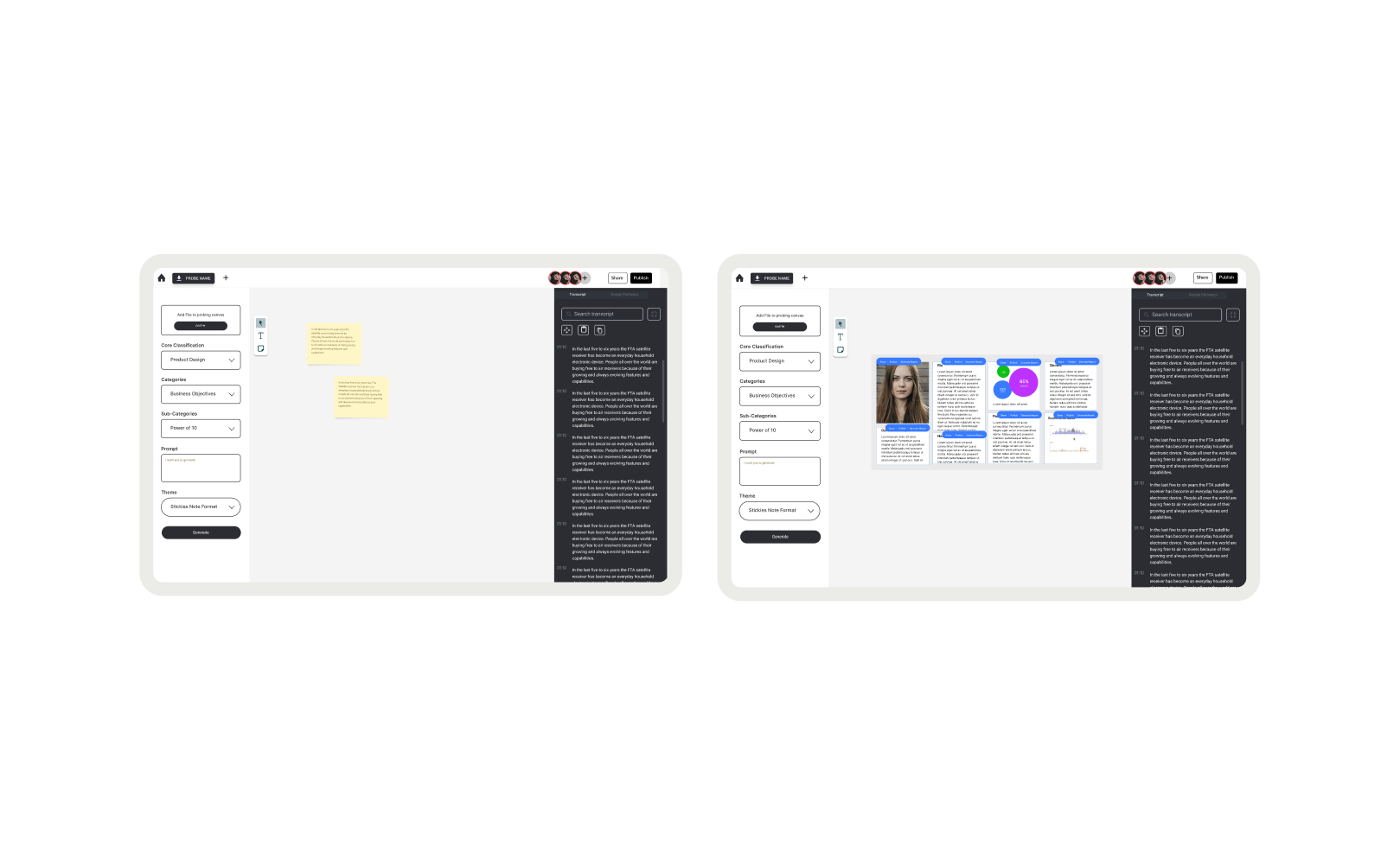
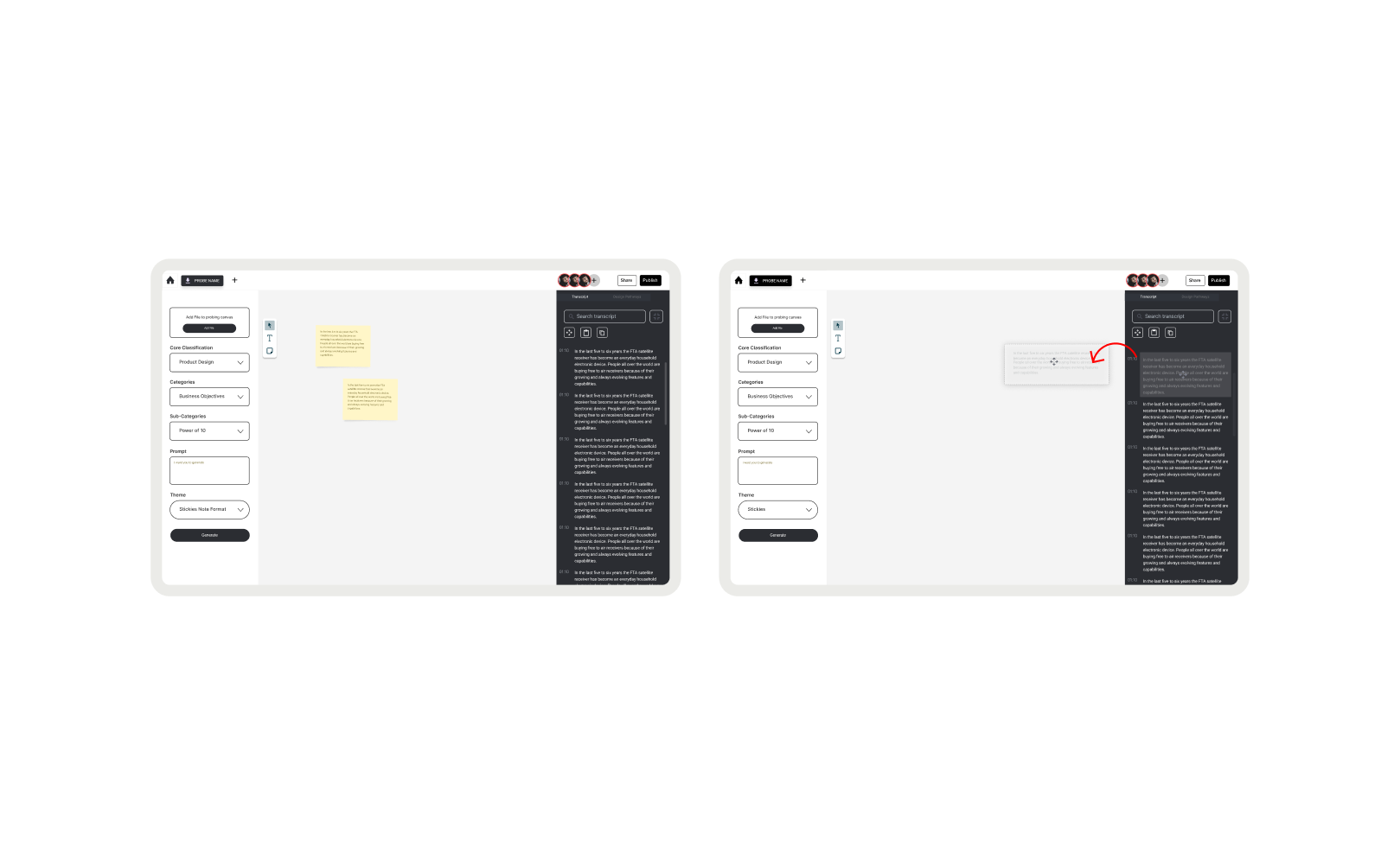
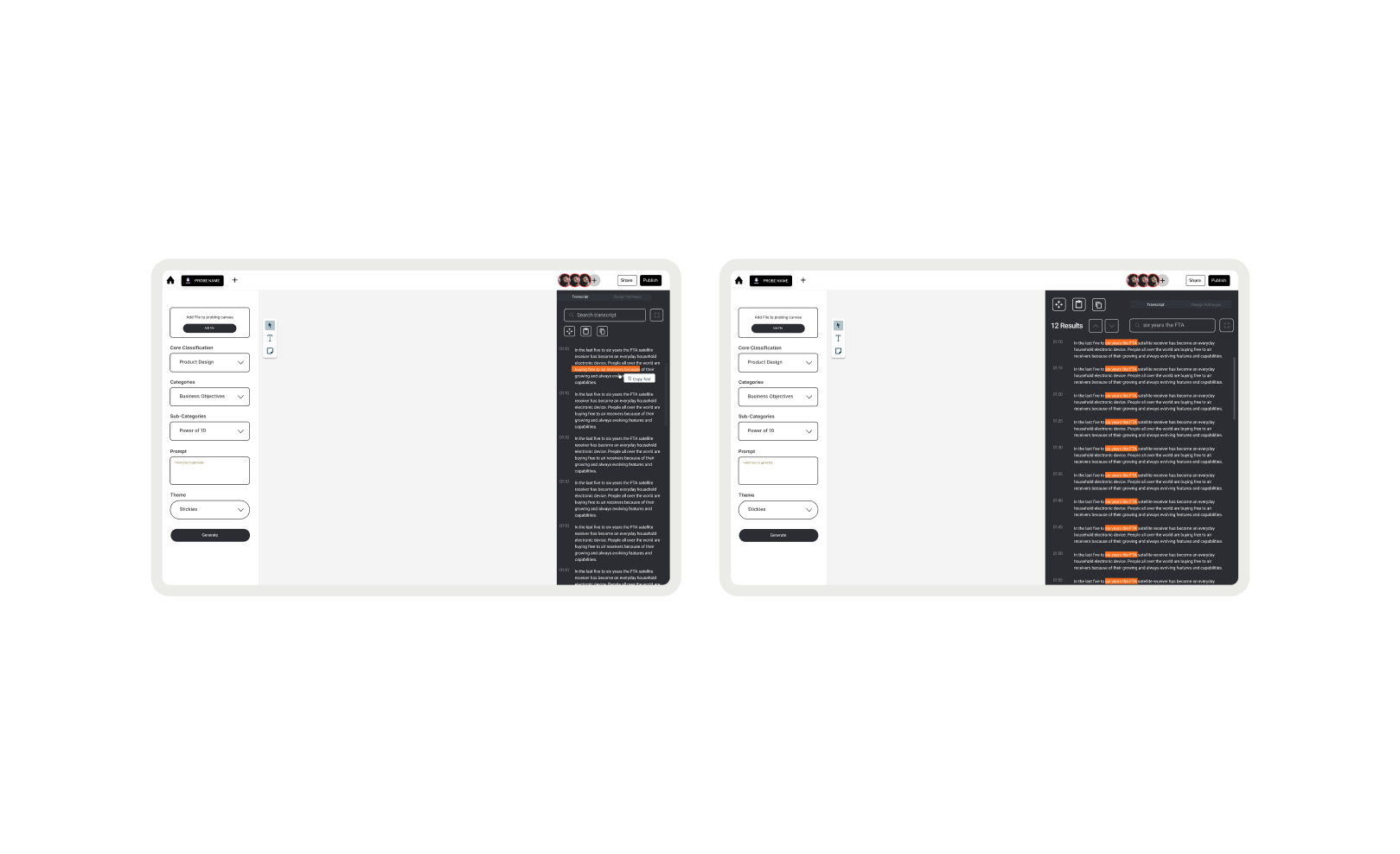
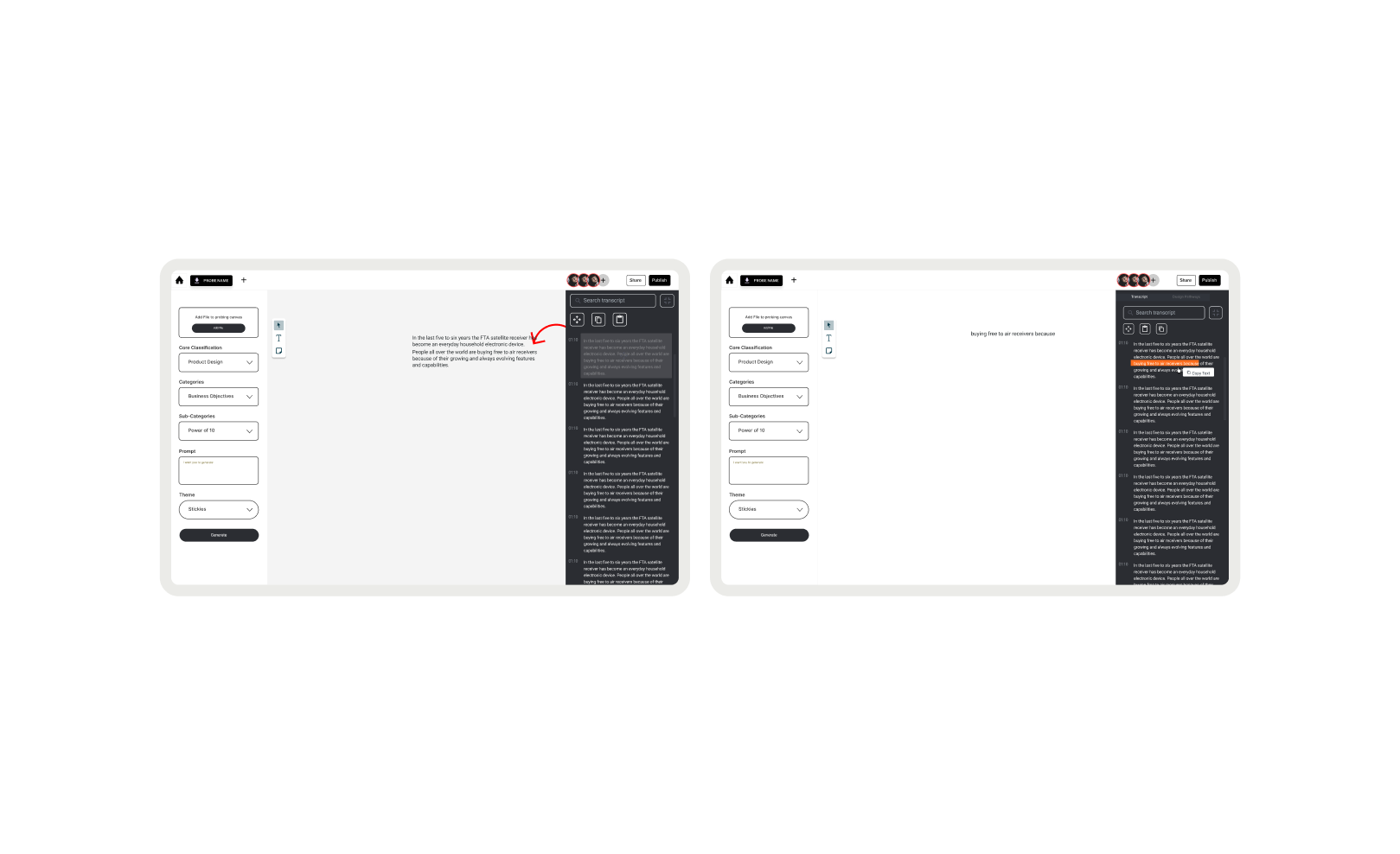
The canvas dashboard enables researchers to apply design methods to synthesize insights directly from transcript data.
Toolkit, Methods & Frameworks
The research process applied strategic frameworks across discovery and prototyping. User interviews revealed that designers spend 40% of project time on repetitive tasks and data sensemaking. Mixed-methods research categorized design methodologies by frequency of reuse within product design teams in big tech companies. Stakeholder mapping uncovered psycho-portrait opportunities, while feasibility studies identified suitable LLM models to power the solution.
Research Processing Time Reduction
Transformed week-long analysis cycles into hour-long processes, freeing designers to focus on strategic interpretation and creative problem-solving.
Design Methods in AI Glossary
Built a comprehensive taxonomy of design methodologies, establishing SenseSpace as an authoritative resource for AI-powered research synthesis across multiple disciplines.
Reflections & Impact
SenseSpace came from recurring problems faced in managing design teams in big tech environments, specifically the time spent on reviewing interview transcripts and notes. At its core, the intervention aims to reduce the time spent on tedious analysis tasks, freeing designers to focus on creative interpretation and strategic thinking. Integrating familiar design methodologies through our growing glossary of over 100 design methods and frameworks can enable designers to leverage AI-identified design opportunities that would have otherwise remained buried in transcripts, leading to more nuanced solutions.
Beyond immediate efficiency gains, this intervention begins to lay a foundational shift in how designers interact with AI. By positioning AI as a new design material rather than merely a tool, we’re helping bridge the persistent gap between technical feasibility and user desirability. As AI capabilities evolve, this foundation will enable design researchers to harness increasingly sophisticated computational tools while maintaining their essential human perspective.
Next Steps
- Create a public AI design methods glossary to share the 100+ documented frameworks and support wider adoption in the design research community.
- Integrate SenseSpace into design school curricula through pilot programs at institutions like CMU, Parsons, and MIT to gather real-world academic feedback.
- Launch beta version with Miro and Notion integrations for the 50+ design teams already engaged, focusing on testing real-time insights and psycho-portraits.
- Publish a white paper and digital showcase to share speculative research outcomes, attract funding, and influence the AI + design research field.