
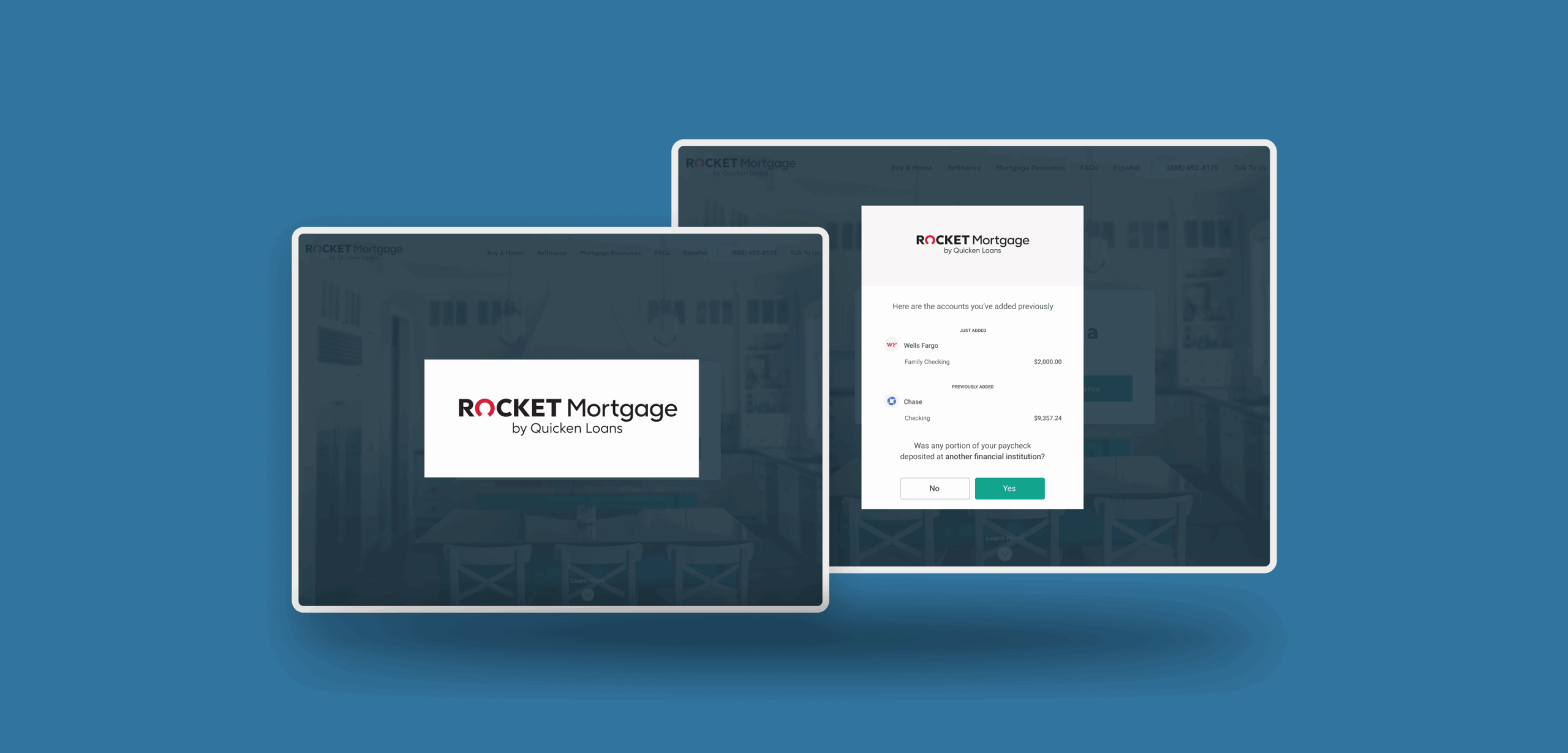

Overview
Rocket Mortgage’s digital Verification of Income and Employment (VOIE) system transforms the lending industry by making income verification 3x faster through intuitive design and smart automation. Our solution empowers both traditional employees and gig workers to seamlessly verify their income while giving loan officers reliable, real-time data. Through human-centered design and TX Verify integration, we achieved a 16% increase in borrower completion rates and reduced verification time by 5 minutes. The reimagined system handles complex scenarios like multiple income streams while maintaining strict security and compliance standards.
Research & Design
Product Design · UX strategy · Design Research · API Design · Consumer banking experiences
- Duration: January - July 2020
- Partners: Rocket Mortgage and TX Verify
- Team: Fas Lebbie, John Adams
Confidentiality: Some metrics and details have been adjusted while preserving the core design story to protect sensitive information.

My Role
Led stakeholder interviews and rigorous user testing to craft UX strategies, improving fragmented financial verification processes into streamlined, inclusive, and high-converting digital borrower workflows.
Designed end-to-end verification systems integrating API-based banking data and automated document flows, balancing user experience with compliance requirements.
Problem Context
In today’s lending landscape, income verification remains a major bottleneck. Despite widespread digital banking, Rocket Mortgage’s process was still complex and slow. The challenge was especially difficult for the 98 million U.S. workers paid through third-party providers, as it added layers of data and verification complexity. Borrowers, particularly gig workers and the self-employed, found income proof confusing and unreliable. Loan officers spent hours chasing documents and trying to make sense of inconsistent formats. Traditional systems were unable to keep pace with changing work patterns or user expectations. Security and compliance requirements added further difficulty, demanding a solution that ensured both speed and regulatory accuracy.
My Approach
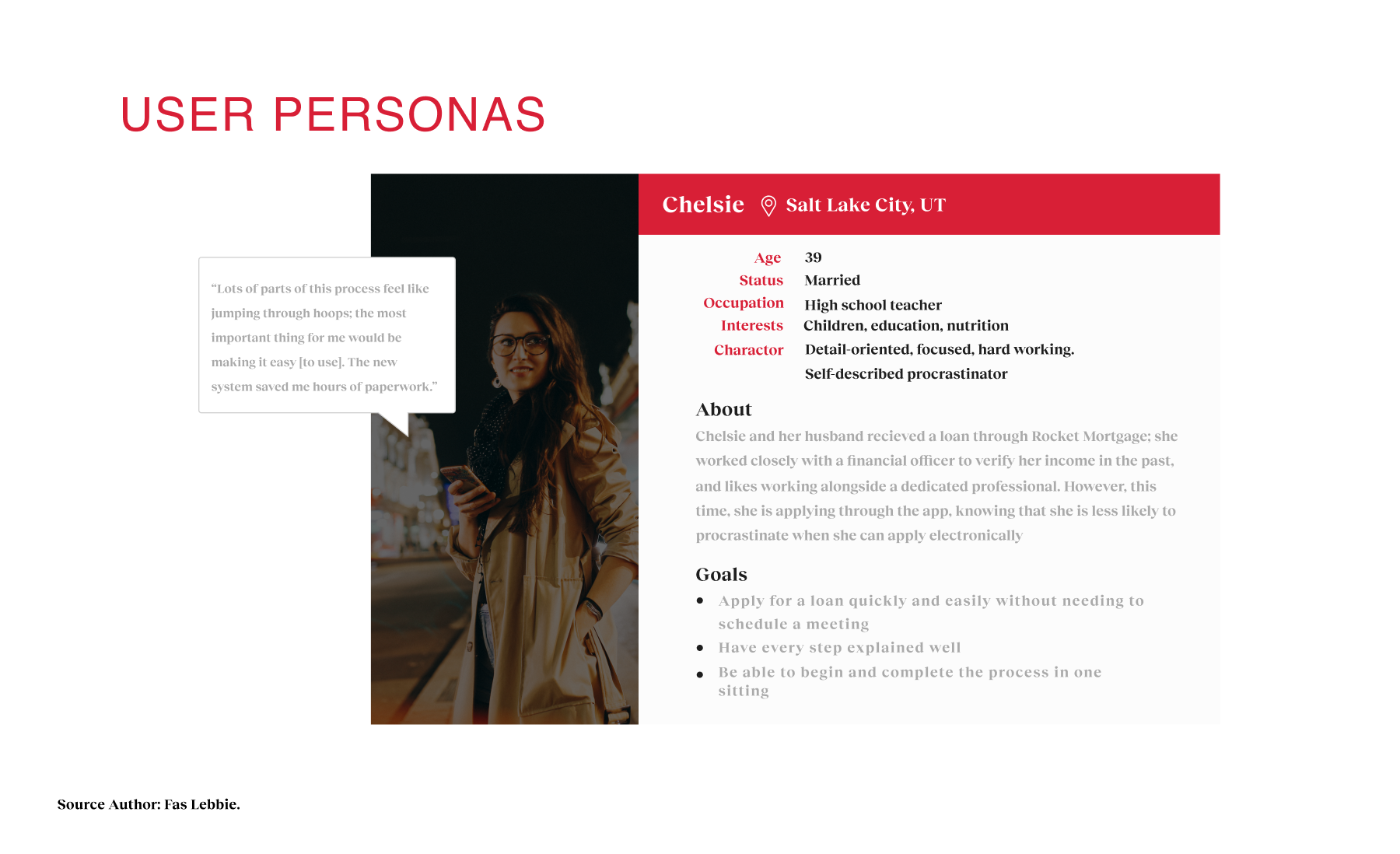
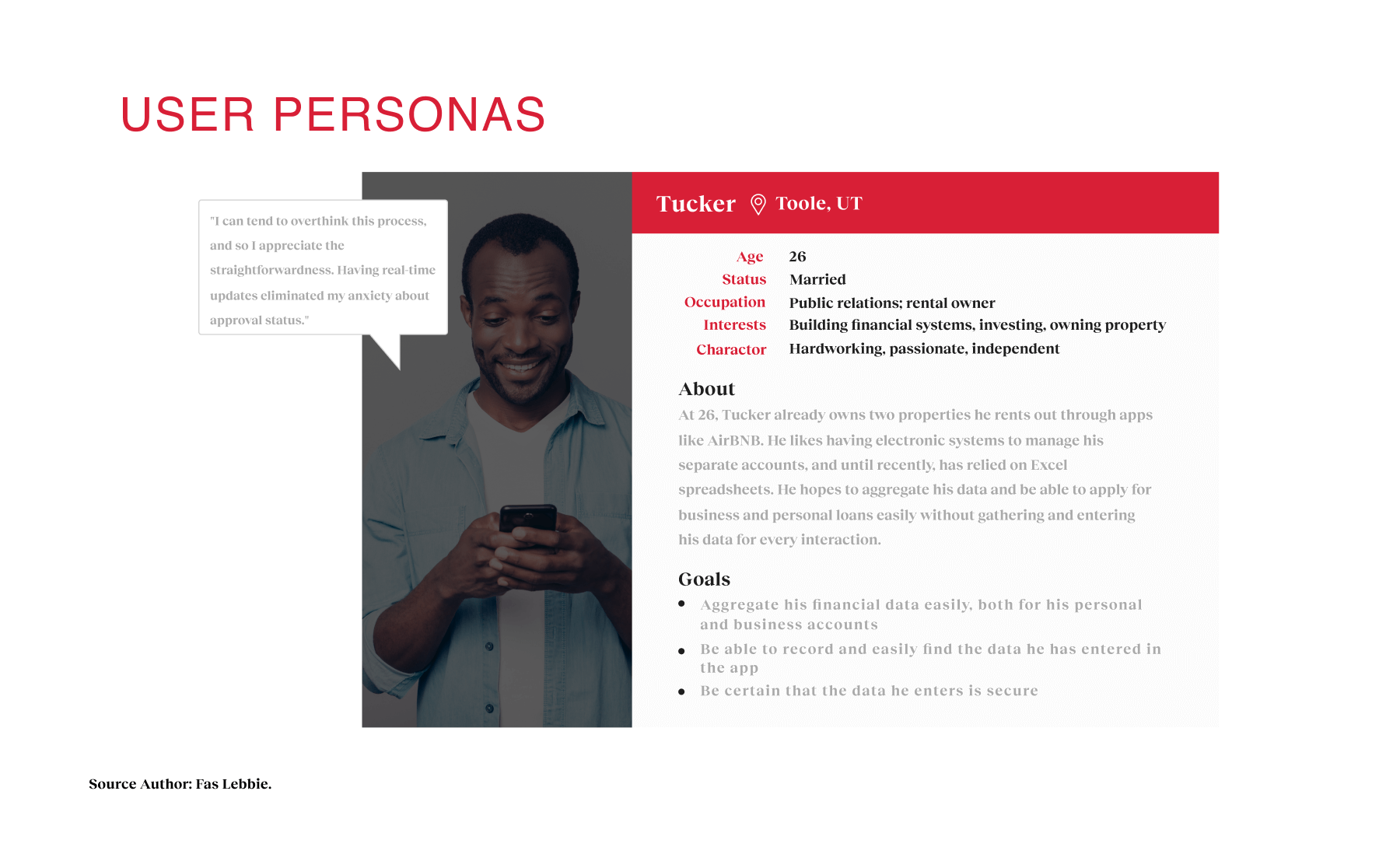
We mapped borrower journeys, focusing on third-party payment flows, then created personas across employment types. Through iterative prototyping and usability testing, we validated simplified verification flows that met both user needs and compliance standards, resulting in a streamlined, secure system tailored to modern income verification challenges.
Design Process
The U.S. labor market presented a complex challenge: out of 156 million full-time workers, 98 million receive payment through third-party providers. This fragmentation made income verification increasingly difficult. To address this issue, we focused on pay stub verification, which forms 75-85% of the loan verification market. The existing system created significant friction — borrowers struggled with document uploads, loan officers spent hours chasing paperwork, and verification times stretched unacceptably long.
Our research centered on one crucial question: How might we redesign income verification to require only one-third of the current completion time? We conducted in-depth interviews with both Rocket Mortgage staff and customers, focusing on their distinct needs and pain points. The team profiled diverse user types, from traditional salary workers to gig economy freelancers.
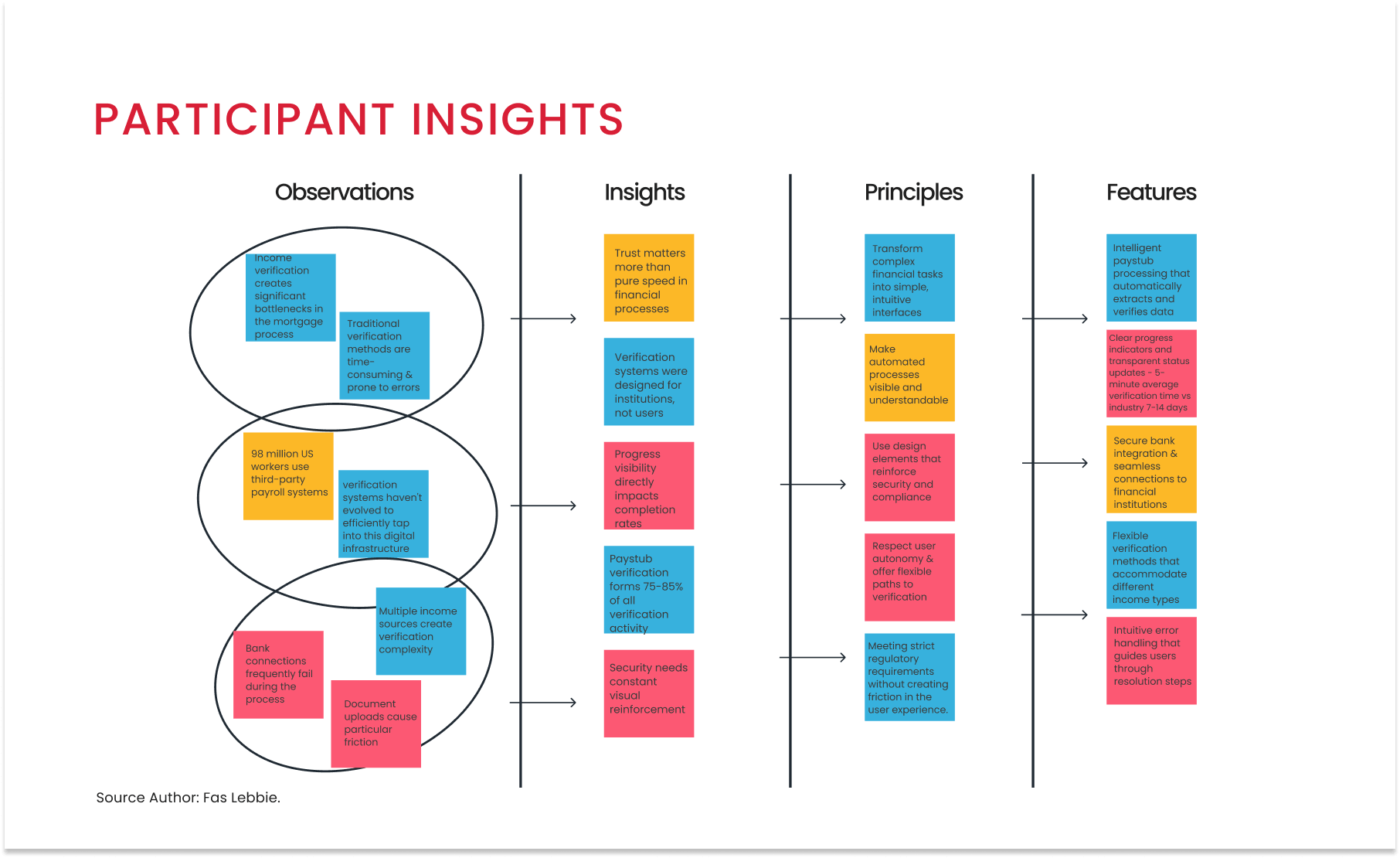
Key findings revealed that users needed speed, transparency, and confidence in the process. Loan officers emphasized the importance of maintaining compliance while streamlining their workflow. These insights led us to develop a strategy focused on creating clear user pathways while automating complex backend processes.
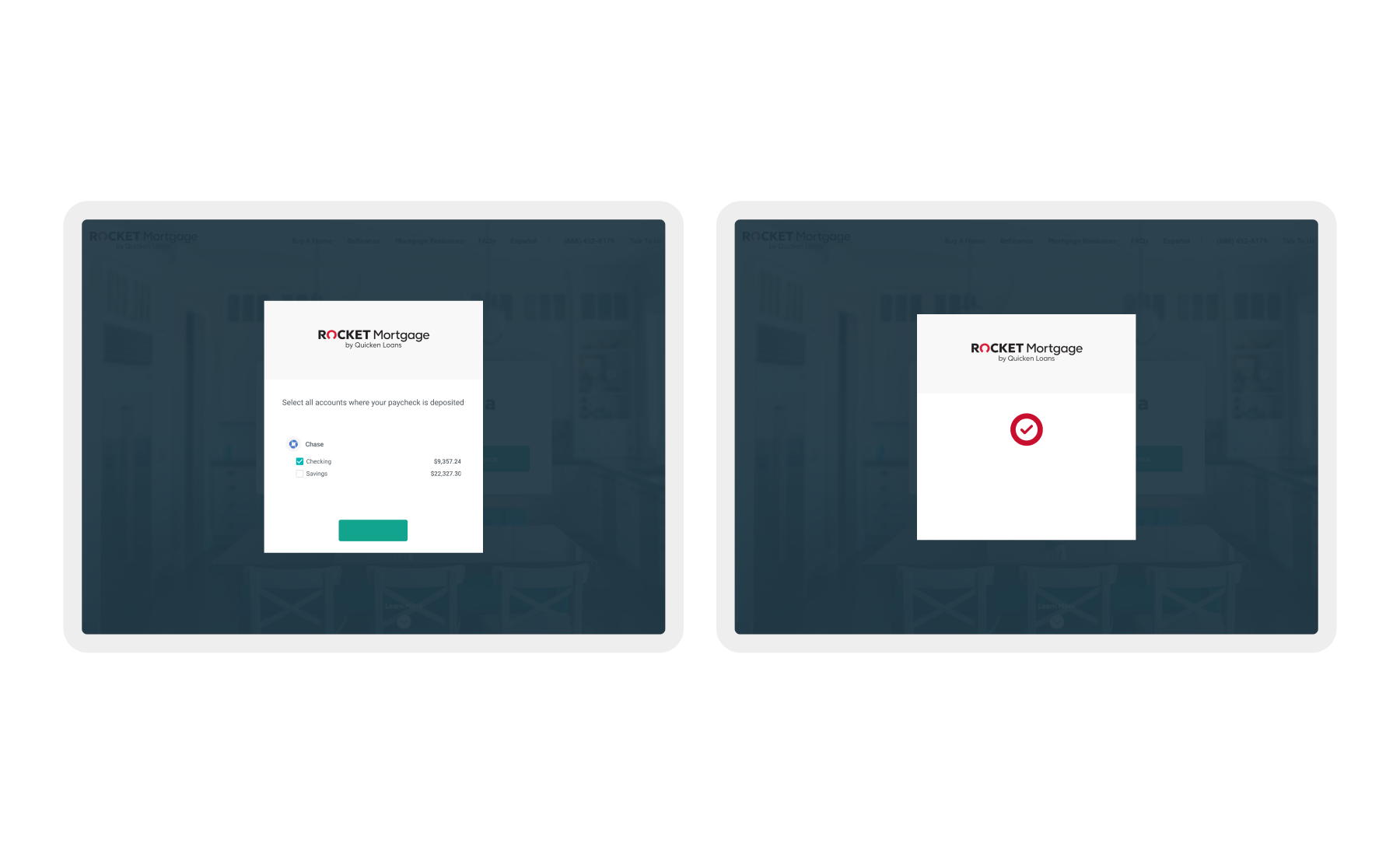
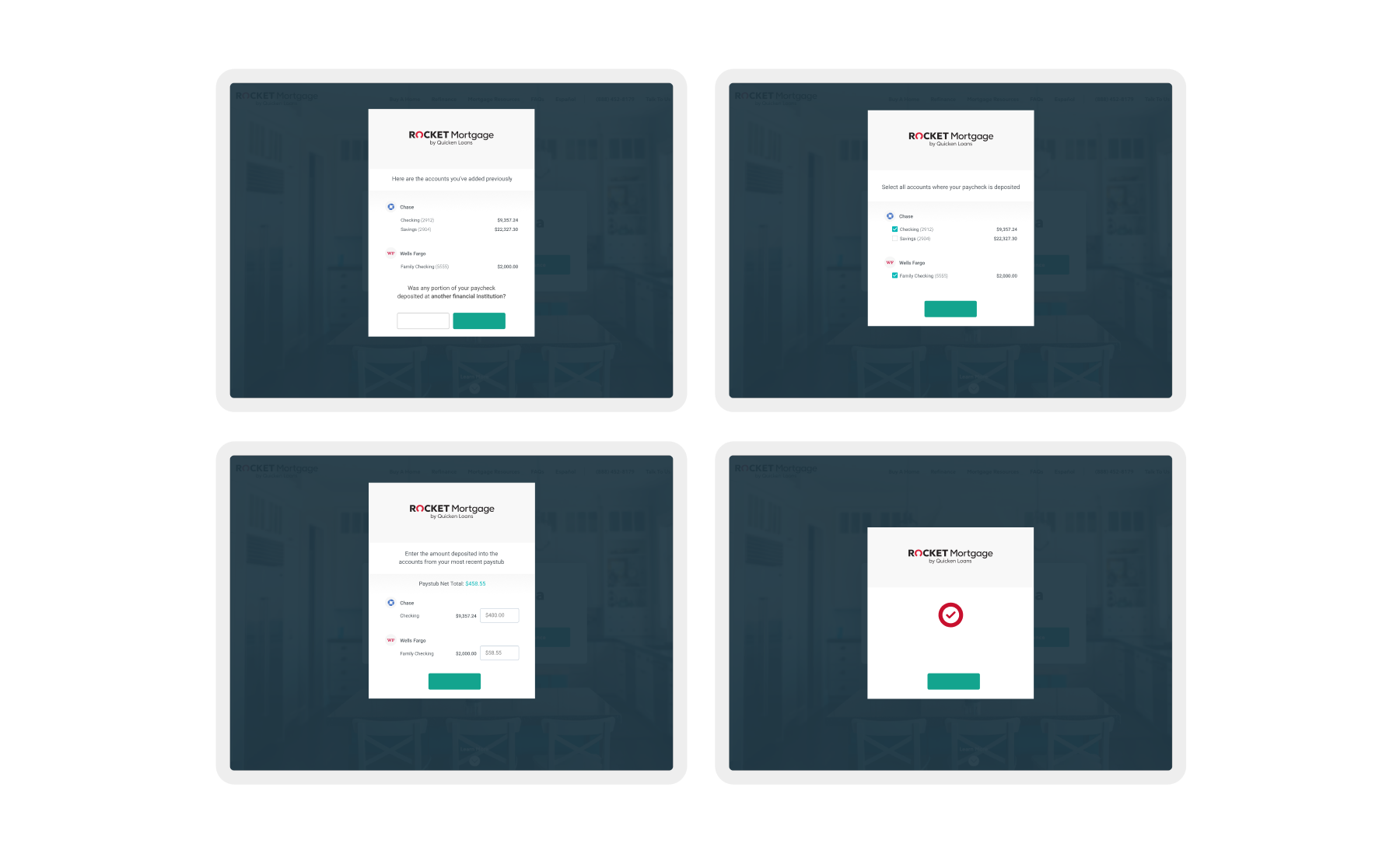
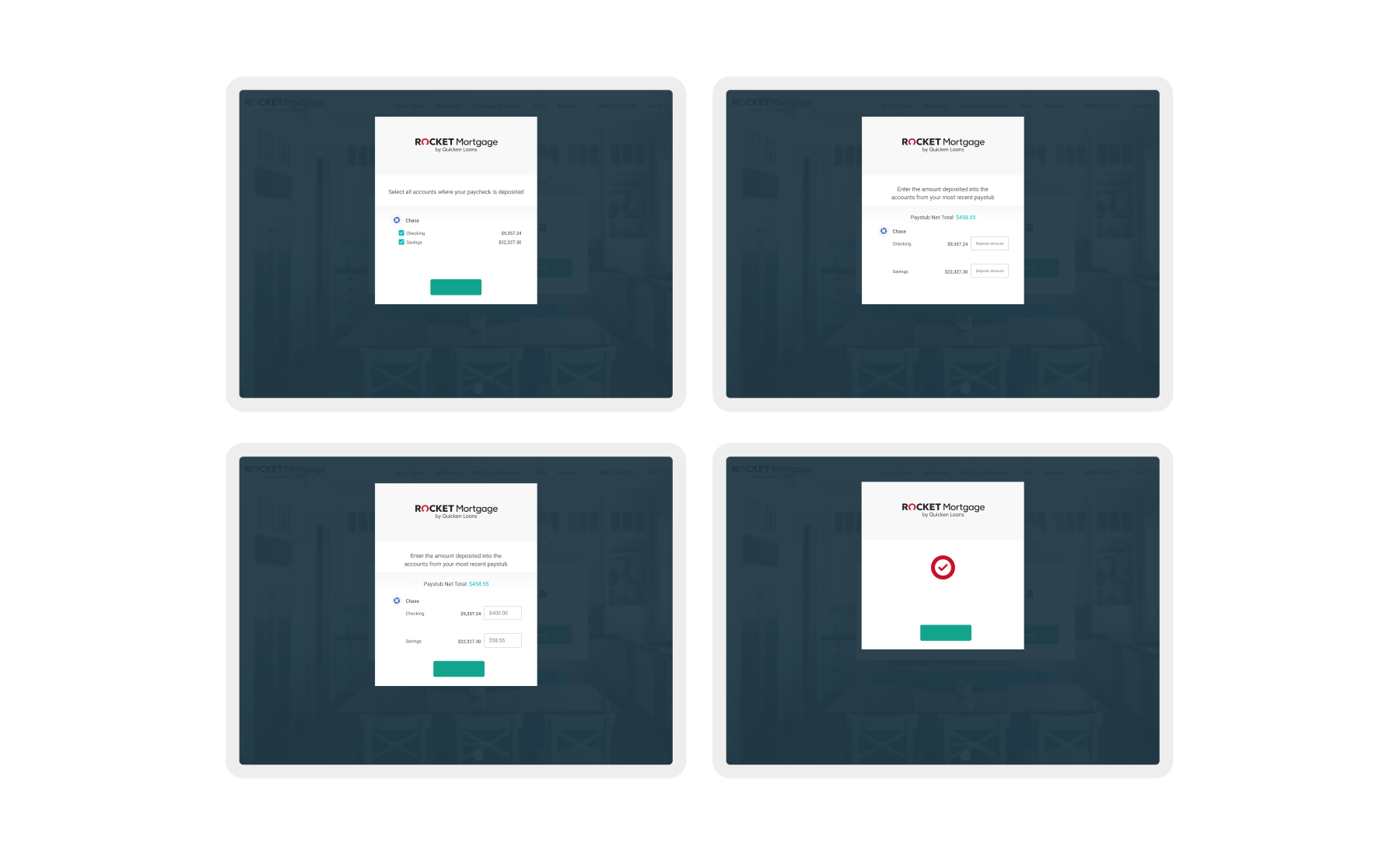
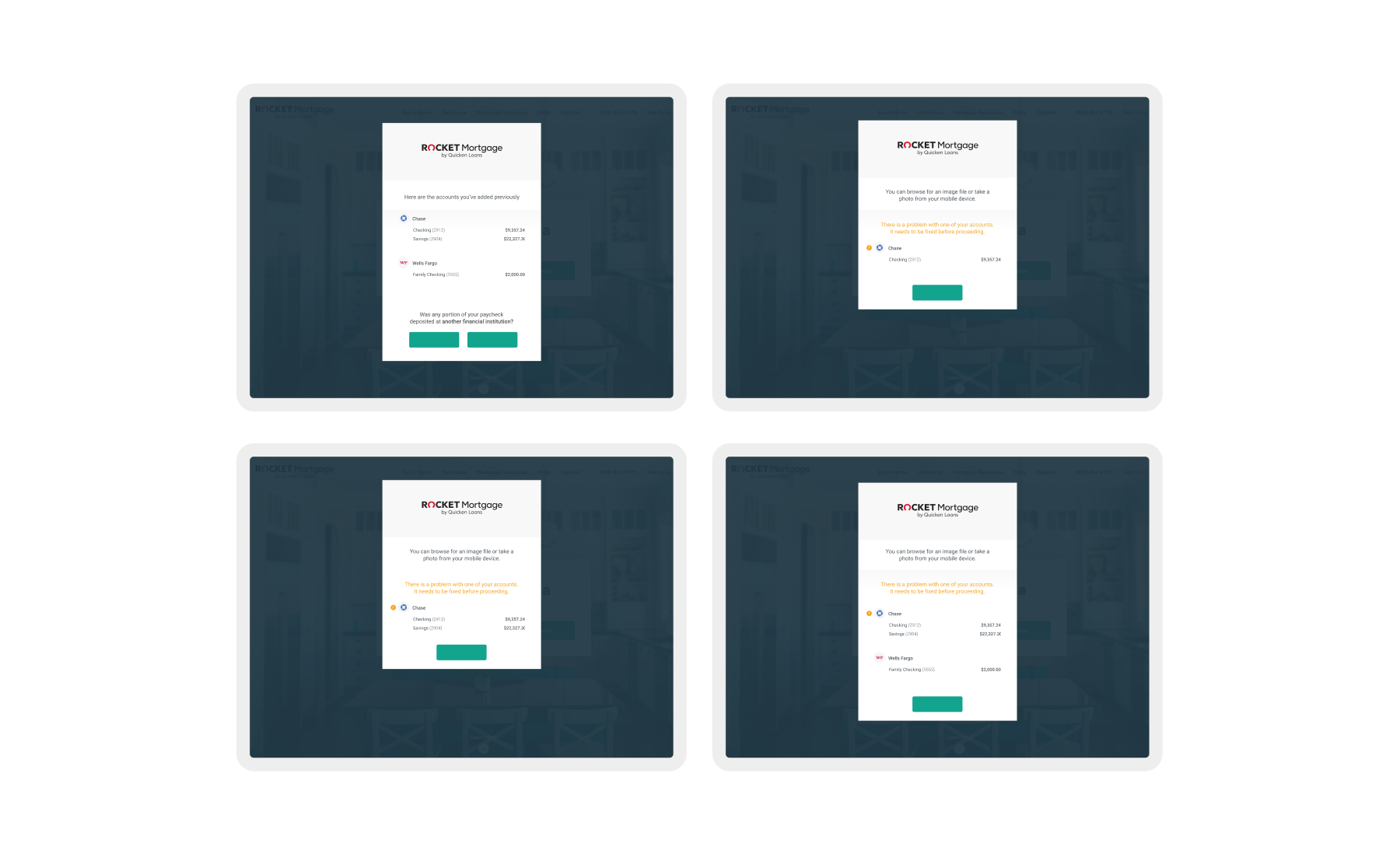
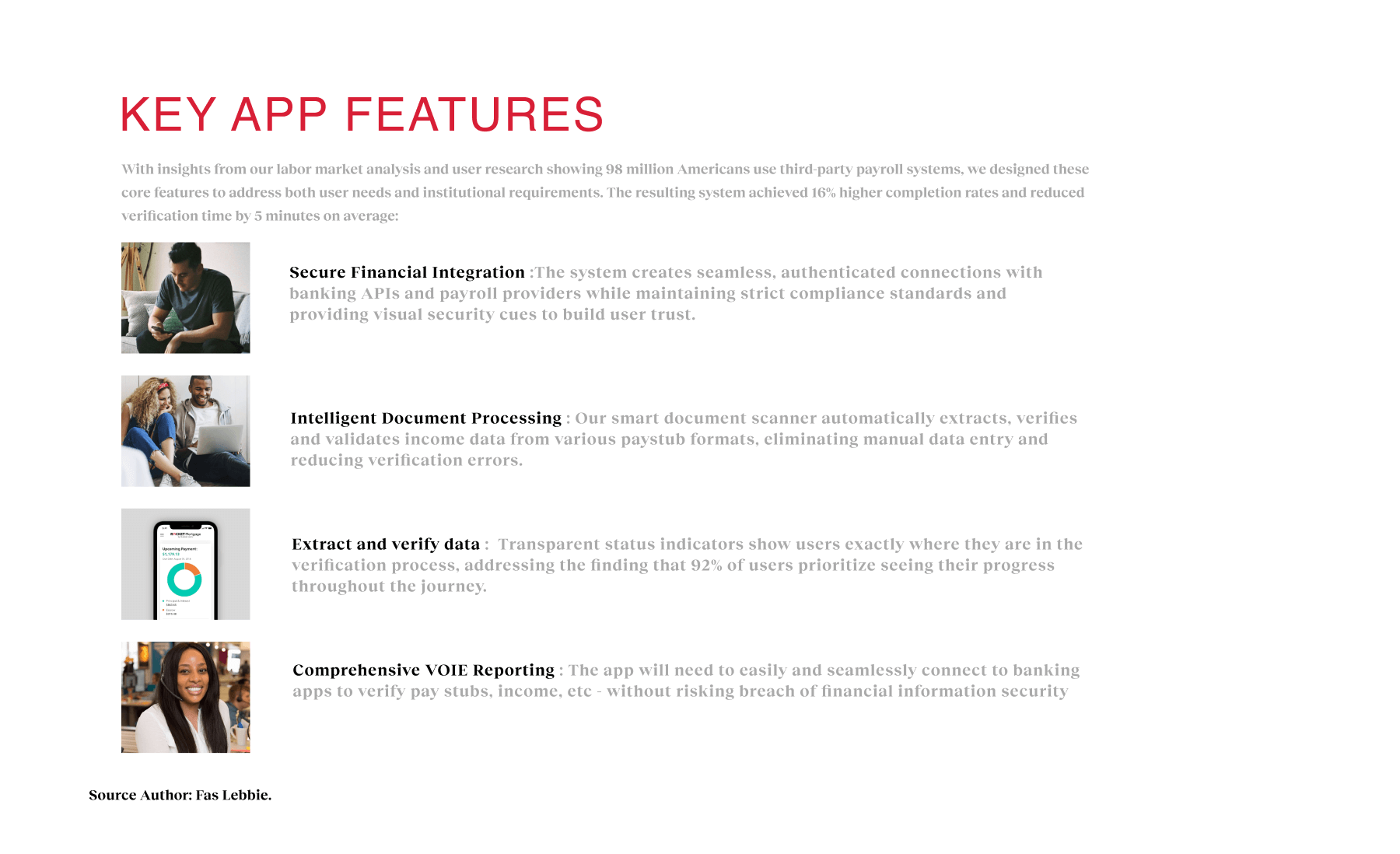
We developed a multi-phased prototype approach, starting with low-fidelity wireframes that mapped core user journeys. The team created four distinct test scenarios, including various banking integrations with institutions like Wells Fargo and Chase. Each iteration was tested with real users at Acme lending offices. The final implementation included several key features:
- Smart document scanning for instant pay stub verification.
- Secure bank account integration for real-time data access.
- Automated data extraction and verification.
- Clear progress indicators and user feedback systems.
We rolled out the solution gradually, ensuring each component met both user needs and regulatory requirements before full deployment.
Our research-to-implementation process revealed crucial insights about digital verification in modern lending. Users consistently prioritized transparency over speed, though both factors were essential. The solution’s success stemmed from addressing both practical and emotional user needs, making the process both faster and more trustworthy.
The results were transformative: verification time dropped by 5 minutes, completion rates increased by 16%, and loan officers reported significantly improved workflow efficiency. Most importantly, the new system successfully handled various income types and banking relationships, making it truly inclusive for different borrower profiles.
This project demonstrated that effective financial technology must balance automation with human understanding, creating experiences that feel both efficient and trustworthy.
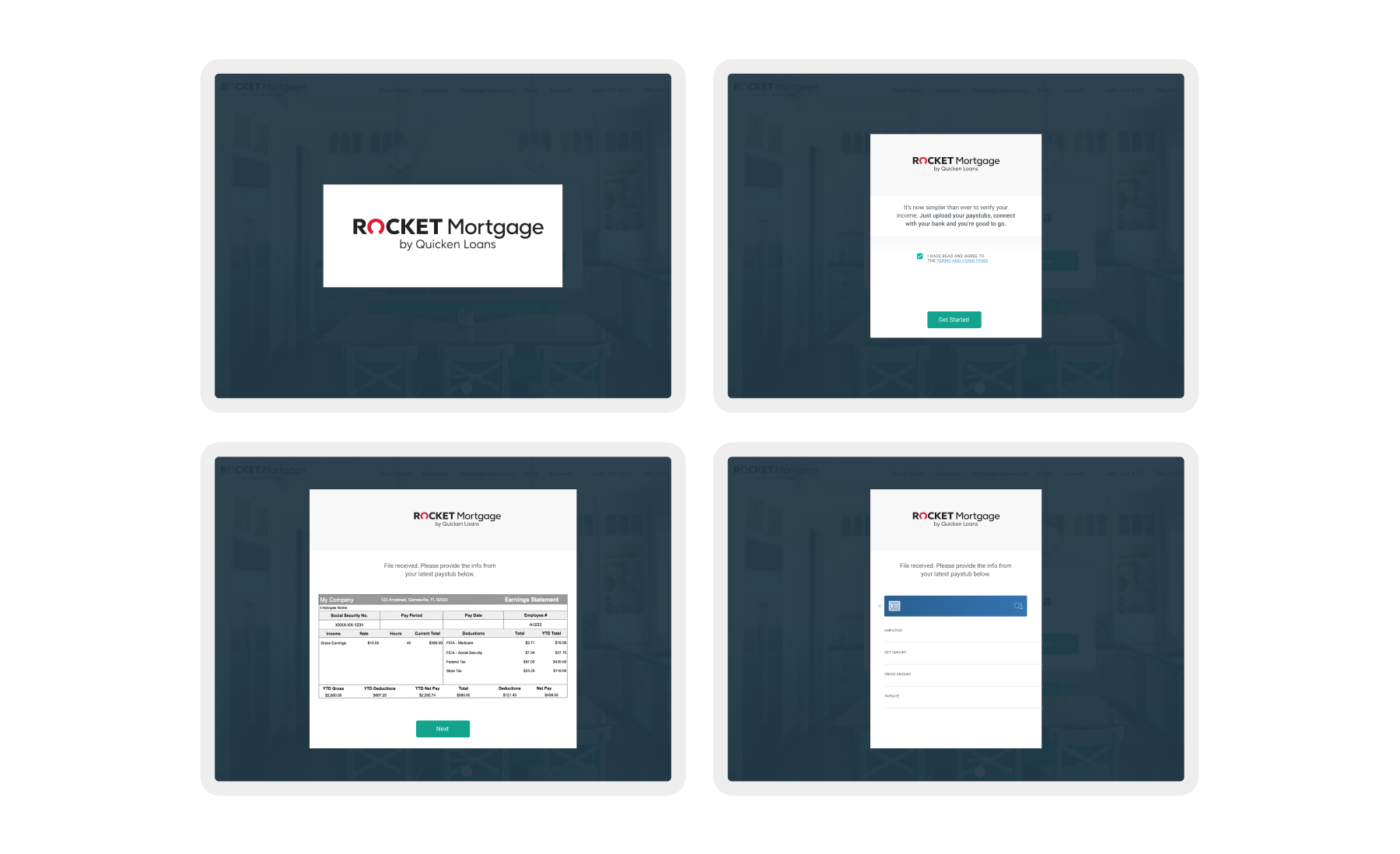

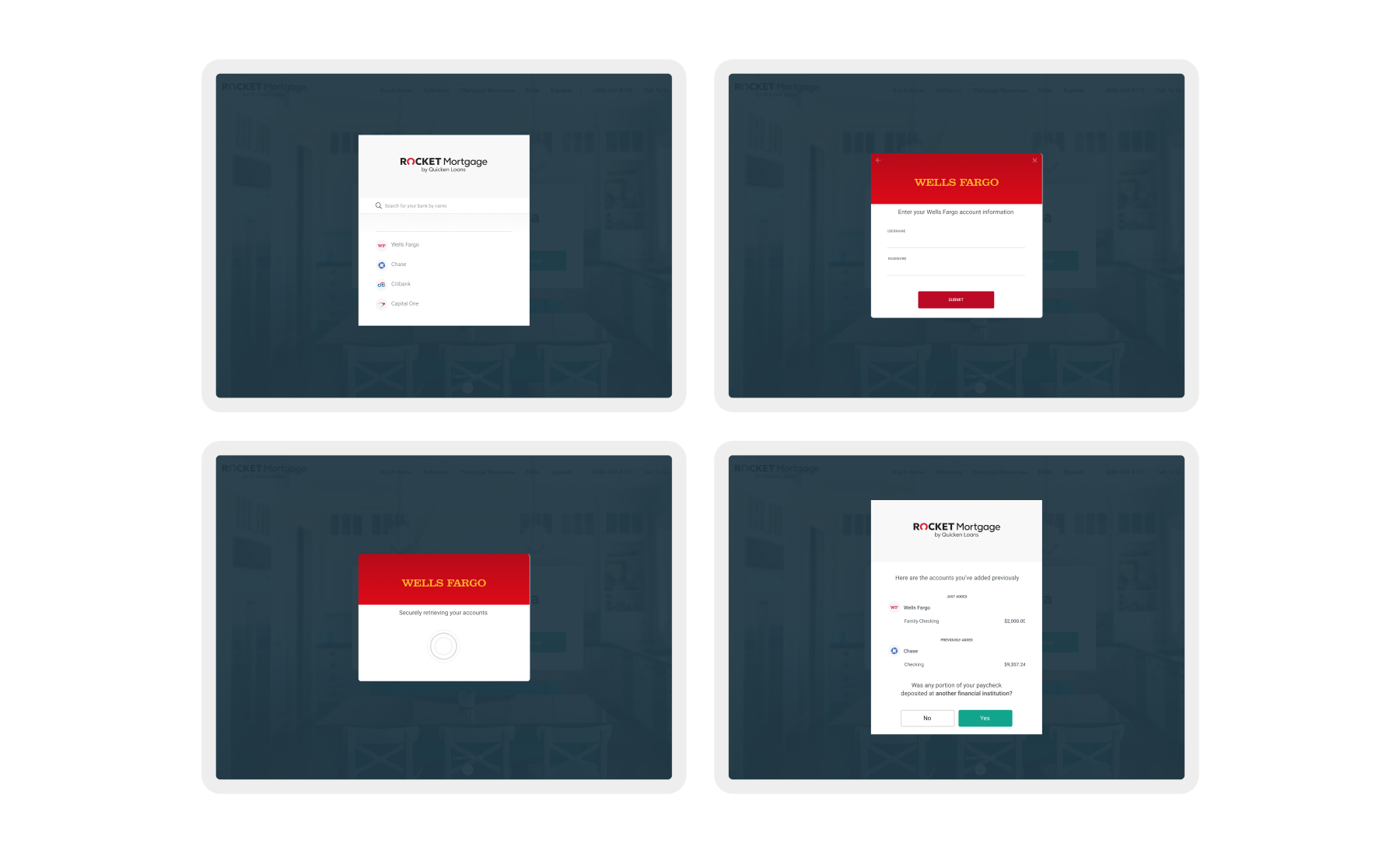
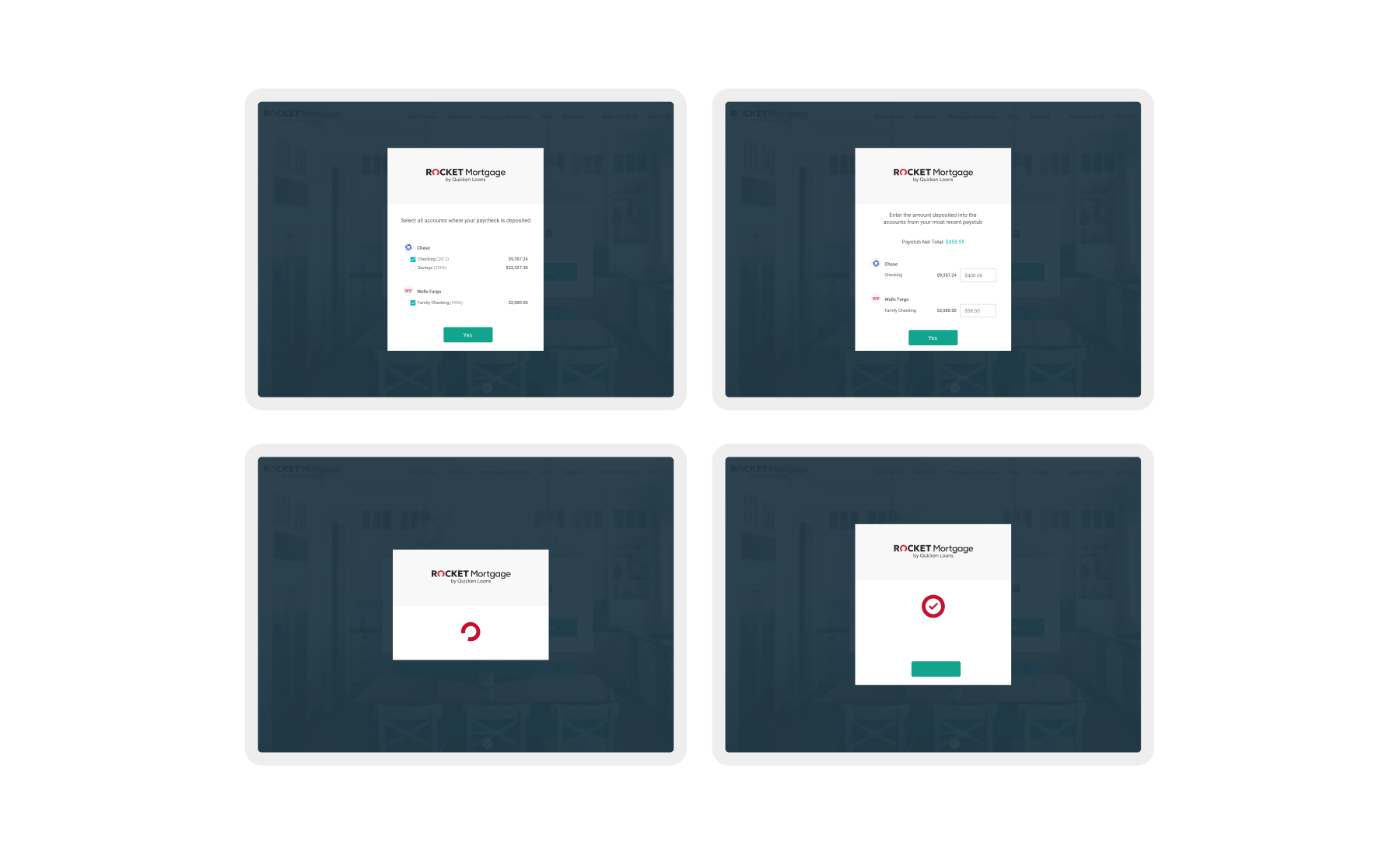


Design Interventions
The solution centered on four key innovations: seamless inter-app connectivity for secure bank integration, intelligent document processing for automated pay stub verification, and real-time data validation, all while maintaining strict security protocols and regulatory compliance, designed to support both traditional employees and freelancers.

Fast, secure income verification empowers millions to access loans, unlock dream homes, and build lasting wealth.


Toolkit, Methods & Frameworks
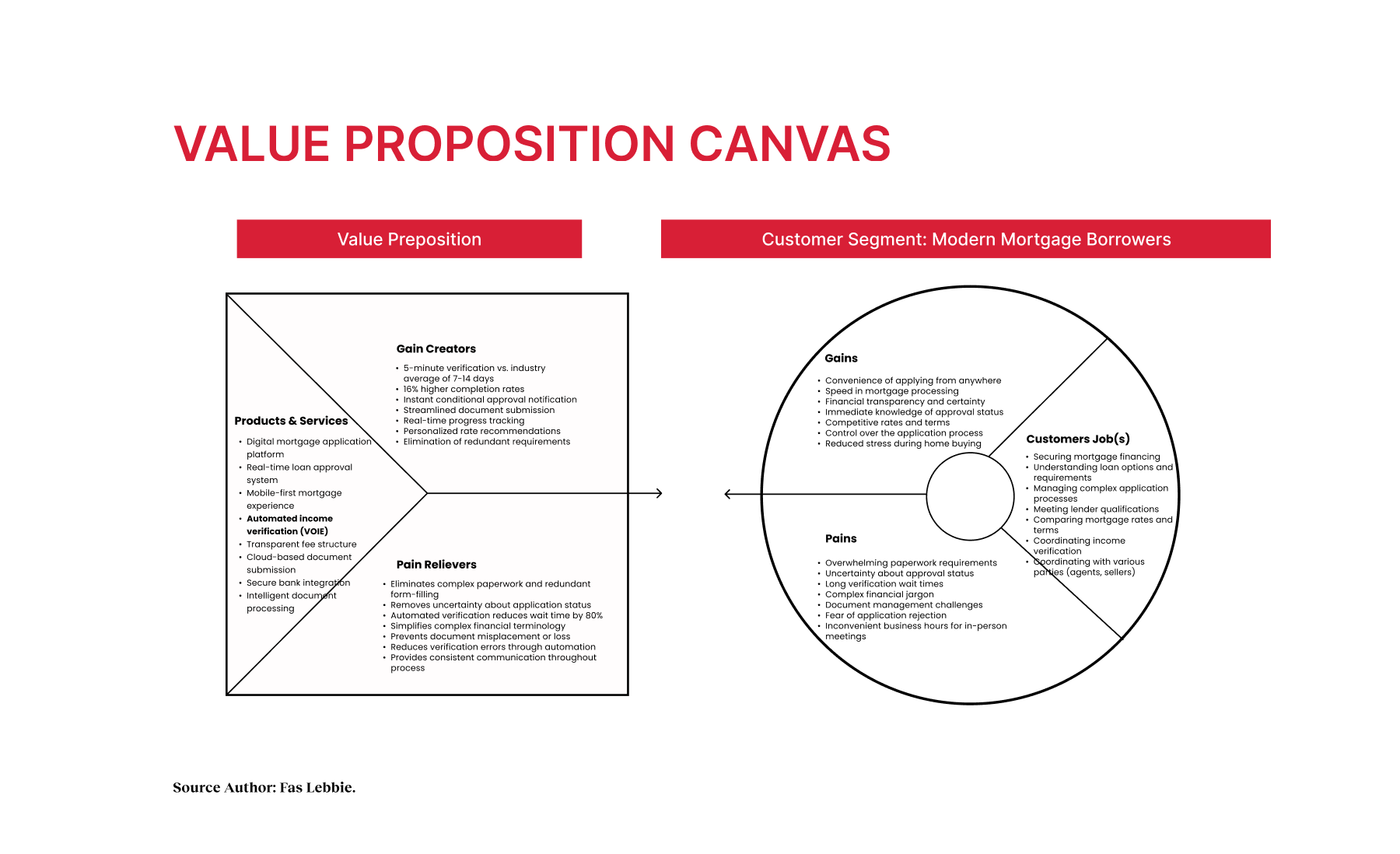
In understanding the financial verification challenges for mortgage borrowers, I used participant interviews, persona development, and value proposition mapping to help improve and redesign income verification. Observation insights and competitive analysis clarified pain points, guiding solutions that reduced verification time, improved trust, and delivered a more transparent mortgage experience.
Increase in First-time Verification Success
Driven by real-time data aggregation and intuitive design, reducing document errors and rework for borrowers.
Reduction in Per-loan Processing Costs
Enabled by automation and smarter workflows that reduced manual touchpoints for loan officers.
Reduction in Loan Officer Follow-up Ttime
Loan teams spent less time chasing documents, focusing instead on high-value borrower interactions.
Short & Long Term Impact
In just three months, VOIE 2.0 cut verification time from up to 14 days to under 30 minutes, improved first-time success rates by 20%, and reduced per-loan processing costs by 12%. Borrower satisfaction rose from 64% to 88%, while loan officers spent 47% less time chasing documents.
Long-term, the platform redefined verification as a user-permissioned digital experience, improving inclusion for gig and self-employed workers. Integration with Finicity set new standards for secure data exchange. Most importantly, the project proved that regulatory compliance and user-centered design can work hand-in-hand, accelerating Rocket Mortgage’s innovation roadmap and positioning them as a leader in consumer-driven lending transformation.
Next Steps
- Create tailored verification flows for crypto earners, freelancers, and international borrowers to boost financial inclusion.
- Partner with additional financial aggregators like Plaid and MX to broaden real-time verification coverage.
- Turn research insights into internal toolkits that guide future compliance-driven UX across Rocket’s digital services.