Overview
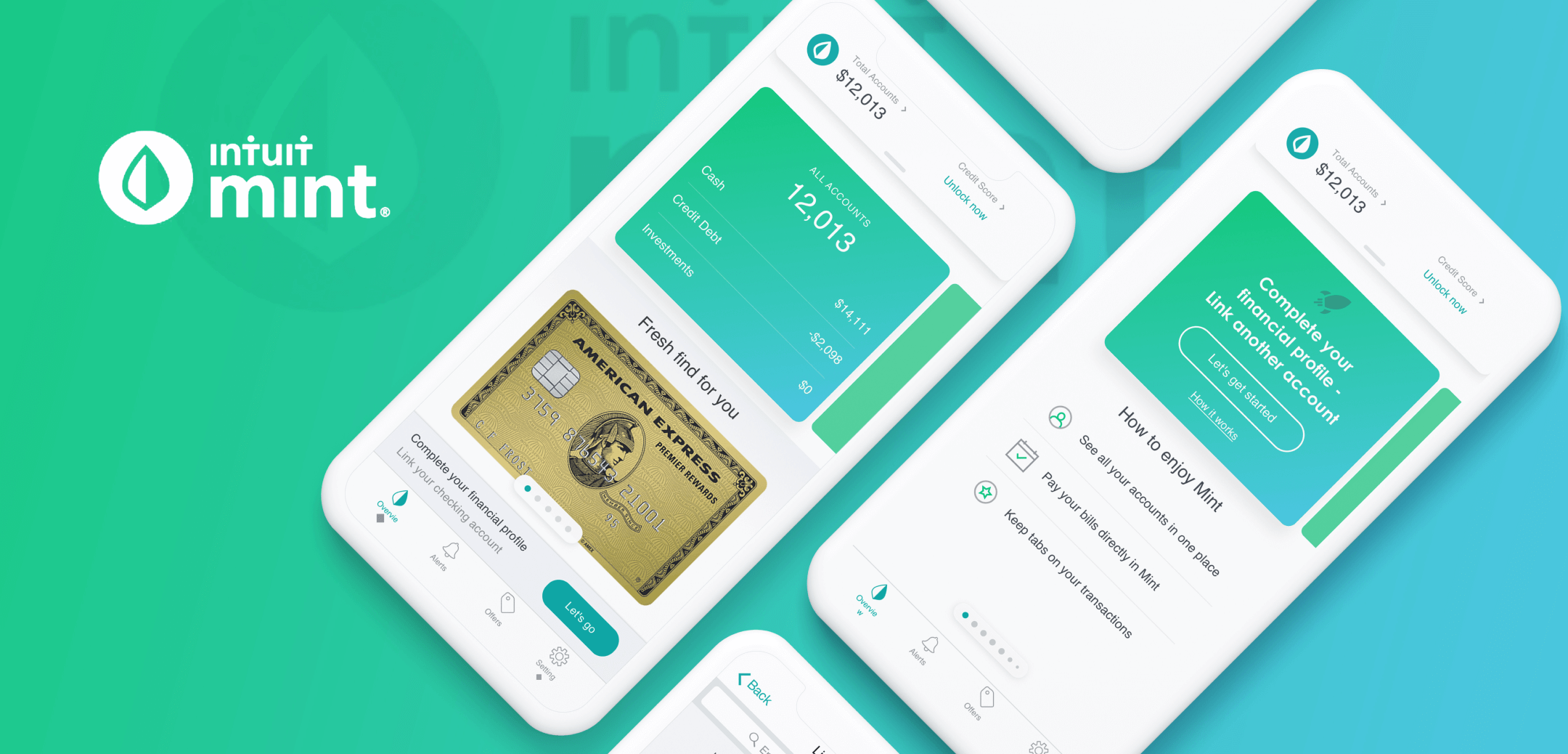
Mint allows users to view all their financial accounts, including banks, credit cards, bills, and investments, in one central location with real-time updates. Using Finicity’s secure data aggregation platform, we enabled seamless connections to major financial institutions, including Chase and USAA. I designed consent experiences that clearly show what data is shared, with whom it is shared, why it is shared, and for how long. This solution supported the broader rollout of FDX and met open banking compliance standards. As founding board members of FDX, Intuit, and Finicity, they helped establish secure data-sharing practices. Our work gave millions of people more control over their financial data and helped them make informed, confident financial decisions.
Research & Design
Design research · Product design · Fintech regulatory compliance · FDX Compliance Integration Developer API platform design · Consumer banking experiences
- Duration: January 2017 - April 2019
- Partners: Intuit, Financial Data Exchange (FDX), Chase Bank, USAA, Finicity
- Team: Fas Lebbie, John Adams

My Role
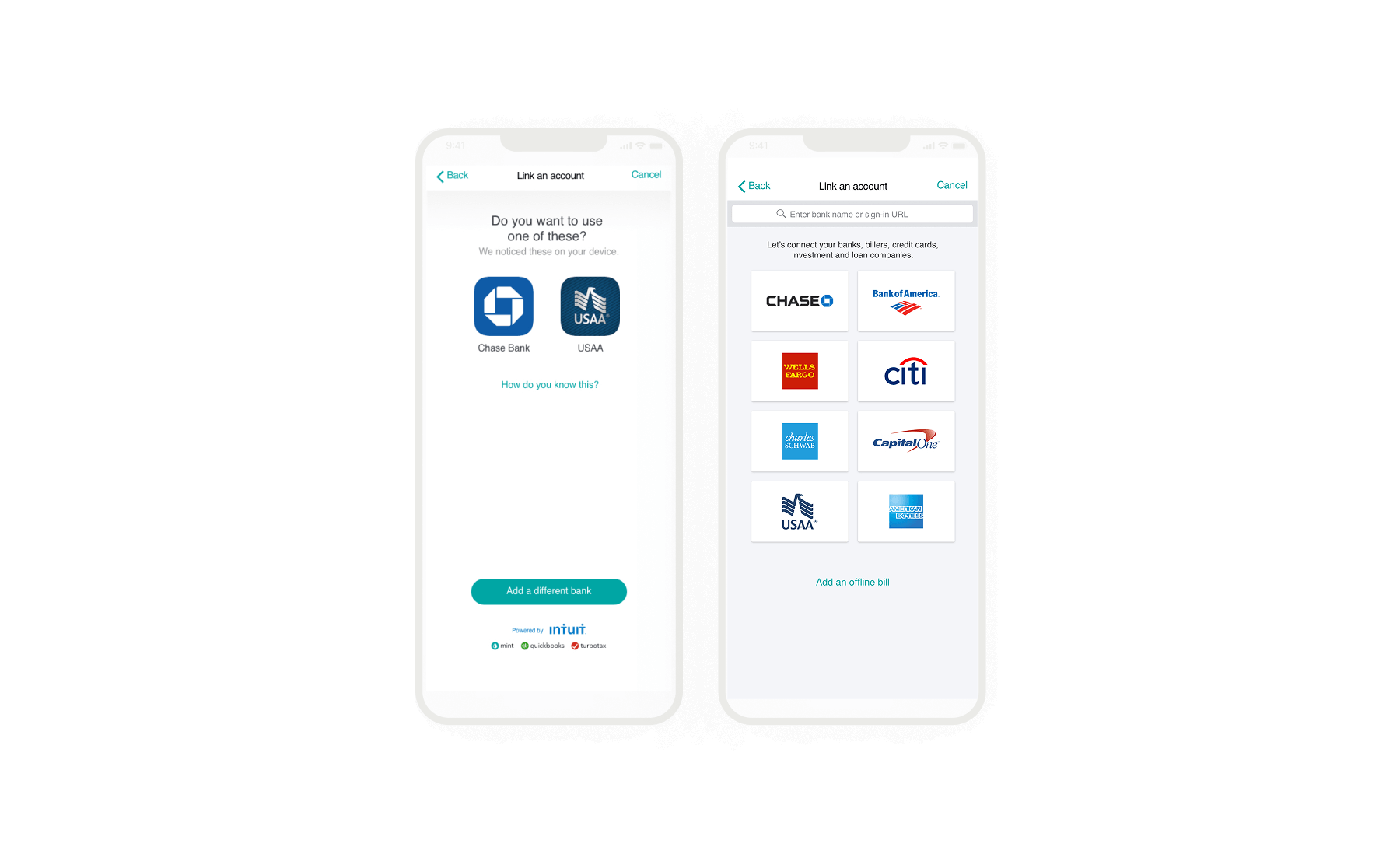
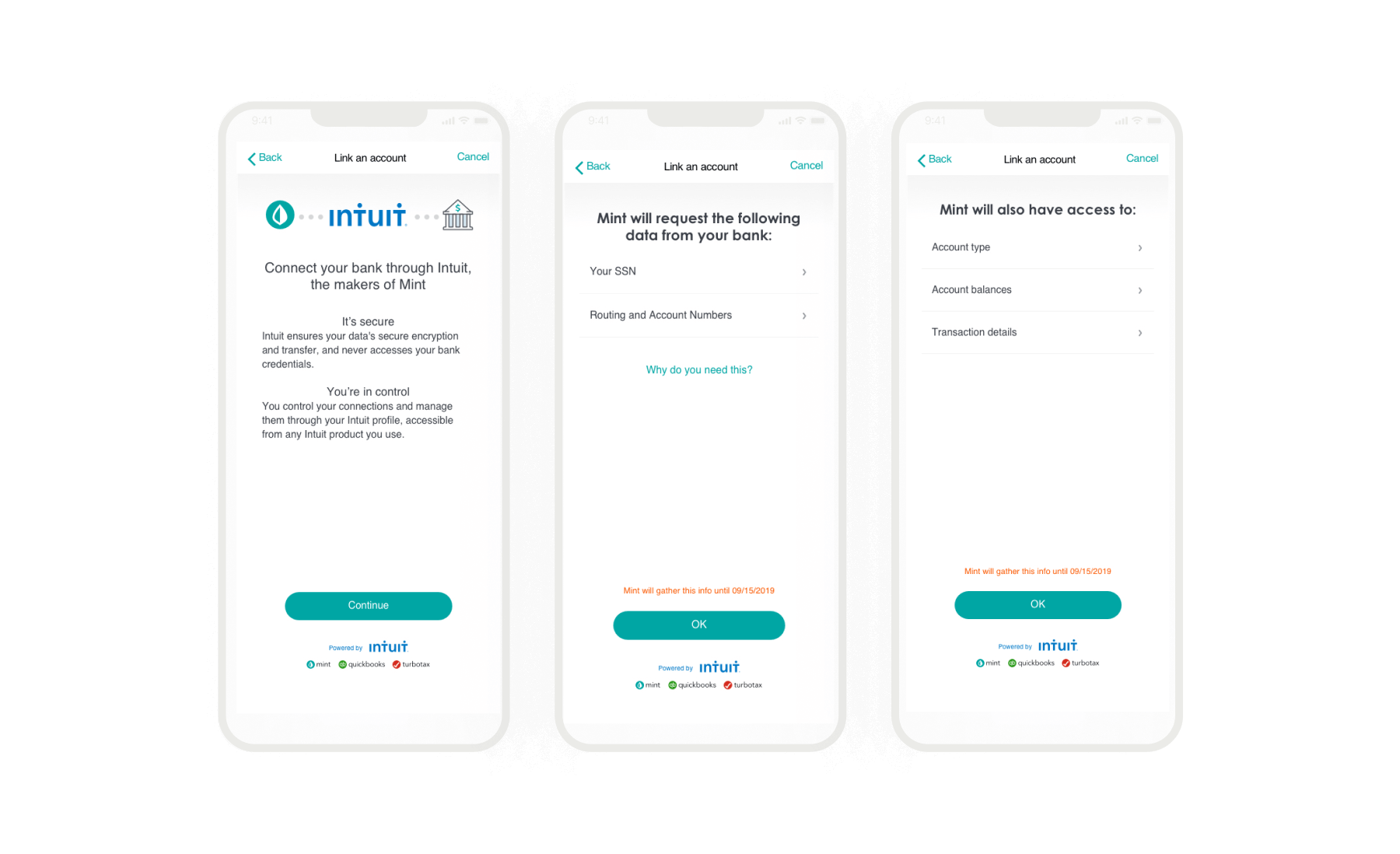
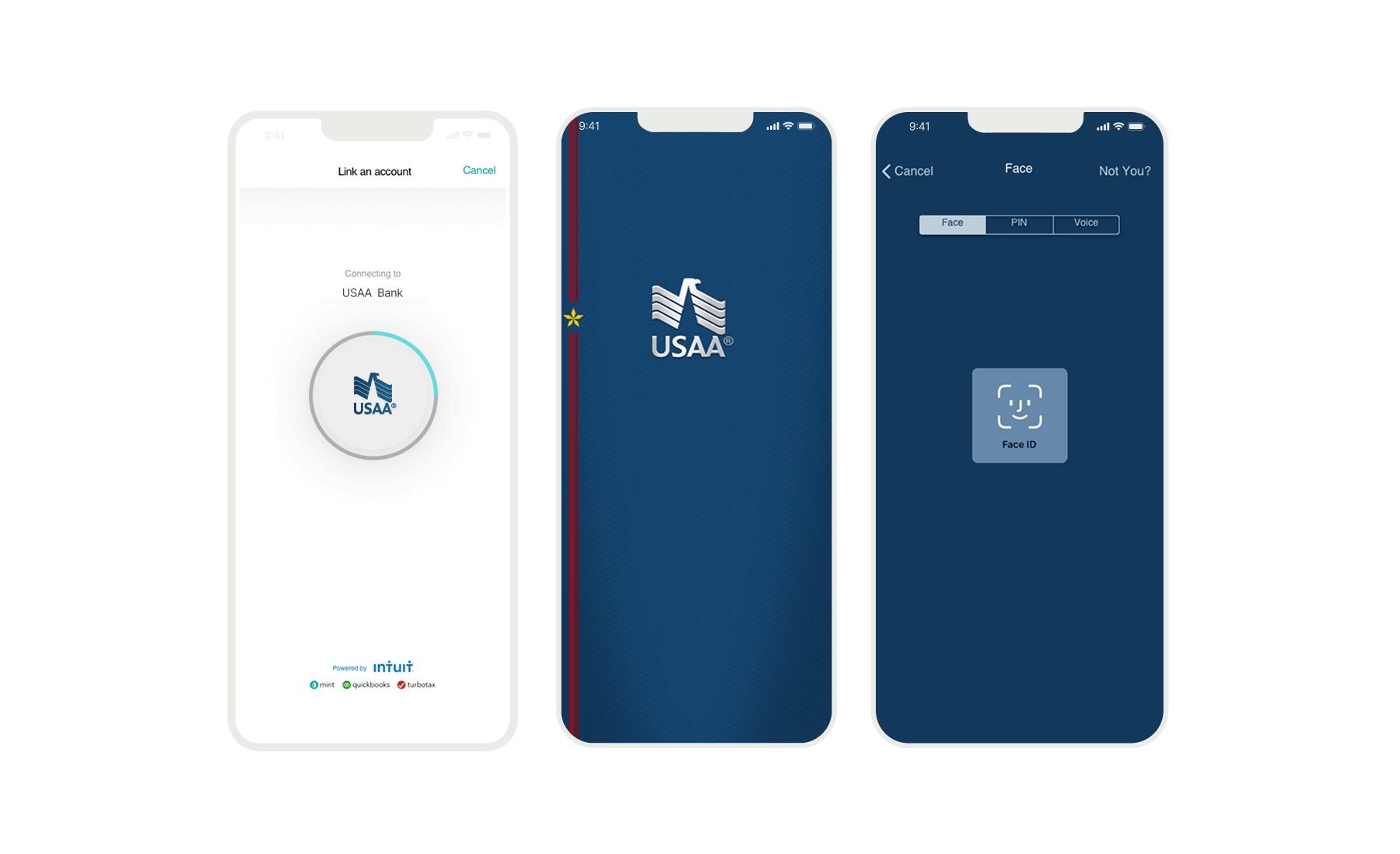
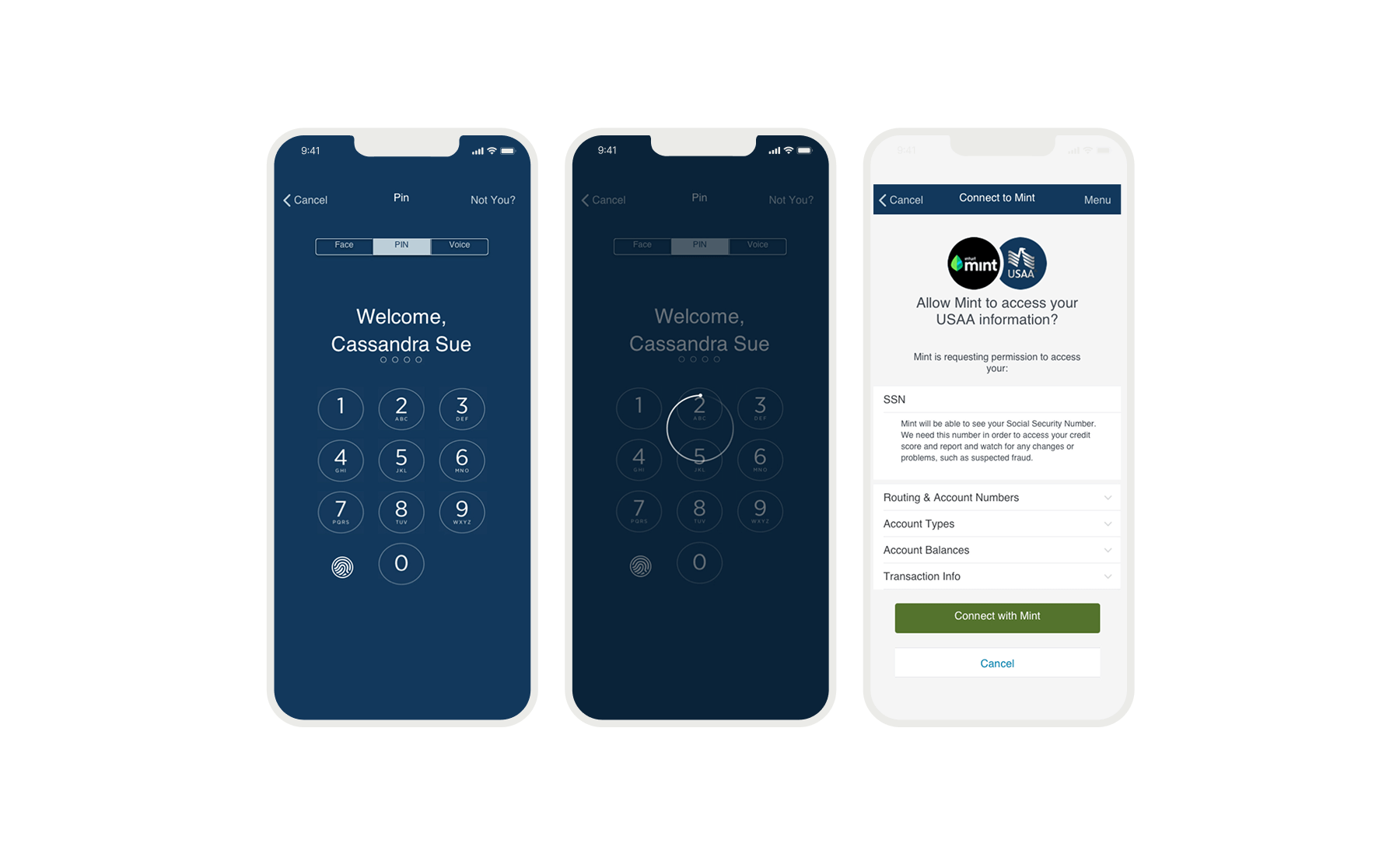
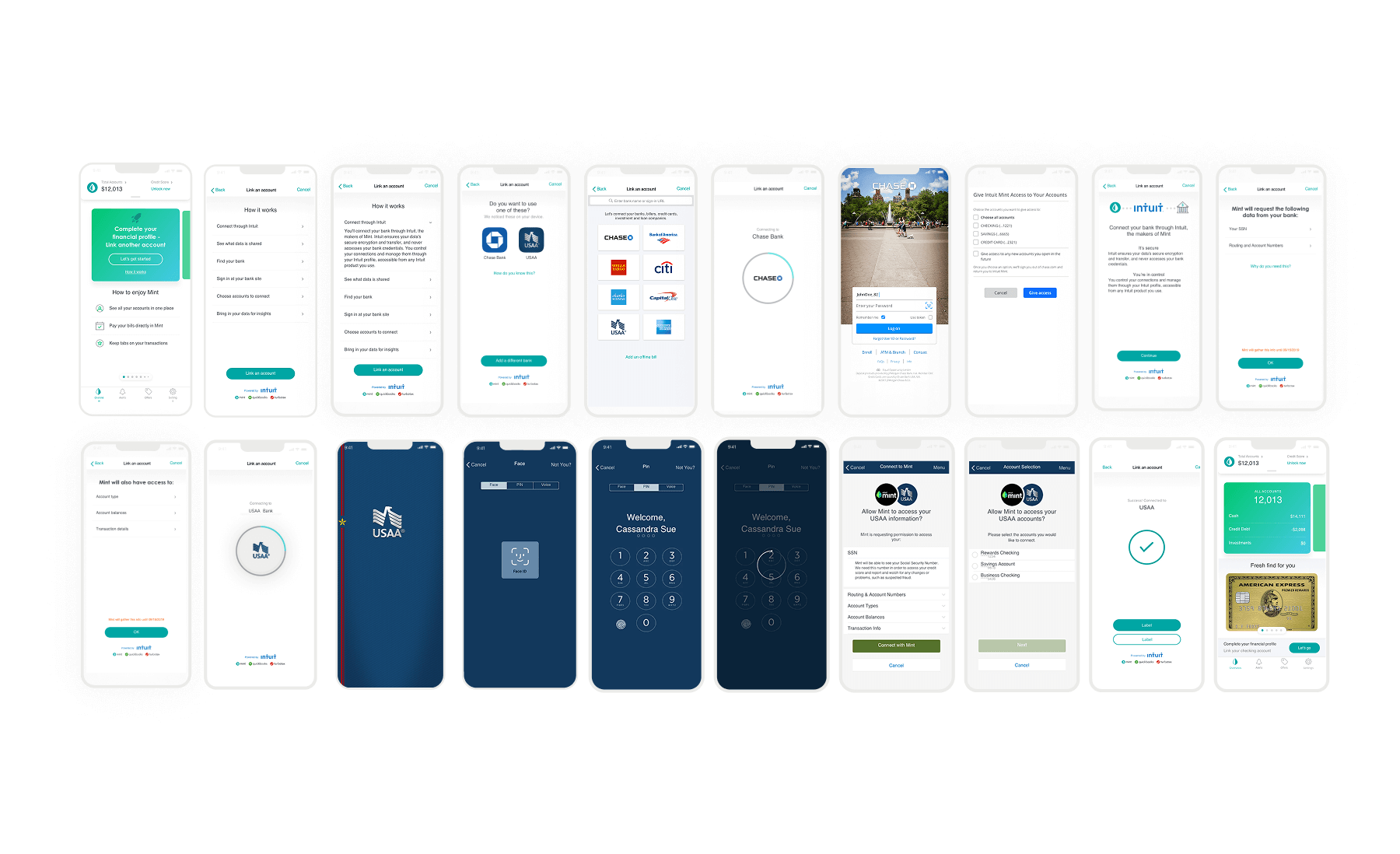
As a design lead at Finicity, I focused on user experience, visual design, and prototyping for the Intuit Mint Financial Data Exchange interface. I created wireframes, high-fidelity mockups, and interactive prototypes that aligned with Intuit’s brand and met FDX compliance. I designed transparent permission screens that informed users about the specific data accessed, like SSNs and account types. I also integrated biometric authentication and secure OAuth flows while reflecting the visual identities of partner banks like Chase and USAA. Through usability testing, I refined the interface to communicate data-sharing details in a transparent and user-friendly manner.
What I Brought
I led design of a data permissions outlining what financial data was shared, with whom, for what purpose, and for how long, empowering users with clarity and control, increasing transparency and trust across Mint's open banking experience.
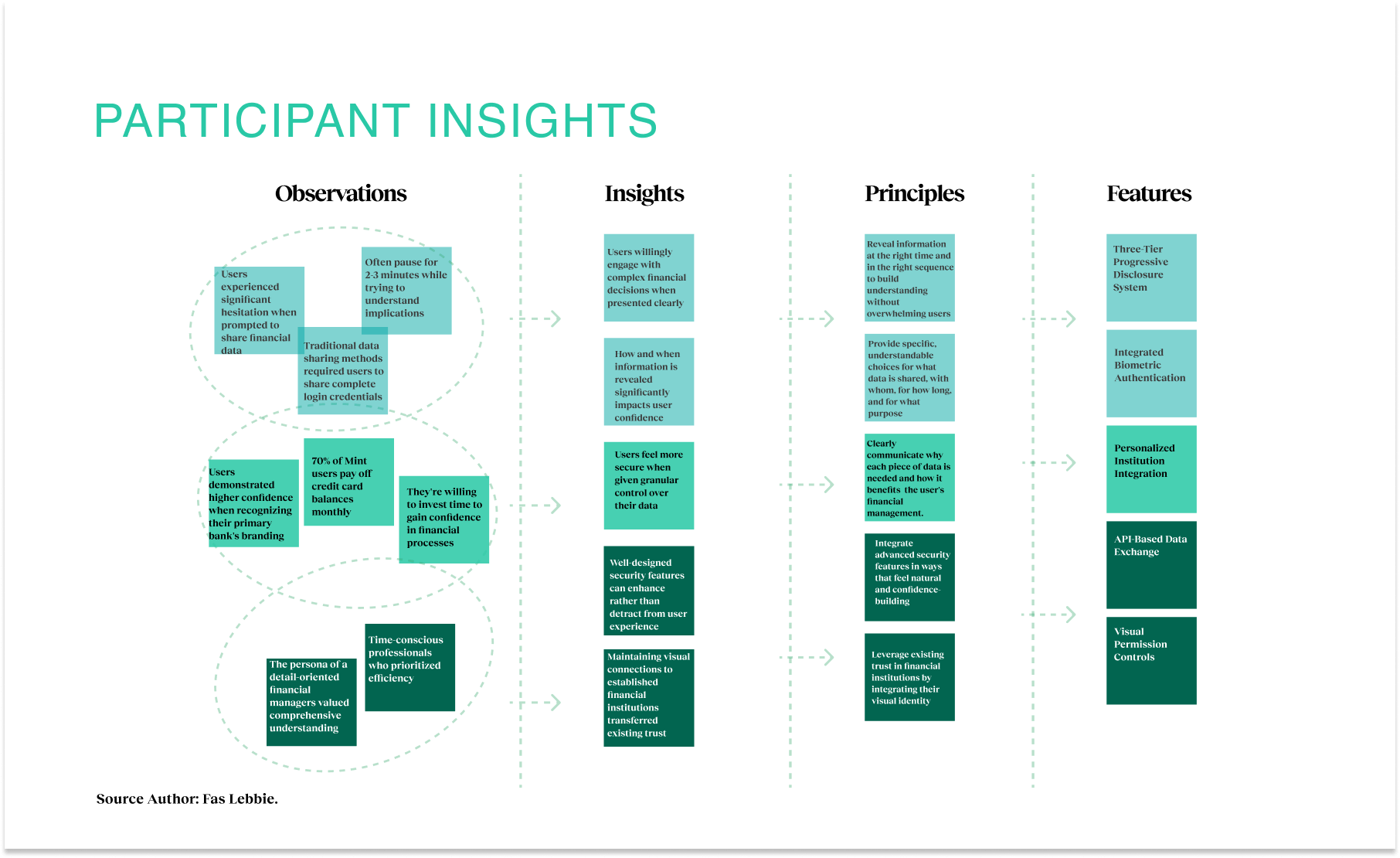
I used methods like Pain Scale and Participant Insights Framework to identify key user anxieties and behavior patterns. This research shaped a consent flow tailored to both detail-seekers and efficiency-focused users.
Collaborating closely at Finicity, with Chase, and USAA, I ensured the designs met FDX standards and seamlessly integrated with secure APIs.
Problem Context
Intuit Mint is a free personal finance app used by over six million people in the United States and Canada. It brings together financial information such as bank accounts, credit cards, and bills in one place. The app updates and organizes this data in real time, helping users track spending, monitor investments, and stay on top of bills. Despite its benefits, many users were uneasy about sharing sensitive financial information online, especially after several major data breaches. In 2019, I was asked to design a new interface for Mint to address these concerns and ensure compliance with Financial Data Exchange (FDX) standards. FDX is a nonprofit group that promotes secure and consistent data sharing across the finance industry. It was founded by companies like Intuit and Finicity. Although 63 percent of smartphone users rely on financial apps, most are unclear on what data is being shared and with whom. Older methods lacked transparency and created confusion.
My Approach
Progressive disclosure of financial data sharing, building trust through transparency while balancing security needs with intuitive user experience design.
Design Process
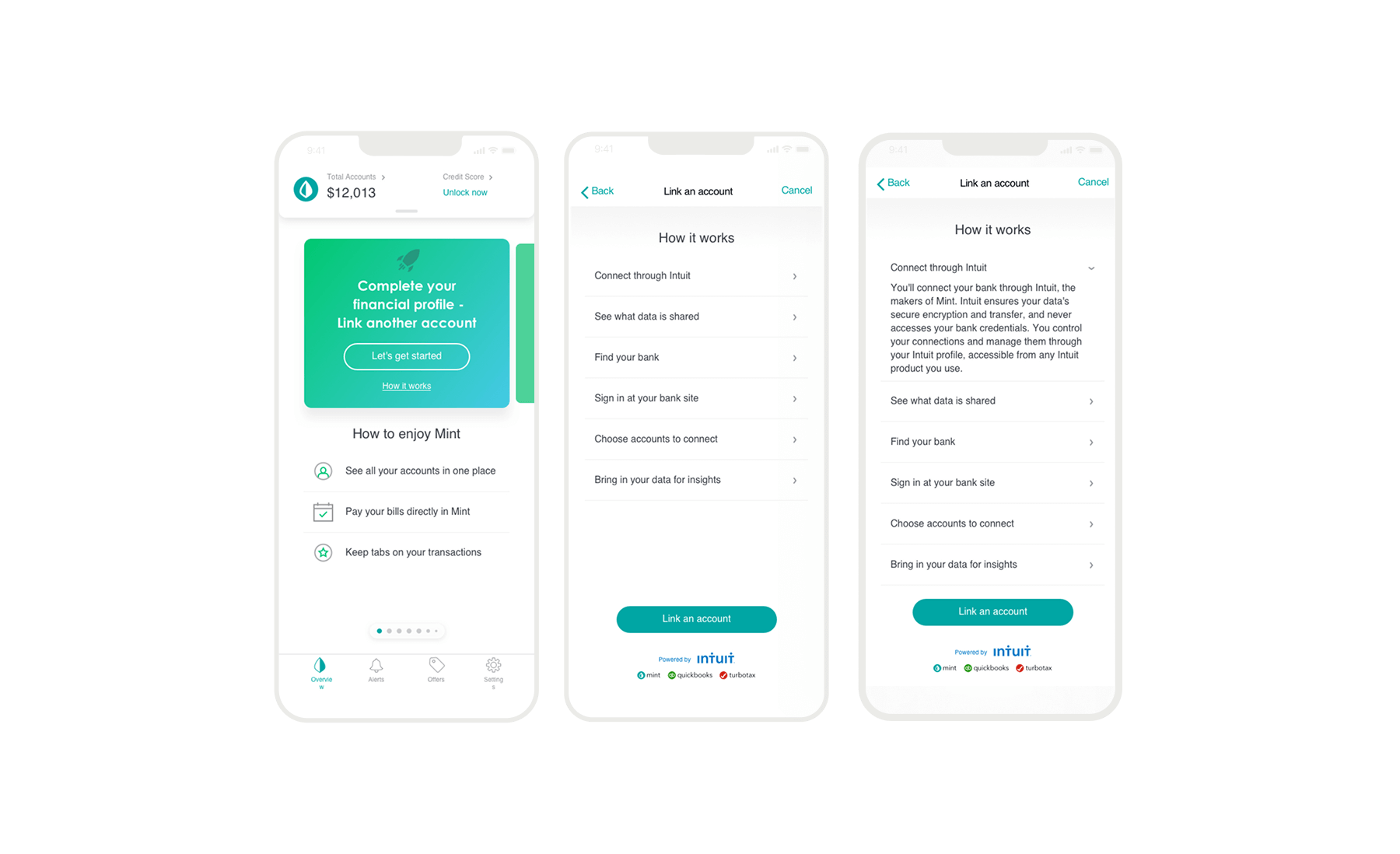
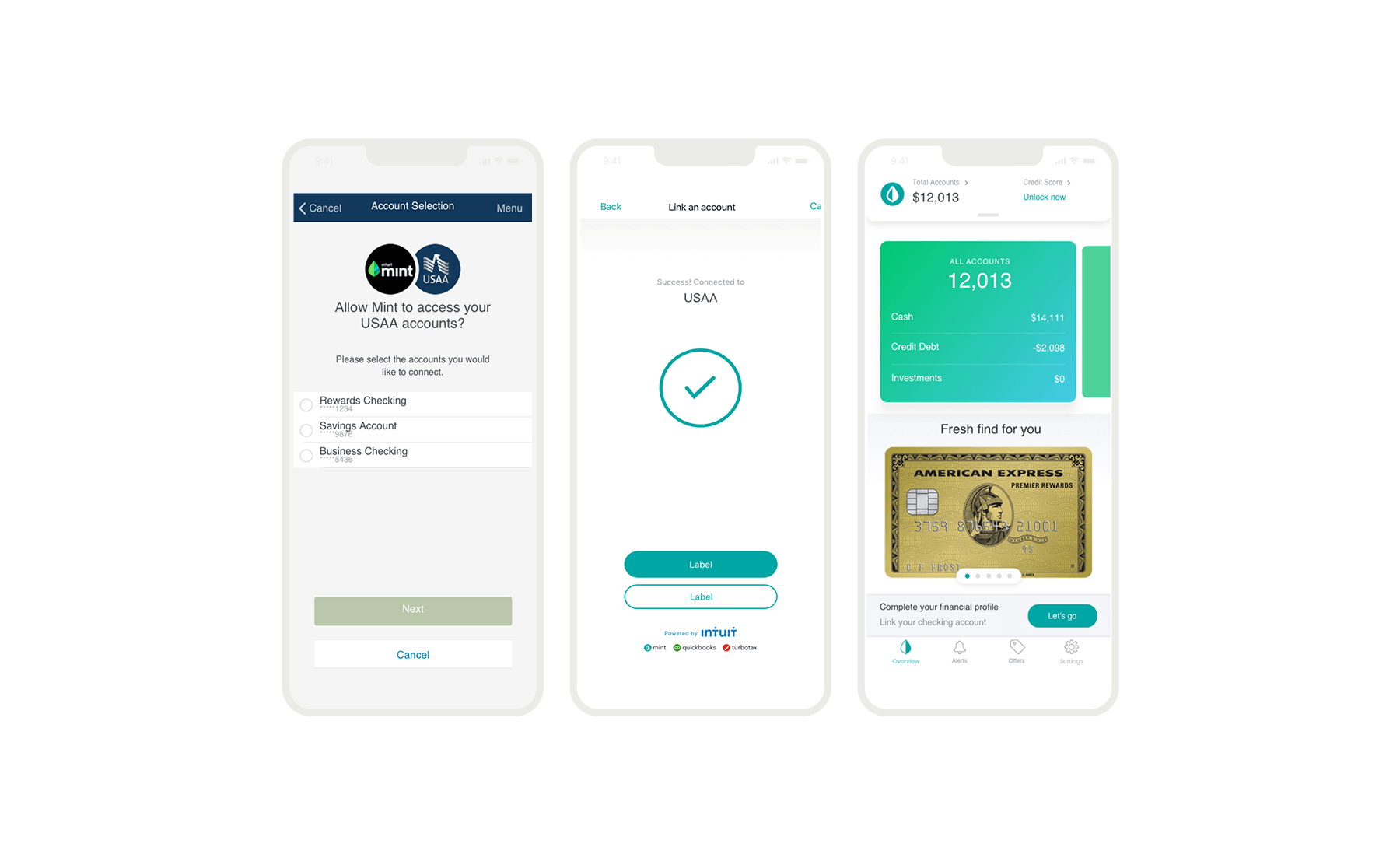
Our design intervention focused on Mint’s over 20 million users across the United States and Canada, as of 2019. We particularly focused on those who are financially conscious. According to Mint’s 2019 data, over 70% of users pay off credit card balances monthly, suggesting they have invested time to gain confidence in their financial processes. Mint’s existing functionality allowed users to see their financial status, track spending, monitor investments, and receive bill reminders in one place, as shown in dashboard screens displaying consolidated financial information. Our challenge was to extend this convenience while maintaining security when third-party applications requested access to this consolidated data. This goal became increasingly important, as Finicity had established data exchange agreements with major financial institutions like Chase Bank (in 2017) and USAA (in 2018), moving from credential sharing to API-based data exchange. As a founding board member of the Financial Data Exchange (FDX) organization alongside Intuit, Finicity was committed to implementing secure, transparent standards for financial data sharing.


Design Interventions
The design intervention allows users to understand what data is being shared, with whom, for what purpose, and for how long. Building on this, my UX solutions started with basic information about connections, then detailed specific data requested (SSN, routing numbers, account information). Finally, the UX provided granular control over which accounts to connect, why this information is needed, and how long it will be accessed, integrating with financial institutions.

Track accounts, credit, and investments securely while knowing exactly what data is shared and why.
Toolkit, Methods & Frameworks
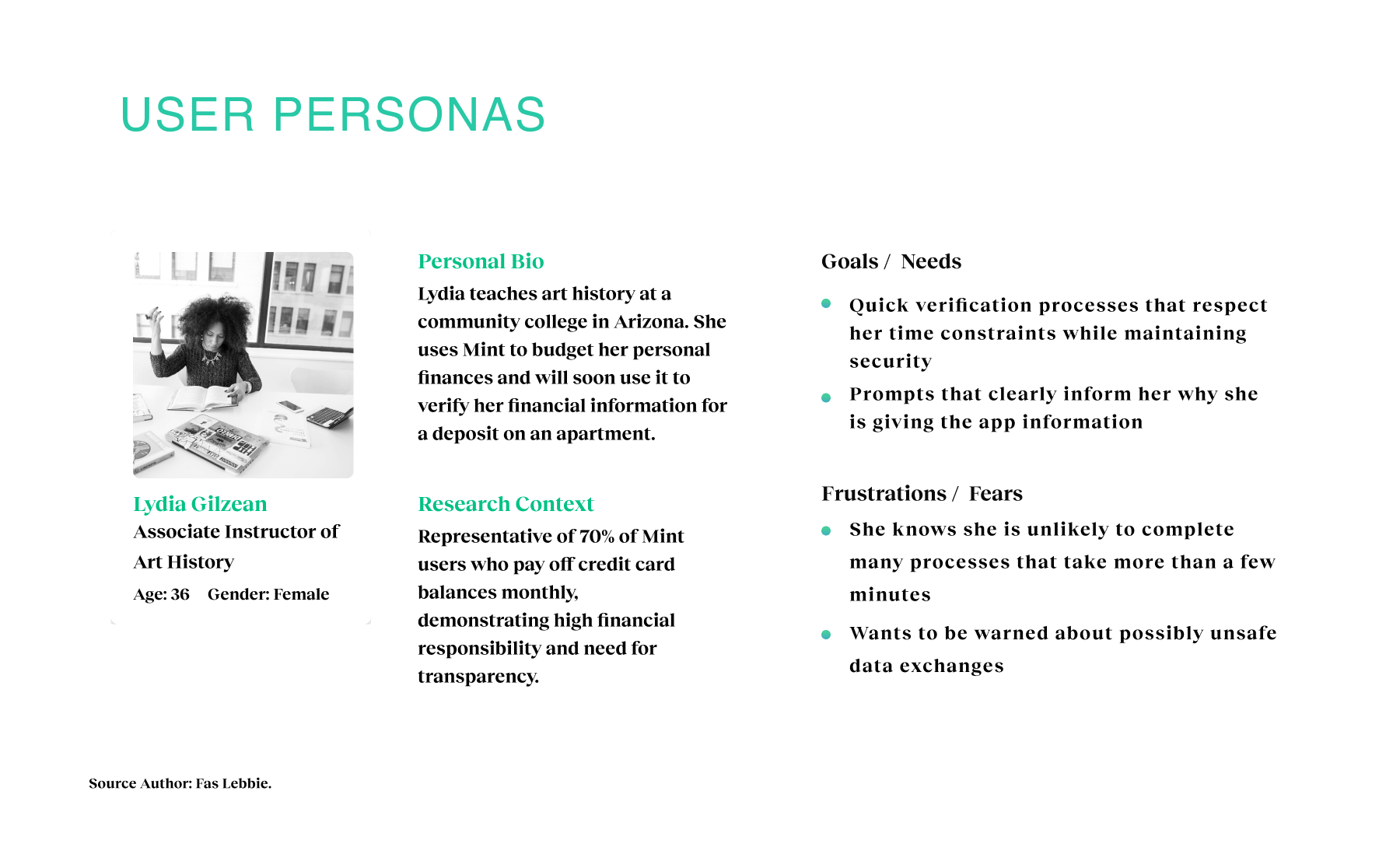
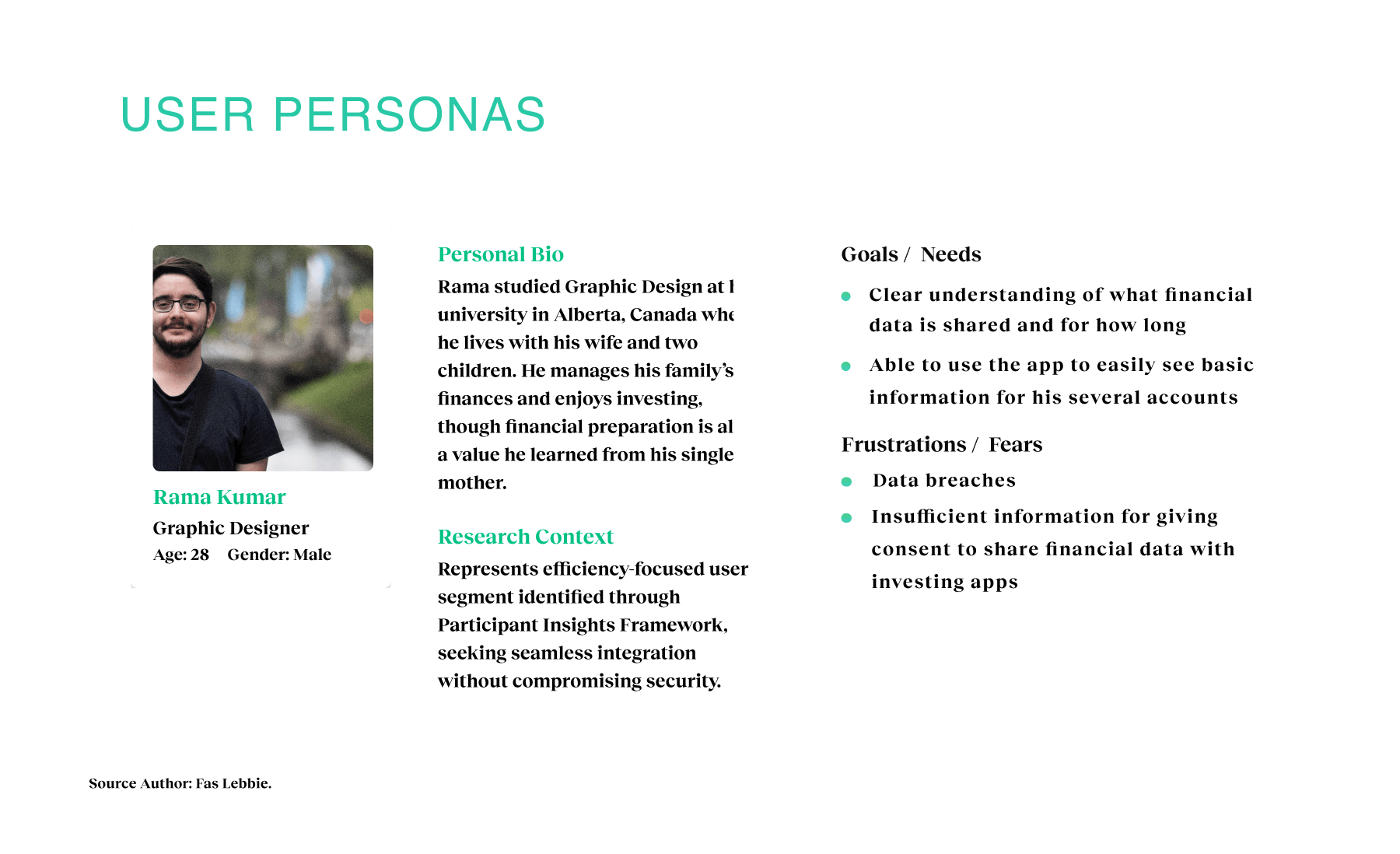
I used Personas featured canvas, participant insights frameworks, and progressive disclosure mapping to uncover user hesitations around financial data sharing. These approaches clarified pain points, shaped design principles for transparency and trust, and informed feature development such as biometric authentication and tiered permission controls.
Mint Users Reached
Extended secure data-sharing capabilities to Mint’s entire user base across the United States and Canada, fundamentally transforming how consumers interact with their financial data.
Credit-Conscious Users
Leveraged the financially responsible user base who pay off credit card balances monthly, ensuring adoption by users who value transparency and control.
FDX Member Organizations
Contributed to the rapid growth of the Financial Data Exchange ecosystem, establishing industry-wide standards for secure financial data sharing by project completion.
Reflections & Impact
The early partnership with Mint, a leader in transparent financial data sharing, served as a blueprint for secure, open banking standards. It gave over 20 million users control over their financial information, with FDX growing to 36 member organizations by 2019. The consumer user-controlled approach helped build consumer trust in digital financial services, ultimately contributing to the validation of open banking solutions and setting the stage for continued industry transformation toward consumer financial data management.
Next Steps
- Enhance consent and security controls with more granular permission settings, time-based access, and biometric authentication options.
- Develop user education tools such as in-app guides and notifications to increase awareness of data-sharing benefits and transparency.