
Overview
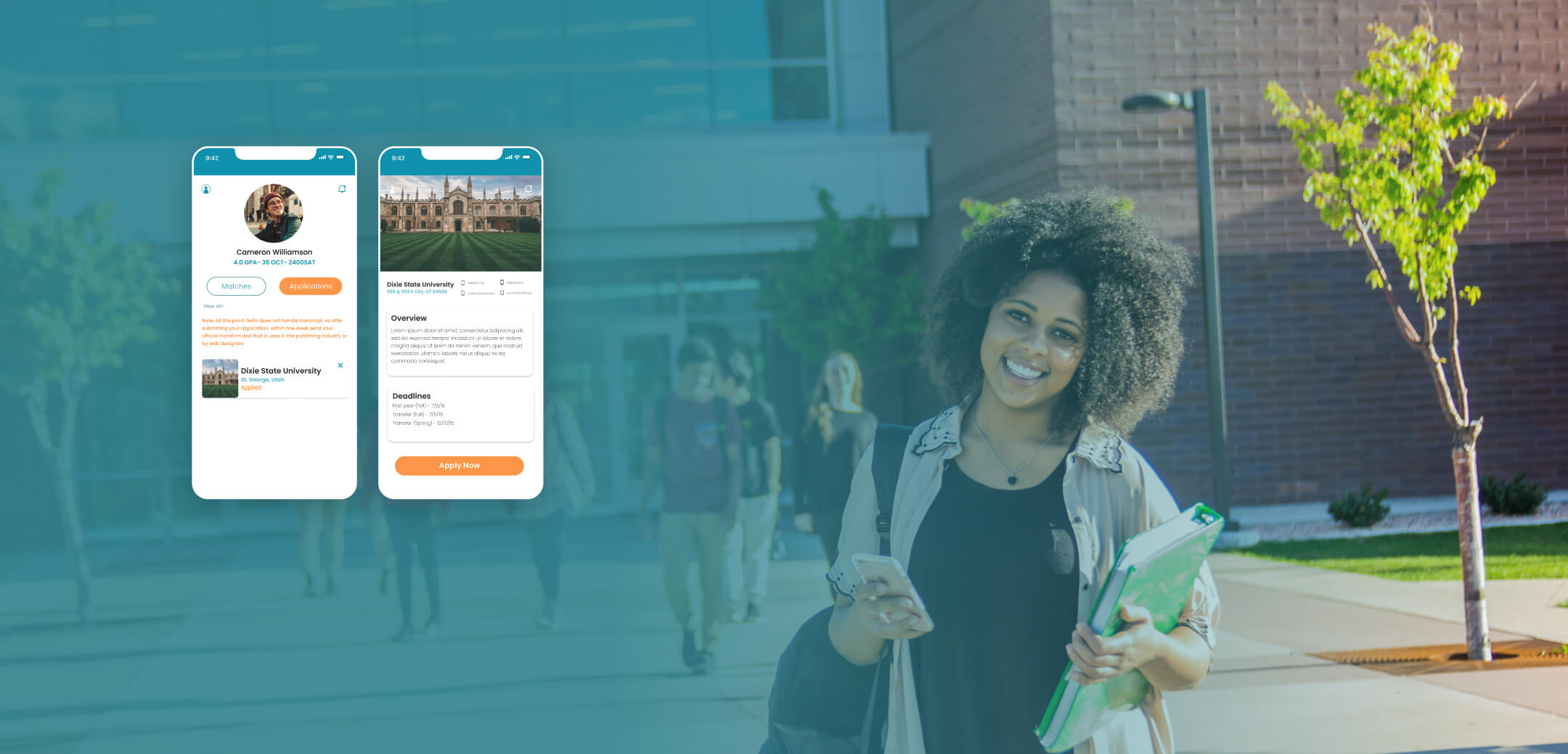
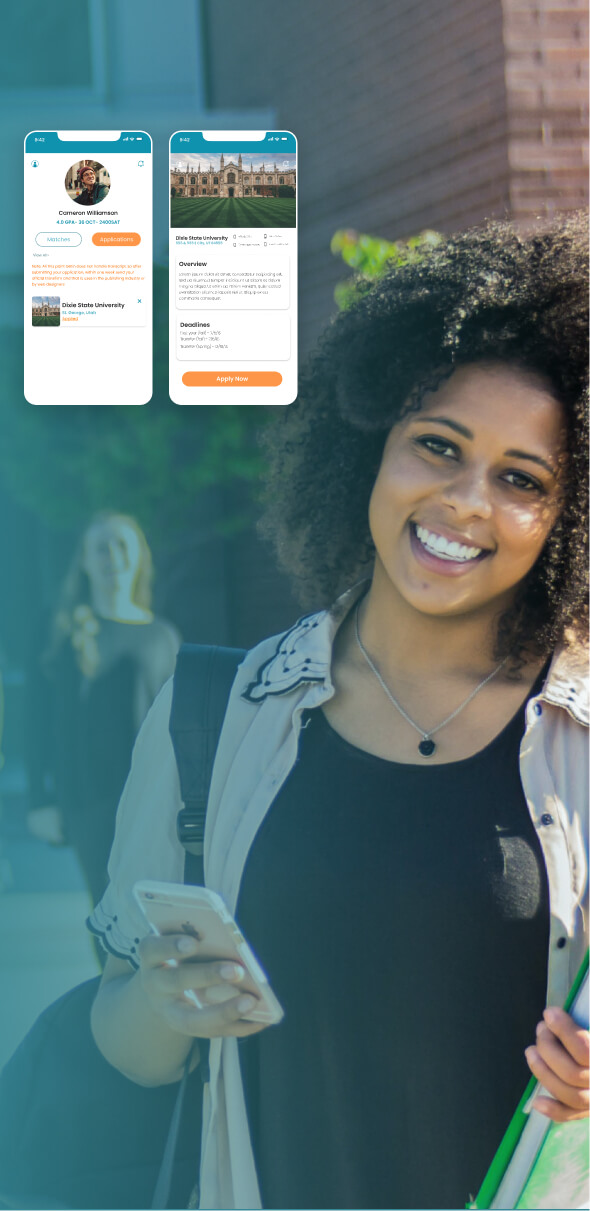
The Getin App transforms how first-generation and low-income students navigate the complex college application process. By streamlining what was once an overwhelming experience into a mobile-first, intuitive application, we’ve helped thousands of students who otherwise might never have applied to college due to time constraints, lack of guidance, or resource limitations. Through partnerships with admissions offices at Weber State University, our work pushed the boundaries of traditional application processes, delivering a complete solution to increase college applications by 20% among our target demographic in Utah.
Research & Design
Experience Design ·Mobile-first design · User research · Mixed methods insights · First-generation student strategy · Brand narrative · Value proposition design
- Duration: June 2017-May 2018
- Partners: I'm First Organization, Weber State University, University of Utah
- Team: Fas Lebbie, Rebecca Tierney, Arthur Francis

My Role
I conducted mixed-methods research, combining surveys, interviews, and in-situ testing. These insights revealed trust barriers and shaped Genin’s unique value proposition around peer guidance, credibility, and social proof.
I led the design strategy grounded in lived experience as a first-generation student, translating research into inclusive user journeys. I designed mobile-first solutions that addressed the emotional and logistical gaps in navigating college support systems. I facilitated fast prototyping cycles and defined MVP features that prioritized student needs. My work helped align engineering, content, and leadership around a clear, user-informed roadmap.
I crafted a relatable, empowering narrative aligned with Genin’s mission, building a visual identity that resonated with first-gen students. I ensured every screen and interaction reflected clarity, trust, and belonging.
Problem Context
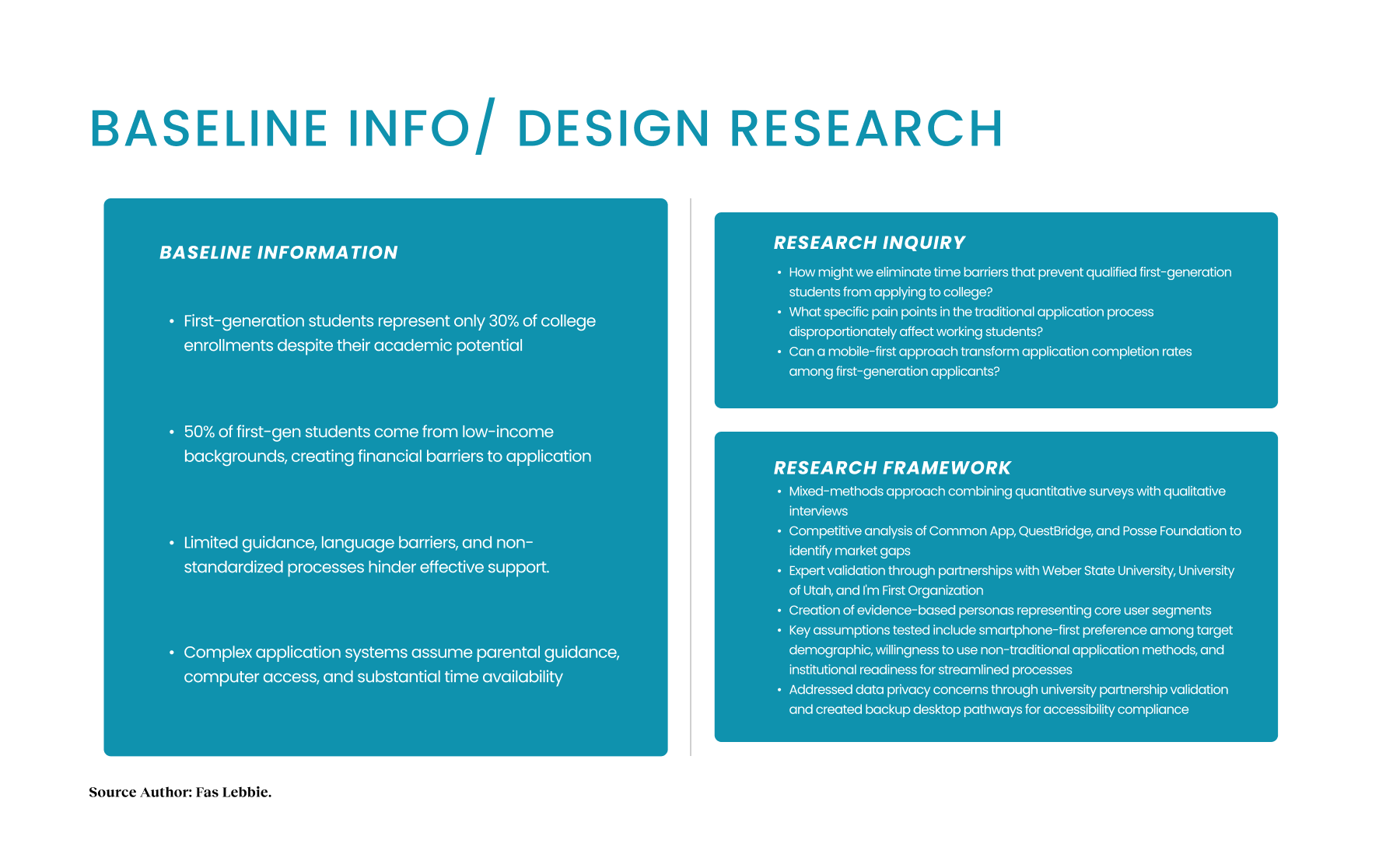
First-generation students encounter a myriad of challenges during the college application process in the U.S., and they make up only 30% of enrolled post-secondary students. An estimated 1.5 million first-generation students are enrolled in higher education today, with 50% coming from low-income backgrounds. These students face unique obstacles their peers do not: parents without college experience to guide them, work responsibilities that limit application time, and inadequate college counseling resources. The traditional application process requires multiple time-consuming steps: researching colleges, gathering documents, writing essays, and navigating complex application systems. The existing systems create barriers that disproportionately affect first-generation applicants, resulting in talented students never pursuing higher education.
My Approach
I applied lived experience, mixed-methods research, and rapid prototyping to co-create with first-gen students and parents prioritizing trust, clarity, and cultural relevance for first-gen students navigating college systems.
Design Process
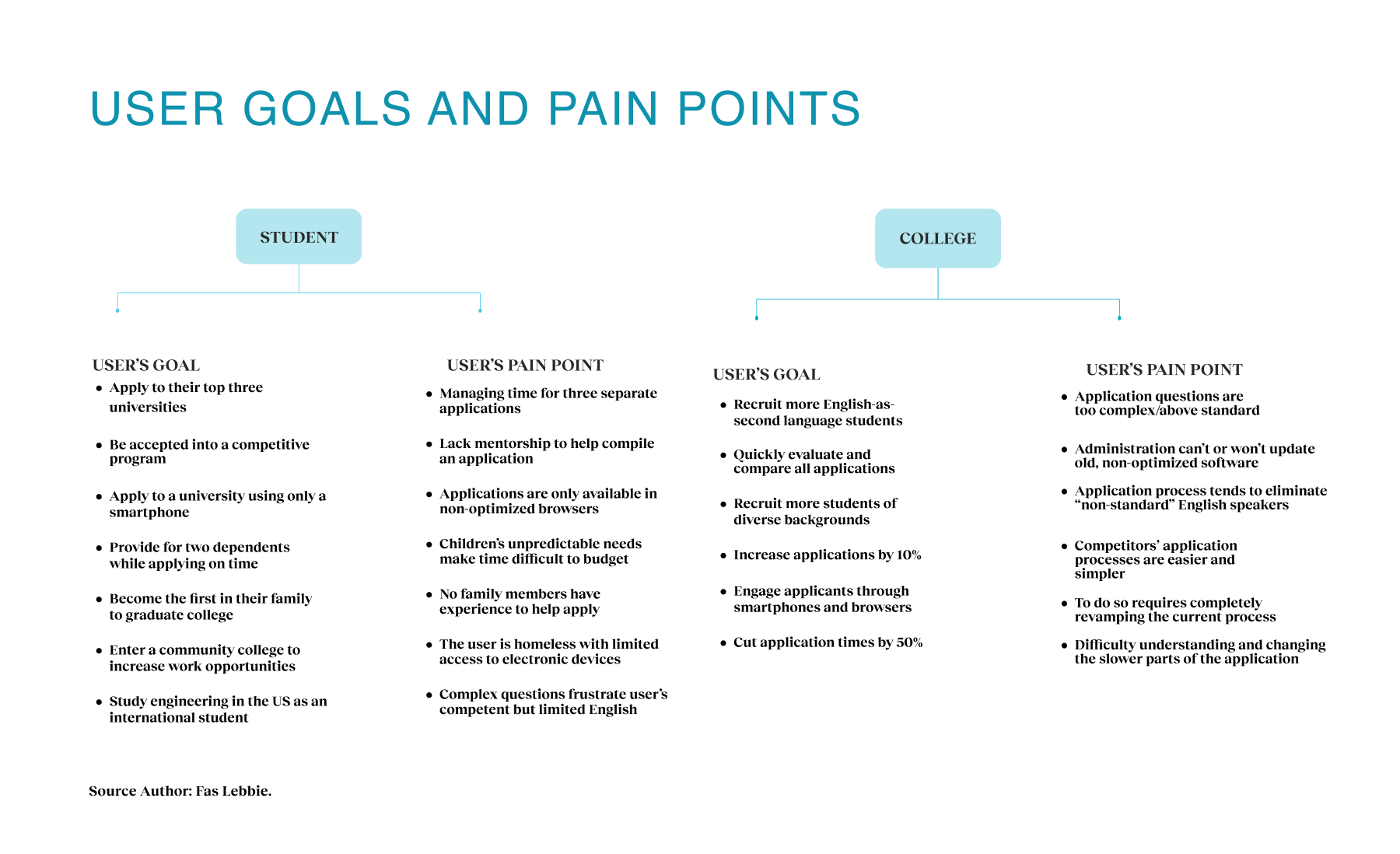
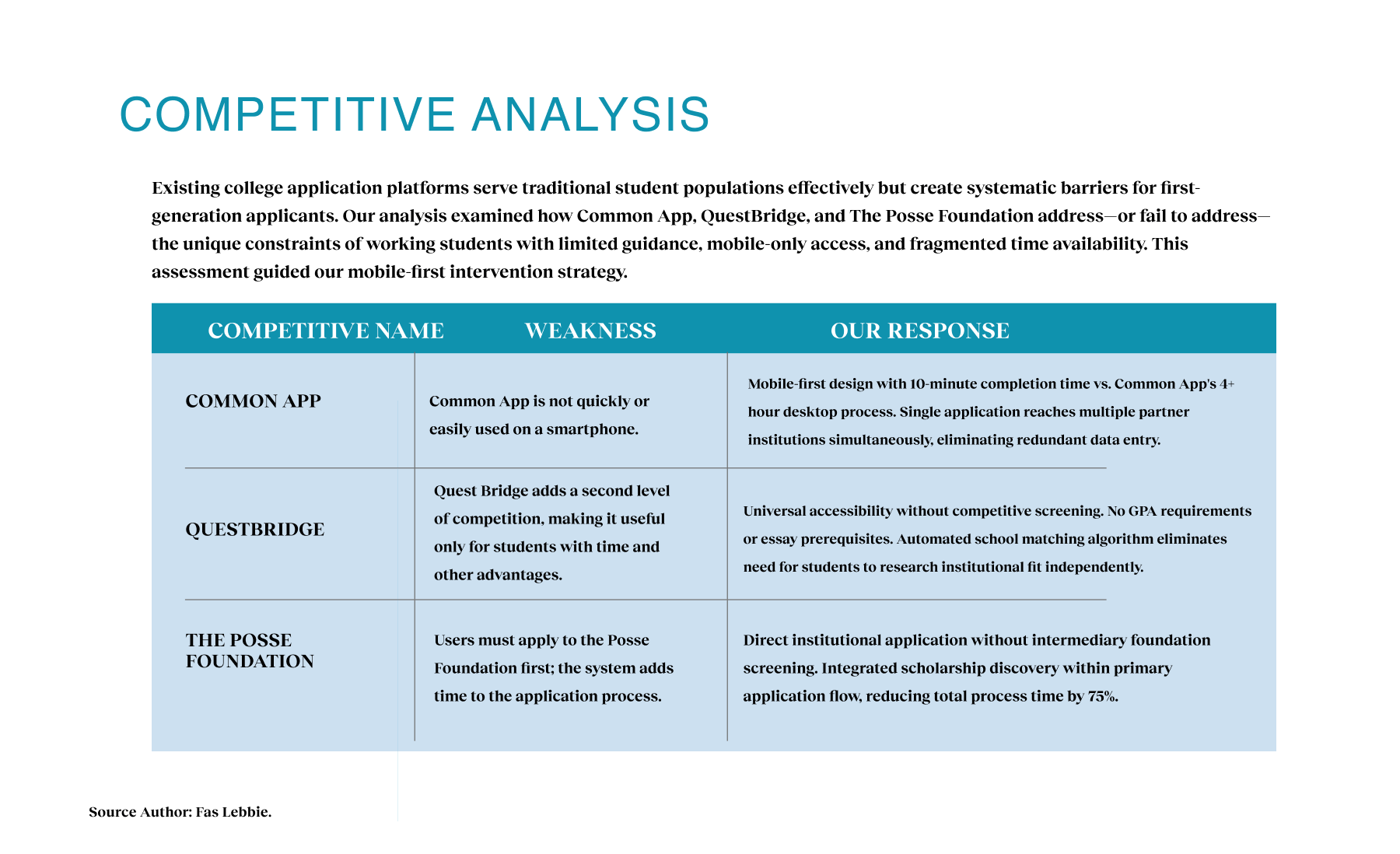
Approximately 30% of students enrolled in post-secondary institutions are first-generation college students, and about 50% come from low-income backgrounds. These students face unique challenges: parents without college experience to provide guidance, full-time jobs that limit application time, and responsibilities caring for other family members. Combining quantitative and qualitative approaches through surveys with 500 high school seniors and in-depth interviews with students and university administrators, our findings showed that 462 students believed college applications were too long, 480 said faster applications would increase college attendance, and 200 felt they couldn’t attend college due to work obligations. We created detailed personas representing our core users, including Prena, who struggles with language barriers; Jamal, who works full-time while supporting family members; and Punit, who returns to education after starting a family. Our competitive analysis of existing solutions like Common App, QuestBridge, and The Posse Foundation identified their limitations in serving first-generation students, revealing that traditional application processes — which can take days to complete across multiple platforms — present significant obstacles. We further validated our understanding by engaging with experts from university admissions offices and programs who serve first-generation students. Talking to key actors ensured our design strategy addressed real barriers to college applications. Our intervention focused on speed, simplicity, and mobile accessibility — directly responding to the constraints faced by first-generation students with limited time and support resources.
Our findings highlighted the barriers preventing first-generation students from applying to college. The lengthy, complex application process represented a significant obstacle, with 92% of students agreeing that faster applications would increase college attendance. Traditional applications required hours or days to complete, often across multiple sessions — an impossibility for students working full-time jobs or with limited computer access. The application language was often needlessly complex, creating additional barriers for ESL students and those without college-educated parents to assist them. Students prefer applications they can complete on smartphones and simplified forms that eliminate redundant information entry. We found that the perception of applications as time-consuming and difficult prevented students from attempting to apply. These insights pointed to precise design interventions: create a mobile-first application process, drastically reduce completion time, simplify language and interface elements, and implement a single application that could be sent to multiple institutions. My team and I sought to transform the college application process to make higher education accessible to a previously excluded population.
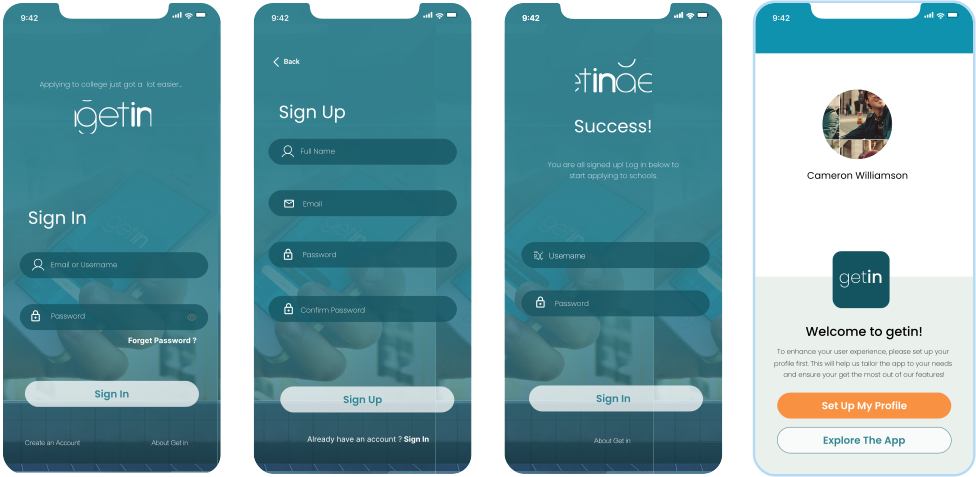
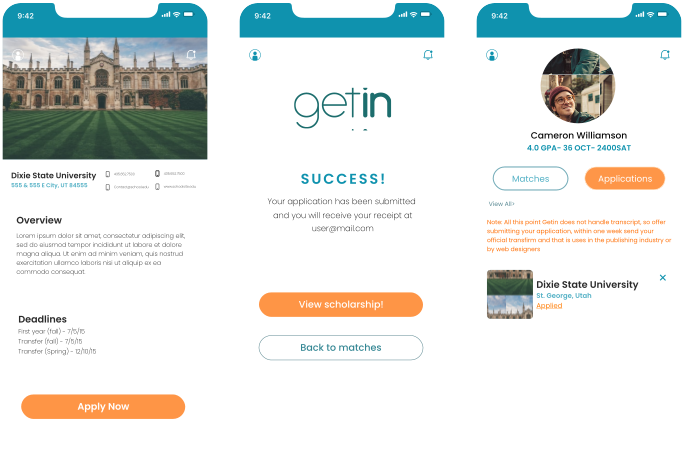
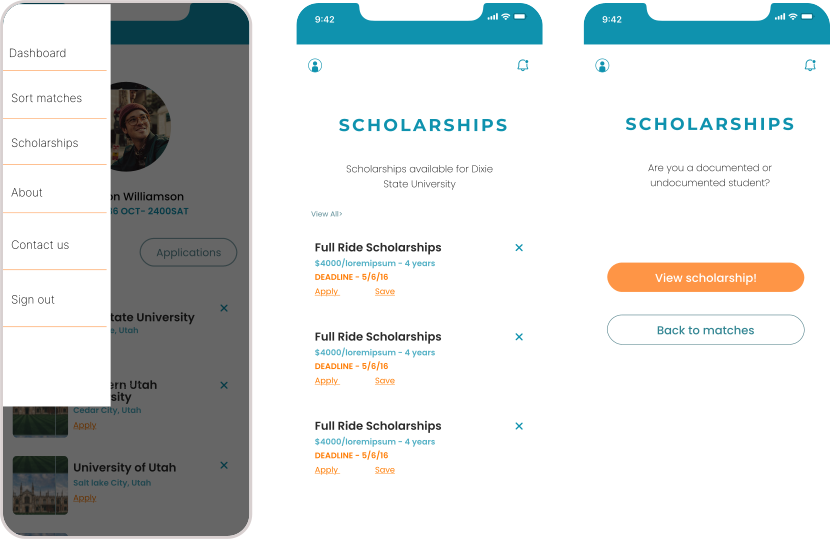
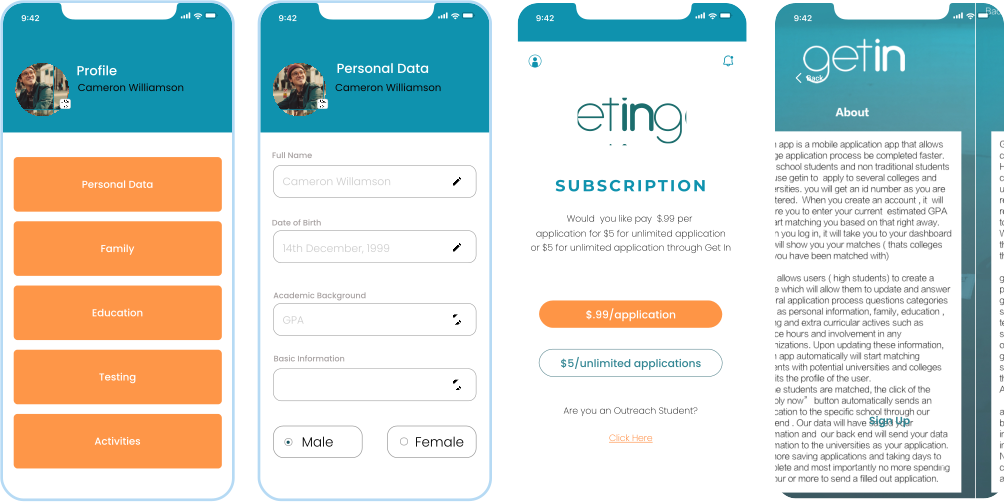
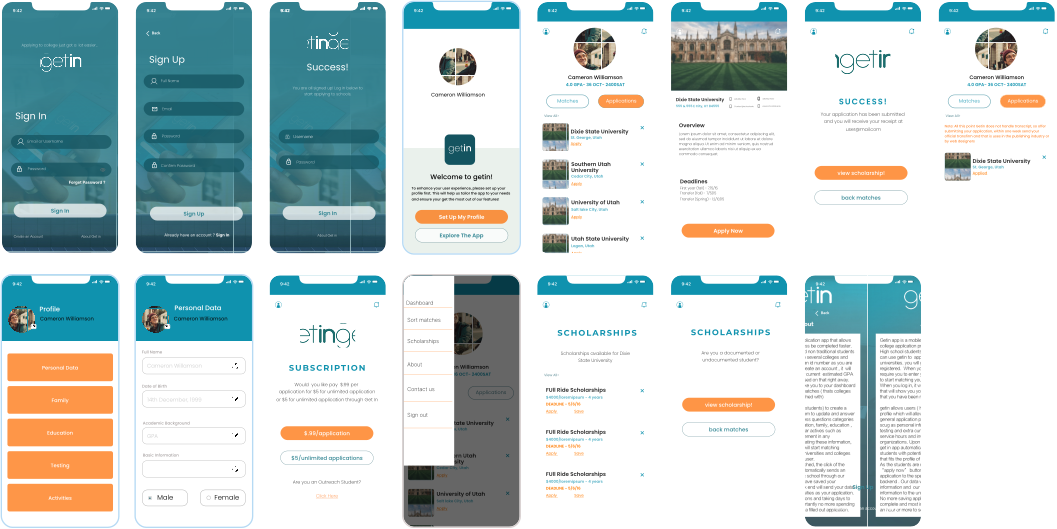
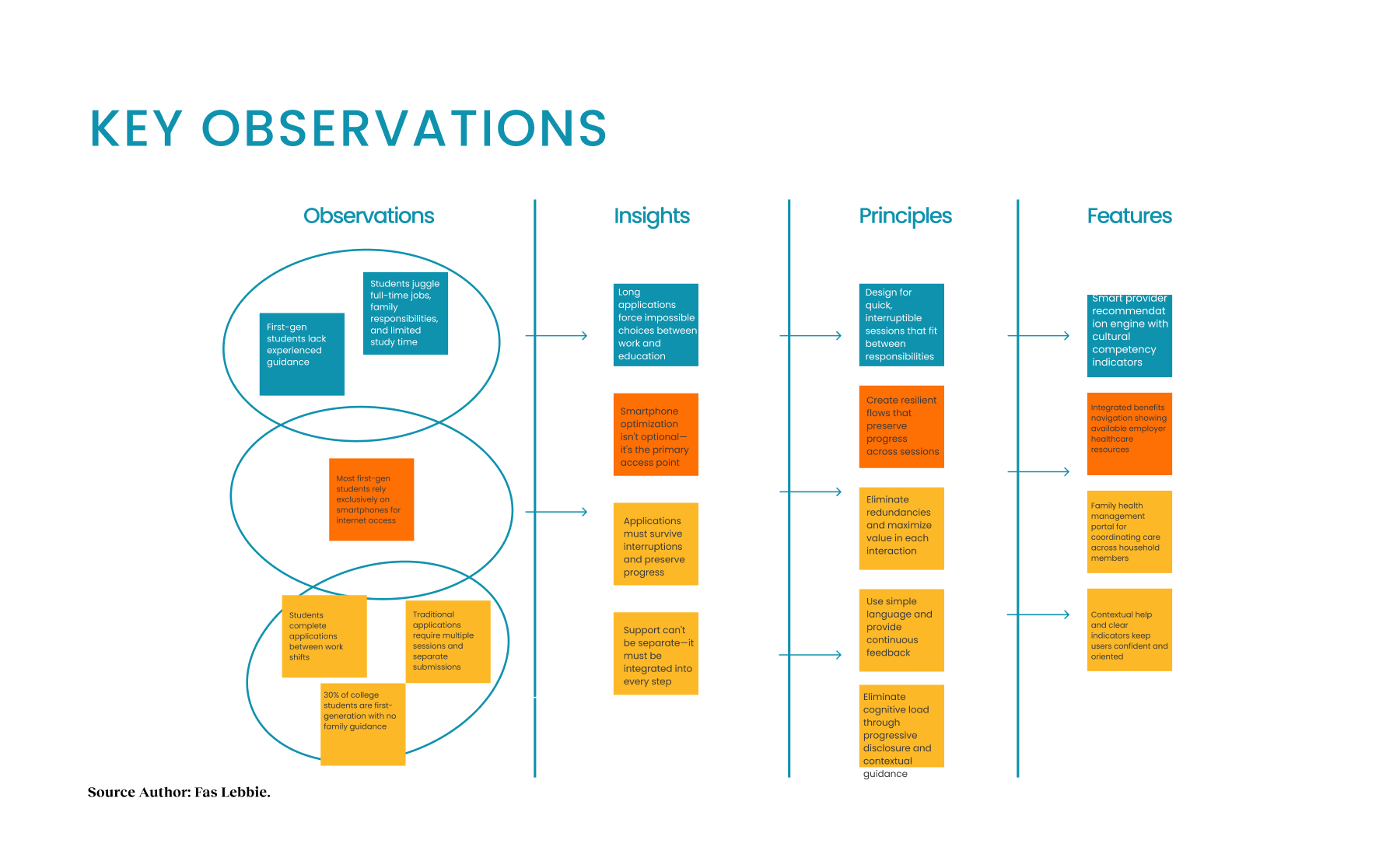
The MVP prototype was tested with high school students applying to Weber State. Our prototyping process focused on three essential components: simplified information architecture, intuitive mobile interactions, and a streamlined application flow. We began with affinity mapping to outline core features, evolving into low-fidelity wireframes testing information flow. Through iterative refinement based on user feedback, we developed high-fidelity prototypes that we tested with 12 high school seniors. Testing revealed that users valued completion time most, with interface simplicity and mobile optimization following. We measured success through learnability, efficiency, and error rates. The implementation strategy involved a phased rollout, starting with core functionality and adding features as users familiarize themselves with the system. Each iteration incorporated feedback from students and university administrators. We used Nielsen’s Ten Heuristics for expert evaluation with admissions professionals, which led to further refining of the app. Final usability testing at Davis High School saw 30 students complete college applications in under 10 minutes, validating our core design premise.

Design Interventions
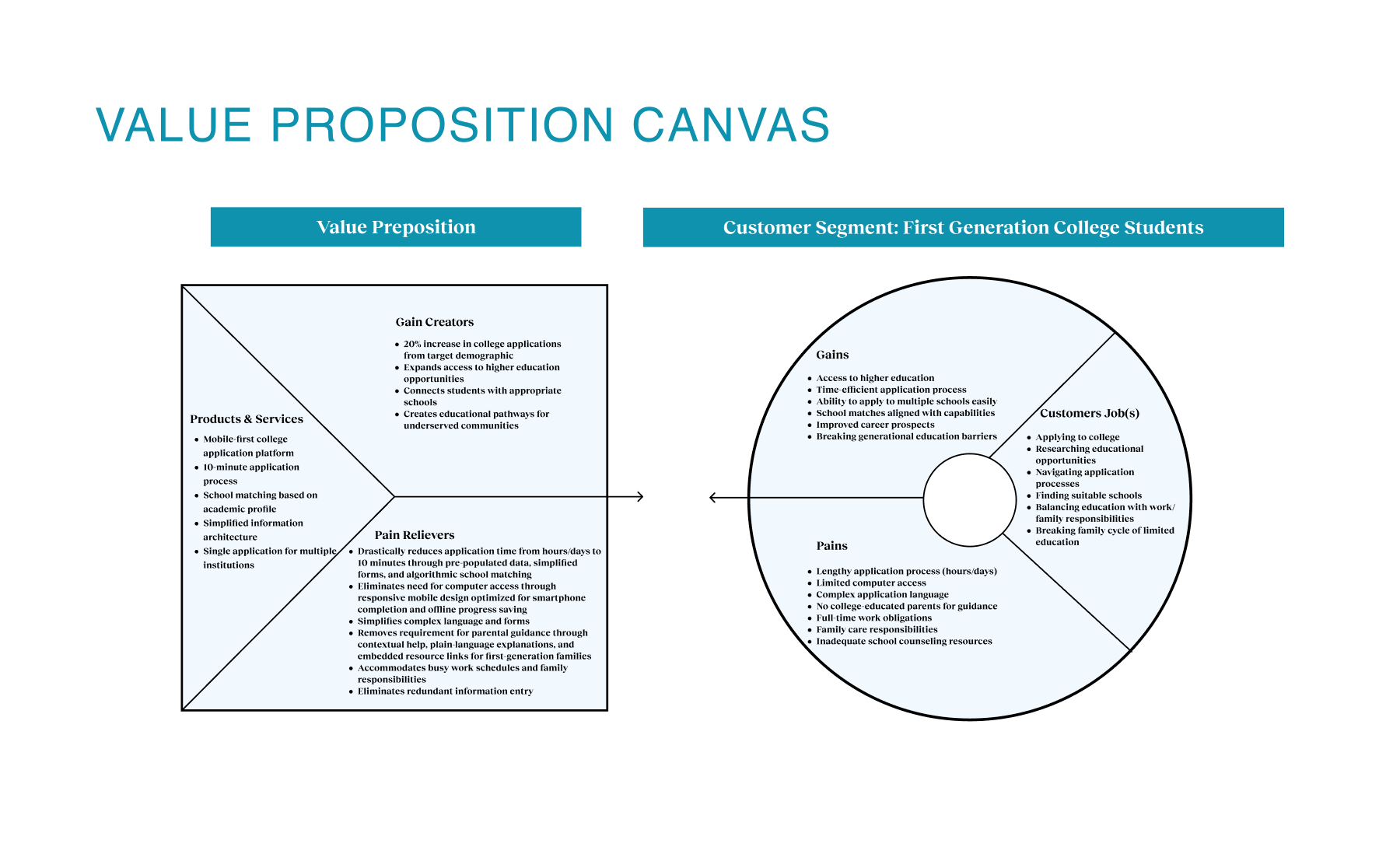
We developed the Getin App, a mobile-first solution that allows students to complete college applications in 10 minutes, matching them with appropriate schools based on their academic profiles and preferences. The platform aims to increase application submission rates by 50%, helping connect over 30,000 first-generation students with higher education opportunities.


Toolkit, Methods & Frameworks
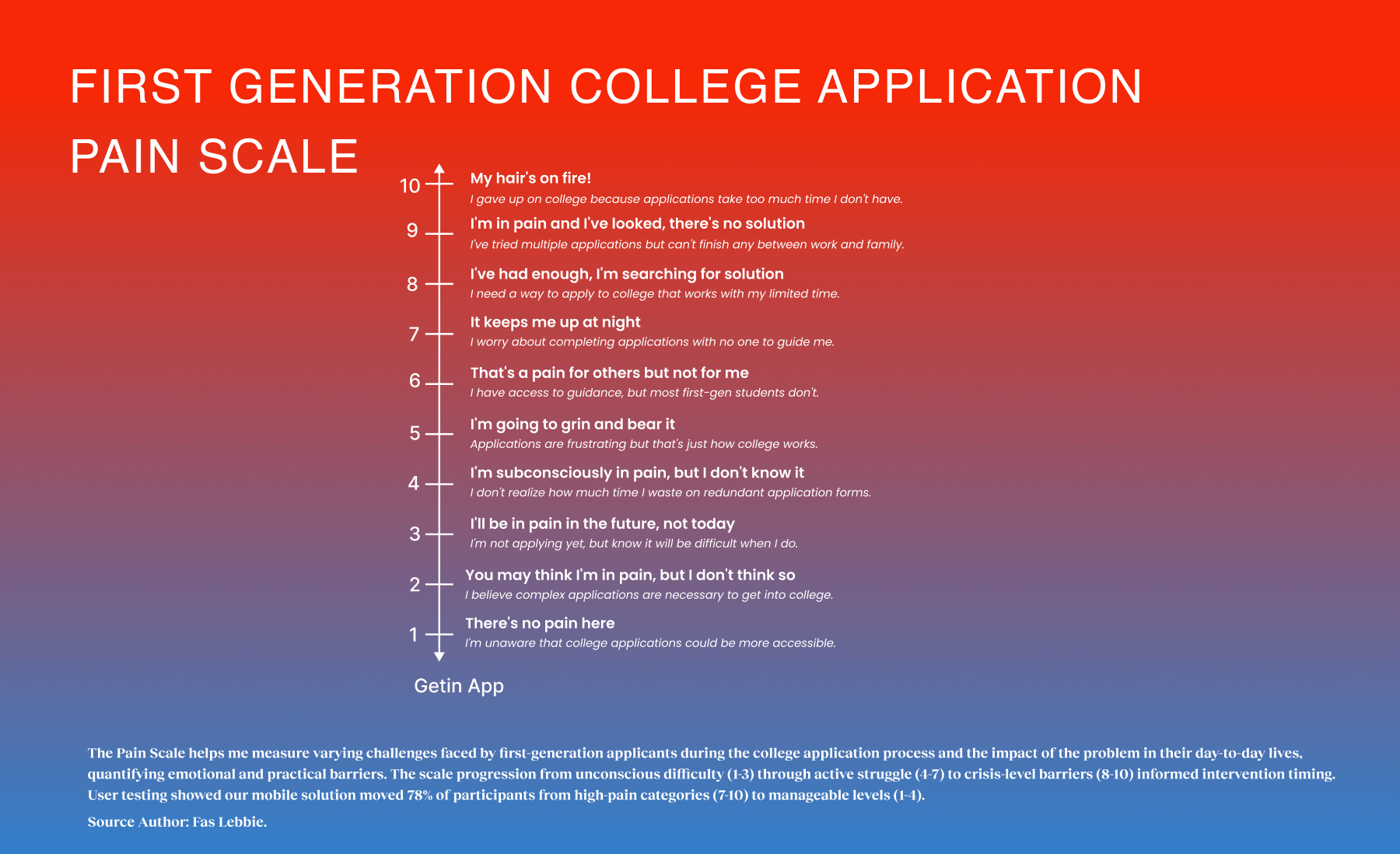
I applied a mixed-methods framework including surveys, interviews, and rapid prototyping to uncover barriers first-gen students face, from time pressure to lack of guidance. Using a Pain Scale framework, we translated insights into our theory of Change, which helped build features for our mobile-first strategy solutions.
Increase in College Applications
Among first-generation students in Utah through the Weber State University pilot program, validating the mobile-first approach to democratizing higher education access.
Application Completion Time
Reduced from hours or days required by traditional applications, removing the primary barrier cited by 92% of surveyed students who said faster applications would increase college attendance.
Student Agreement Rate
Percentage of surveyed high school students who confirmed that faster application processes would directly increase their likelihood of attending college.
Reflections & Impact
The Getin App has moved beyond concept to active fundraising and partnership development, demonstrating its value to college admissions offices nationwide. The pilot with Weber State University validated our approach, helping increase applications among first-generation students in Utah. The company is addressing critical barriers that prevent qualified students from pursuing higher education through a mobile-first solution that reduces application time from hours to just 10 minutes. The company’s vision creates educational pathways that transform individual lives and entire communities. By democratizing college access regardless of time constraints, family background, or technical resources, the Getin App represents a fundamental shift in how universities connect with previously overlooked talent pools.
Next Steps
- Expand partnership network to include 10+ additional state universities across the Mountain West region.
- Integrate a comprehensive scholarship database with automated matching based on student profiles and academic achievements.
- Develop an administrator dashboard for university admissions offices to track application flows and student engagement metrics.
- Create a parent/family engagement portal to help first-generation families navigate the college process alongside students.
- Establish API integrations with existing university information systems to streamline data transfer and reduce administrative burden.
- Launch the essay writing assistance feature with templates and guidance specifically designed for first-generation student experiences.