Overview
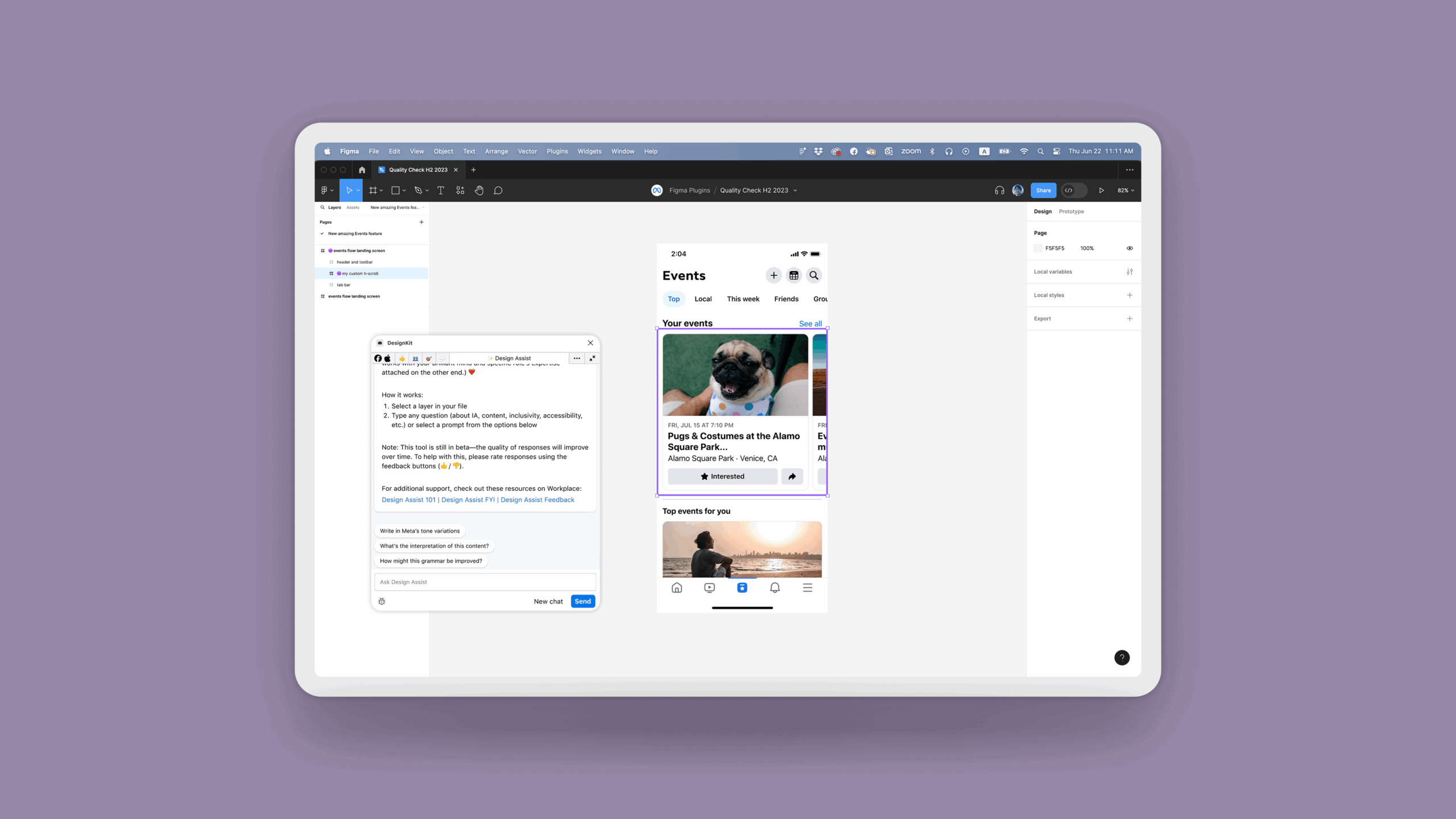
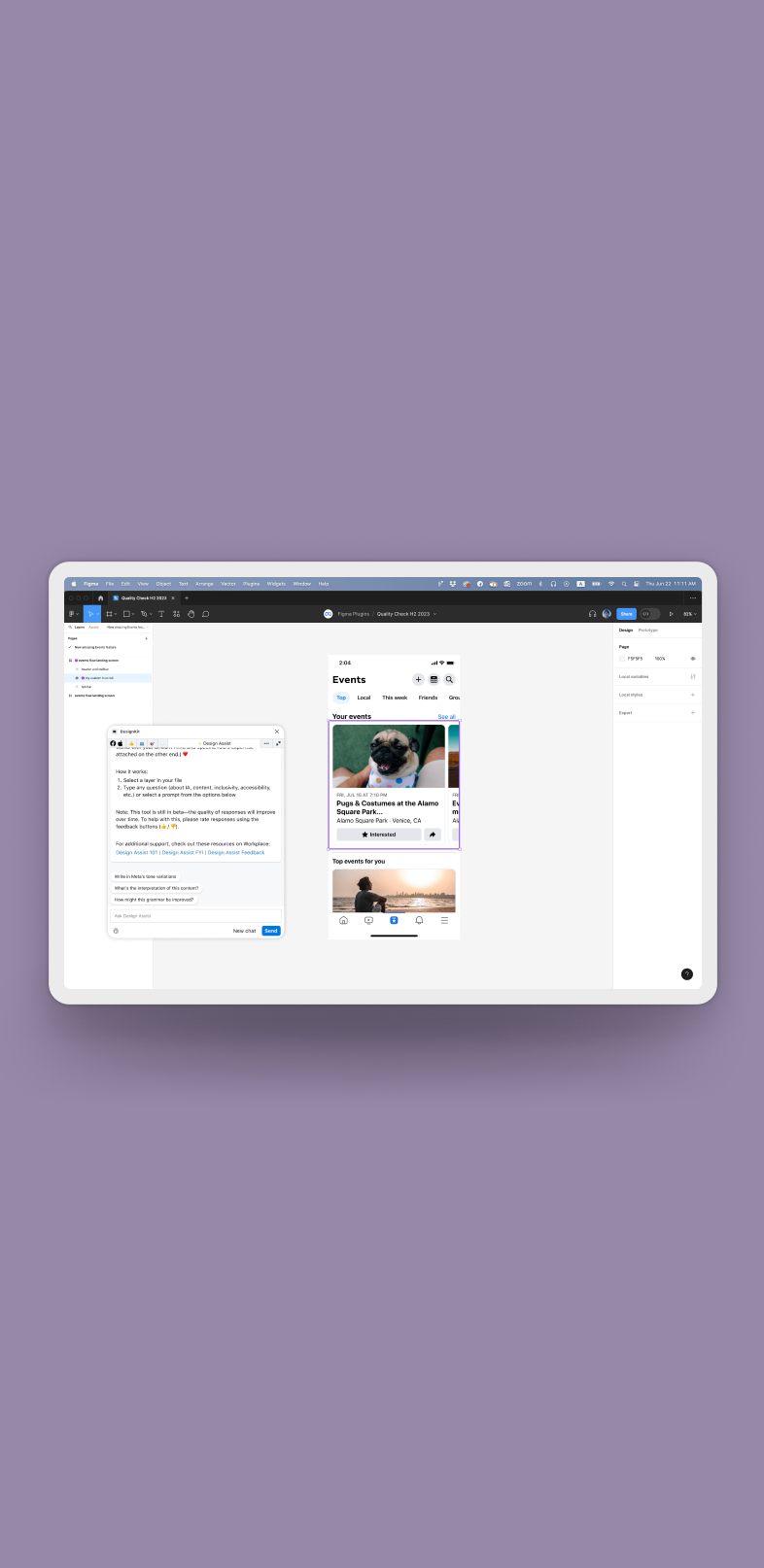
Design Assist is an AI-powered tool that helps Meta product designers work seamlessly with the Blueprint design system inside Figma. It provides contextual guidance, real-time compliance checking, and automated recommendations — reducing cognitive load while preserving creative flow. Partnering with MetaGen AI and Blueprint teams, we transformed compliance from a constraint into an integrated creative process. Today, over 600 designers use Design Assist daily, driving higher adoption and consistency across enterprise products. The design, development, and implementation of Design Assist improved how product designers at Meta interact with the Dim Sum design system.
Research & Design
AI product design · UX research · Interaction design · Conversational interfaces · Design systems · Workflow automation · Compliance frameworks · Cross-platform integration · Figma plugins · Toolchain integration
- Duration: April 2024–January 2025
- Partners: MetaGen, Blueprint Design System, Figma
- Team: Fas Lebbie, EISA Engineering
Confidentiality: Certain details have been adjusted to protect proprietary information while accurately representing my design approach and impact.

My Role
As the Design Manager at Meta, I led an AI-powered design tool’s vision, UX strategy, and implementation, collaborating closely with cross-functional teams, including MetaGen AI engineers, product managers, and the Blueprint design system team. I directed research studies to identify designers’ pain points related to design system adoption and created and tested multiple iterations of the conversational UI and contextual features. Additionally, I oversaw the tool’s integration with Figma and Blueprint, ensuring a seamless user experience.
WHAT I BROUGHT
Led end-to-end AI product design process, orchestrating multi-layered UX research and translating insights into interaction models that reduced system-related tasks.
Designed conversational interfaces and workflow automation features directly in Figma, embedding compliance frameworks and Blueprint design system integration, which helped 600+ daily designers maintain creative flow while improving design quality score.
Partnered with MetaGen and engineering teams to build plugins and toolchain integrations, delivering a phased rollout strategy that accelerated enterprise adoption and set new standards for AI-driven design tooling at Meta.
Problem Context
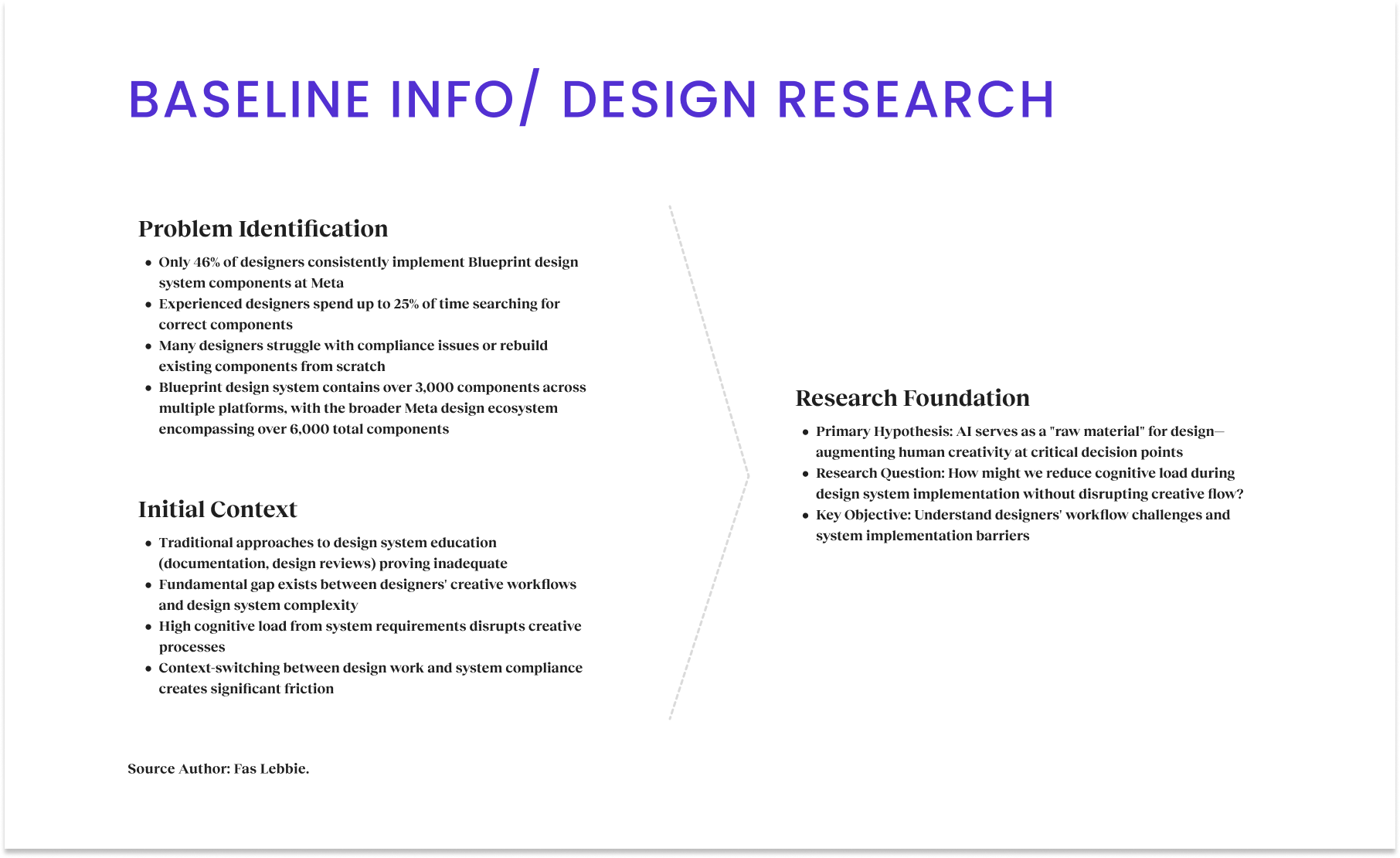
Only 46% of designers consistently implement the Blueprint design system components at Meta. Research identified that even experienced designers spent up to 25% of their time searching for correct components, struggling with compliance issues, or rebuilding existing components from scratch. This inefficiency stemmed from a fundamental gap between designers’ creative workflows and the growing complexity of the Blueprint design system, which contained over 3,000 components across multiple platforms. The traditional approaches to design system education, such as documentation websites and design reviews, were inadequate for real-time implementation needs. Designers were left with a high cognitive load that disrupted their creative processes. As Meta’s Enterprise Infrastructure Services and Analytics org product ecosystem continued to expand, this disconnect led to inconsistent user experiences, increased design debt, and longer production timelines. We needed a more integrated approach to design system implementation, one that could provide contextual assistance without forcing designers to context-switch between creative work and system compliance.
My Approach
I combined research-driven insights, conversational AI design, workflow design, and iterative prototyping with cross-functional collaboration to streamline workflows and embed compliance into design tools.
Design Process
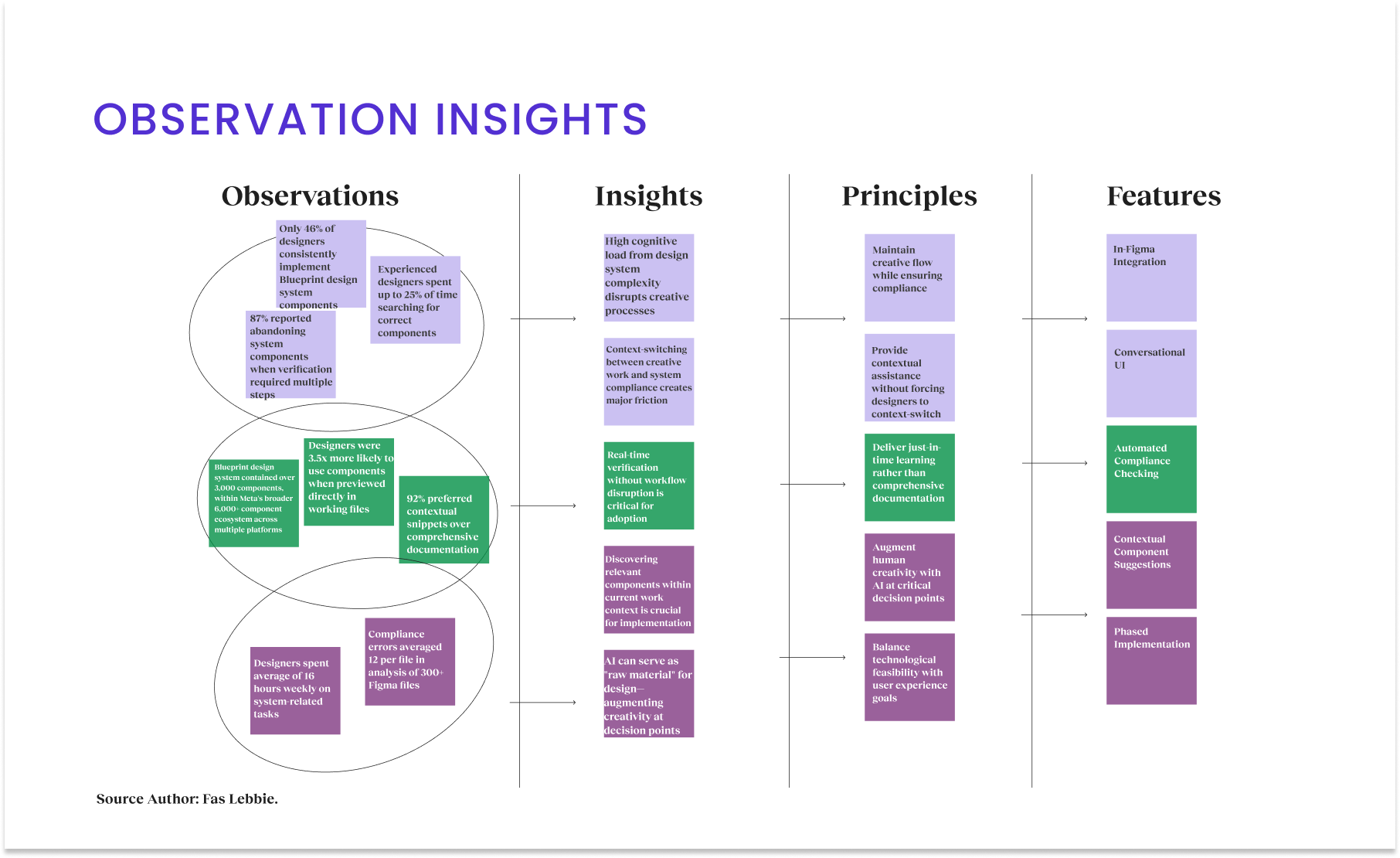
My research began with the hypothesis: How could AI serve as a raw material for design? Built on the premise of not replacing designers’ creativity but augmenting it at critical decision points. To test this, we needed a comprehensive understanding of designers’ actual workflow challenges and system implementation barriers. We conducted multi-layered research, which combined 17 in-depth interviews with Meta product designers, 20 contextual inquiries observing real-time workflow patterns, and a quantitative analysis of 300+ Figma files. We also mapped the design system implementation journey and identified critical moments where designers abandoned system compliance. We saw compliance errors averaged 12 per file, and system-related tasks consumed valuable design time.
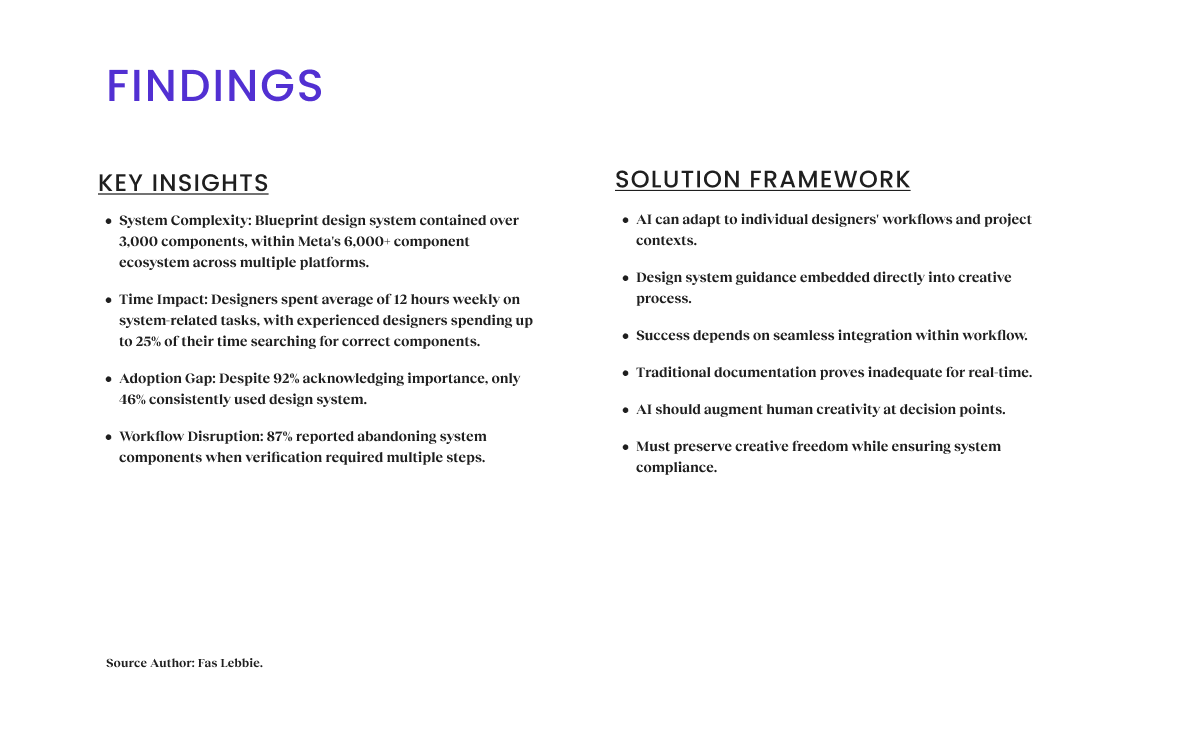
This mix of methodologies revealed that Blueprint and Dim Sum, the previous design systems, contained over 6,000 components across multiple platforms, and designers spent an average of 16 hours weekly on system-related tasks. Despite 92% of designers acknowledging the importance of design systems, only 46% consistently used these systems. The research identified three key opportunity areas for intervention. First, designers needed real-time verification of design system compliance without disrupting their flow 87% reported abandoning system components when verification required multiple steps. Second, they needed to discover relevant components within the context of their current work, as designers were 3.5x more likely to use system components when they could preview them directly in their working files. Third, designers needed to learn about system rules and patterns while designing, with 92% preferring contextual snippets of information over comprehensive documentation. These insights revealed that successful design system implementation isn’t just about better components or documentation; it’s about seamlessly integrating assistance within the creative process. We determined that an AI-powered design assistant can be a raw material for designers by adapting to designers’ workflows.
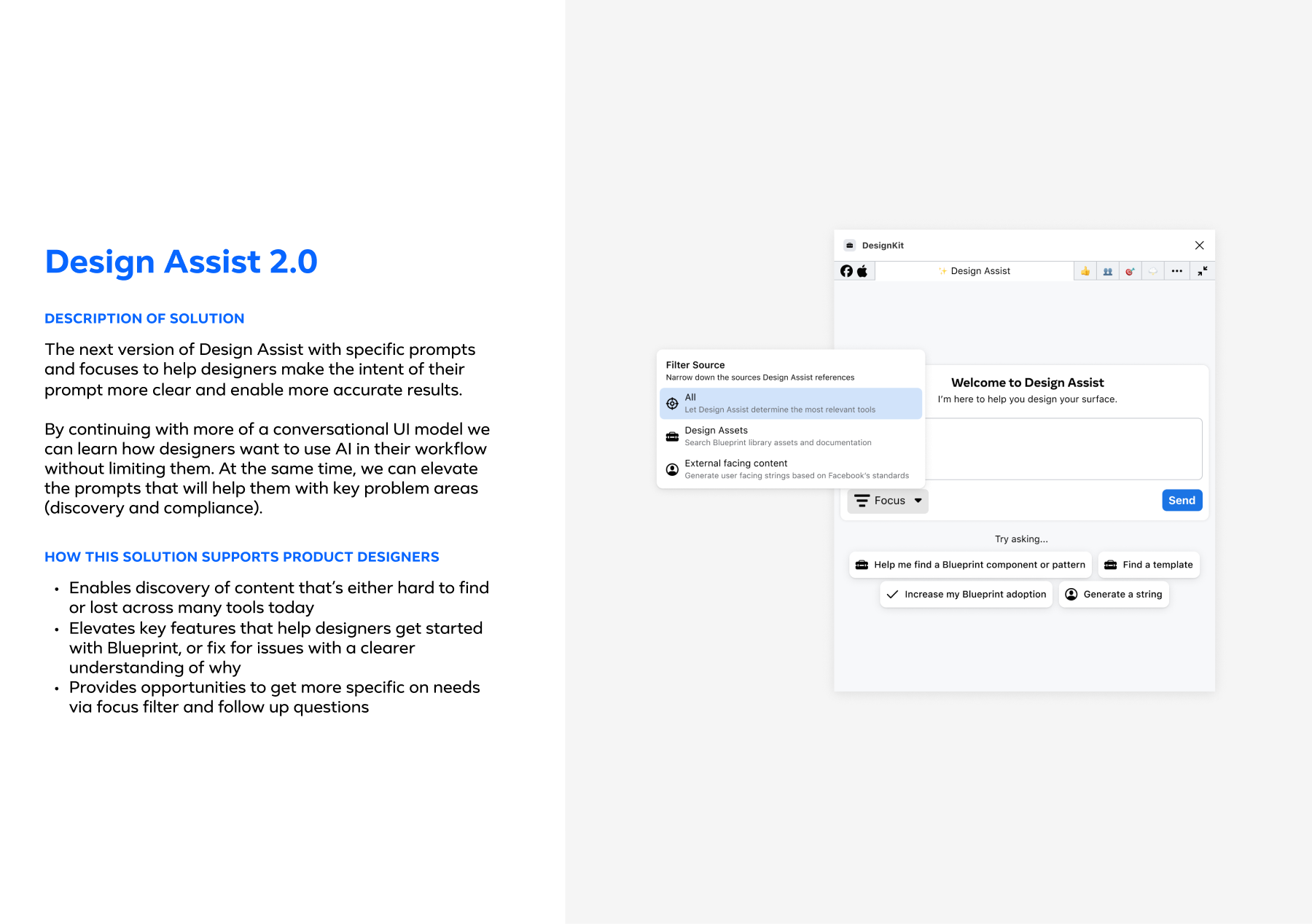
Our prototyping approach evolved through collaborative design workshops and iterative testing to balance technological feasibility with user experience goals. We conducted three structured design workshops (February–March 2024) where cross-functional teams collaborated to explore and refine Design Assist concepts. These workshops brought together product designers, AI specialists, and Blueprint system experts to co-create solutions using the XDS Design System components and GenAI tooling.
The workshop structure followed a progressive development path:
- Concept exploration and ideation based on research insights
- Feature refinement and prototype development with critique sessions
- Demo preparation and implementation planning with engineering teams
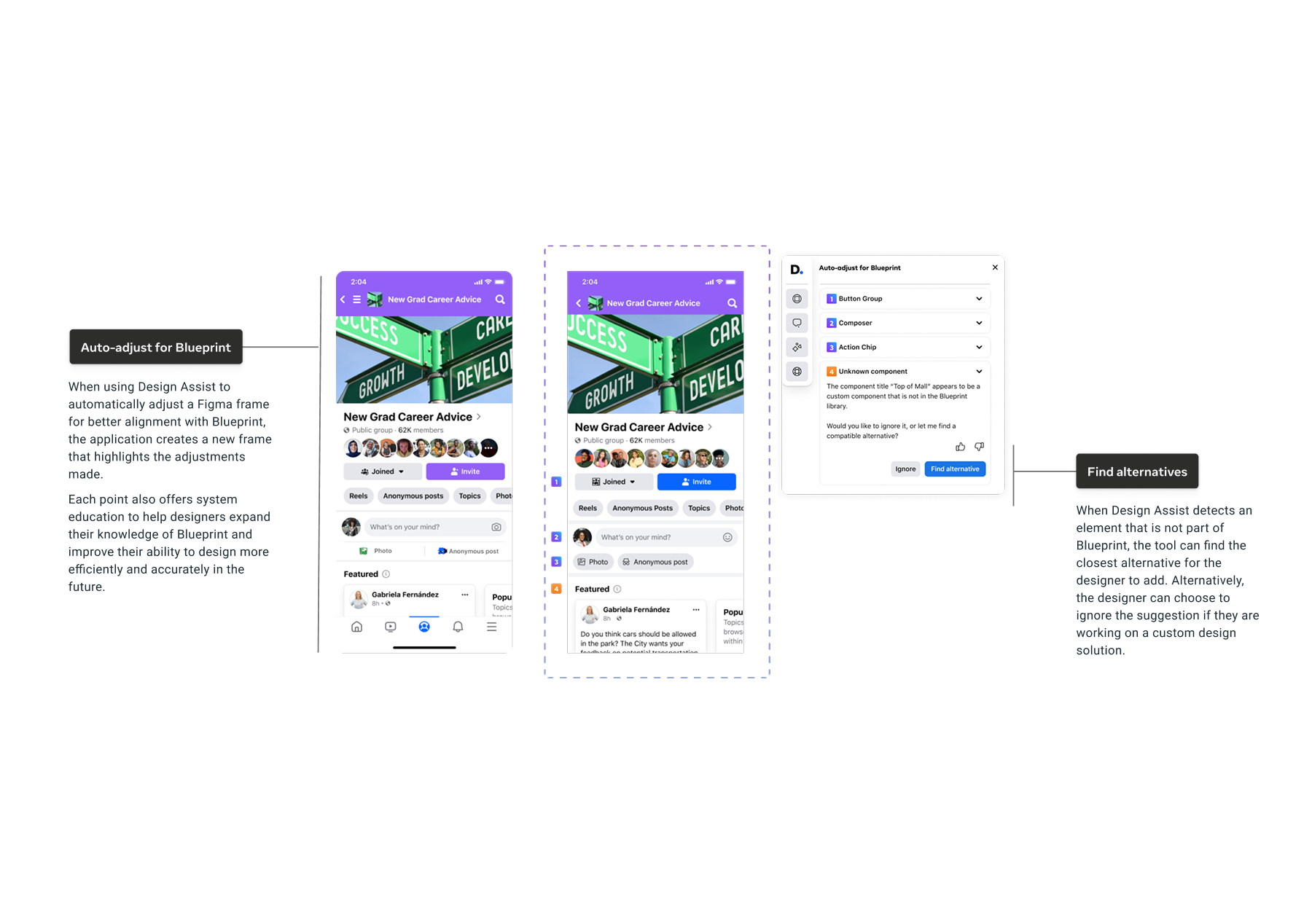
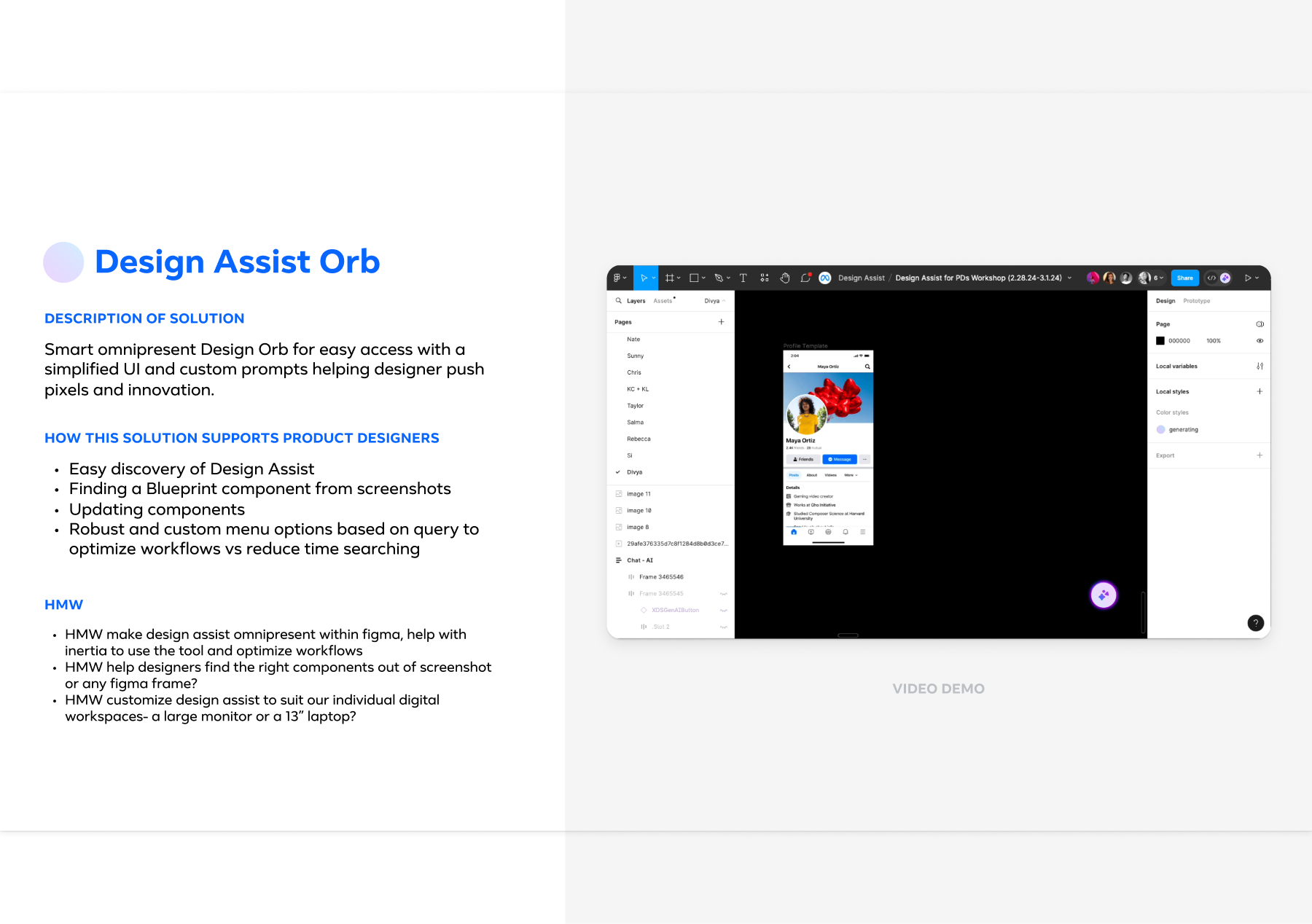
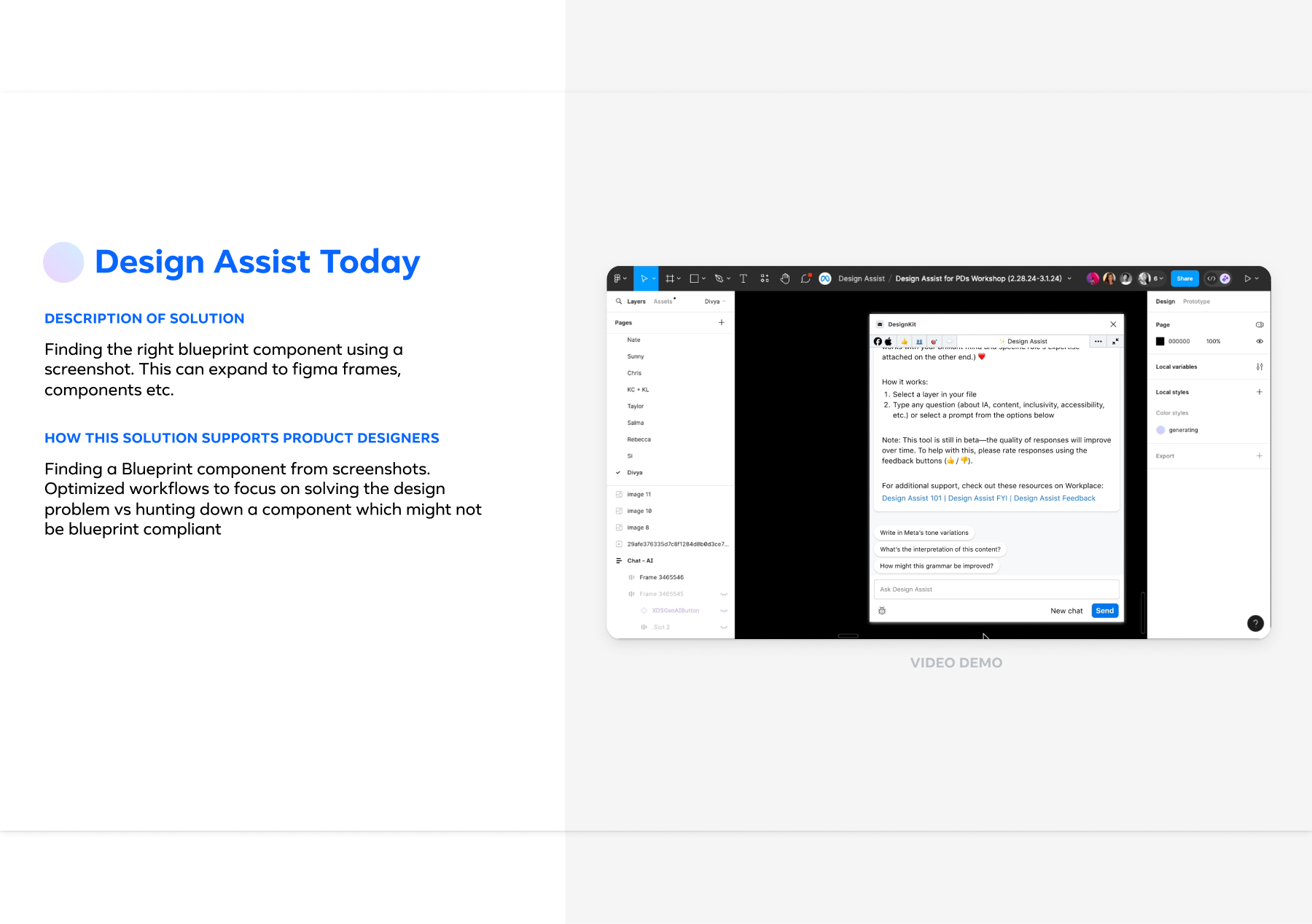
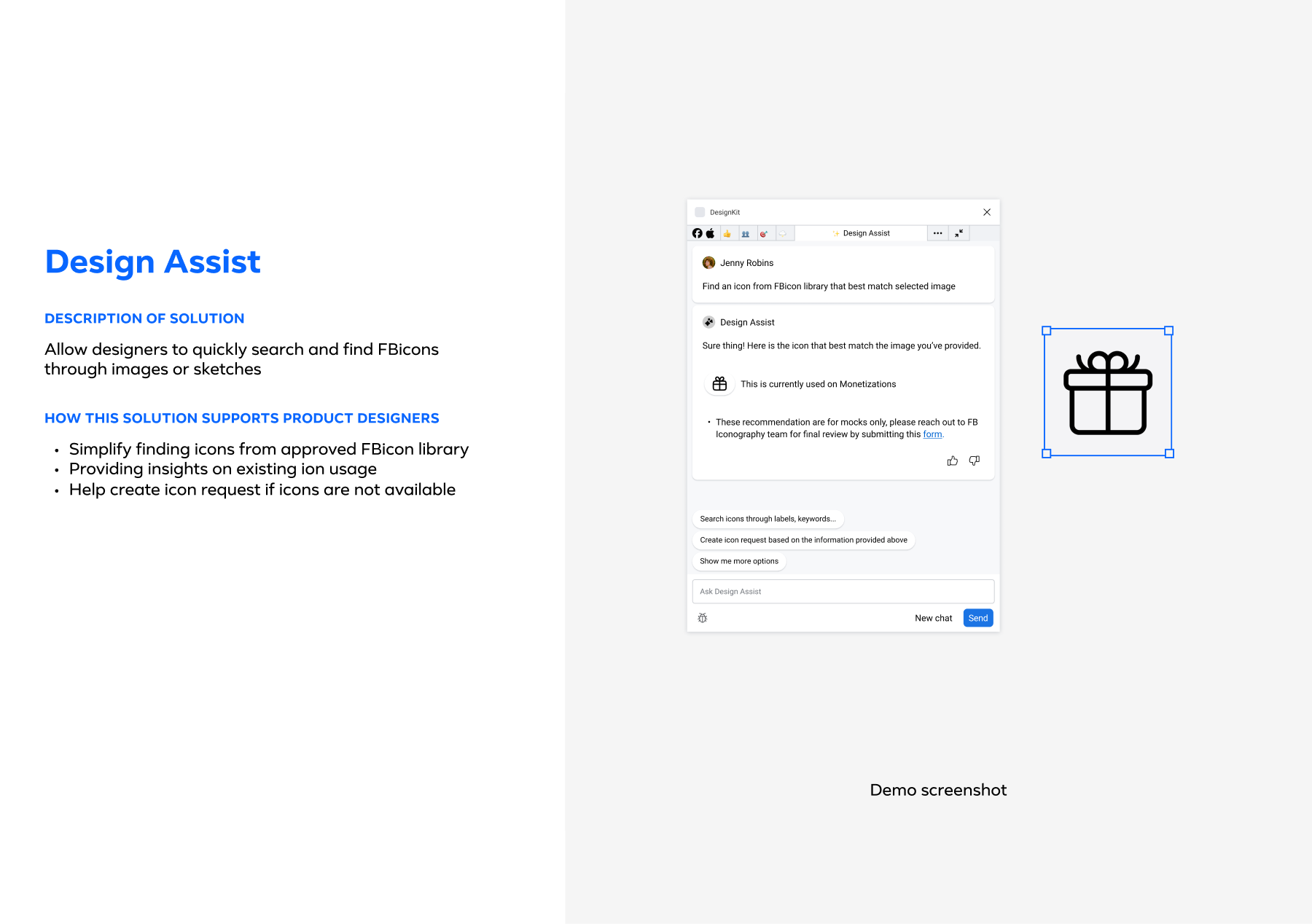
This collaborative approach allowed designers to prototype the designs directly. The phased rollout strategy began with essential Blueprint component detection, followed by automatic compliance checking (increasing adoption by 42%), and finally, the introduction of contextual recommendations and iteration features. Each implementation phase incorporated user feedback, particularly around maintaining creative autonomy while providing system guidance. Technical implementation required close collaboration with the MetaGen team for AI capabilities and the Blueprint team for design system integration, ensuring accurate component detection and recommendations while adhering to Meta’s privacy and security.

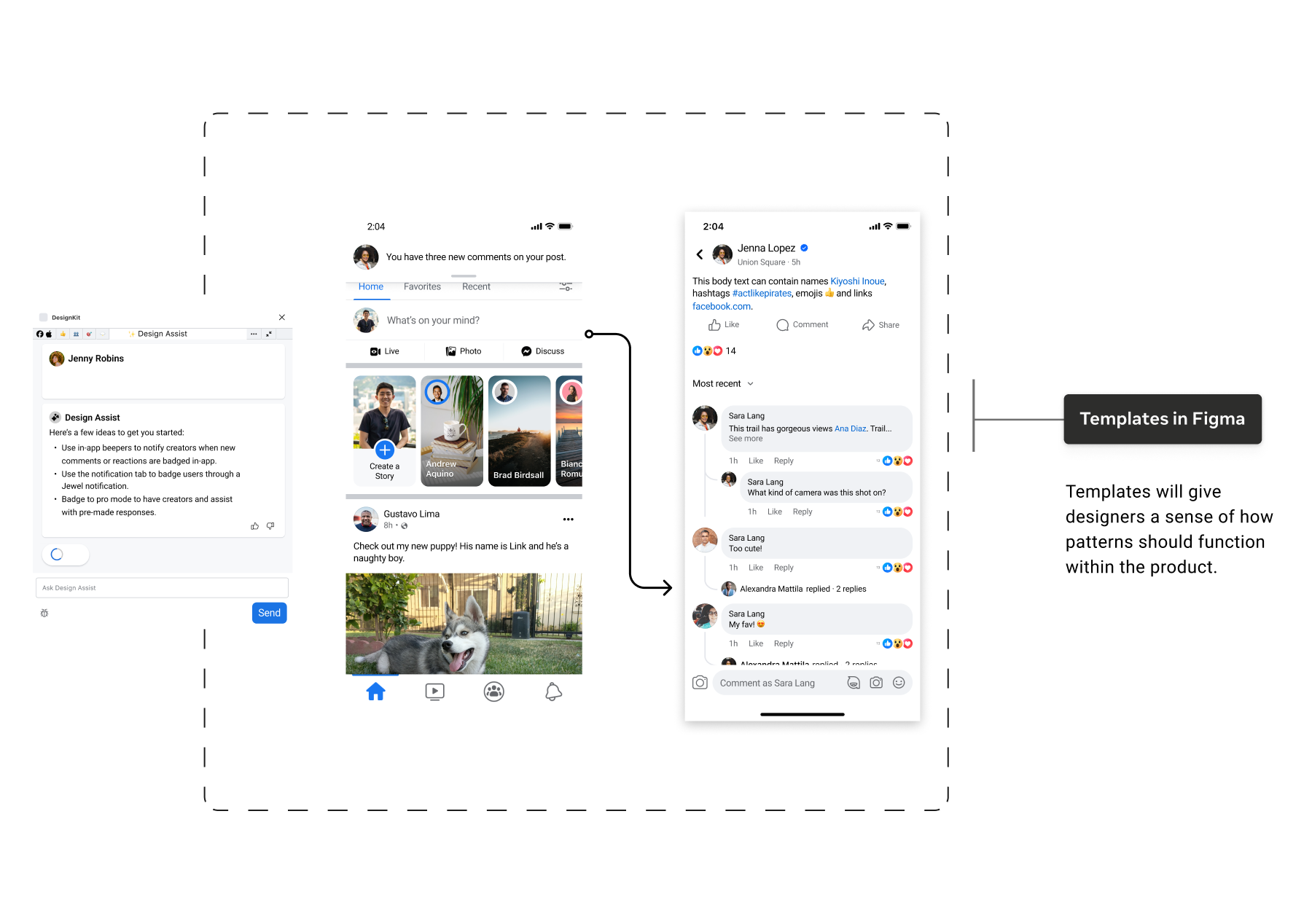
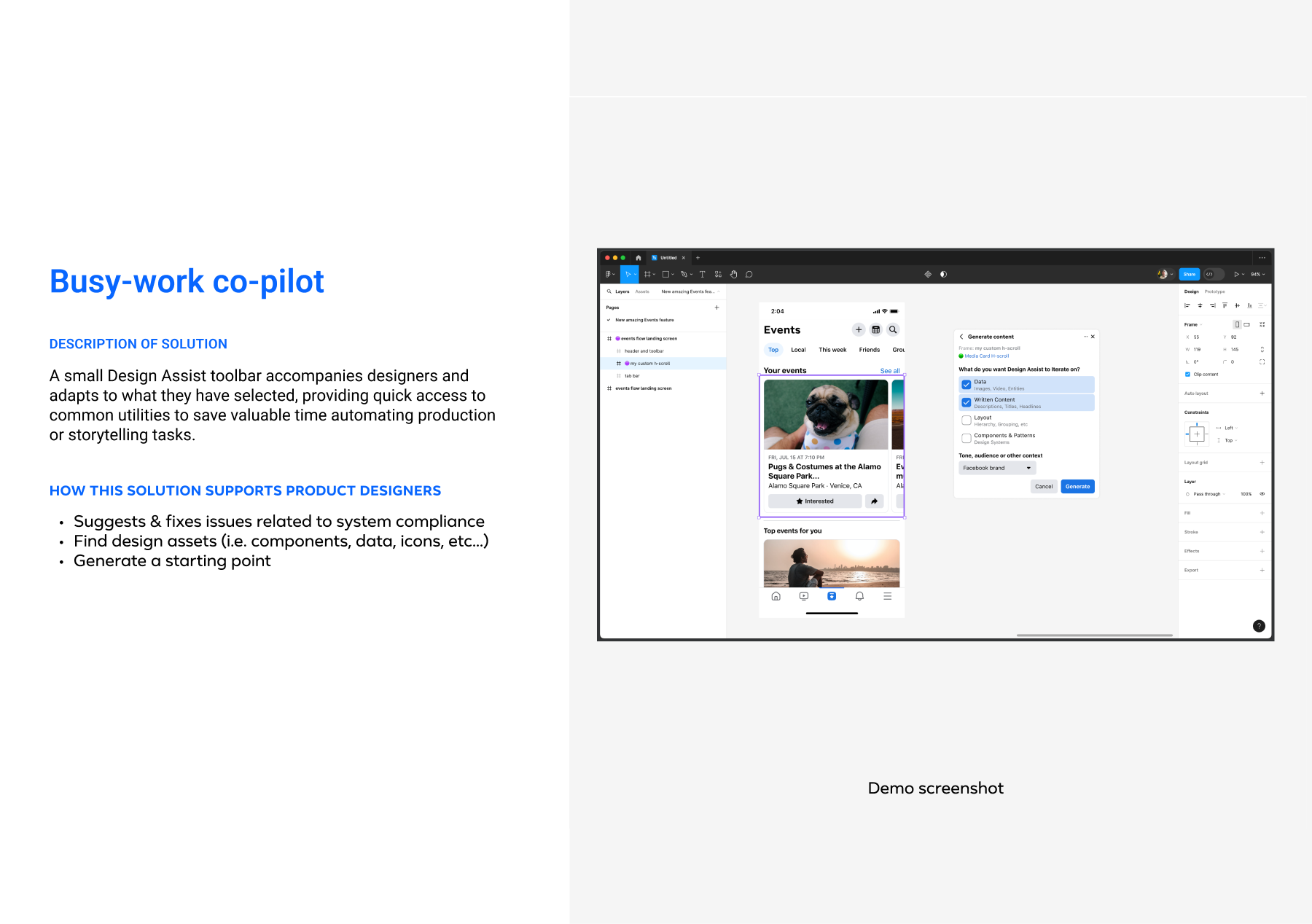
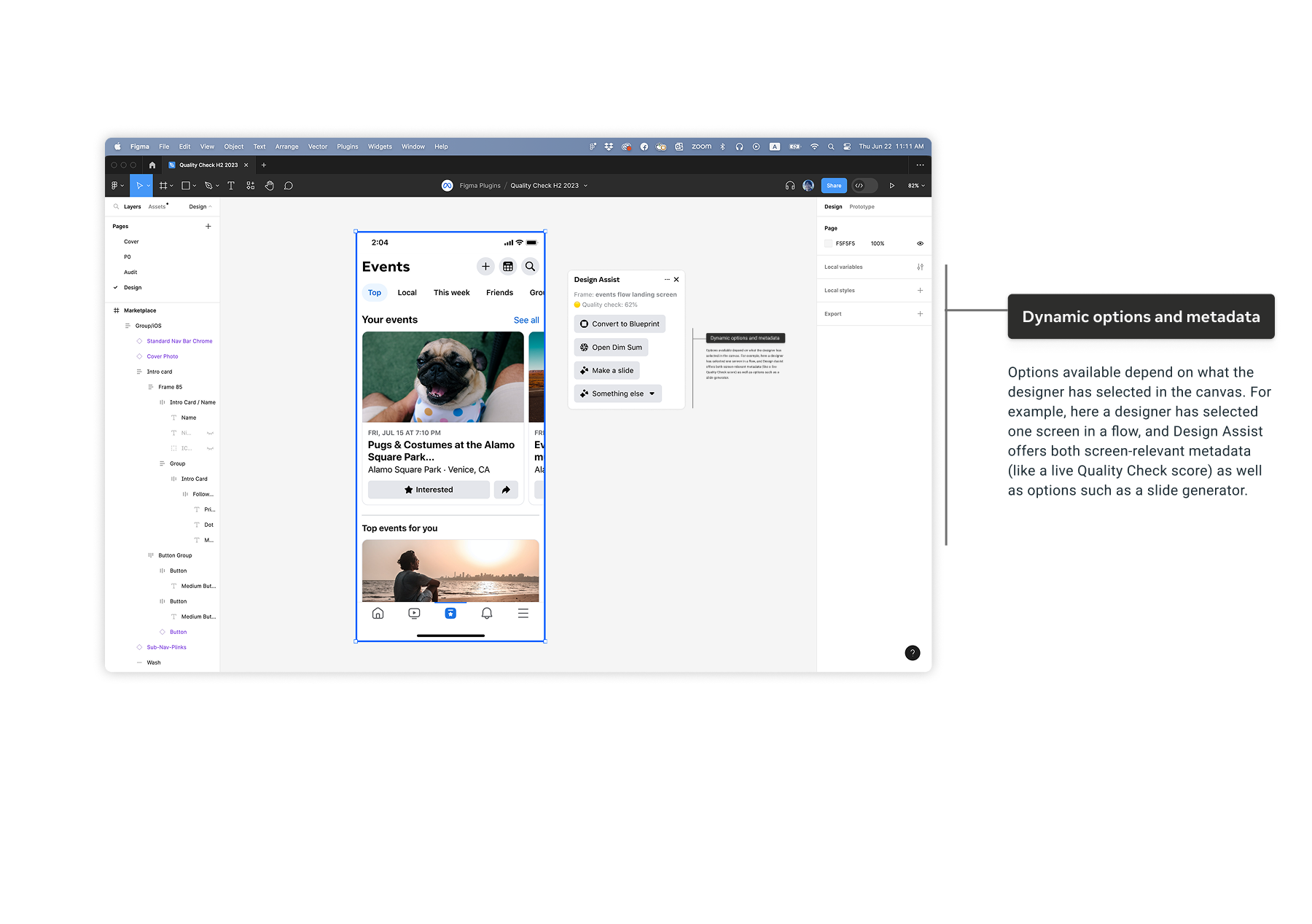

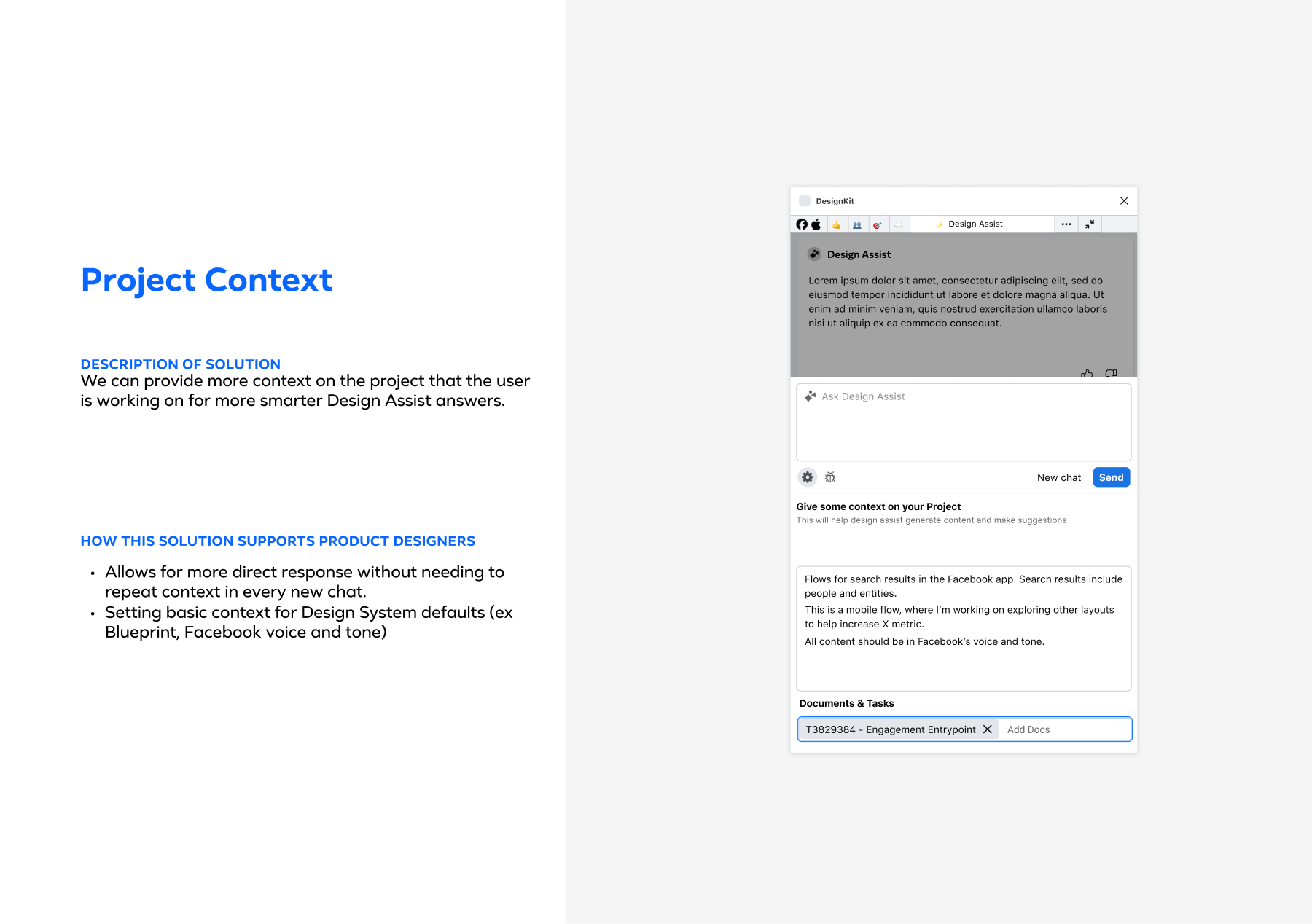


Design Interventions
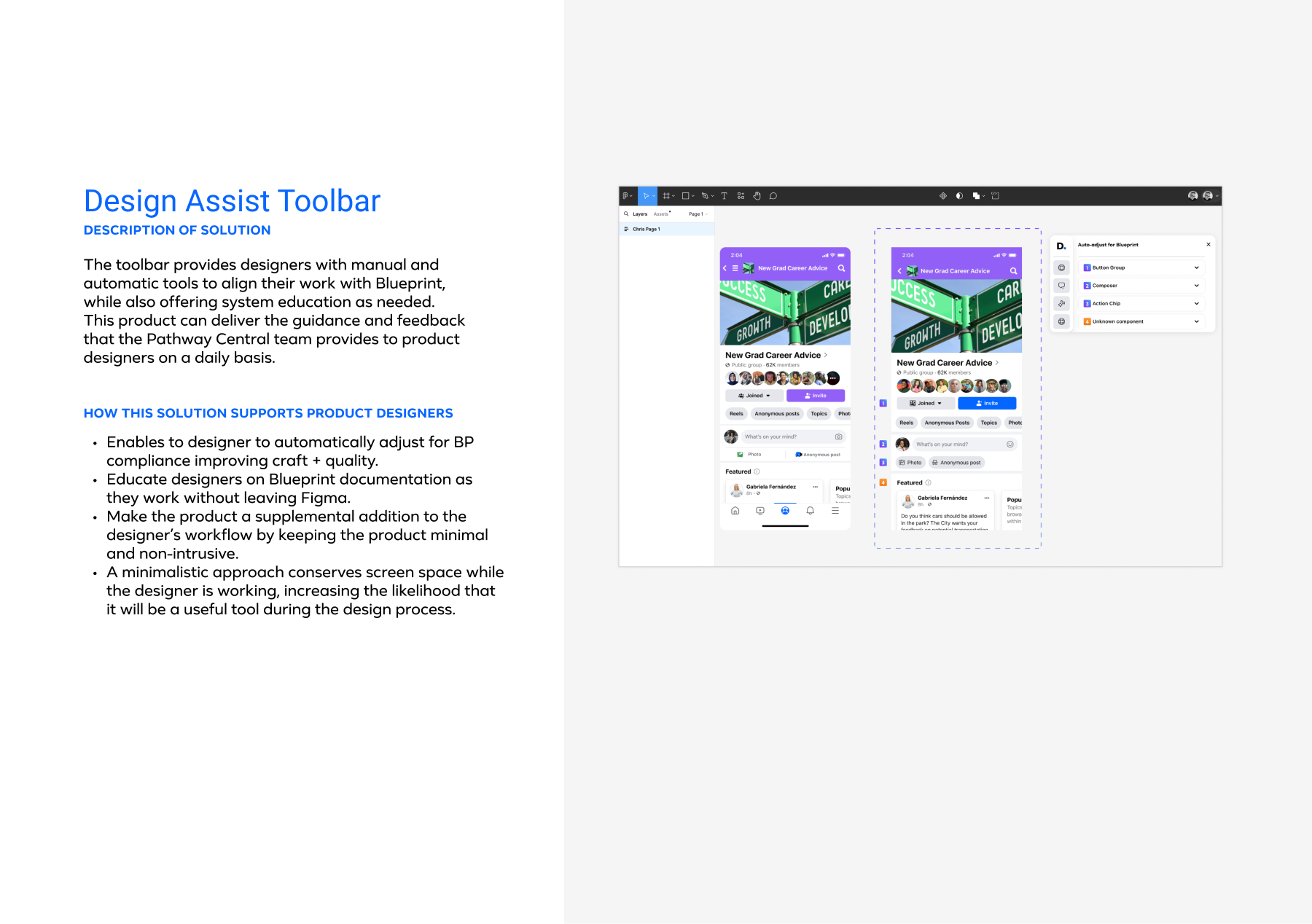
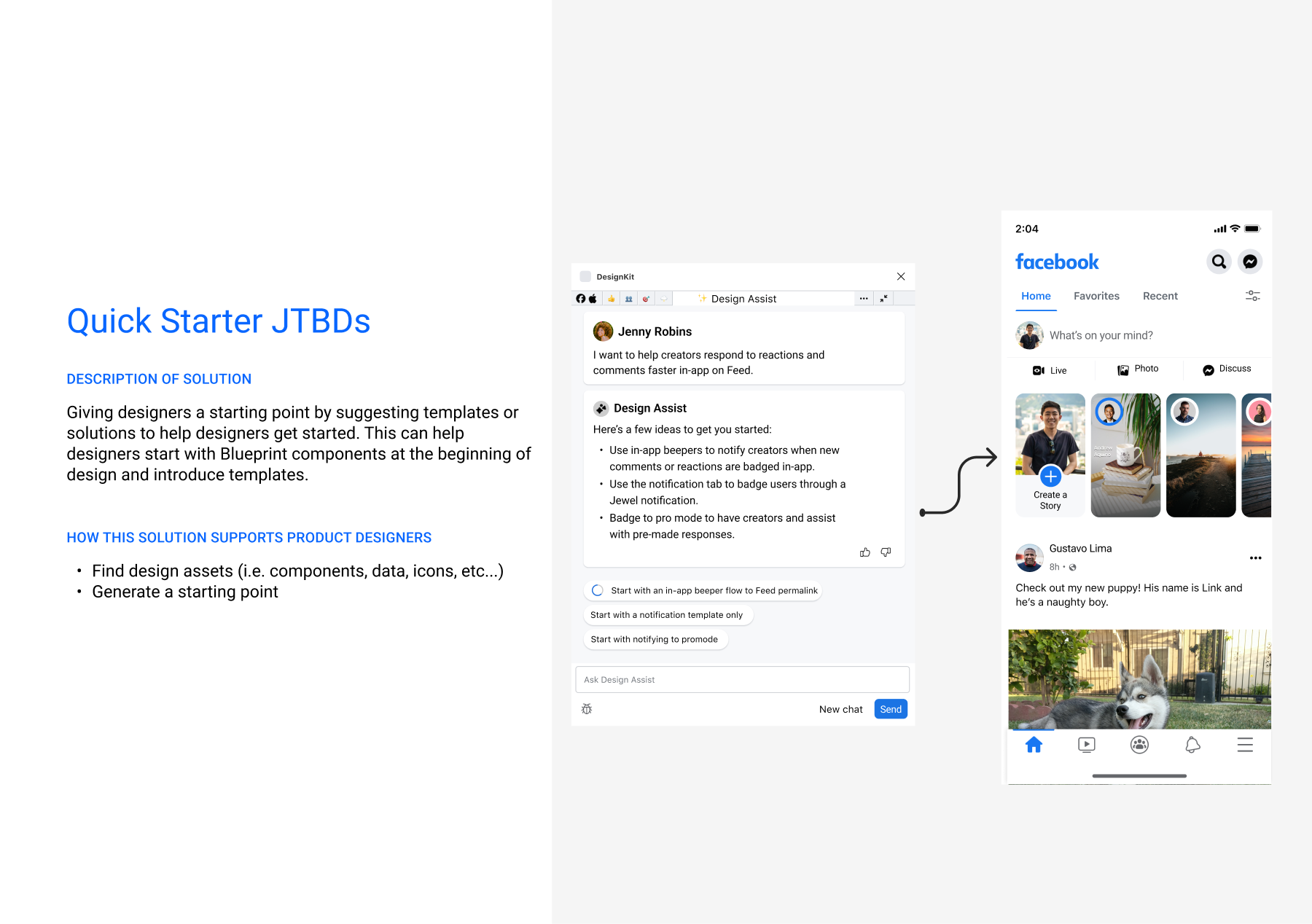
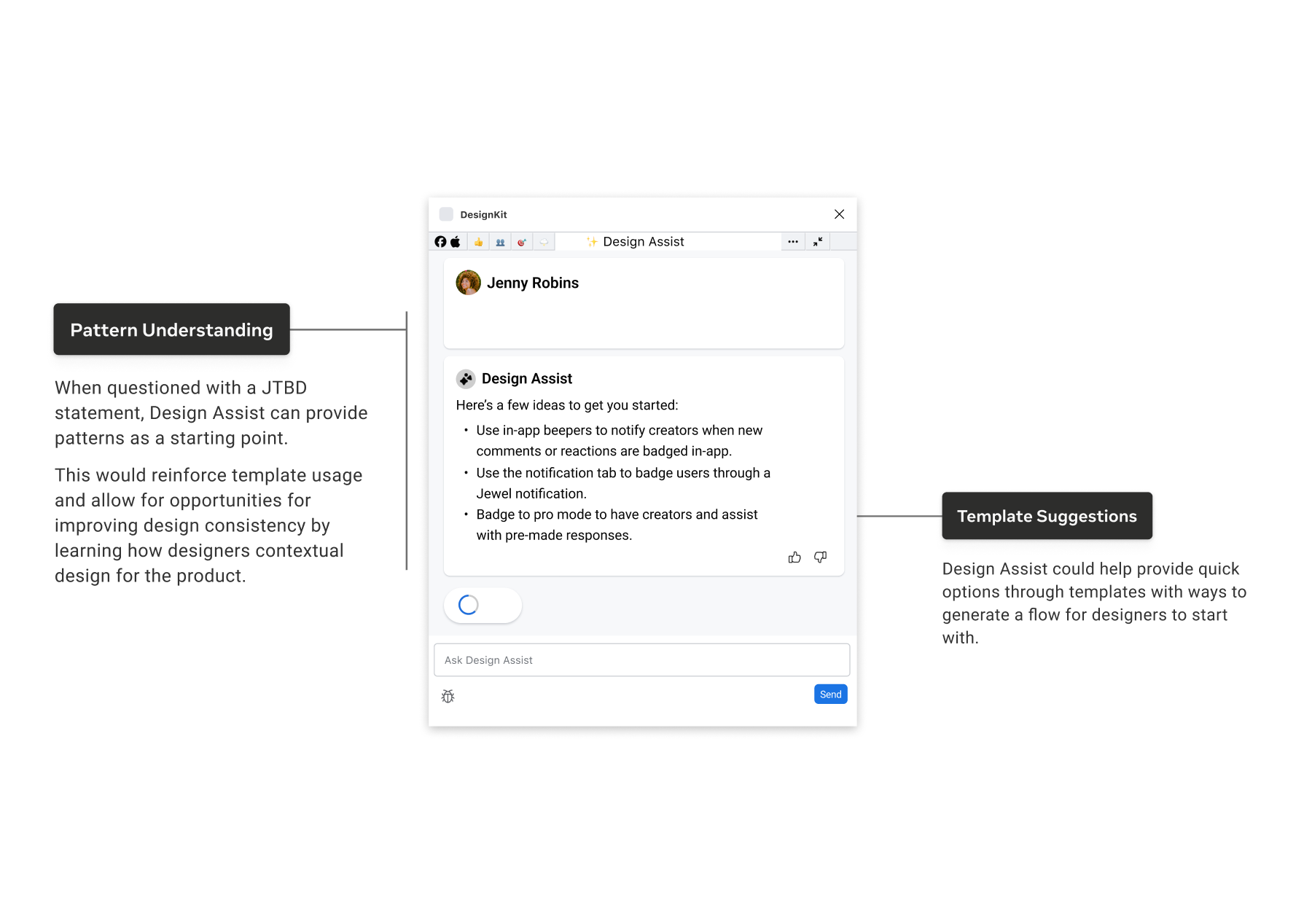
Our intervention targeted product designers at Meta working within the Blueprint design system in Figma, where 78% struggled with compliance while maintaining creative flow, often losing 12 hours weekly to searching, checking, or recreating patterns. Grounded in research showing 92% preferred embedded help over documentation, we co-created Design Assist, an AI-powered tool integrated directly into Figma. Through workshops and prototyping, we shaped features including conversational guidance, automated compliance checking (+42% adoption), and contextual component recommendations. This phased rollout embedded compliance seamlessly into creative workflows, improving efficiency while preserving design freedom.

Toolkit, Methods & Frameworks
During the research, we analyzed 300+ Figma files, conducted 17 interviews, and 20 contextual inquiries. This helped to uncover barriers in design system adoption at Meta EISA org. Findings showed 46% inconsistent Blueprint usage, 25% time lost searching components, and high compliance errors.
Daily Active Designers
Adopted Design Assist within six months, embedding the tool into Meta’s Enterprise Infrastructure Services and Analytics workflows.
Increase Blueprint Adoption
Driven by contextual component recommendations, integrating system compliance seamlessly into daily creative workflows.
Time Reduction
Time to find and implement components dropped nearly in half while design system quality scores improved by 13 points, ensuring consistency and efficiency.
Reflections & Impact
Design Assist transformed compliance from an overhead task into an embedded part of creative workflows. Within six months, it reached over 600+ daily active designers, drove a 72% increase in Blueprint adoption, cut component search time by 46%, and raised design system quality scores by 13 points. It reshaped how designers perceived compliance, from a constraint to a creative enabler, resulting in more consistent, higher-quality interfaces across Meta’s Enterprise Engineering products. This shift sparked systemic change, influencing the development of other design tools within Meta’s Enterprise Infrastructure organization and positioning “AI as a raw material for design”. By embedding assistance directly into workflows, Design Assist set a precedent for how enterprise-scale AI can augment design, establishing new standards for efficiency, quality, and creative empowerment across the org.
Next Steps
- Design for multi-tool ecosystems by extending beyond Figma into other workflows, enabling cross-platform and tool compatibility across Meta’s design environments.
- Advance AI-powered guidance through contextual recommendations and proactive pattern recognition to deepen workflow integration and support evolving design needs.
- Institutionalize adoption through onboarding and analytics with automated training for new designers and dashboards for system managers to track adoption, quality, and impact.