Overview
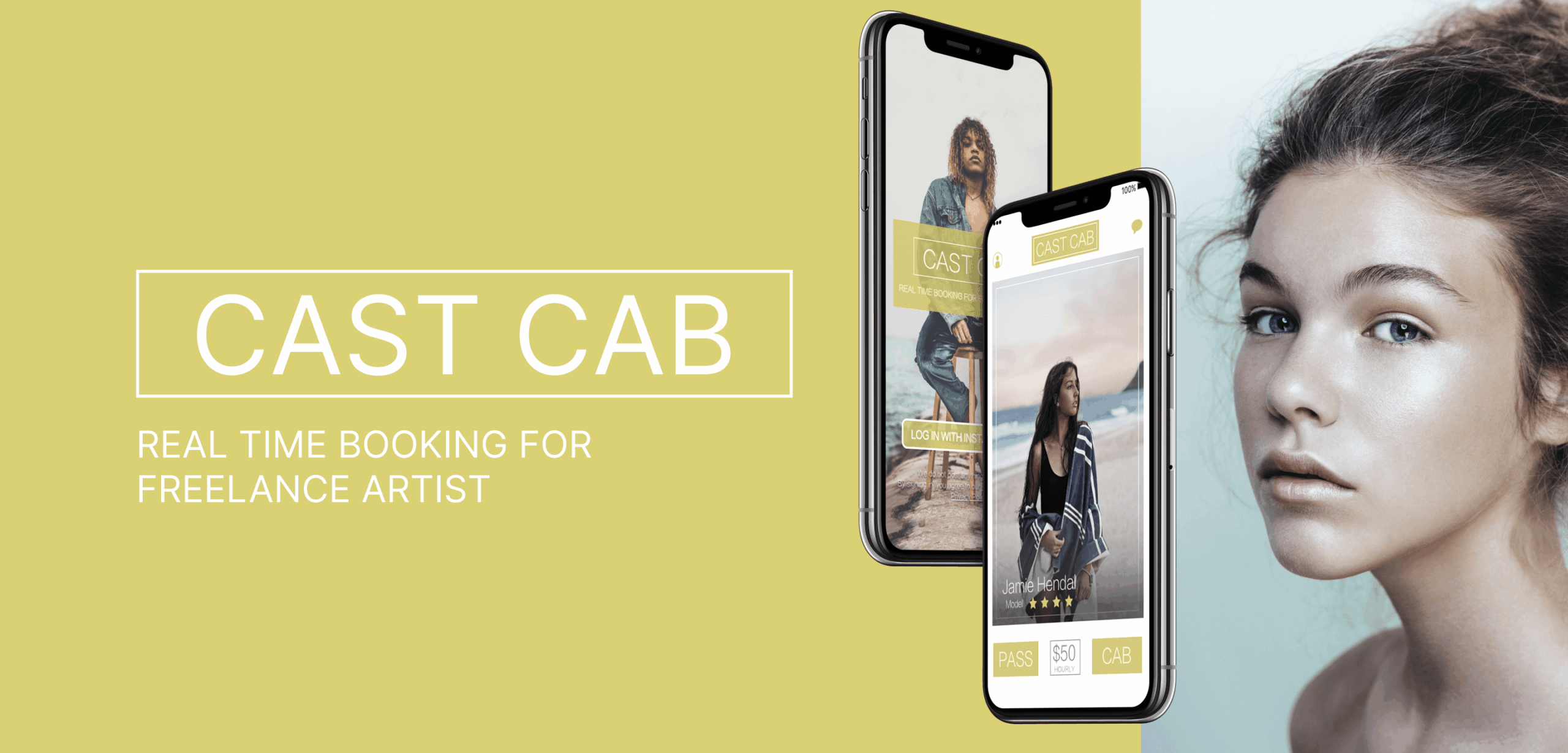
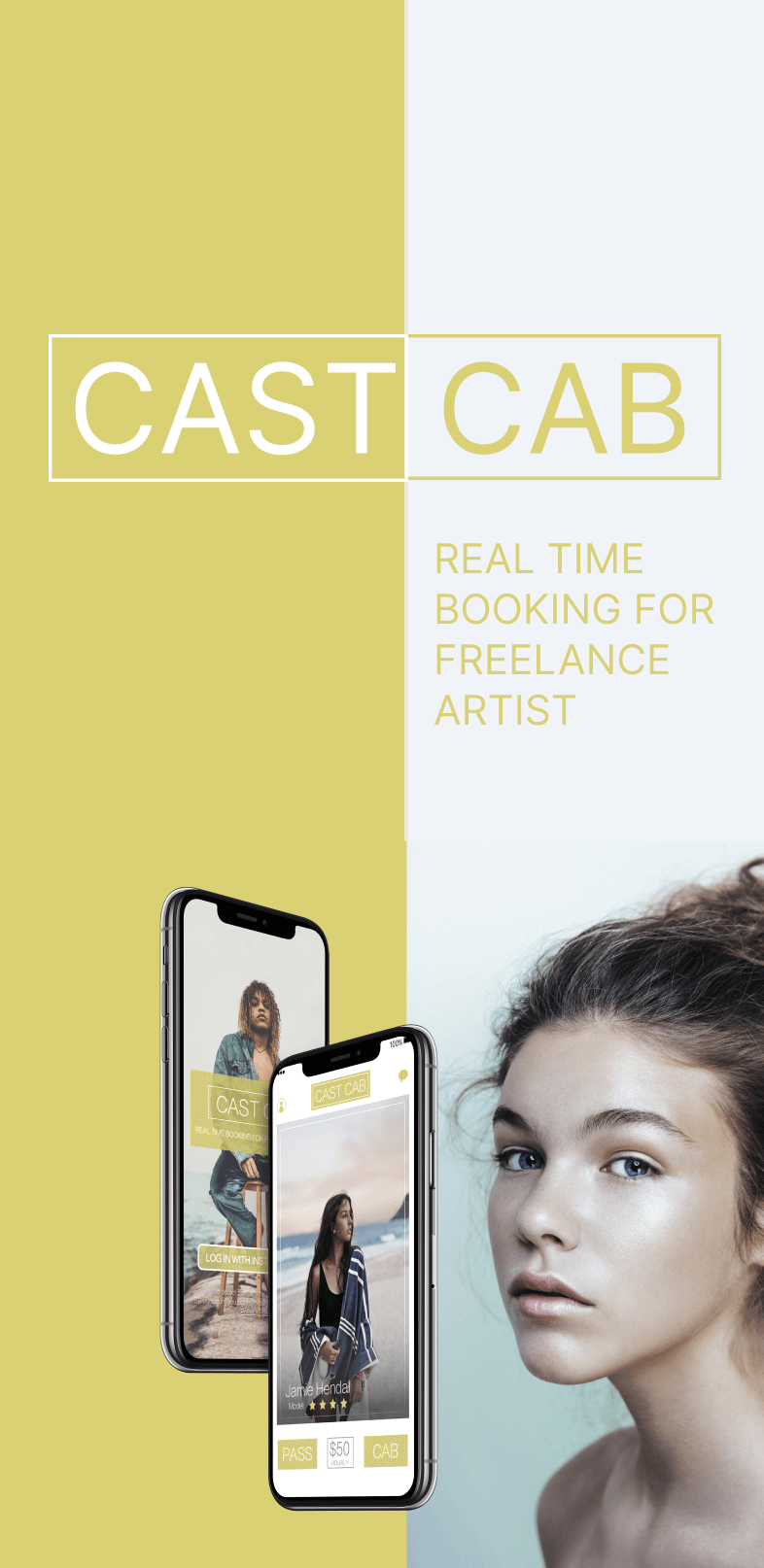
The Cast Cab app addressed inefficiencies in traditional creative industry booking methods, such as high agency fees and prolonged negotiations. The app allows photographers and models to connect instantly through a swipe feature. It also integrates social media and streamlined verification processes, maintaining professional standards while removing conventional barriers. This approach empowers independent creatives, minimizes booking friction, and generates opportunities for established and emerging talent. The platform fosters collaboration, reduces costs, opens new avenues for local partnerships, and solves unexpected marketing initiatives requiring real-time local artists to be hired.
Research & Design
Design research · Experience design •Mobile app design · User-centered design · Real-time API design
- Duration: June - November 2017
- Team: Fas Lebbie, Arthur Francis
Confidentiality: Certain details in this Cast Cab case study have been modified due to confidentiality agreements. The design process and outcomes presented reflect my views and contributions as design lead, not necessarily those of Cast Cab or its stakeholders.
What I Brought (My Role)
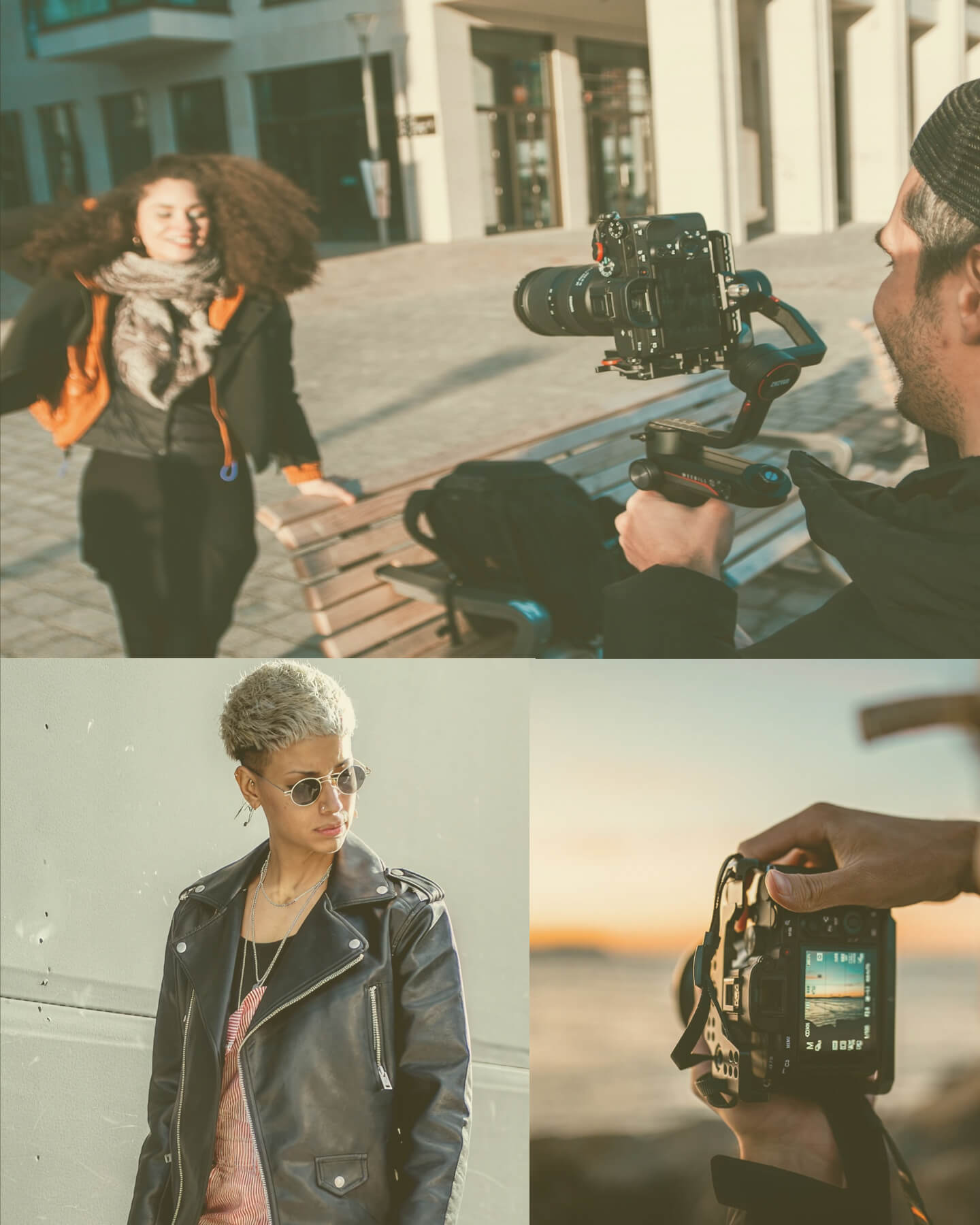
I led field research at creative industry events to identify overlooked market gaps and reposition Cast Cab as a creator-first platform. These insights directly informed our go-to-market strategy and helped secure two years of operational funding.
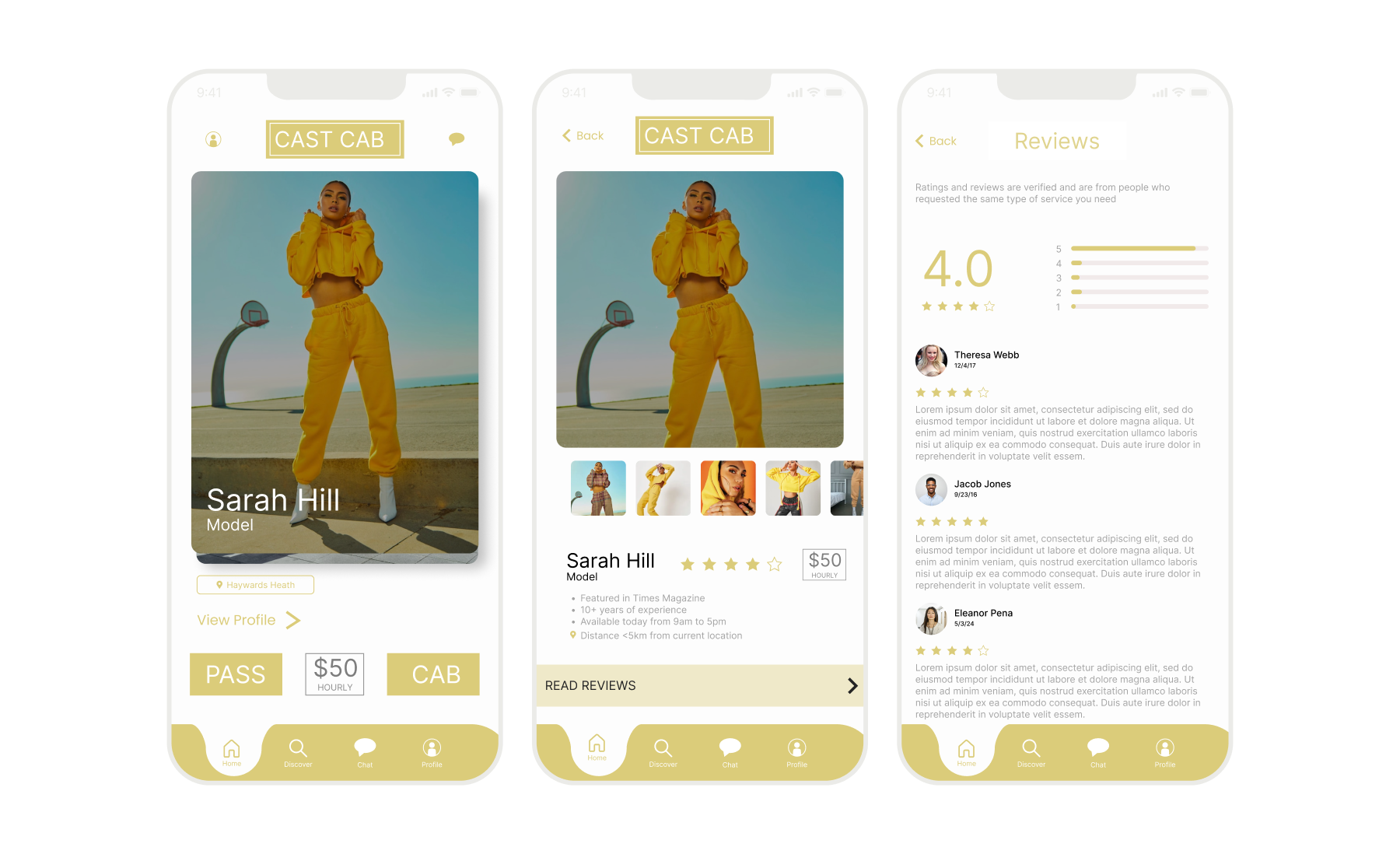
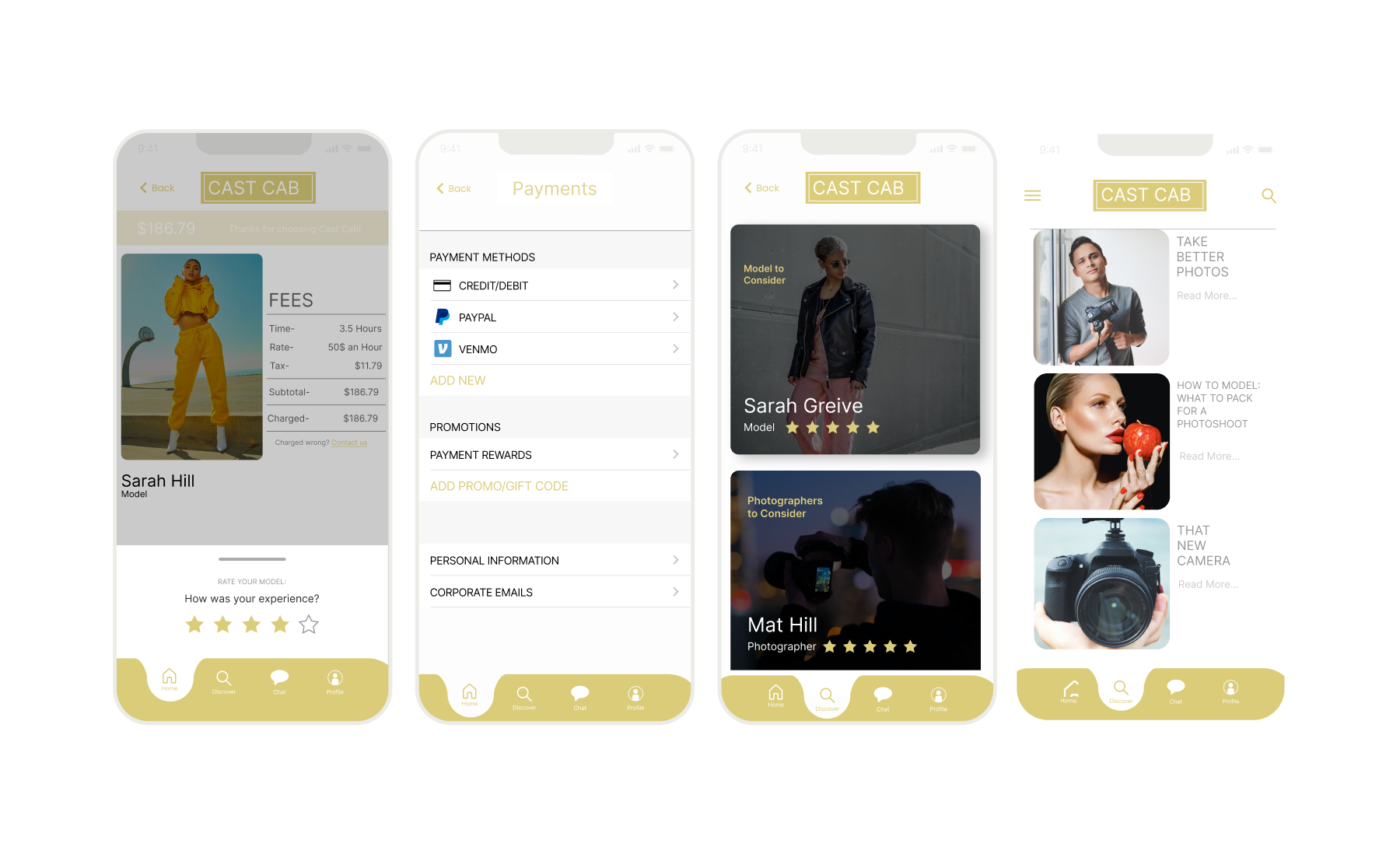
I designed a mobile booking experience that integrated Instagram login and real-time availability, reducing booking cycles from weeks to hours and removing barriers for emerging creators to access paid opportunities.
I partnered closely with engineering and product to translate strategy into scalable systems, launching a zero-waitlist MVP and delivering a mobile product experience that made creative gigs accessible on demand.
Problem Context
The creative talent industry has historically operated through a system that disadvantages both talent and clients. Traditional booking agencies provide valuable services, but they create significant barriers as intermediaries. They typically take substantial commissions, extend booking timelines through prolonged negotiations, and limit direct communication between artists and clients. This system creates a barrier to entry for emerging photographers and models, as agency representation remains inaccessible to many talented individuals. Alternative approaches like direct messaging on social media platforms present their own challenges, introducing risks without formal agreements or payment protection. This system leads to a market gap where independent creative professionals need a solution that offers the security and structure of agency booking without the associated costs and inefficiencies. The rise of social media has fundamentally changed how creative professionals showcase their work, with platforms like Instagram becoming de facto portfolios. Despite this evolution in self-presentation, the booking process had not kept pace with these changes. This disconnect between modern portfolio presentation and outdated booking processes represented an opportunity to create a more integrated, efficient system, leveraging existing digital behaviors and expectations.
My Approach
I combined contextual inquiry with lean prototyping to uncover creator pain points, then translated insights into a streamlined booking flow. By aligning user needs with business goals, I led a cross-functional rollout that expanded access and drove platform adoption.
Design Process
How could we improve how models and photographers are booked in real-time to increase supply to startups that need marketing content? Our first step was to understand the existing talent booking landscape through contextual inquiry field research at creative industry events and competitive analysis of platforms like Ubooker, Swipecast, Model Mayhem, and Modl App. The research strategy includes fieldwork and engagement with photographers and models. I traveled to photoshoots and creative events to observe industry dynamics firsthand. I complemented this research with an extensive review analysis of competing platforms. While apps like Model Mayhem dominated the market, none had successfully addressed the dual needs of efficiency and professional standards. I also analyzed app review comments in the app store, focusing on comments like “I would have given it five stars if it did…” We identified concrete improvement opportunities that would differentiate Cast Cab from existing solutions.
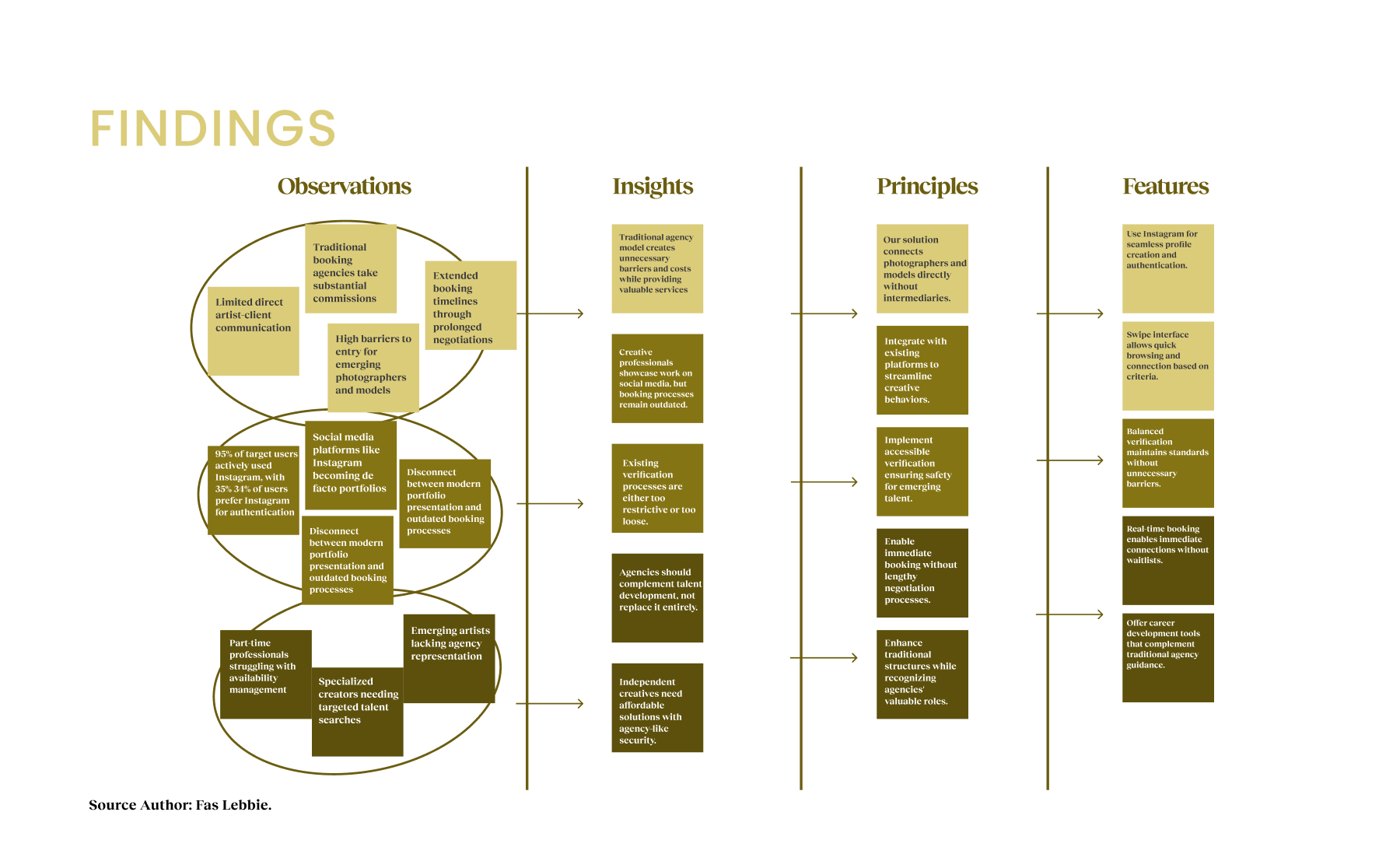
My research identified three critical opportunity areas. First, existing verification processes were either too restrictive (limiting scalability) or loose (compromising safety). Second, while providing valuable services, traditional agency models created unnecessary barriers through high commissions and limited direct communication. Third, despite the prevalence of social media portfolios, booking platforms require redundant profile creation. User surveys revealed significant digital behavior patterns, with 95% of potential users actively using Instagram and 34% preferring it for authentication. The existing booking ecosystem was particularly challenging for three user types: part-time professionals struggling with availability management, specialized creators needing targeted talent searches, and emerging artists lacking agency representation. We organized these research findings into actionable design priorities through affinity mapping sessions. These insights presented design intervention opportunities to develop a platform that maintained professional standards while removing unnecessary friction from the booking process. We established three essential requirements: real-time booking capability, streamlined verification that balances safety with accessibility, and seamless integration with existing social media portfolios. Our design intervention focused on independent creatives and small businesses as our primary target users, based on research showing existing solutions most underserved them. With 95% of users active on Instagram and 35% maintaining monetized accounts, we identified an opportunity to leverage existing digital behaviors rather than creating entirely new ones.
Our prototyping process progressed from low-fidelity wireframes focusing on core booking flows to high-fidelity mockups incorporating visual design elements. Each iteration was validated through user testing, particularly concerning the verification process and onboarding experience. A pivotal moment came during expert evaluation using Nielsen’s Heuristics, where feedback from industry professionals challenged our initial positioning against traditional agencies and emphasized the role agencies played in the career development of models and photographers. Initially, the team and I had viewed traditional agencies as obstacles, but additional insights revealed their valuable role in talent development and career guidance. This led to the incorporation of educational resources and career development tools that complemented rather than replaced agency services. Implementation followed a phased approach, beginning with Instagram authentication integration and followed by the booking system, verification process, and payment infrastructure. Technical challenges included developing a verification system and creating a reliable availability management system.


Design Interventions
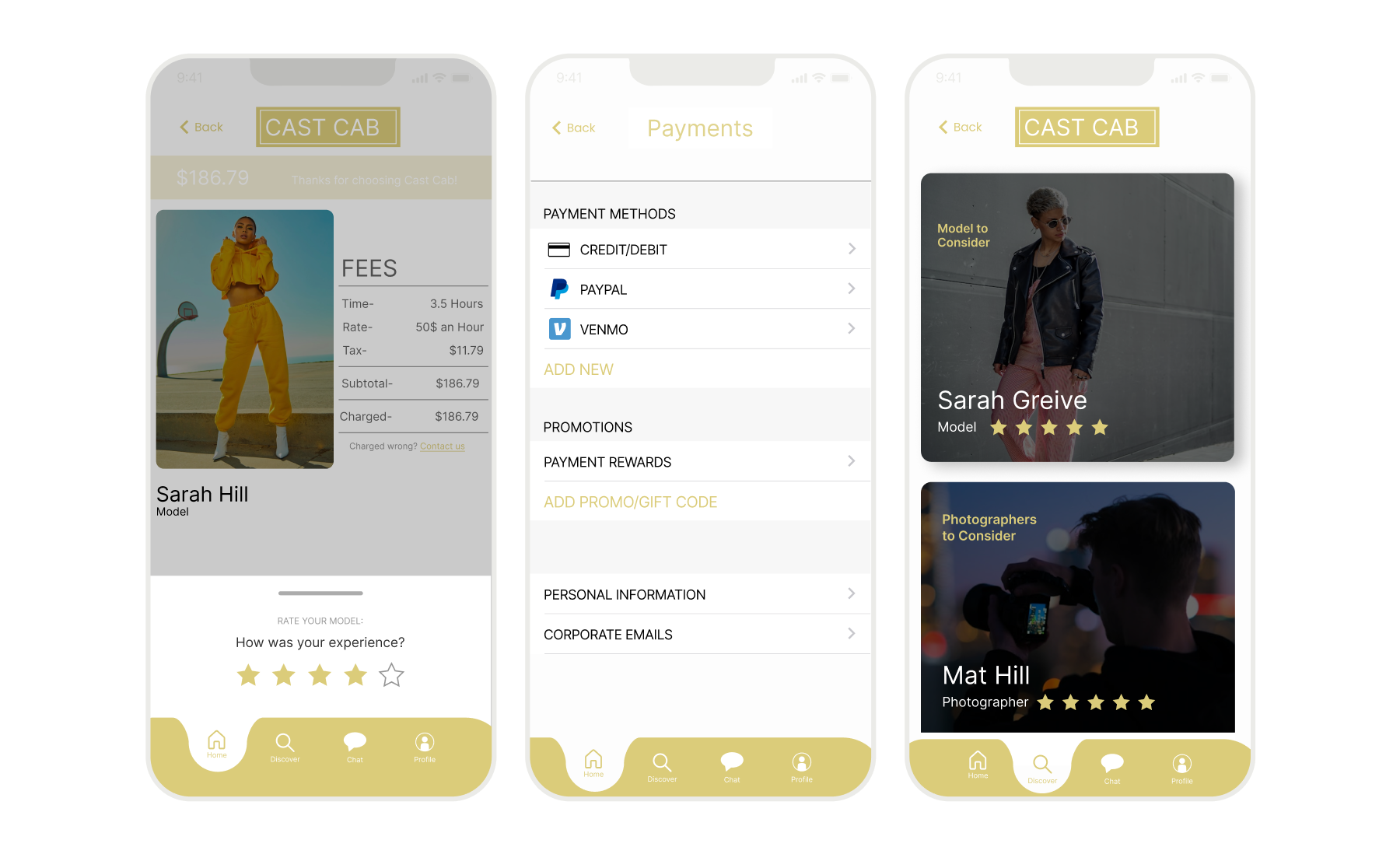
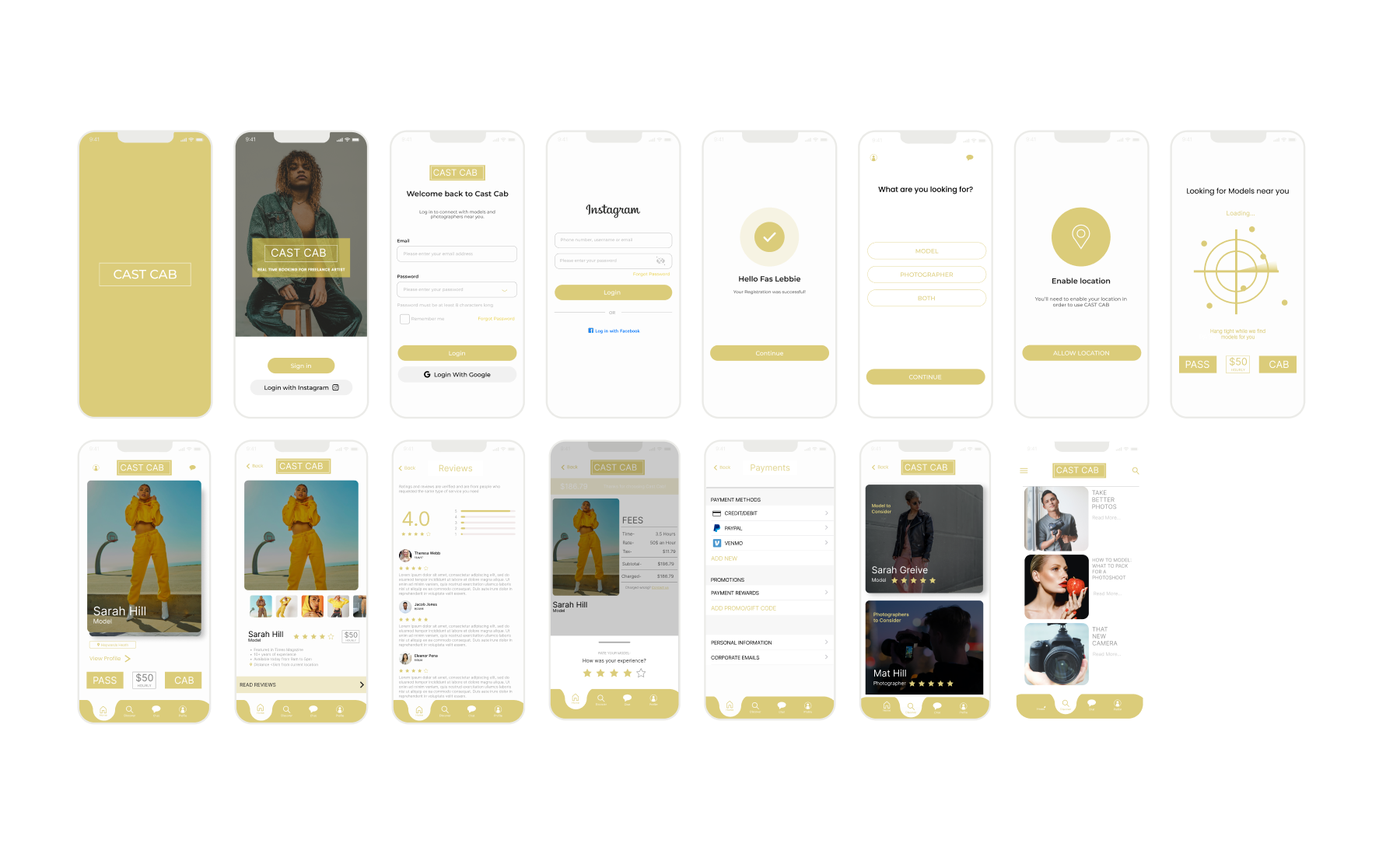
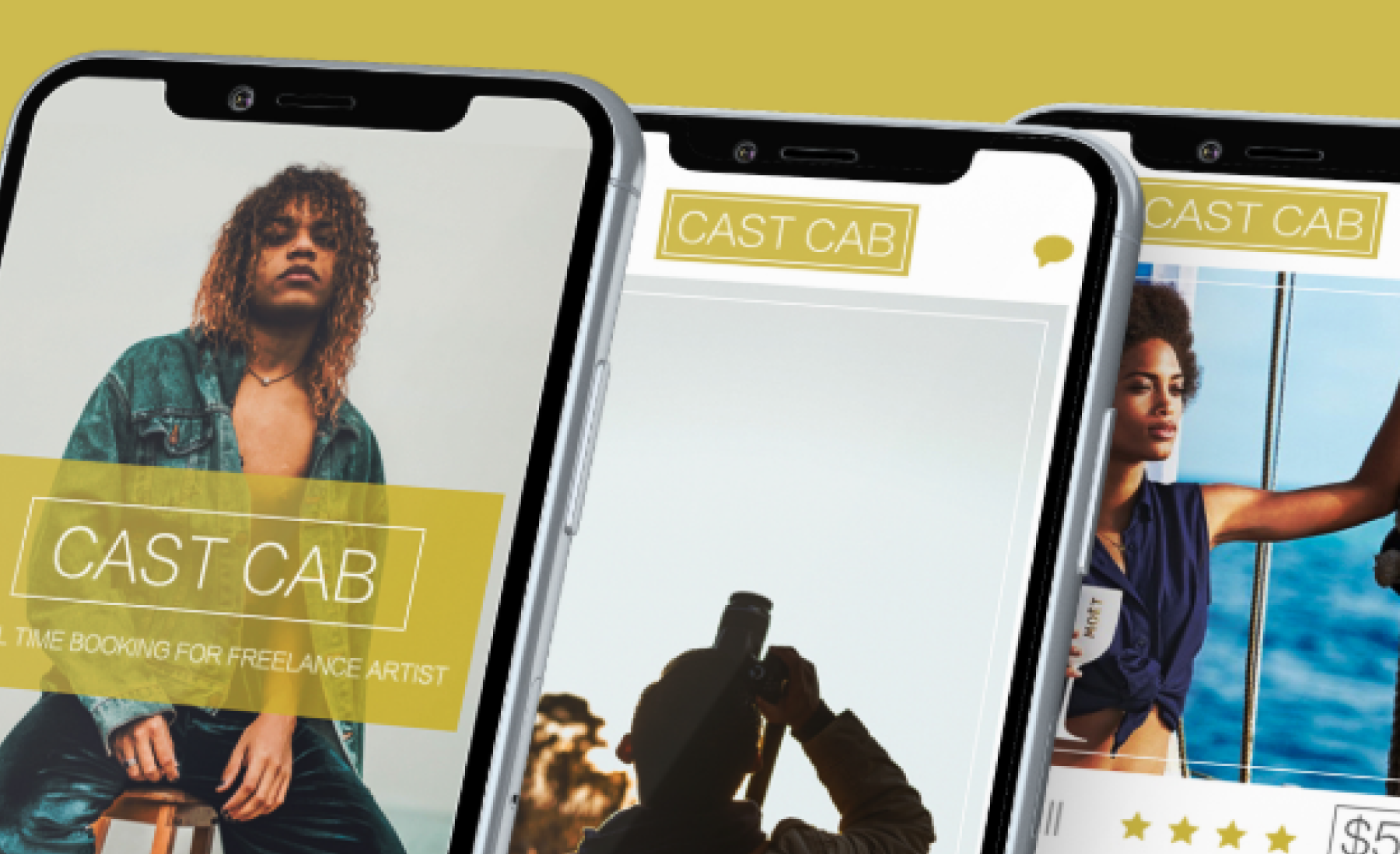
Cast Cab is a real-time booking app that connects photographers and models directly, eliminating waitlists. Users can easily find talent or opportunities by browsing options based on specialty, location, and availability. The app simplifies profile creation by integrating with Instagram, making onboarding quick and easy. Its success helped us secure two years of funding, proving that our solution effectively addresses a key challenge in the industry.
Empowering Creative Freedom
Making creative careers visible, bookable, and valued in their terms and their time, without compromise.
Toolkit, Methods & Frameworks
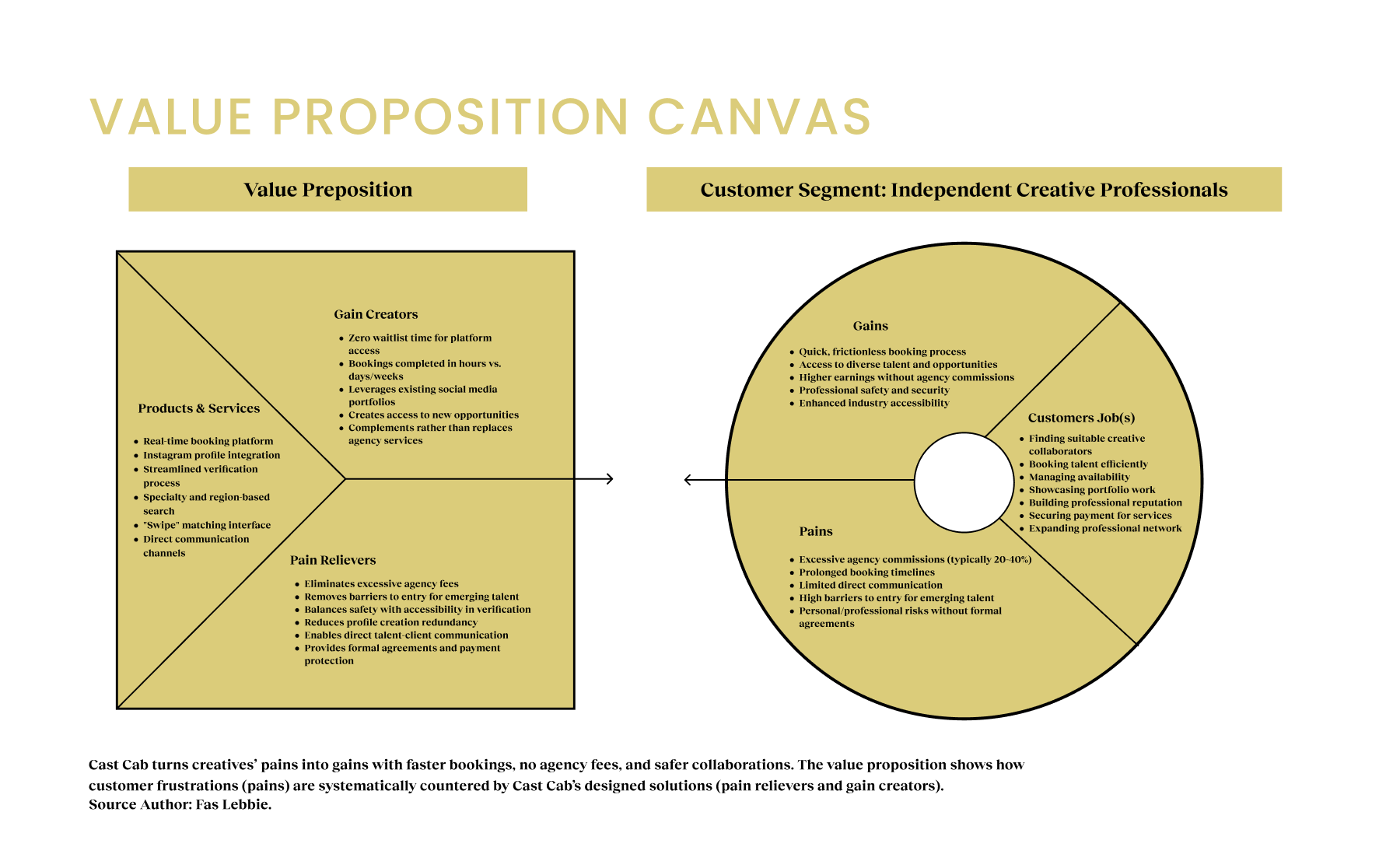
Participant interviews, system mapping, and value proposition canvassing, along with other methods, including contextual inquiry and behavioral mapping, were applied to examine barriers in creative bookings. Observation insights and feature mapping clarified agency pain points, guiding the design of a platform that streamlined verification, enabled direct communication, and reduced entry barriers for emerging talent.
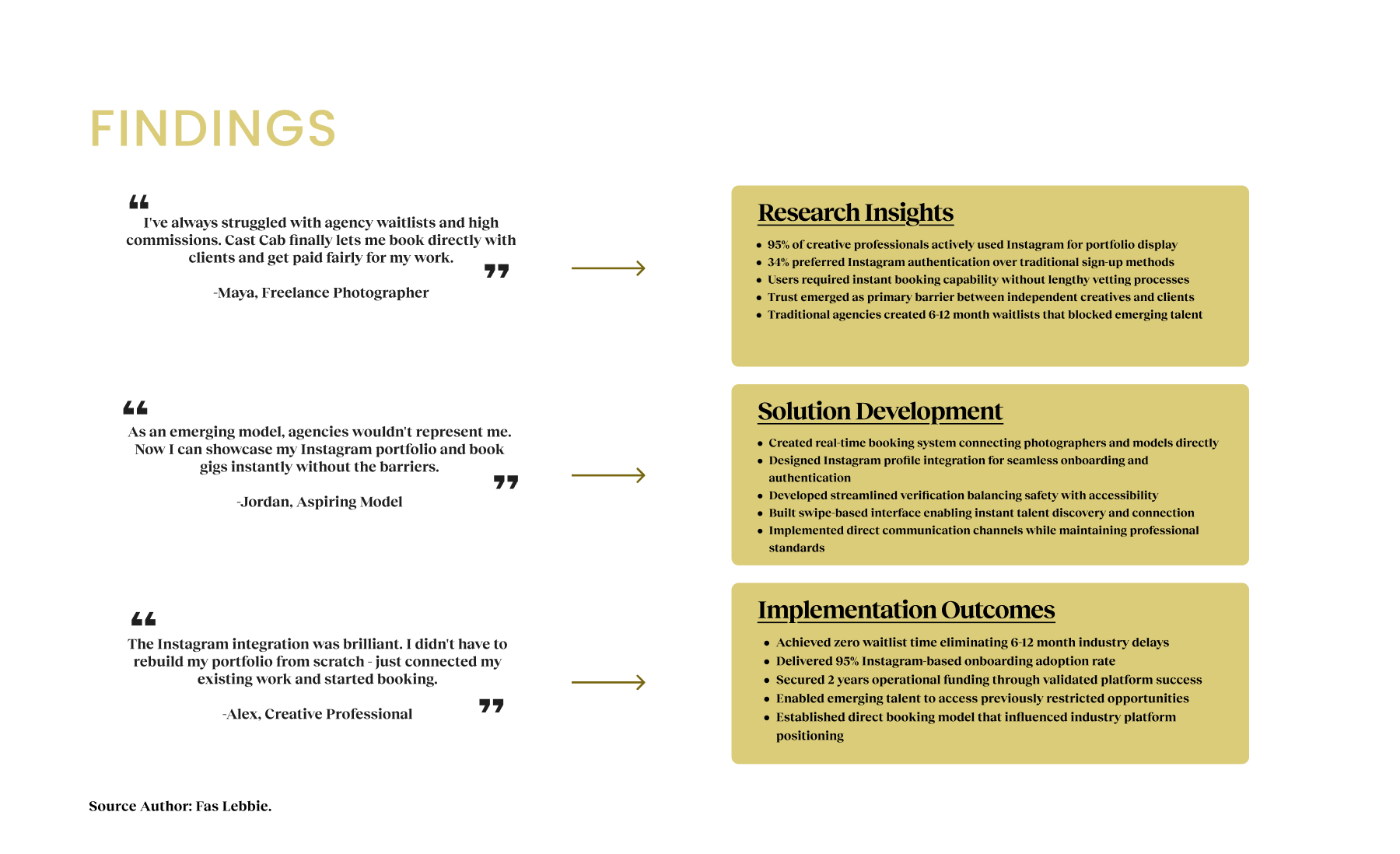
Instagram-based Onboarding Adoption
Validated seamless authentication strategy by aligning with users’ existing behaviors and reducing sign-up friction
Waitlist Time for Verified Talent
Eliminated 6–12 month industry vetting delays through instant profile validation and streamlined booking workflows
Operational Runway Secured
Secured investor funding based on a user-validated platform, strong retention signals, and market positioning strategy
Short & Long-term Impact
Within the first months after launch, Cast Cab achieved adoption with zero waitlist time, significantly improving competitors’ long vetting periods, which ranged from six months to one year. The Instagram integration strategy proved successful, with 34% of users authenticating through this method, validating our research-driven design decisions. The qualitative feedback from users, who reported completing bookings in hours rather than days or weeks, saw emerging talent secure opportunities that would have been inaccessible through traditional agency routes, demonstrating Cast Cab’s role in democratizing access to the creative industry.
Based on our initial design and implementation, we secured two years of operational funding. The platform’s approach to enhancing rather than replacing traditional industry structures influenced how subsequent platforms positioned themselves in this space.
Next Steps
- Develop specialized categories for makeup artists, stylists, and other creative professionals.
- Expand geographic coverage to major metropolitan markets, including Los Angeles, Chicago, and Miami.
- Add team booking capabilities for multi-talent projects and collaborative shoots.
- Develop video portfolio integration to complement existing Instagram photo galleries.
- Create an agency partnership program offering white-label booking solutions for traditional talent representatives.