
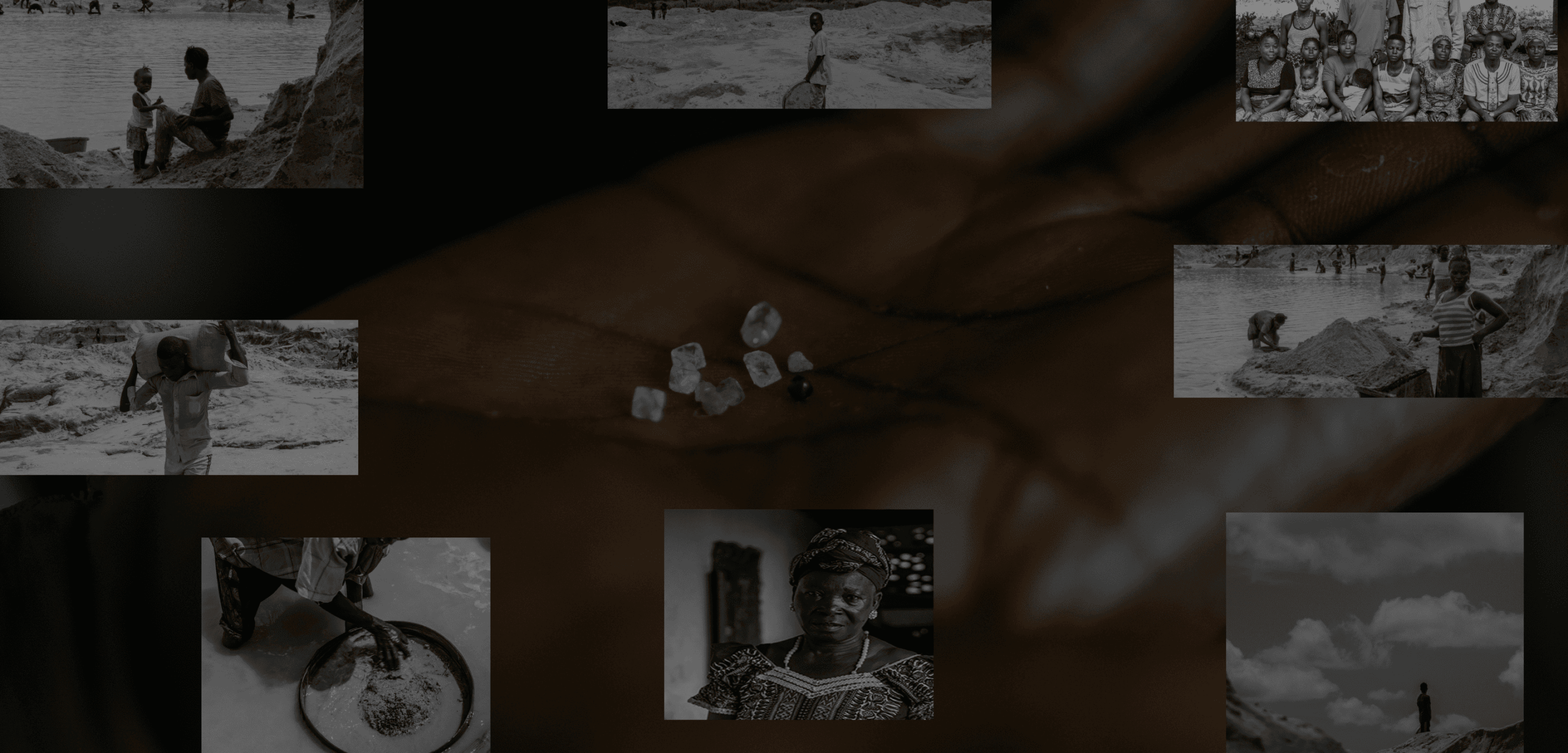
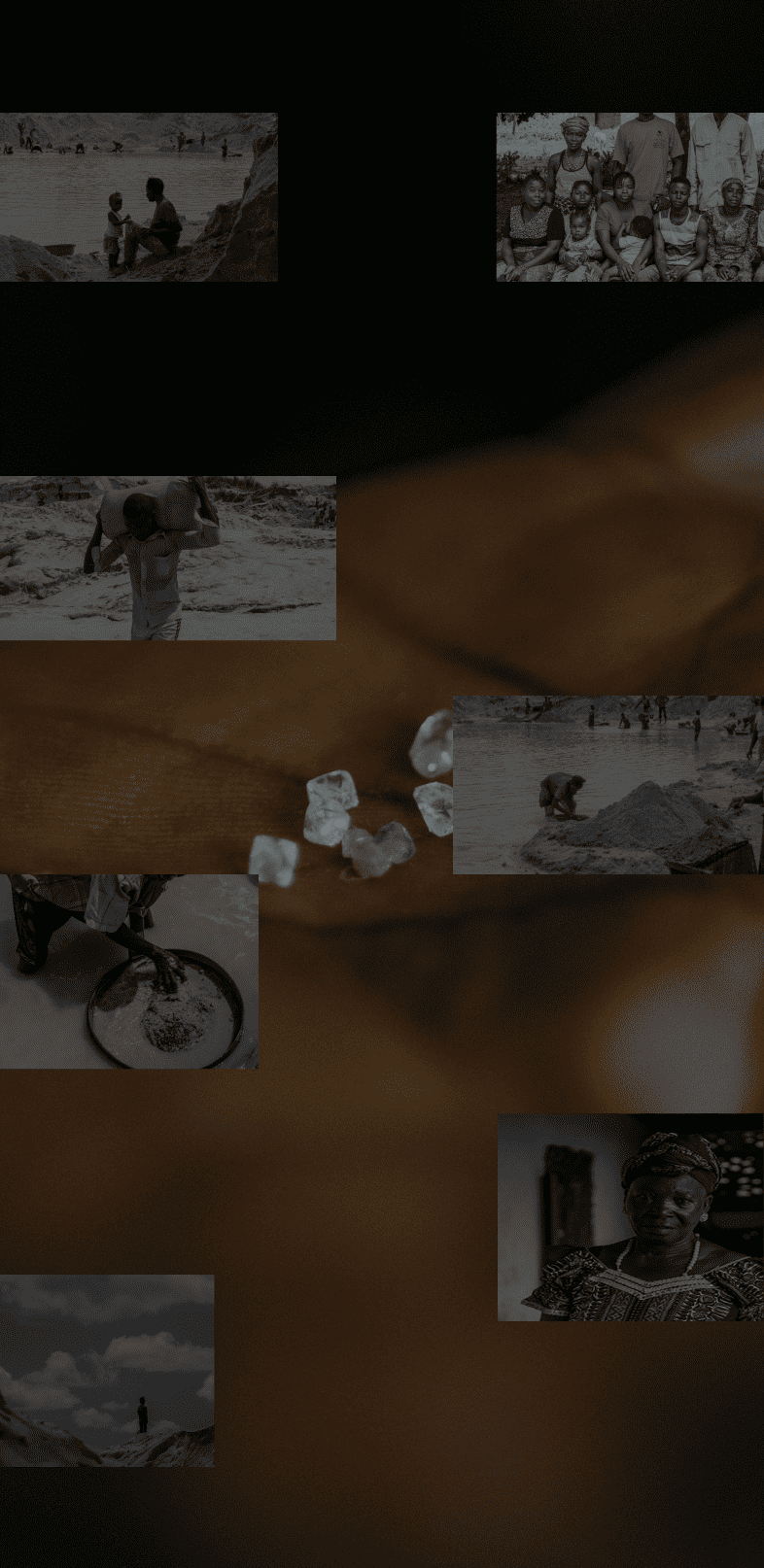
Overview
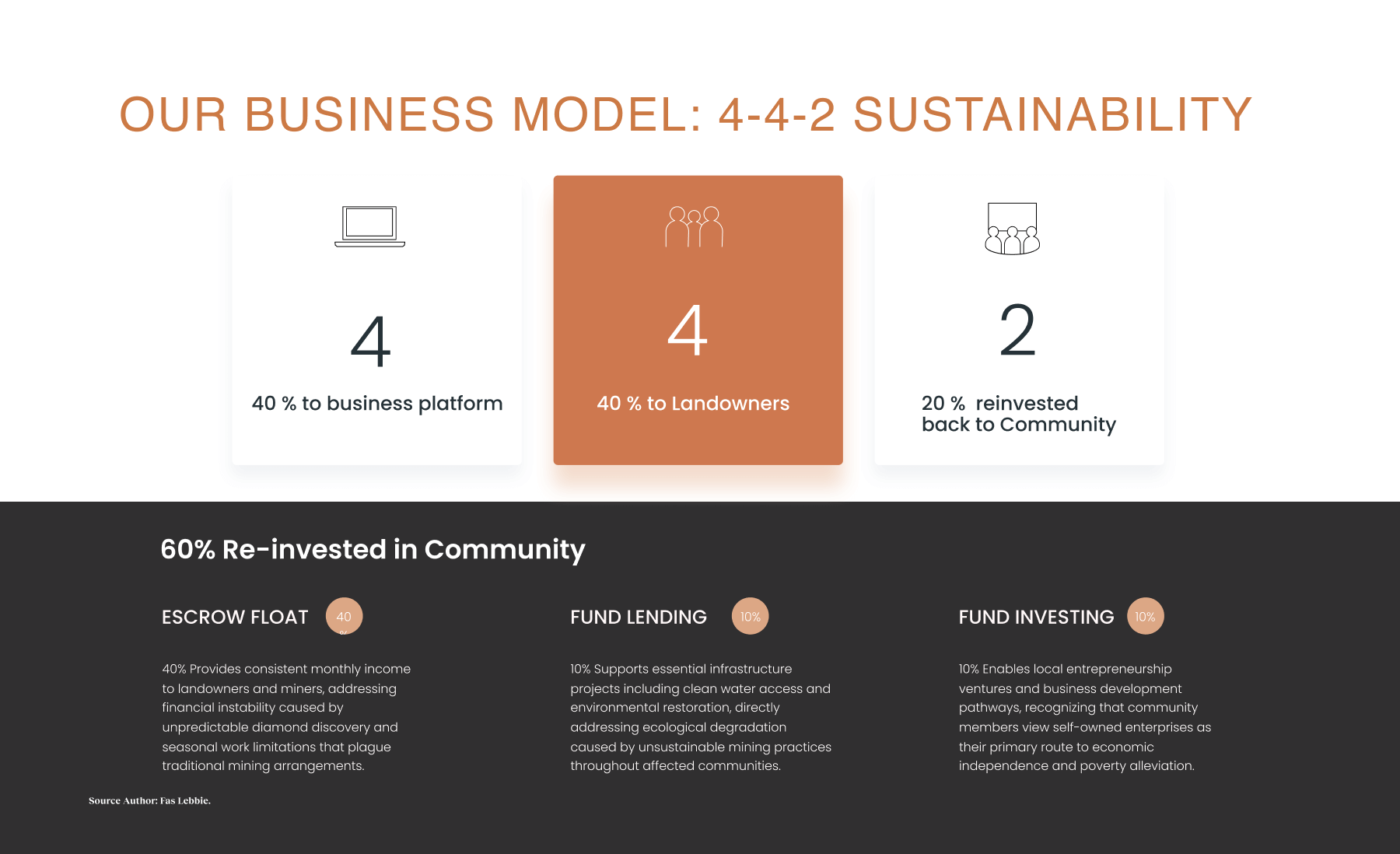
Sierra Leone exports over $250 million of uncut diamonds annually (approximately $6 billion in retail value), yet 70% of its people live below the $1.25-a-day poverty line. The diamond industry has long been plagued by exploitation, with those who own the land and work the mines receiving few benefits from their resources. My design-led research through Root Diamonds challenges this paradigm through an innovative 4-4-2 profit-sharing model. By reconnecting landowners with the international market and eliminating exploitative intermediaries, the company aims to establish sustainable pathways that benefit local communities. The research proposes a profit-sharing model that ensures 40% of profits are returned directly to stakeholders, 40% support platform sustainability, and 20% fund community development — effectively transforming how diamond wealth circulates within mining communities while providing conscious consumers with the transparent, ethical diamonds they increasingly demand.
Research & Design
Theory of Change · Co‑design facilitation · Product / Platform Design ·Participatory Design ·Policy, Compliance & Accountability Brand · Market & Partnerships ·Consumer education ·Community Development & Sustainability
- Duration: February 2020 - December 2021
- Team: Fas Lebbie, Parker Gibbons, Sage Bennett
WHAT I BROUGHT
I led co-design sessions with mining communities and stakeholders, facilitating participatory workshops to map systemic challenges, develop equitable solutions, and ensure that every design decision reflected local voices and needs.
I designed and prototyped the Root Diamonds platform, blending product strategy, policy frameworks, and transparent digital experiences to connect ethical diamonds with conscious consumers while ensuring sustainable value distribution.
I built strategic alliances with local cooperatives, international partners, and conscious jewelry brands to strengthen the 4‑4‑2 profit-sharing model, integrating community sustainability with global market positioning.
I crafted narrative-driven campaigns and educational tools that elevated awareness around ethical sourcing, empowering consumers to make informed, impactful purchasing decisions.
Problem Context
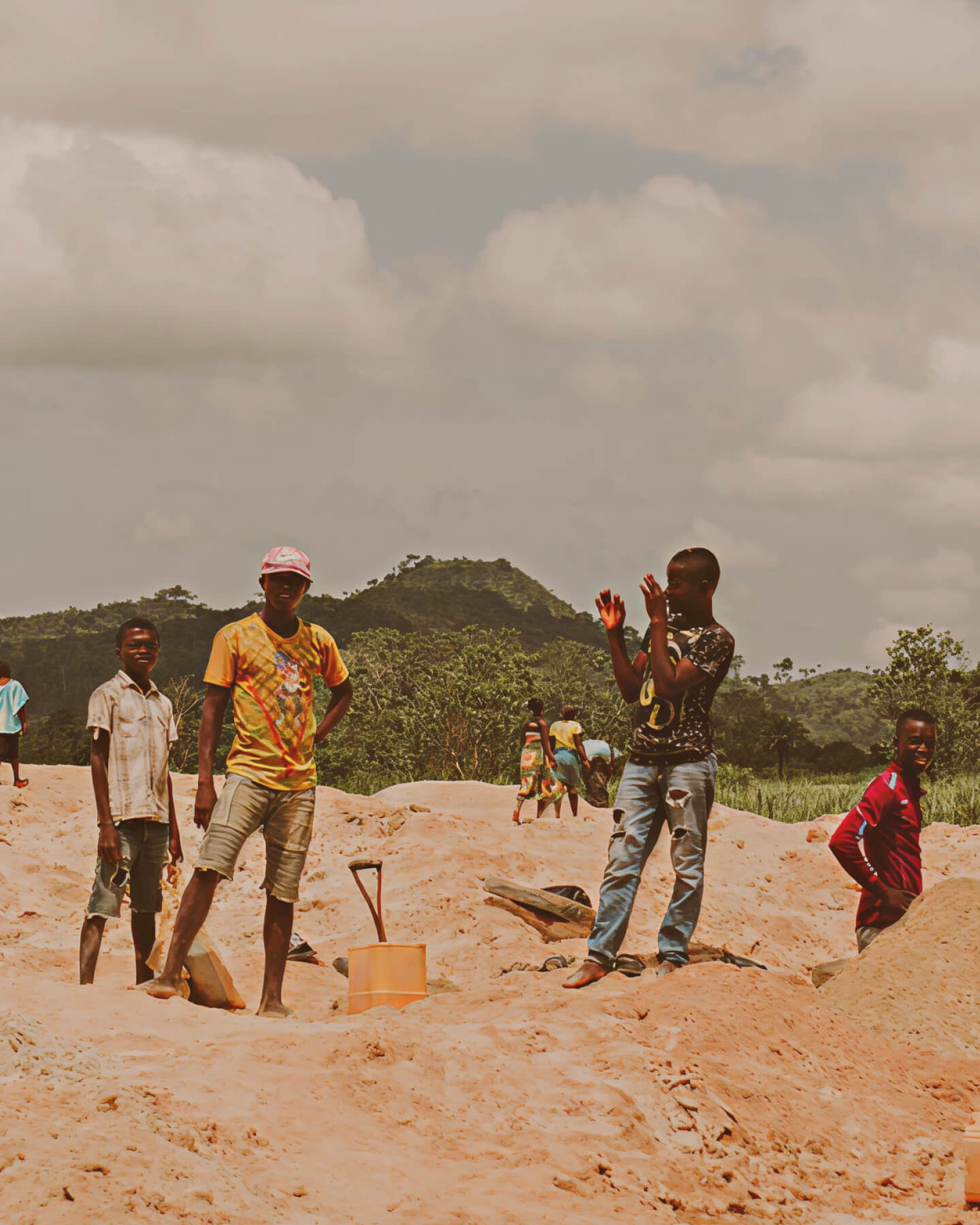
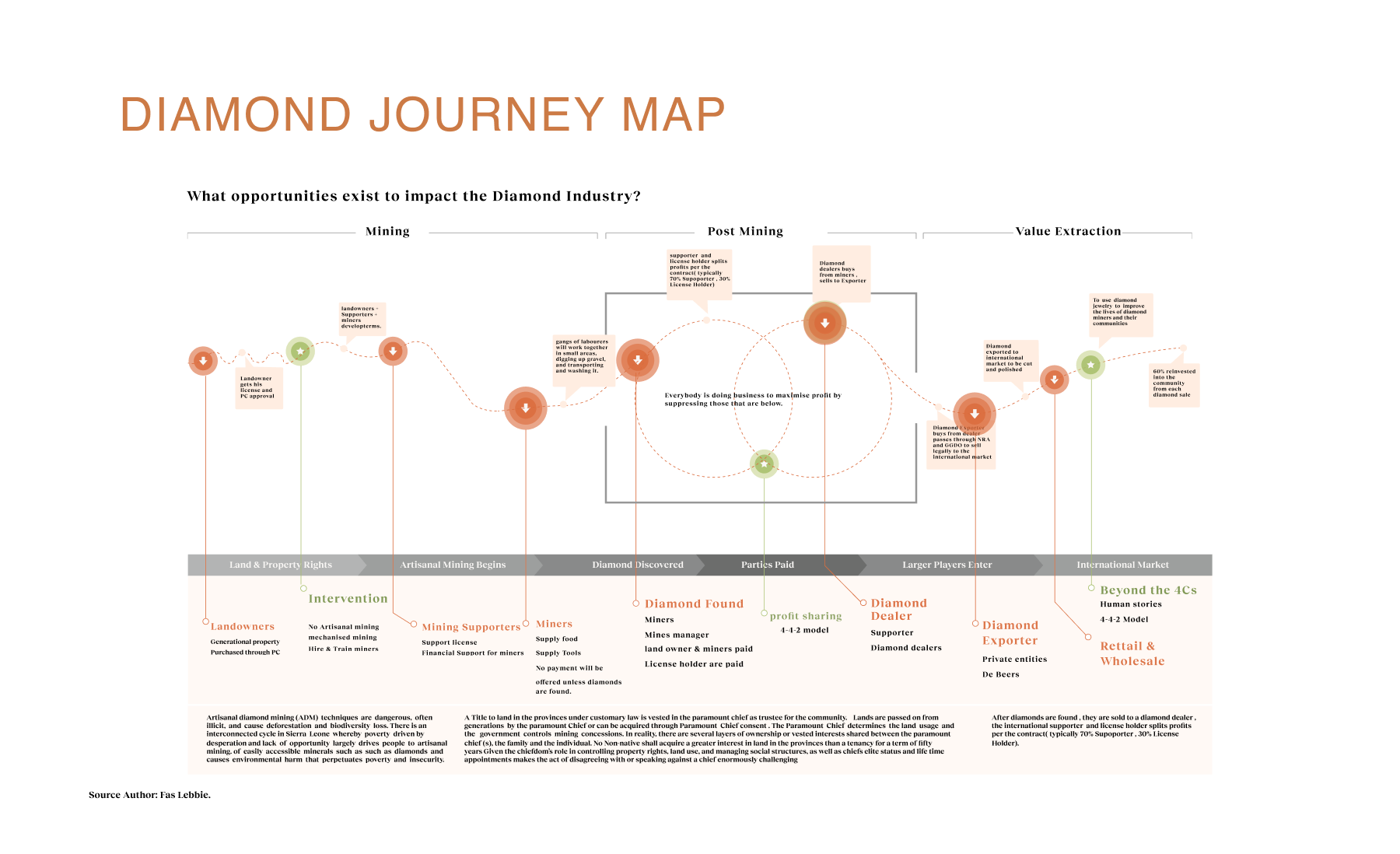
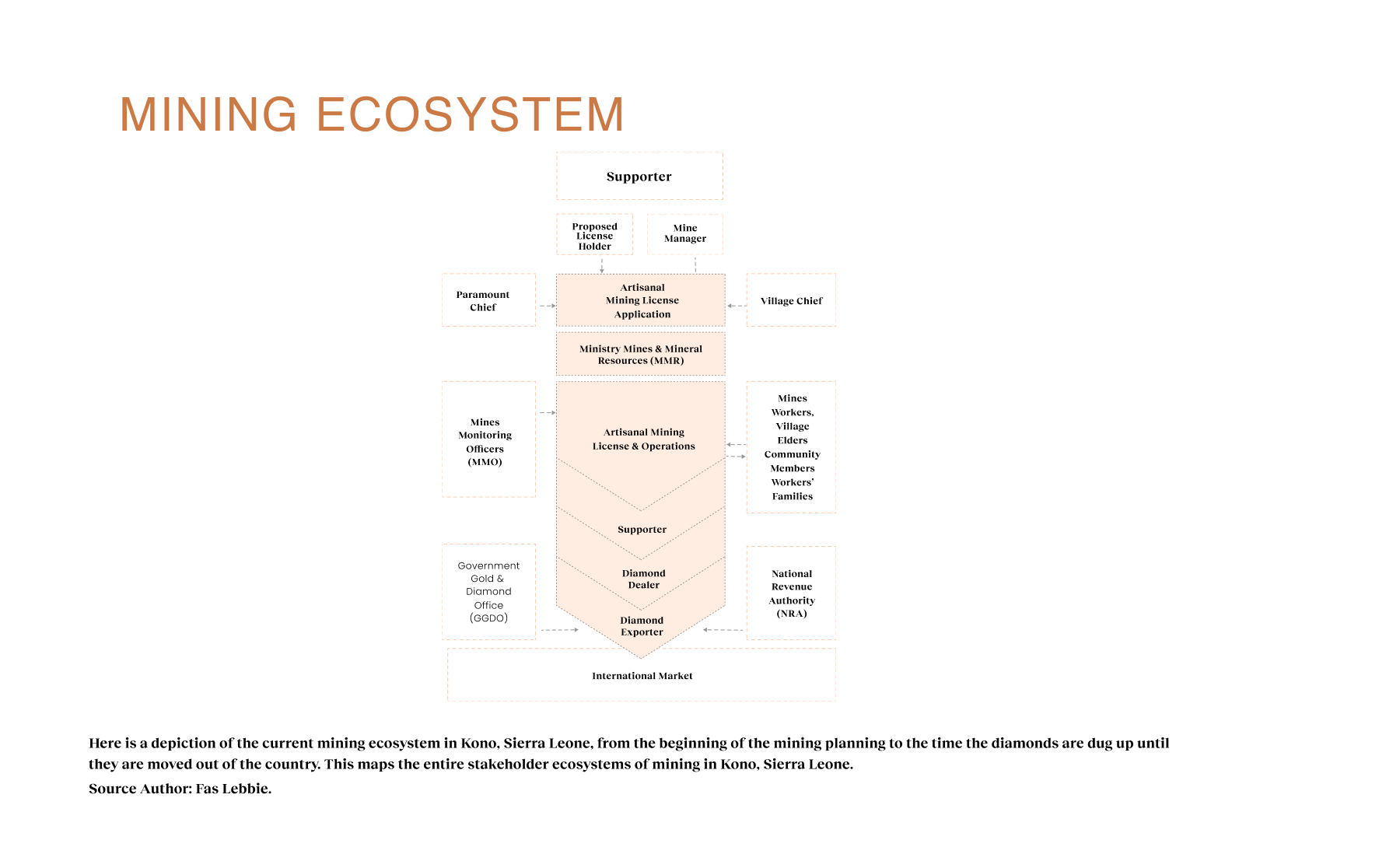
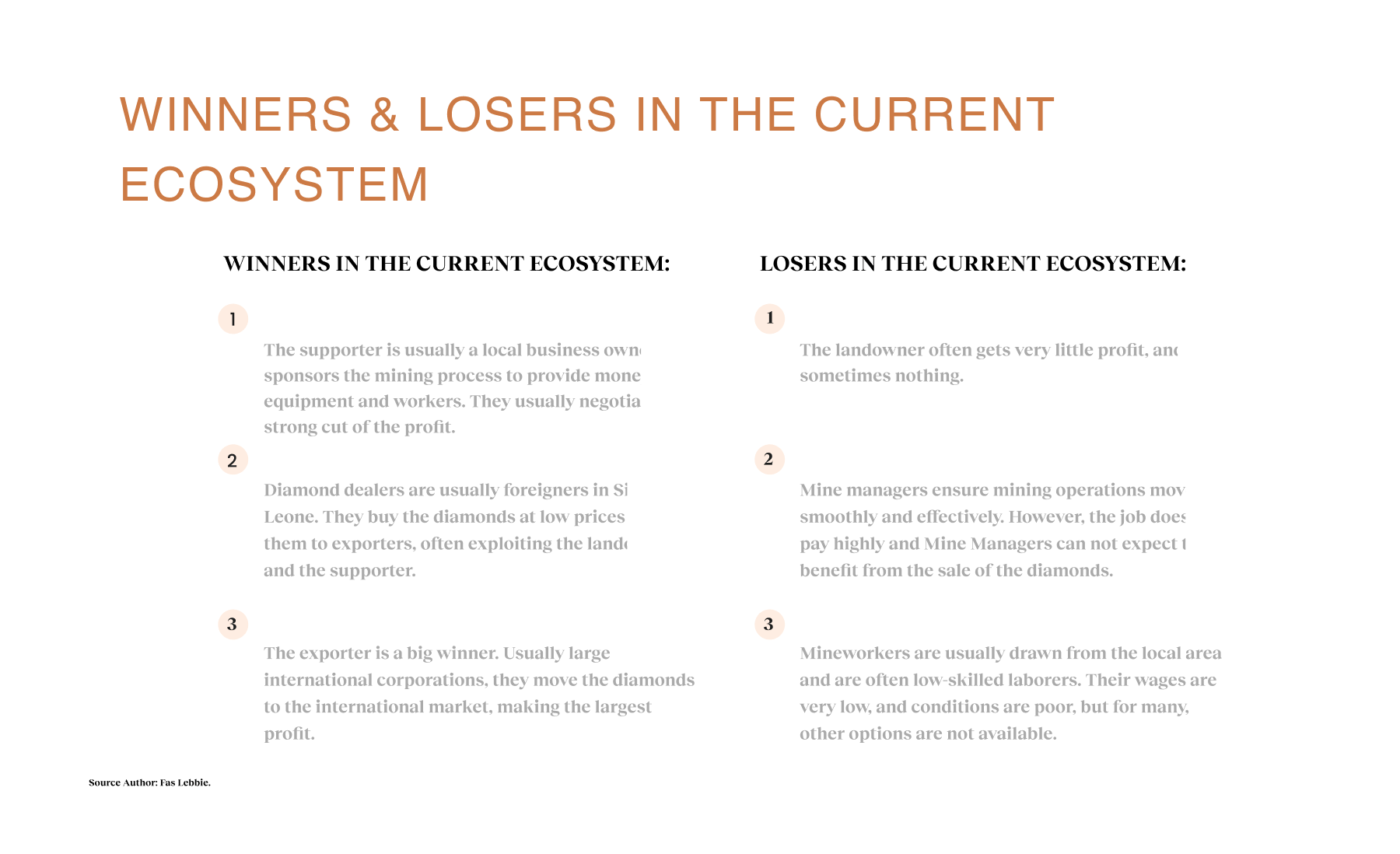
The diamond industry in Sierra Leone exploits resources at the expense of local communities. Despite exporting over $250 million worth of uncut diamonds annually (with a retail value of approximately $6 billion), 70% of Sierra Leoneans live below the $1.25-a-day poverty line. This inequity stems from a deeply entrenched system where foreign interests and middlemen extract the majority of value, leaving landowners and miners with minimal compensation. The current diamond industry ecosystem features multiple layers of exploitation: landowners lack capital and must rely on supporters who take significant profit shares; middlemen known as diamond dealers purchase stones at far below market value; and international exporters ultimately capture the highest margins while contributing little to local development. These systemic issues are compounded by poor working conditions, child labor, environmental degradation, and a lack of transparency throughout the supply chain. The existing model perpetuates cycles of poverty despite the tremendous wealth generated by Sierra Leone’s natural resources, creating an urgent need for intervention that addresses both economic inequity and sustainability concerns.
My Approach
I approached the challenge through a design justice framework, an approach that rethinks design processes, centers on people who are normally marginalized by design, and utilizes collaborative, creative practices to address the most profound challenges communities face. This approach required immersing myself in the lived experiences of those most affected while continuously examining my own position as an insider-outsider researcher.
Design Process
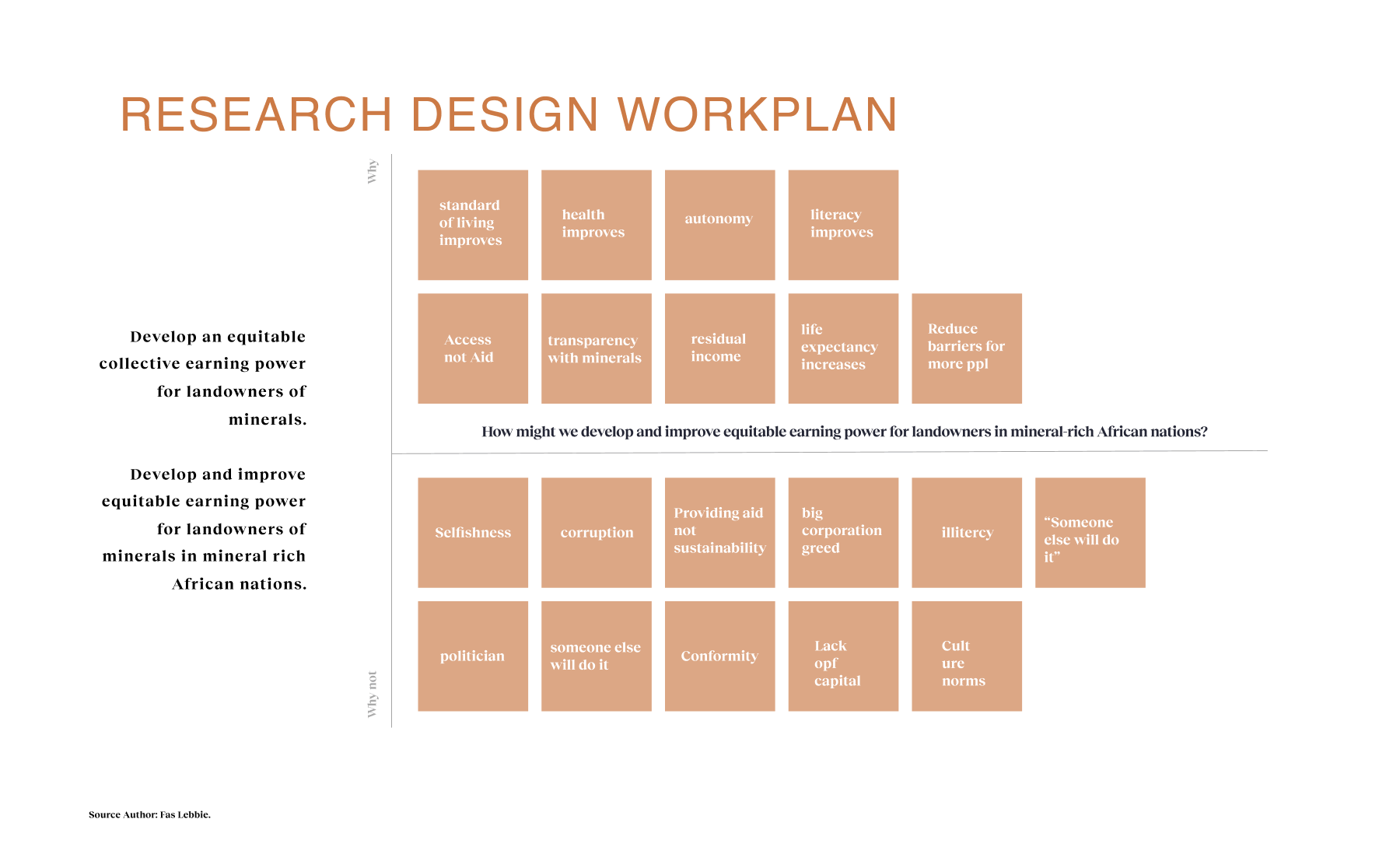
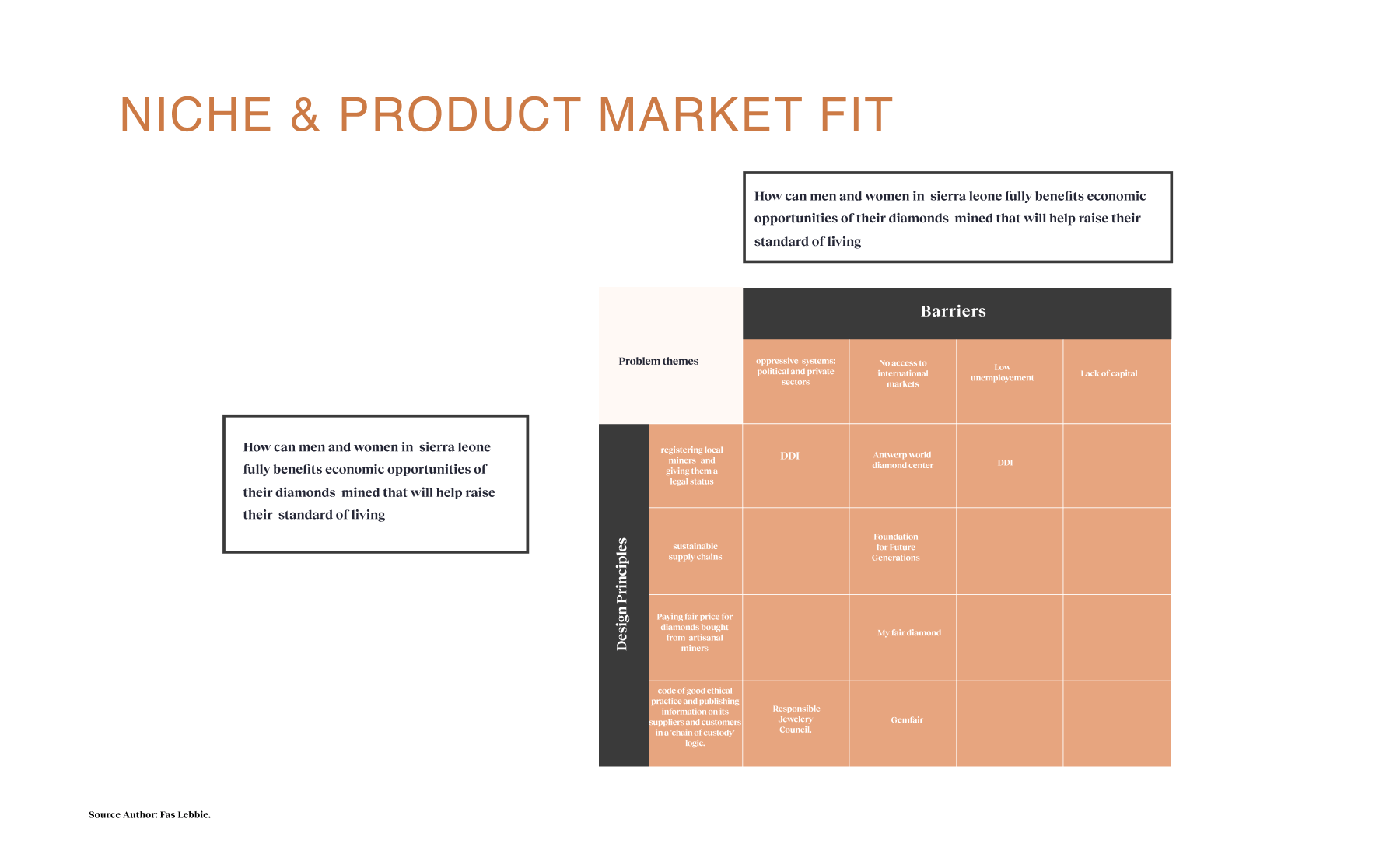
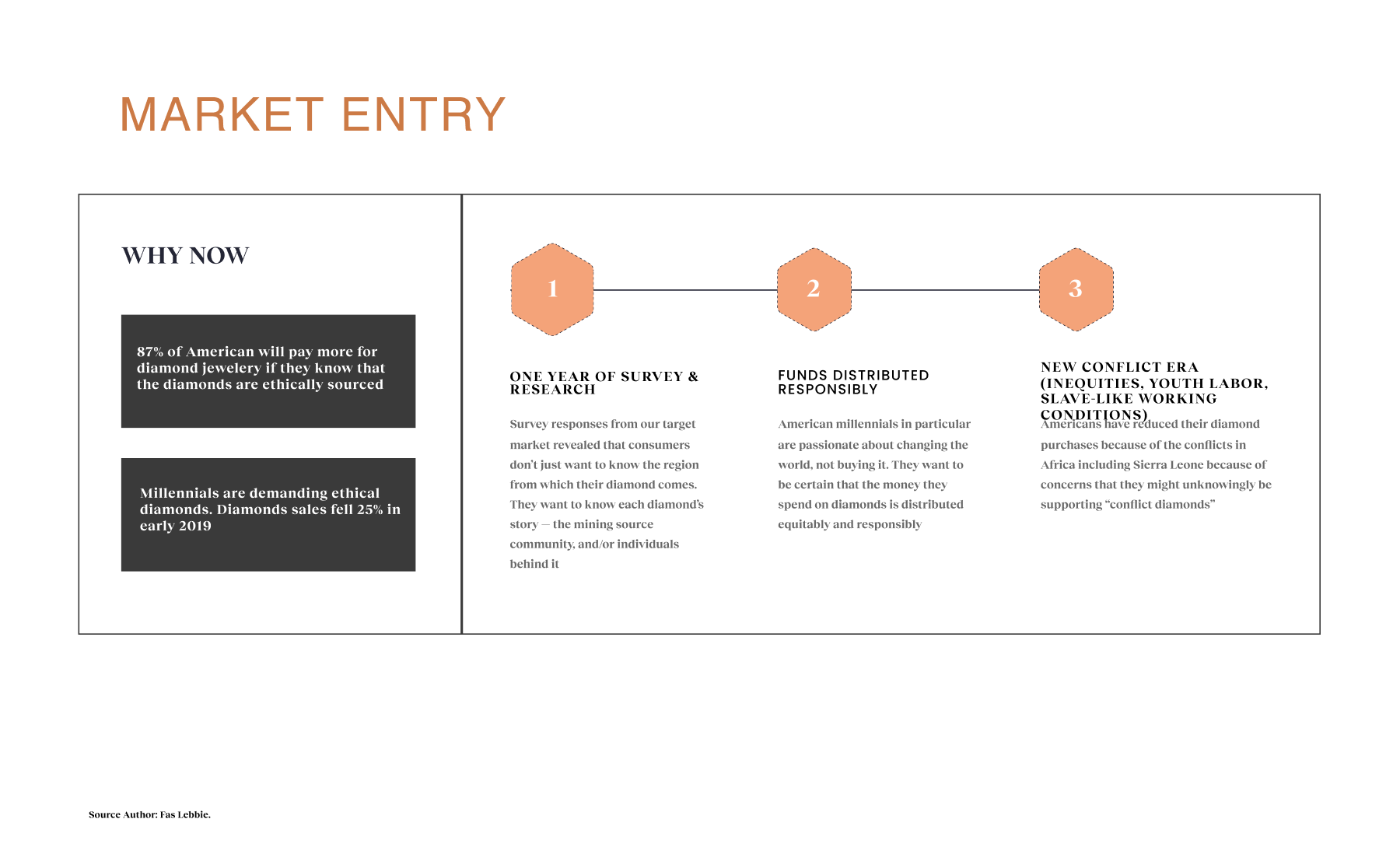
My initial research focused on mapping the journey of diamonds from extraction to retail, identifying that stones generate the greatest value after they leave the country. We learned that traditional mining arrangements typically give landowners only 10-20% of the value of the diamonds they discover, with various middlemen capturing the remainder. Additionally, we found that 87% of American consumers would pay more for ethically sourced diamonds, indicating a market opportunity aligned with addressing exploitation. This baseline understanding helped us formulate our core research question: How might we develop and improve equitable earning power for landowners of minerals in Sierra Leone?
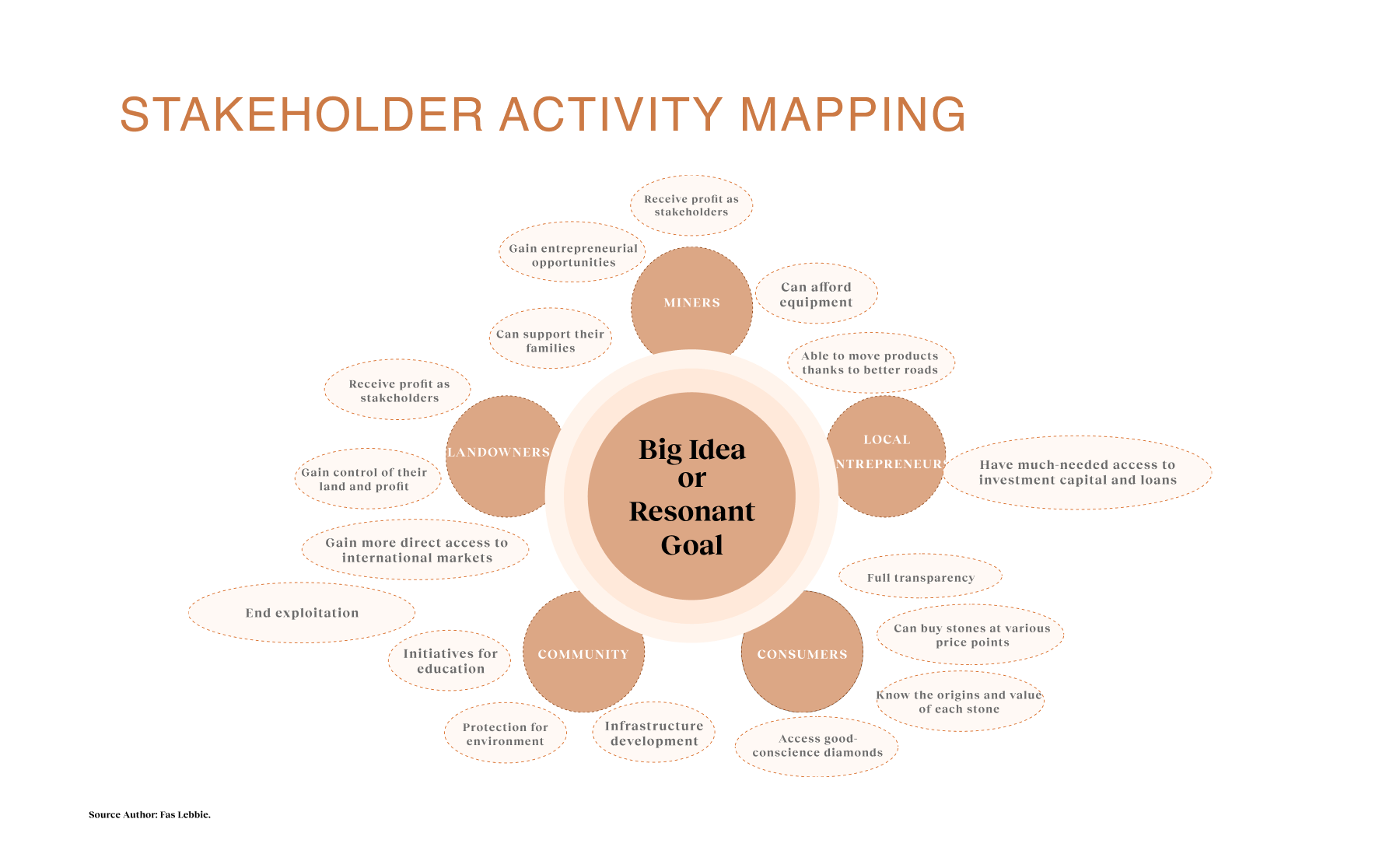
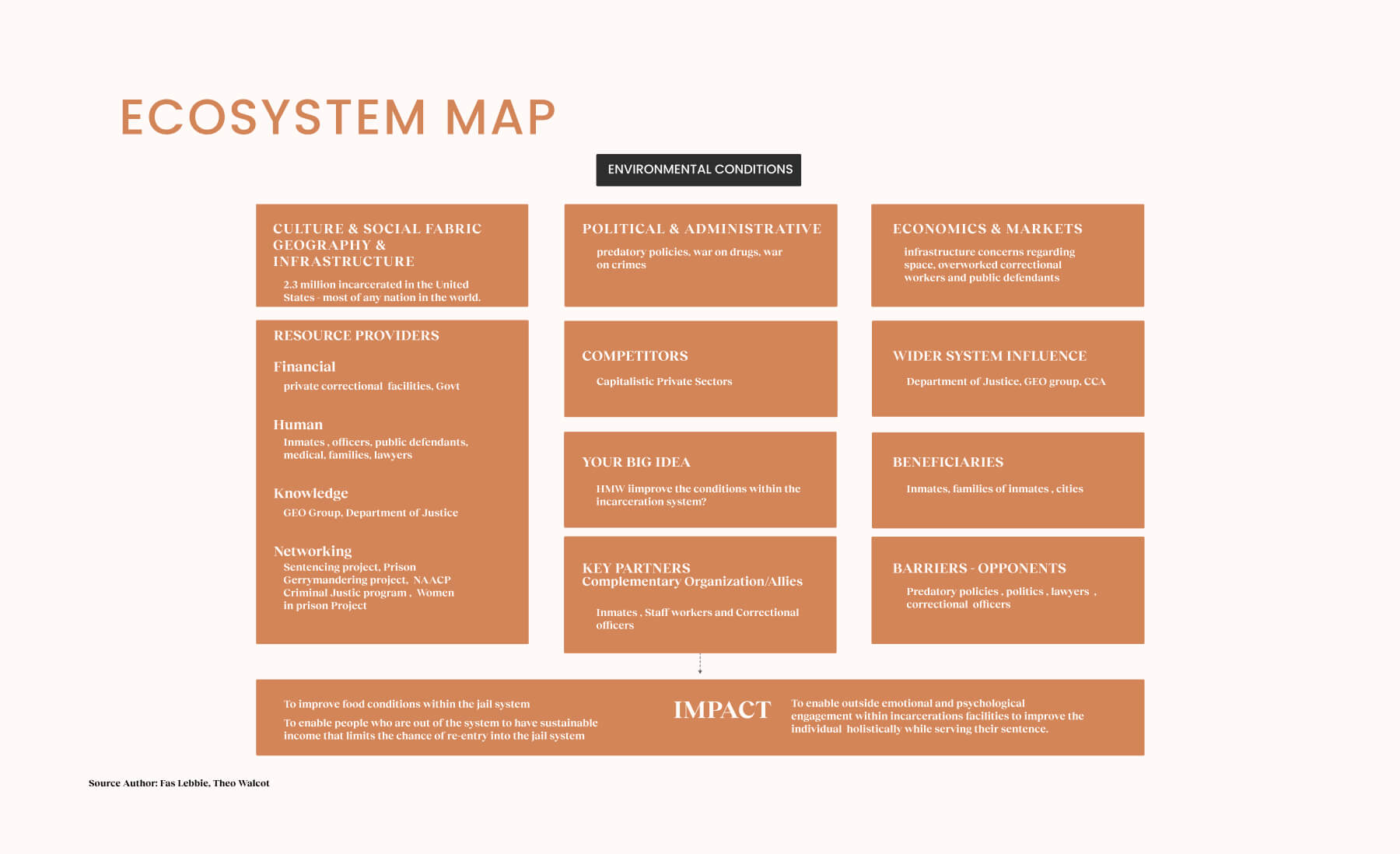
Our research methodology was grounded in design justice principles, centering on the needs and experiences of those most marginalized within the diamond mining system. The approach intentionally seeks to shift power dynamics. I gathered firsthand accounts from landowners, miners, and community leaders as co-designers with essential expertise. This process centers communities, designing with them instead of designing for them. We conducted 80 semi-structured interviews with stakeholders throughout the Kono District, led by a collaborative team, including local community members, who helped design questions, conduct interviews, and interpret findings. This method ensured the research was shaped by people with lived experience of the issues. We prioritized voices of those most exploited within the current system — landowners and miners who perform labor yet receive little benefit. We created ecosystem maps with community members to visualize relationships between stakeholders and identify leverage points for intervention. All research materials and findings were shared openly with community participants, honoring their ownership of the knowledge. Throughout the research, we worked to redistribute power in our methodologies. We compensated local participants for their time and expertise, conducted sessions in local languages with trusted translators, and ensured findings would benefit the community regardless of our project’s outcomes. This approach recognized that ethical design research must not extract value from communities without clear reciprocal benefits.
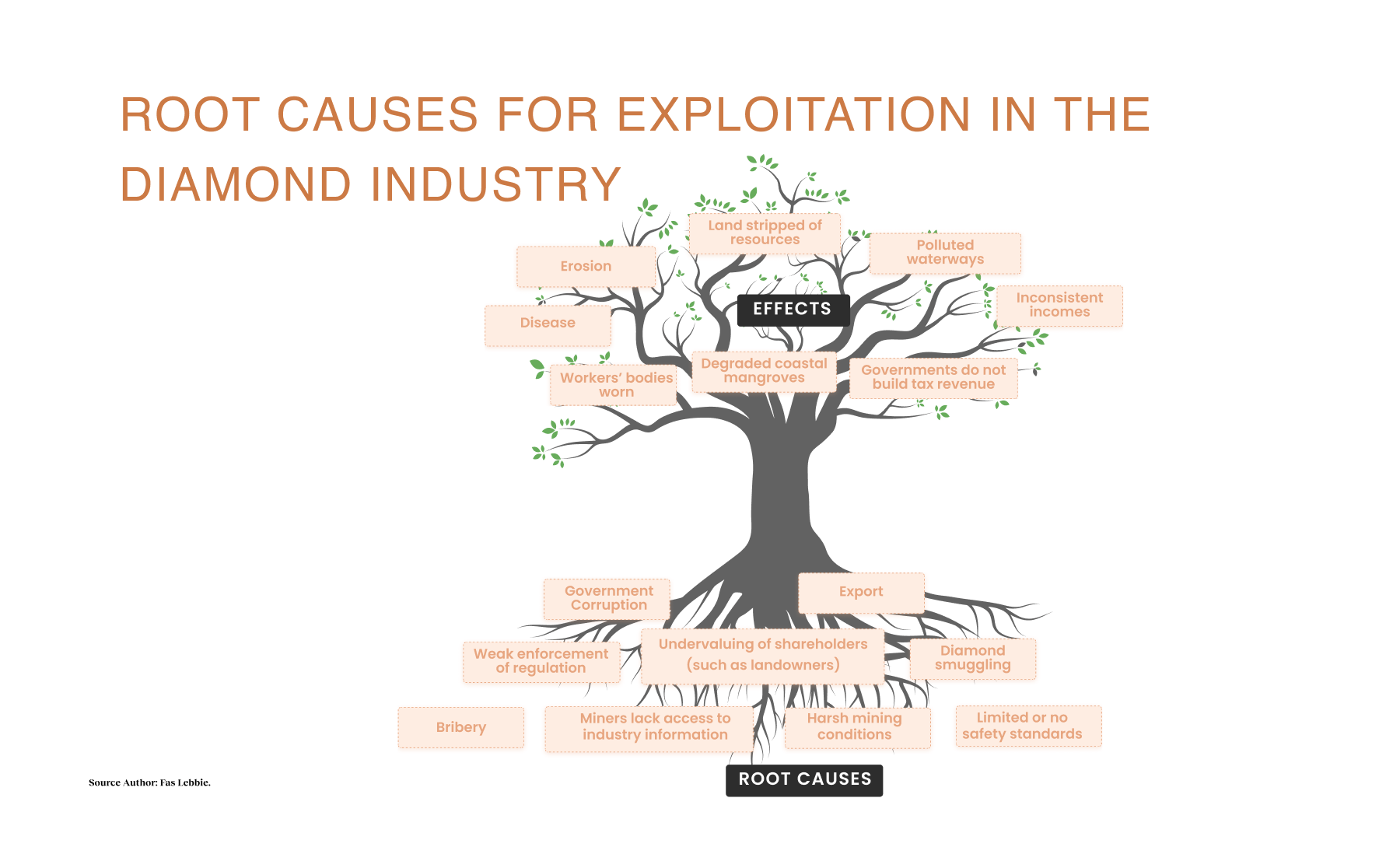
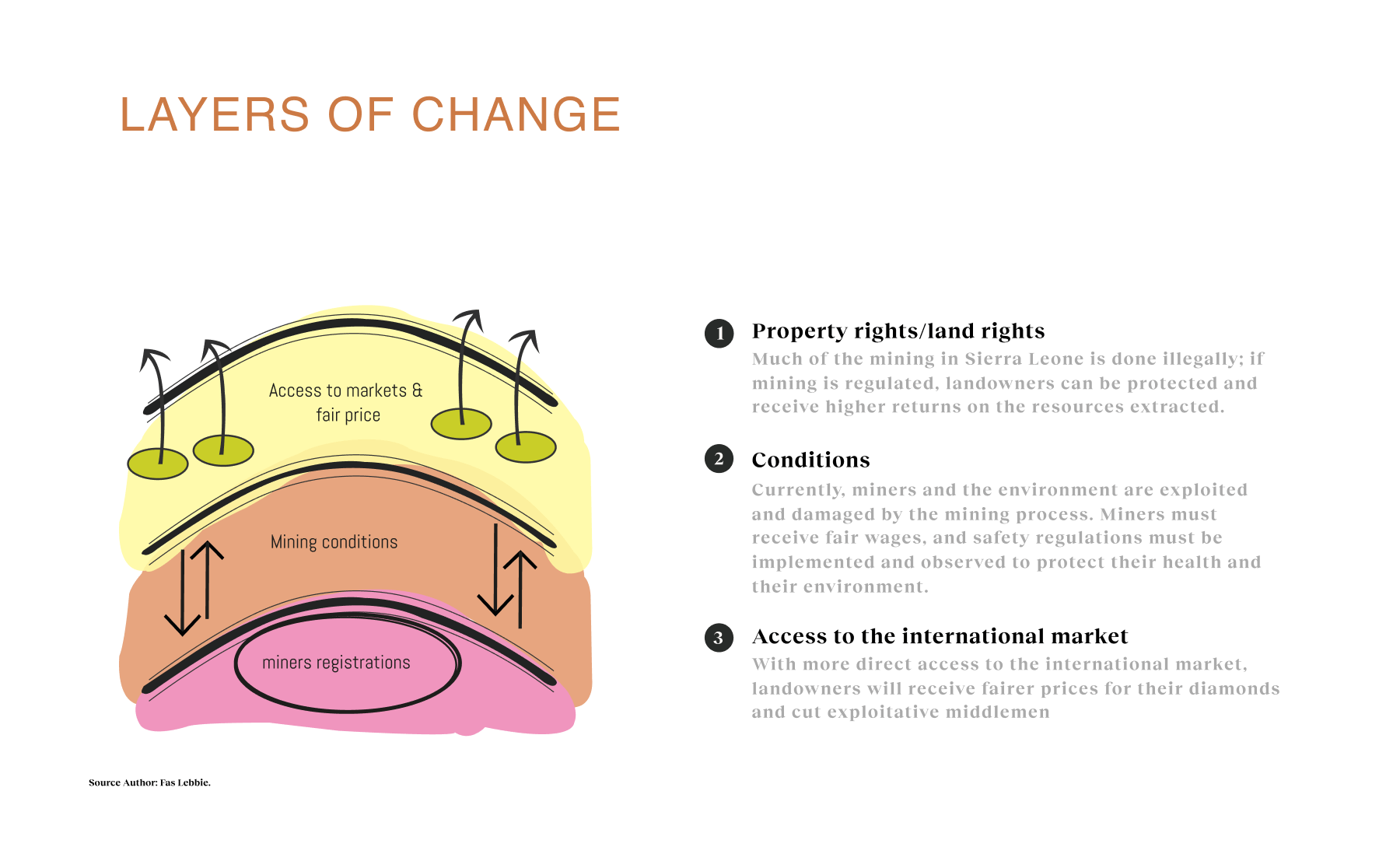
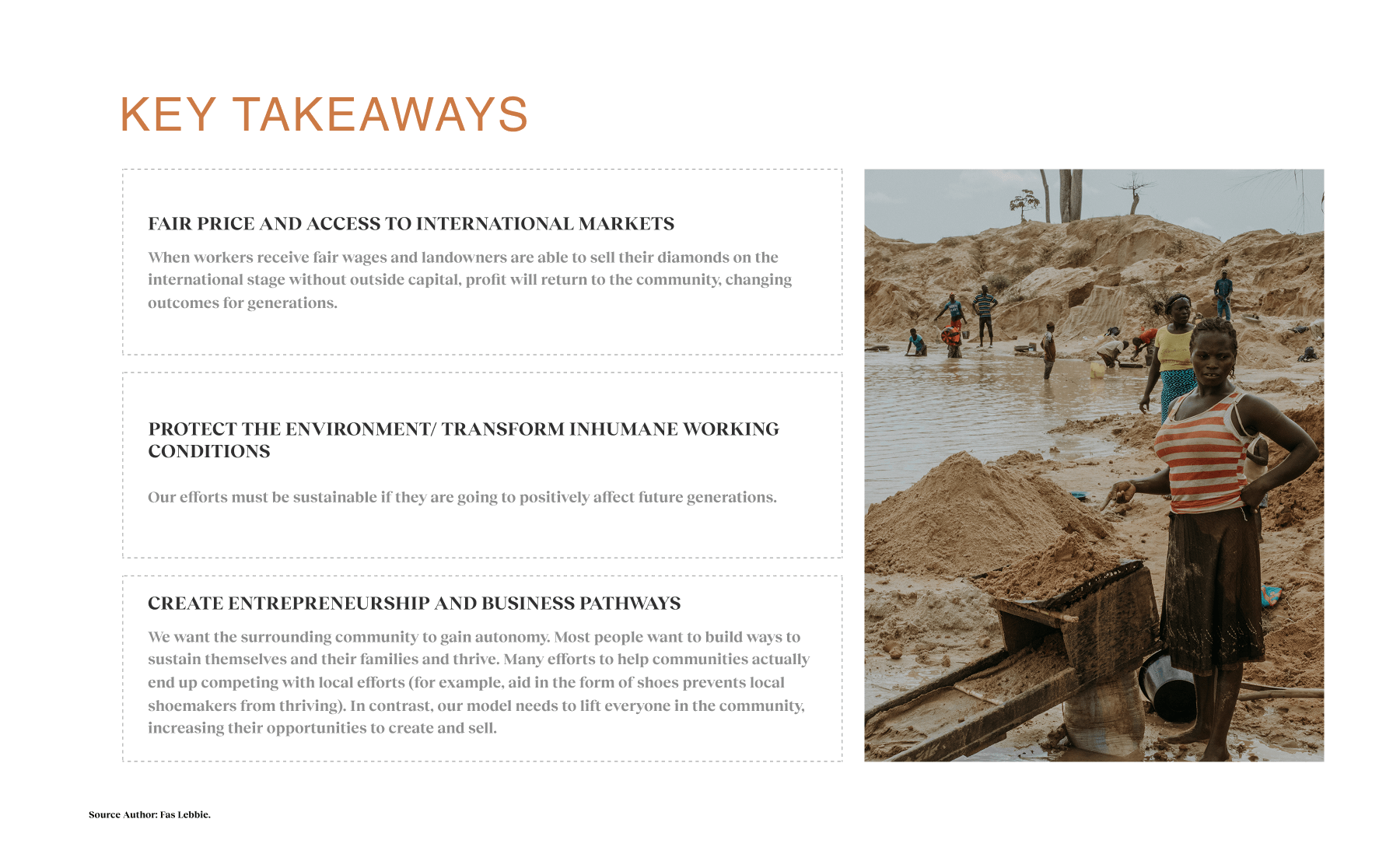
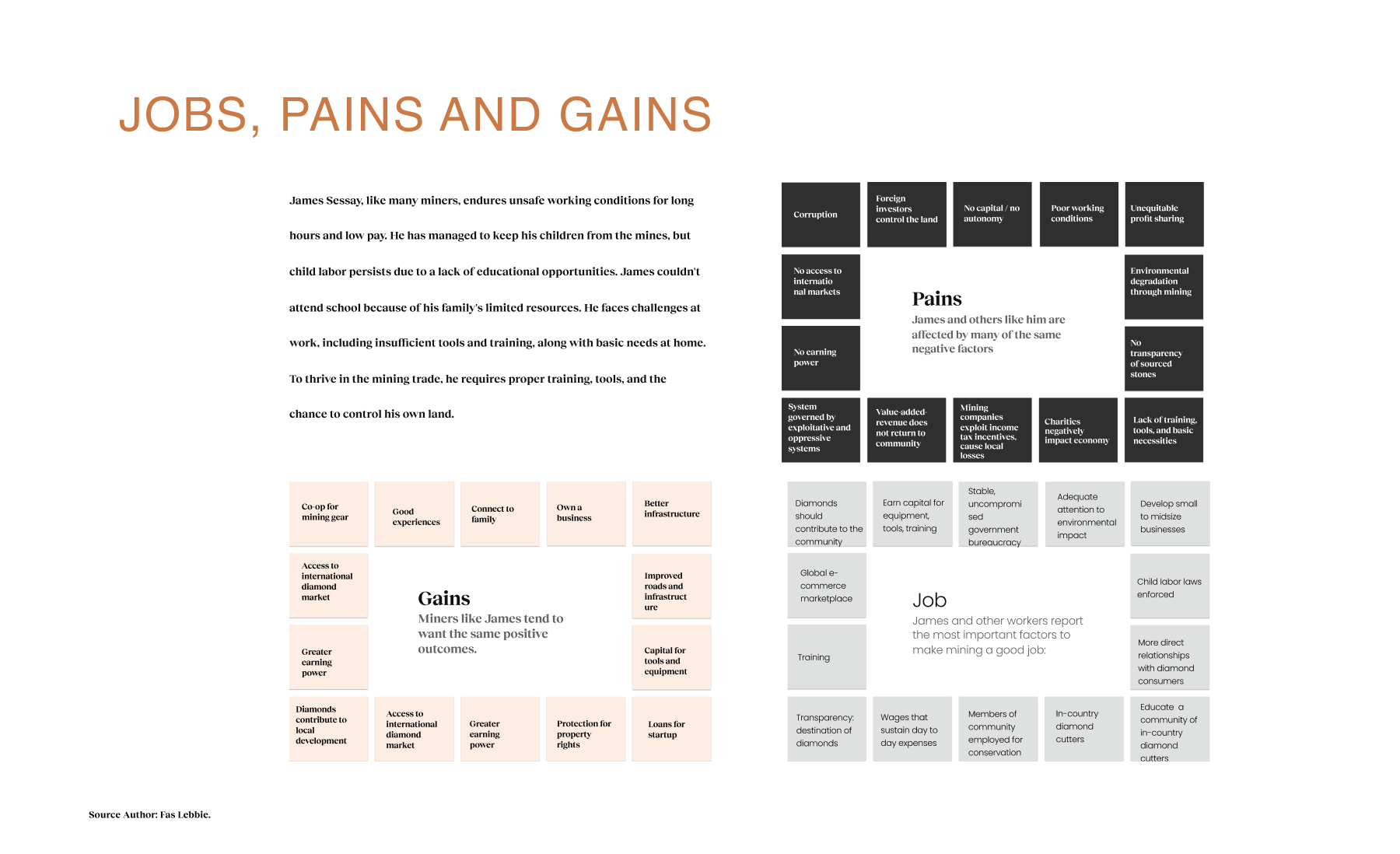
The research identified critical insights about the diamond mining ecosystem in Sierra Leone. We found that the current system lacks accountability, with standards and practices going unenforced and corruption rampant throughout the supply chain. Most landowners lack agency due to insufficient capital, so they are forced to accept exploitative partnerships that leave them with few profits. Many children work in mines to help their families survive, as one income is insufficient under unfair payment structures. Environmental degradation, particularly through unsustainable mining practices, creates a cascade of problems for communities, including lack of clean water. Despite these challenges, we observed a strong entrepreneurial spirit, with many miners and landowners seeing self-owned businesses as their pathway out of poverty and believing a large enough diamond would fund such ventures. Labor remains largely unmechanized and physically demanding, causing significant wear on workers’ bodies and minds. Their productivity is severely affected by seasonal rains. Income is inconsistent despite constant work, creating financial instability. Illegal and informal mining is widespread, operating outside regulatory frameworks. These insights revealed three primary intervention opportunities: providing fair prices and access to international markets, protecting the environment and transforming working conditions, and creating entrepreneurship and business development pathways for community members.
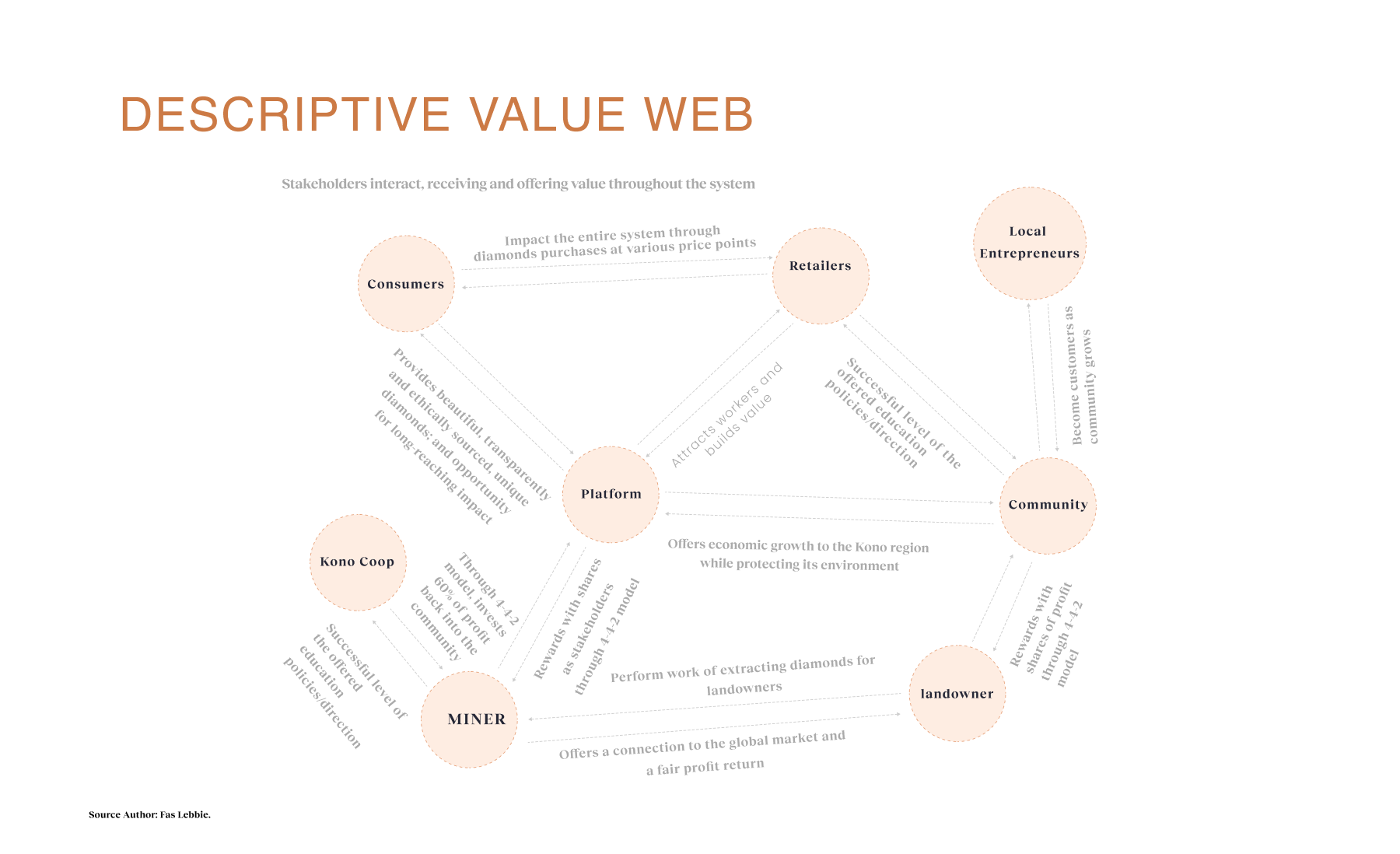
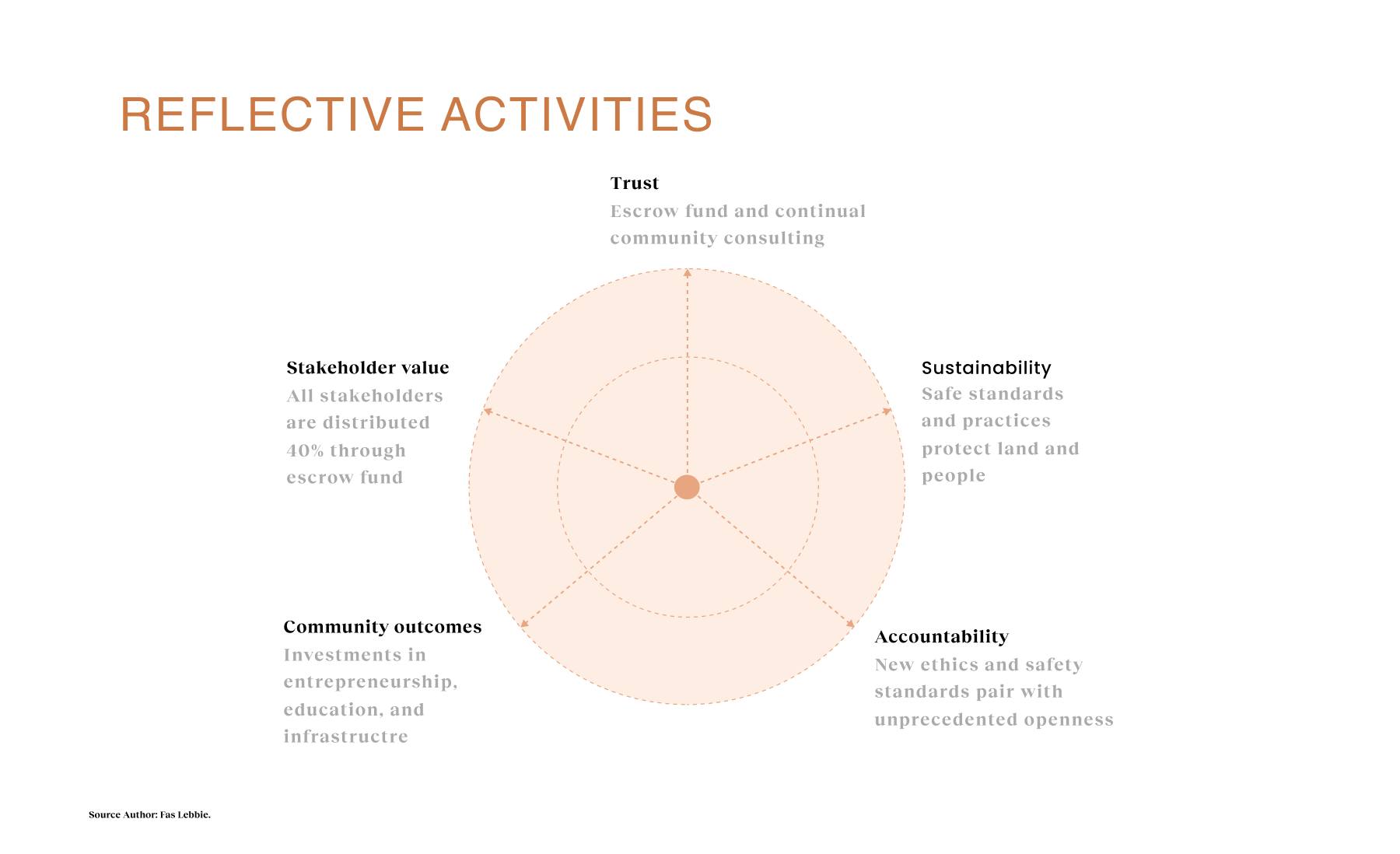
Rather than imposing external solutions, we established a co-design framework where the Kono miners I worked with directed the development of a business model. We designed the 4-4-2 profit-sharing model through collaborative sessions before finalizing the structure that allocates 40% to the platform, 40% to stakeholders, and 20% to community development. We created financial models that strike a balance between commercial viability and returns to mining communities. For the consumer experience, we planned to prototype three transparent pricing tiers that would communicate different levels of community impact, making the value flow visible to all participants in the system. Our process acknowledged that sustainable solutions must address both the ecological impacts of mining and the social sustainability of fair labor practices. Community members and my team plan to begin by establishing the Kono Cooperative — a structure that dismantles traditional power hierarchies by empowering miners and landowners with collective governance. This cooperative approach transforms the relationship from one of extraction to one of collaboration, recognizing that marginalized communities must control their own resources. I will conduct further research to determine if the platform can incorporate blockchain technology as a means of creating accountability and transparency, thereby shifting power toward those previously exploited. The escrow system we designed provides consistent income to stakeholders, directly addressing the financial instability revealed in our research. This mechanism creates mutual accountability between consumers, the platform, and local communities.
We found some key takeaways during implementation:
- How can tangible benefits to mining communities be demonstrated from the earliest stages of implementation?
- In what ways can we incorporate protective mechanisms against market volatility, ensuring stable income for stakeholders even during fluctuations in diamond prices or discovery rates?
- We also discuss building research practices within our team that can maintain non-extractive, reciprocal relationships with community partners, ensuring that the knowledge, resources, and benefits generated through our work are shared equitably with those who contributed to their creation.
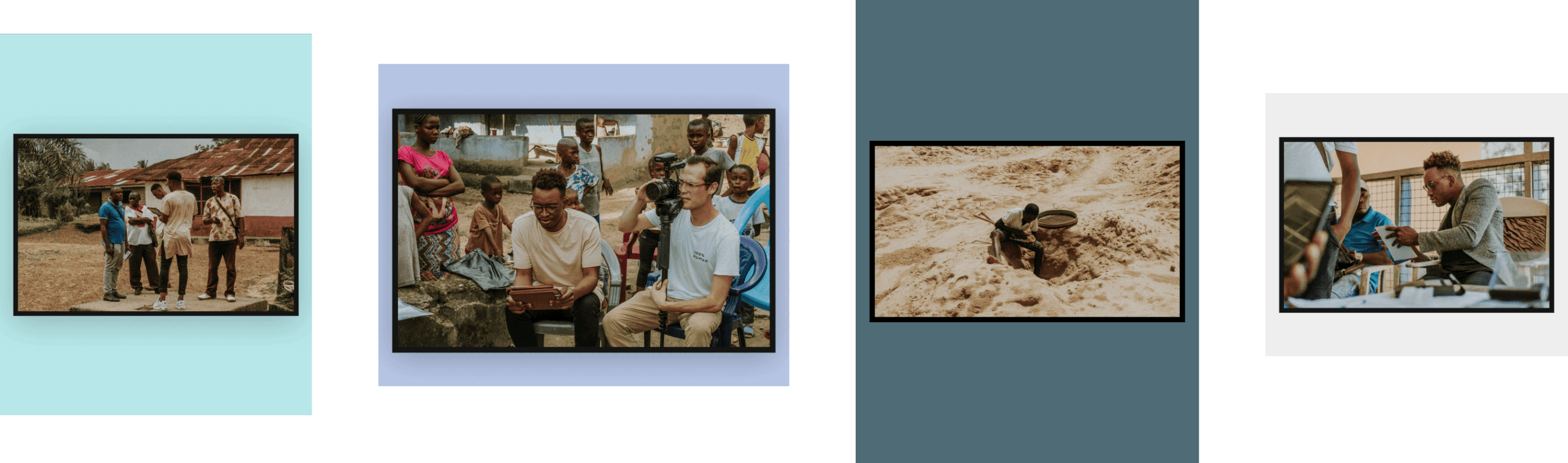
Co‑Designing Futures
Engaging locals through research, storytelling, and collaboration to reshape diamond mining into equitable, community-driven systems.
Design Interventions
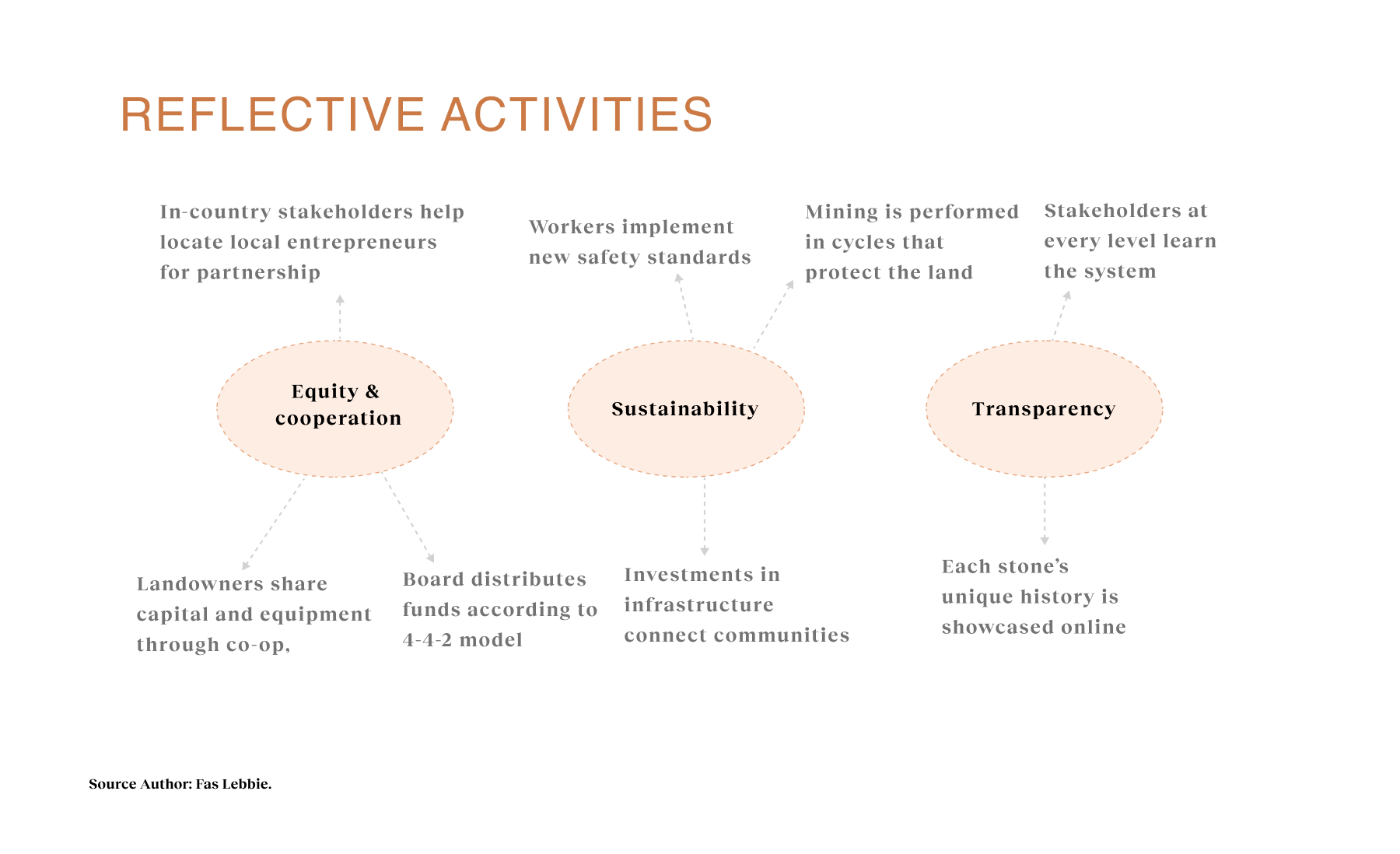
Based on our ethnographic research, we implement a 4-4-2 profit-sharing model, ensuring that 40% of earnings are reinvested in the organization/entity engaging in extractive activies, 40% are returned directly to Miners and lanowners who mined the diamond through an equitable distribution, and 20% are channeled back into community development through infrastructure projects and local entrepreneurship support. This method enables consumers to make a direct impact on stakeholder compensation and community investment.
Empowering you to truly be their advocate.
Coral Health is an actionable way to embody your diversity, equity, and inclusion commitment by helping culturally-diverse people within your organization feel a sense of safety, understanding and belonging in healthcare situations.

Toolkit, Methods & Frameworks
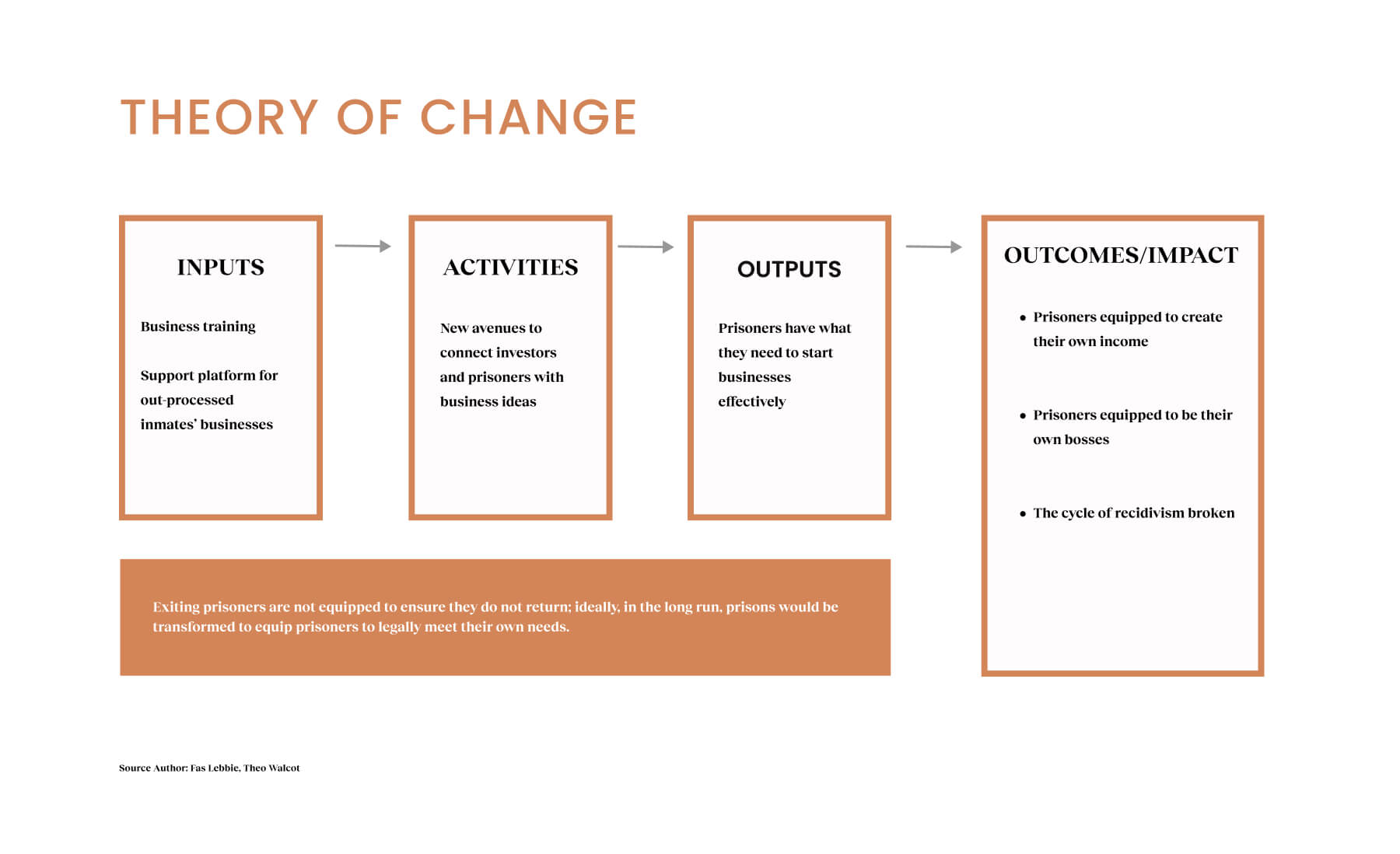
I employed ethnographic research, systems mapping, stakeholder mapping, ecosystem mapping, and more, which helped uncover deeper insights about the current system of exploitation of artisanal miners. Additional co-design methods were employed, demonstrating our commitment to co-designing through a community-centred design practice.
Stakeholder Interviews
conducted across Kono District, revealing systemic exploitation patterns and shaping the 4-4-2 profit-sharing model.
Consumer Willingness Premium
400 participants in a survey indicated that American buyers would pay more for ethically sourced diamonds, validating market viability.
Profit Sharing Structure
ensuring equitable distribution: 40% to stakeholders, 40% to platform sustainability, 20% to community development.
Reflections & Impact
The 4-4-2 business model addresses economic inequities while supporting the healing and liberation of communities that have been historically harmed by extractive industries. Each feature of the model was designed to disrupt exploitative patterns by addressing intersecting forms of oppression. The diamond industry perpetuates colonial power structures, gender inequities, and environmental degradation. Our approach recognized these interconnected systems and developed interventions that simultaneously tackle exploitation at multiple levels. Throughout the process, we prioritized direct community benefits and sustainable outcomes. The resulting 4-4-2 model generates immediate economic returns while establishing long-term infrastructure for community self-determination, ensuring that communities directly control and benefit from the design outcomes.
Next Steps
- Pilot the 4-4-2 profit-sharing model with local mining cooperatives to validate its economic viability and community impact.
- Expand co-design workshops with additional mining communities to refine solutions and ensure transparent value distribution.
- Build partnerships with ethical jewelry brands, NGOs, and policy advocates to scale Root Diamonds and secure market access.
- Prototype a blockchain-based transparency system to track diamond origins and strengthen consumer trust in ethical sourcing.