
Overview
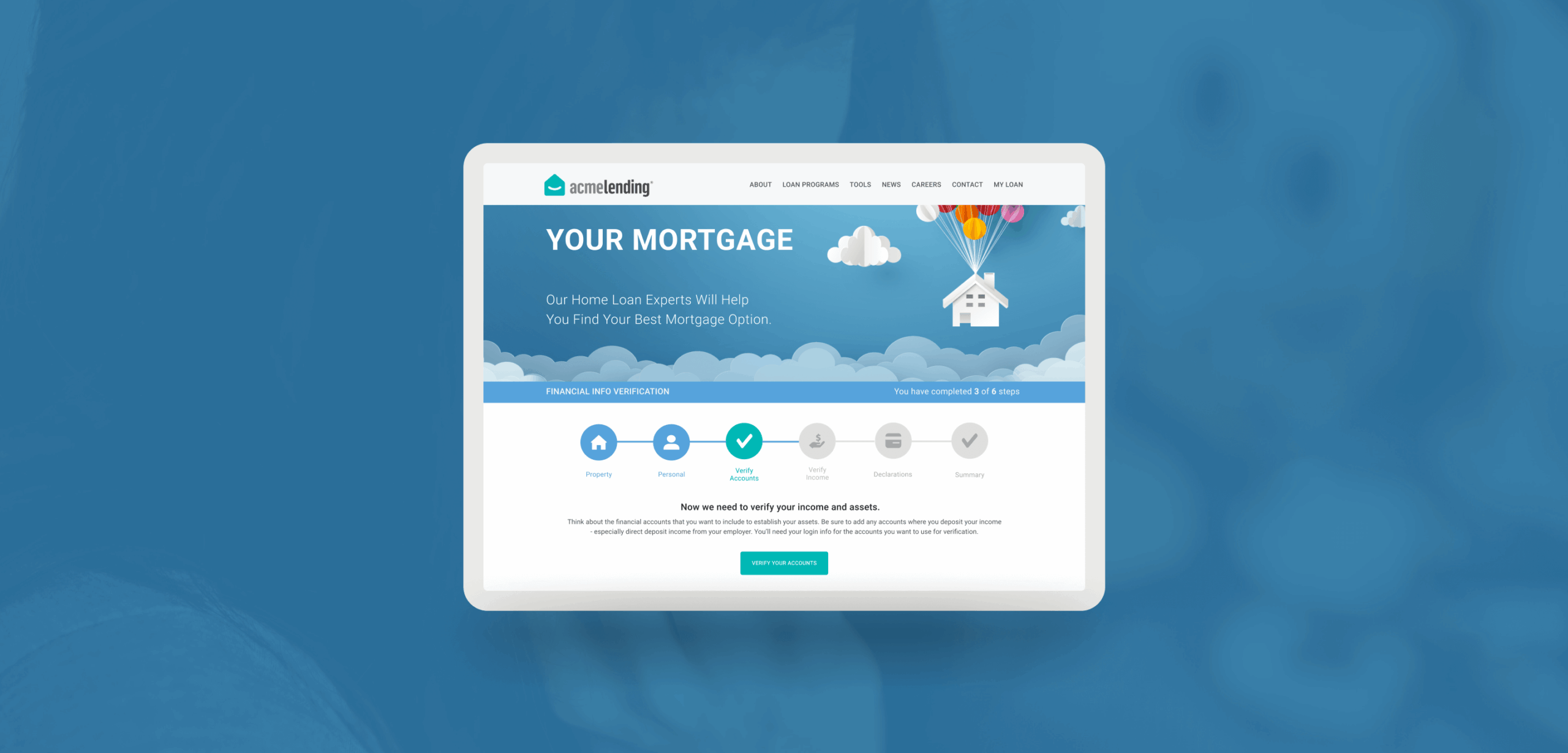
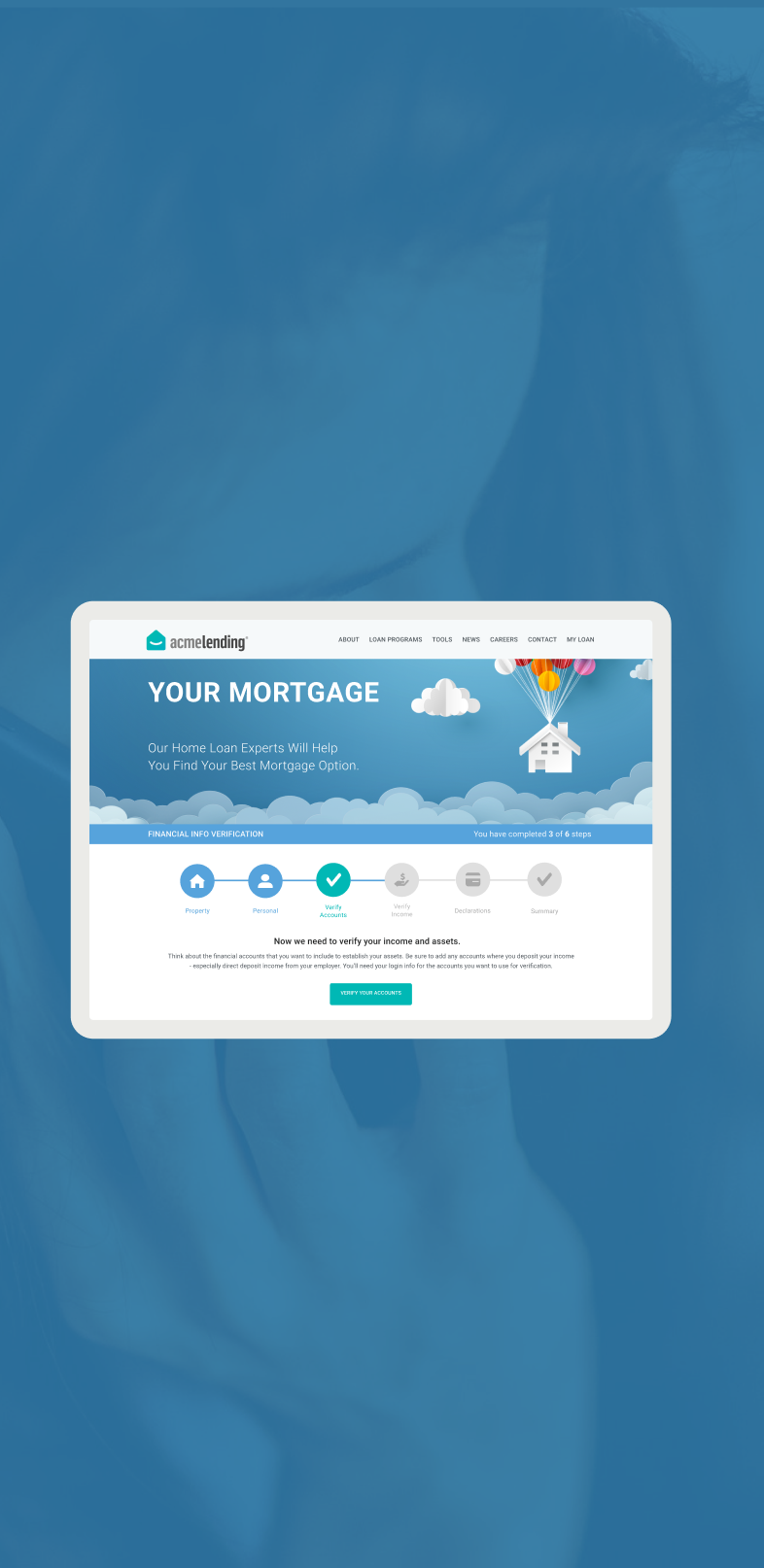
What if verifying your income for a loan took minutes instead of hours? At Acme Lending, my team partnered with TX Verify to implement a digital Verification of Income and Employment (VOIE) solution designed to reduce verification time by one-third while improving accuracy and user experience. By aligning the process with human needs and digital capabilities, we delivered a redesigned interface that made it easier for borrowers to submit financial documentation. As a result, the number of borrowers completing digital verification increased by 10%, and overall verification time decreased by 33%.
Research & Design
Product Design · UX strategy · Design Research · API Design · Consumer banking experiences
- Duration: March - April 2019
- Partners: Acme Lending, Finicity/Mastercard
- Team: Fas Lebbie, John Adams
Confidentiality: This case study reflects my perspective. Specific details have been modified to protect sensitive information while showcasing my design approach.
My Role
I conducted user interviews and testing while implementing human-centered design strategy frameworks across cross-functional teams, delivering strategic research insights to increase digital verification completion rates.
I designed comprehensive UX interfaces and API integration solutions while collaborating with financial institutions
Contributed to cross-functional teams while ensuring financial regulatory compliance through collaborative that delivered GSE-accepted solutions.
Problem Context
The traditional income verification process for loans is often time-consuming, unreliable, and frustrating for financial institutions and consumers alike. Out of 156 million full-time workers in the U.S. labor market, 98 million are paid through payroll providers or third parties, but verification systems aren’t designed to seamlessly connect with these digital payment channels. Instead, borrowers must manually collect, scan, and submit documents while financial officers spend hours verifying their authenticity and completeness. The existing verification process typically requires borrowers to provide physical pay stubs or bank statements, which must be manually verified by loan officers, creating a significant bottleneck in the loan approval process. This discrepancy stems from verification systems that haven’t kept pace with digital financial practices, resulting in inefficient processes and delayed approvals. While digital lending has rapidly evolved, verification has remained largely paper-driven. Borrowers have to submit documentation multiple times, and financial institutions have to perform repetitive verification steps. Traditional verification requires multiple touchpoints, frequent follow-ups, and complex document submissions that frustrate both borrowers and financial institutions.
My Approach
Led user research, crafted compliant UX flows, and designed API-integrated experiences that empowered borrowers and lenders.
Design Process
We approached the challenge of improving the loan verification process by focusing on the experiences of both borrowers and loan officers, acknowledging that purchasing a home is one of the most significant financial decisions an individual can make. In the U.S. labor market context, 98 million out of 156 million full-time workers are compensated through payroll providers or third parties, and pay stub verification accounts for 75-85% of the loan verification market. Based on the data, my team and I decided that a tailored solution was essential. Our design research involved direct interviews with Acme Lending’s customers and staff to uncover their specific needs related to loan verification. As an independent broker, Acme’s clientele valued a more personalized experience, which emphasized the importance of regulatory compliance in our design solutions. To ensure our design was grounded in real-world use cases, we developed personas representing typical users, including loan recipients and loan officers. Our findings indicated that any verification system must seamlessly integrate financial regulations while delivering a streamlined and efficient user experience. By conducting usability testing with relevant scenarios, we were able to pinpoint pain points and refine our strategies to meet both user needs and compliance requirements effectively.
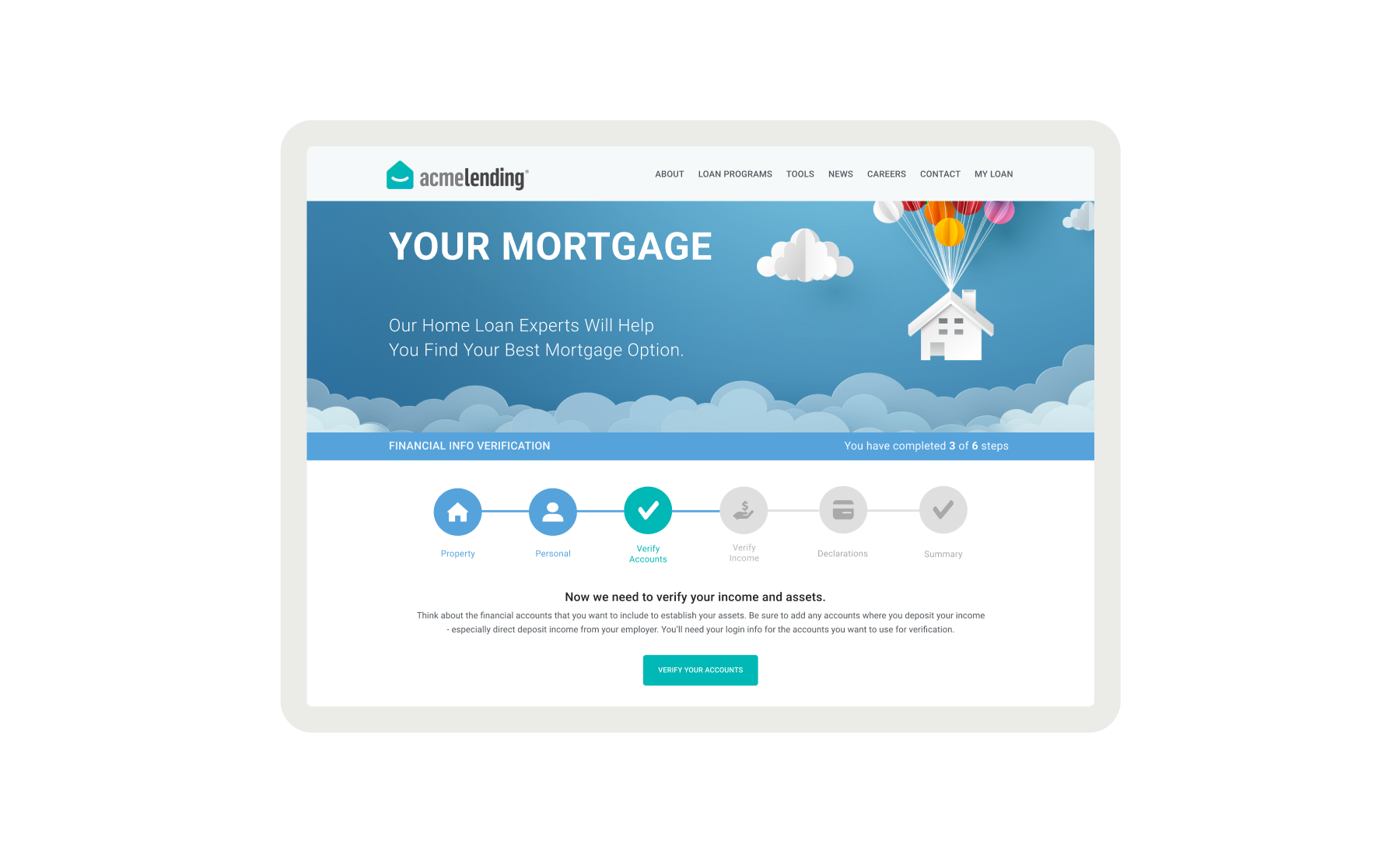
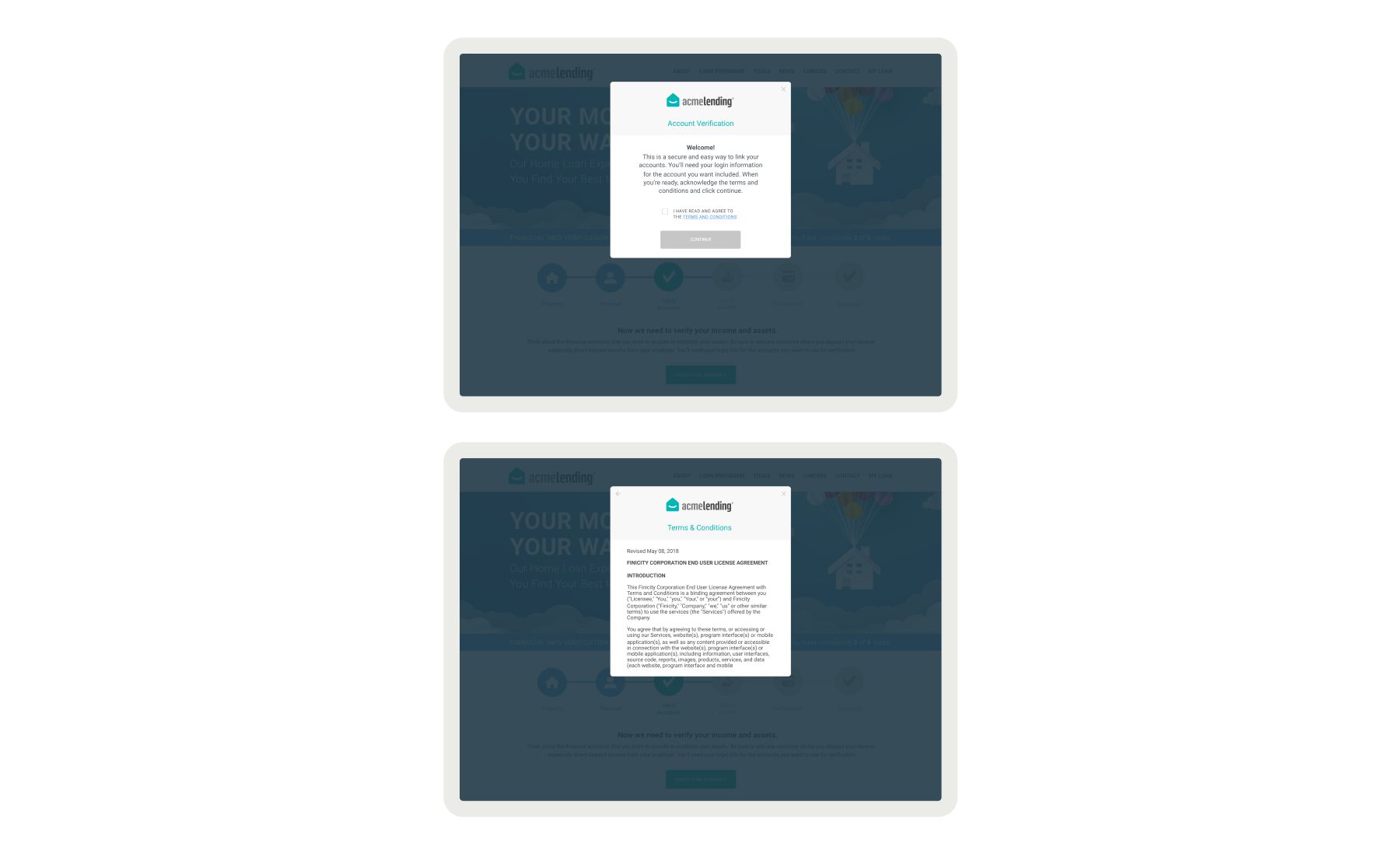
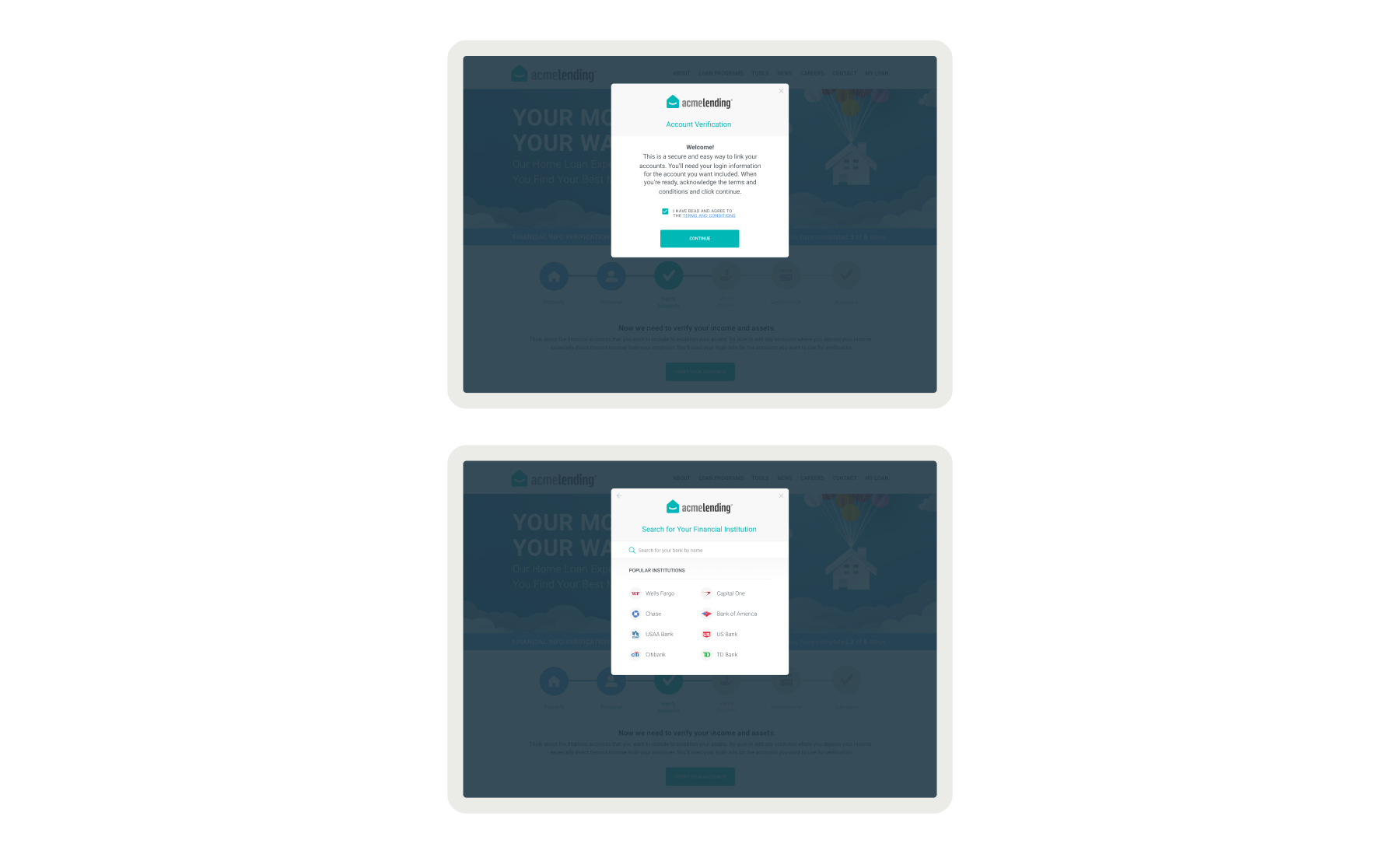
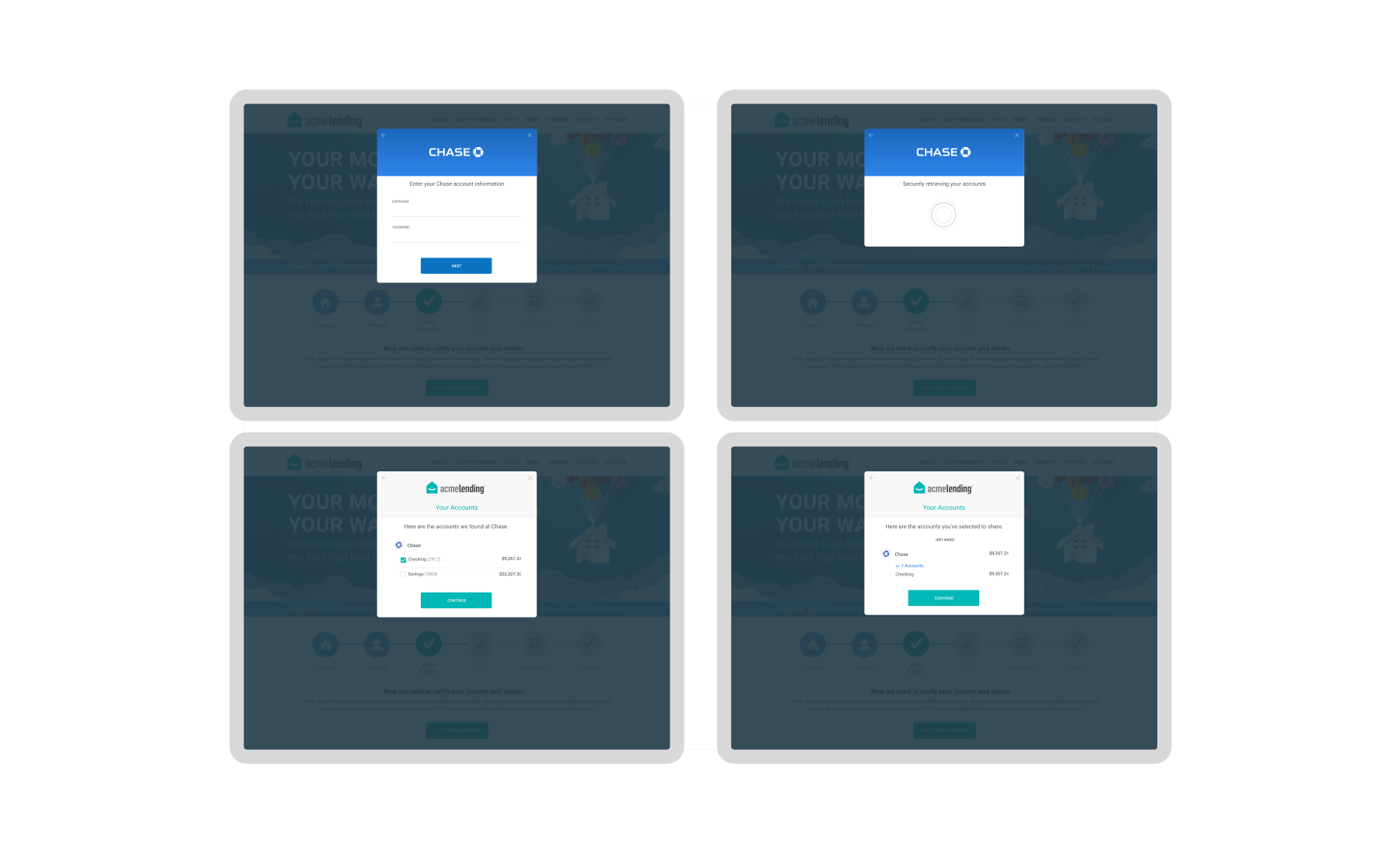
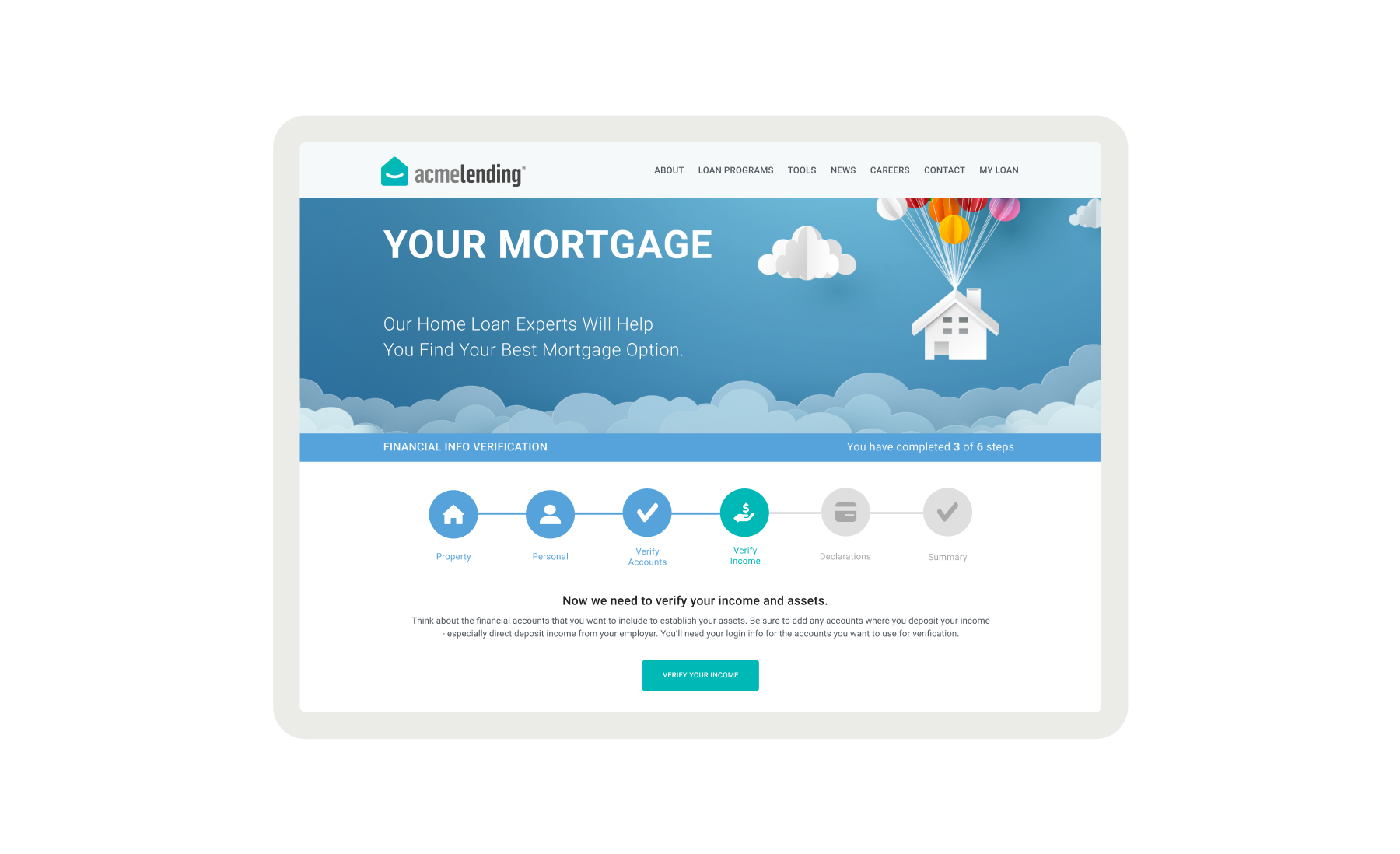
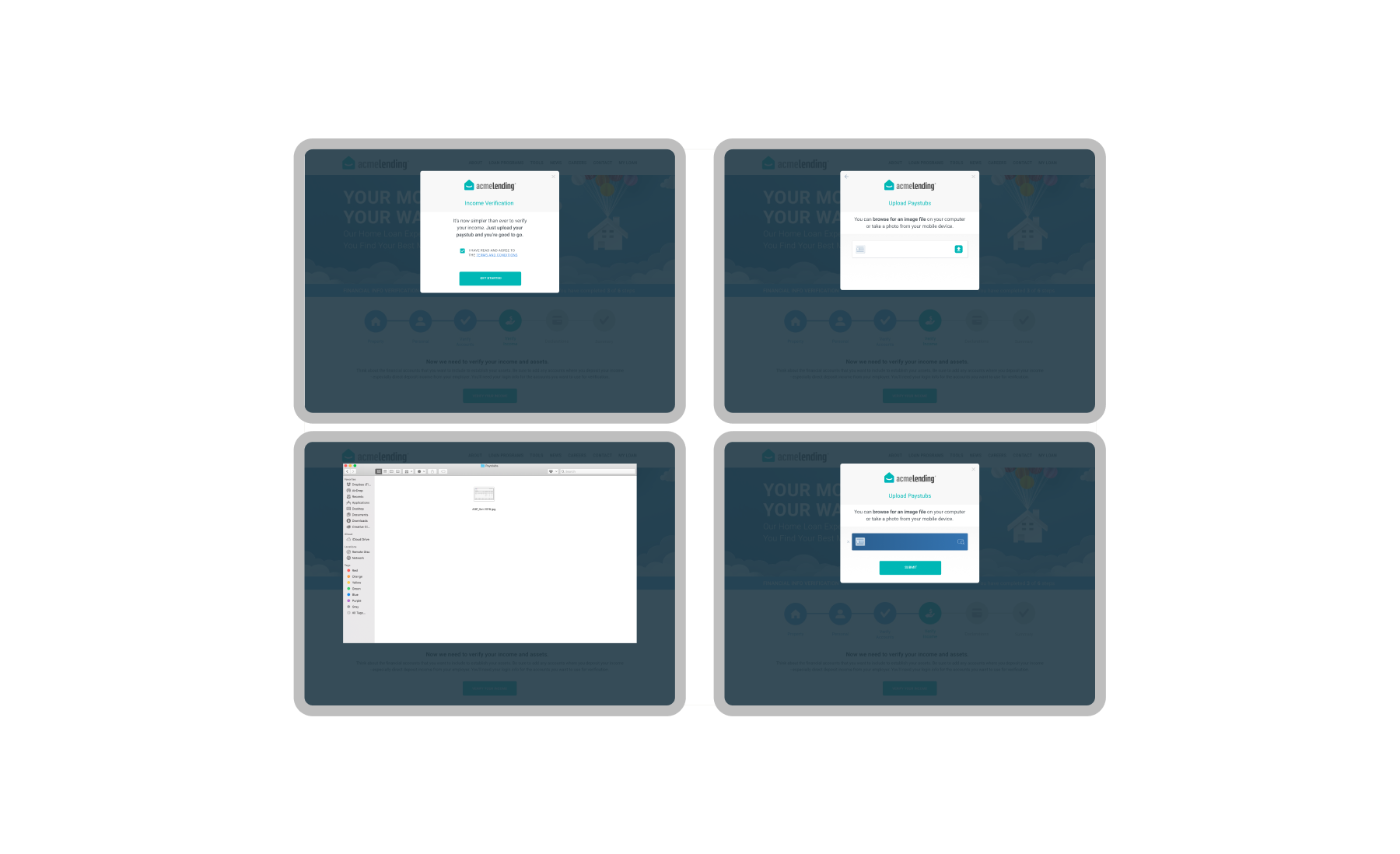
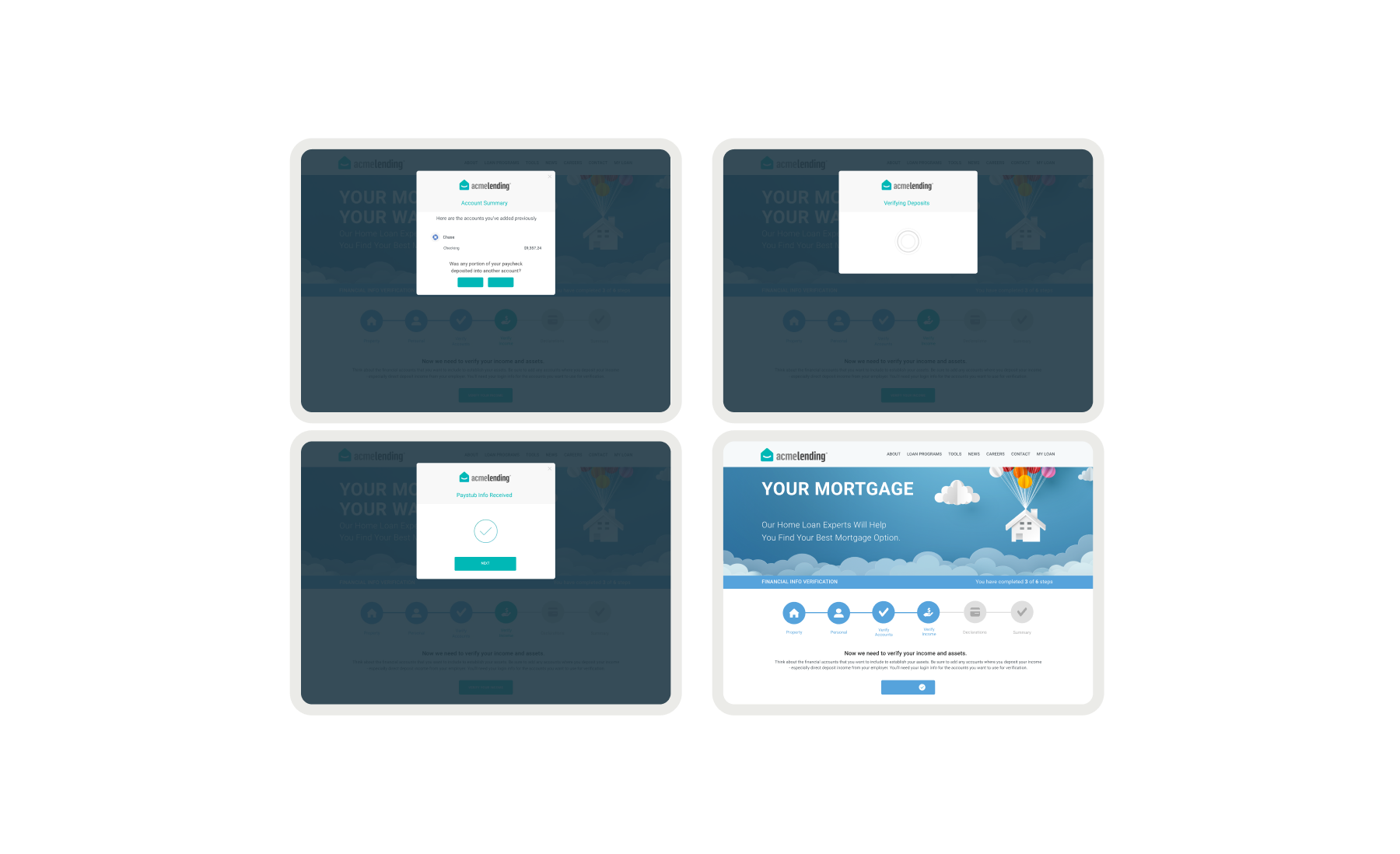
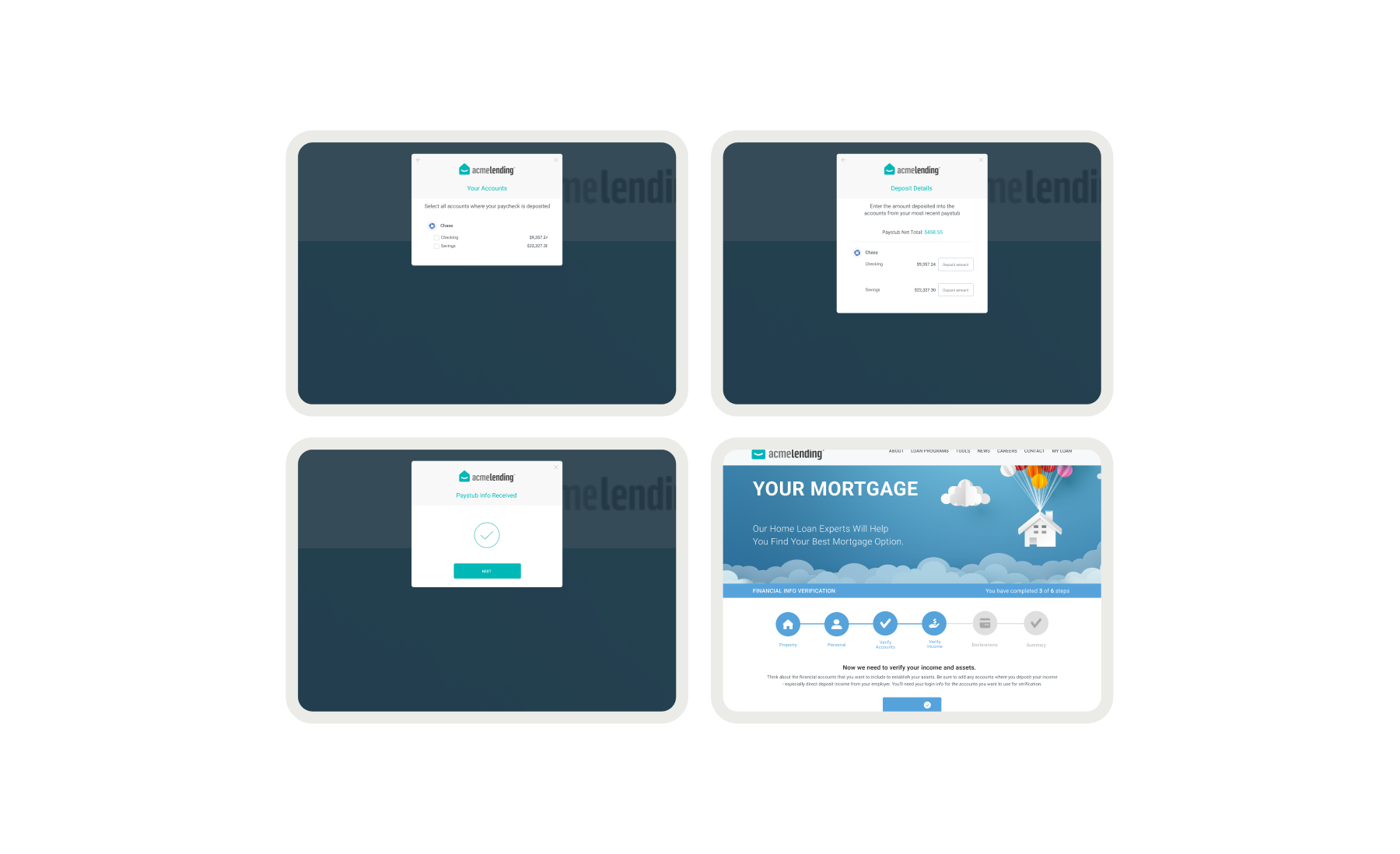
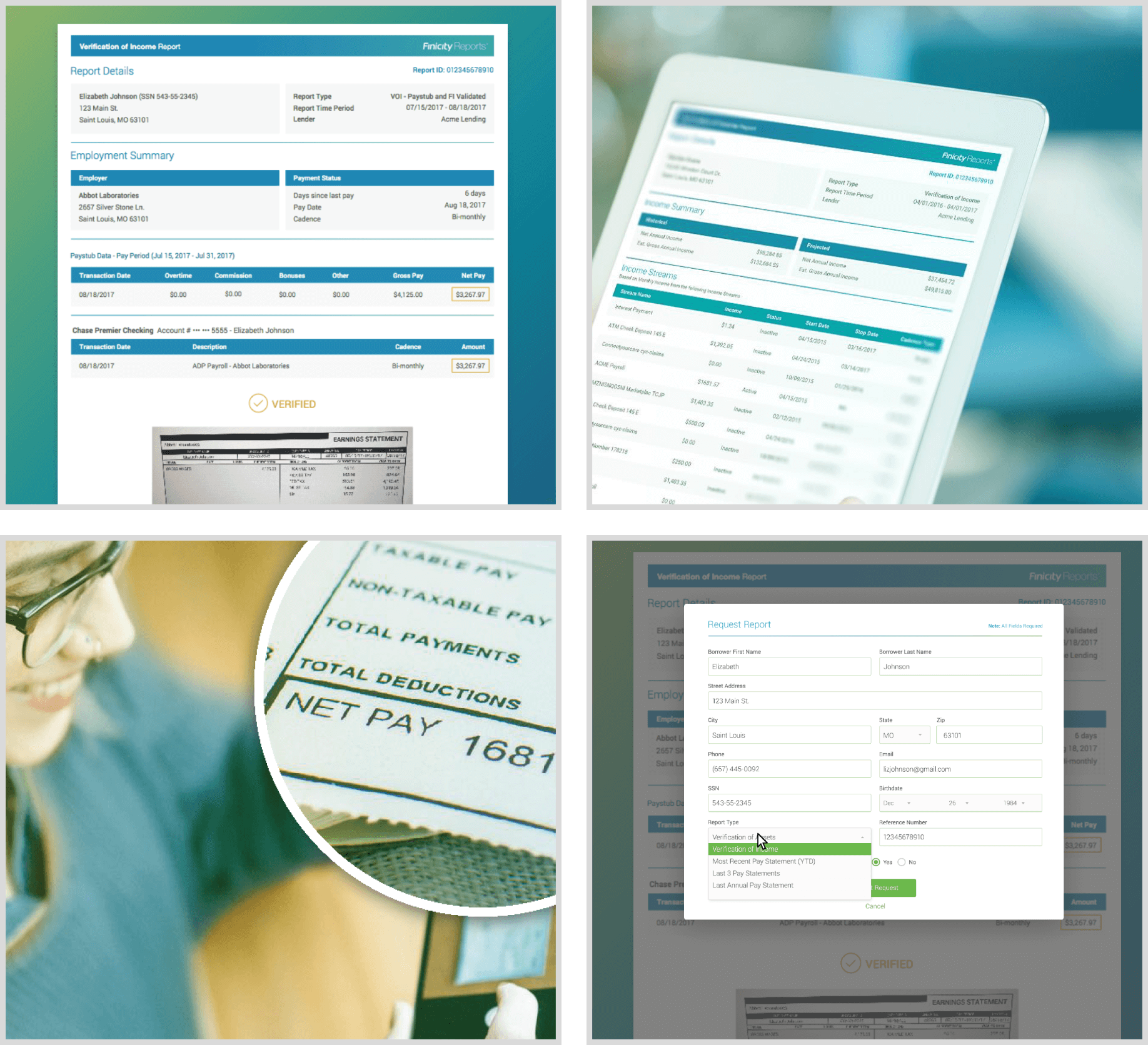
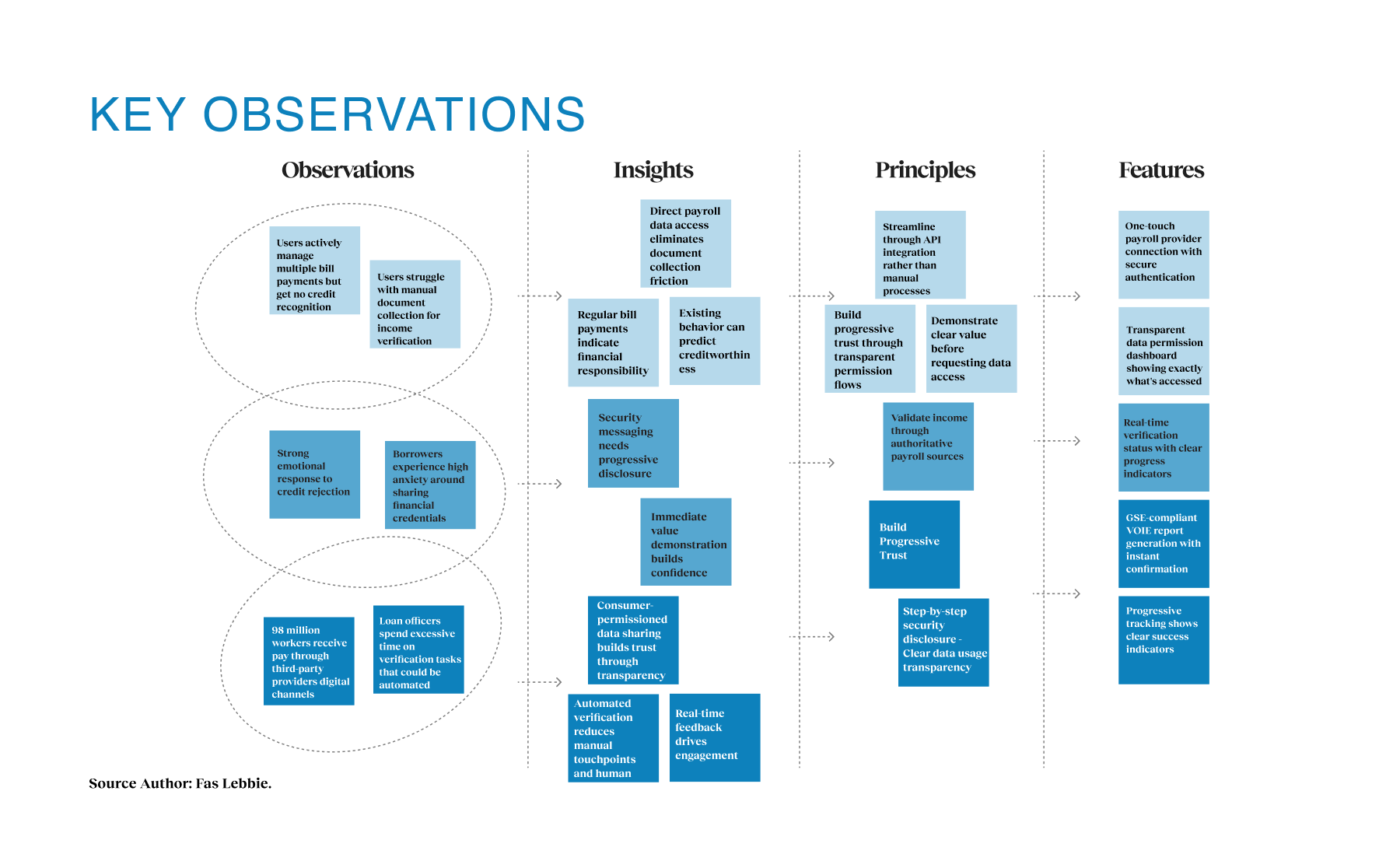
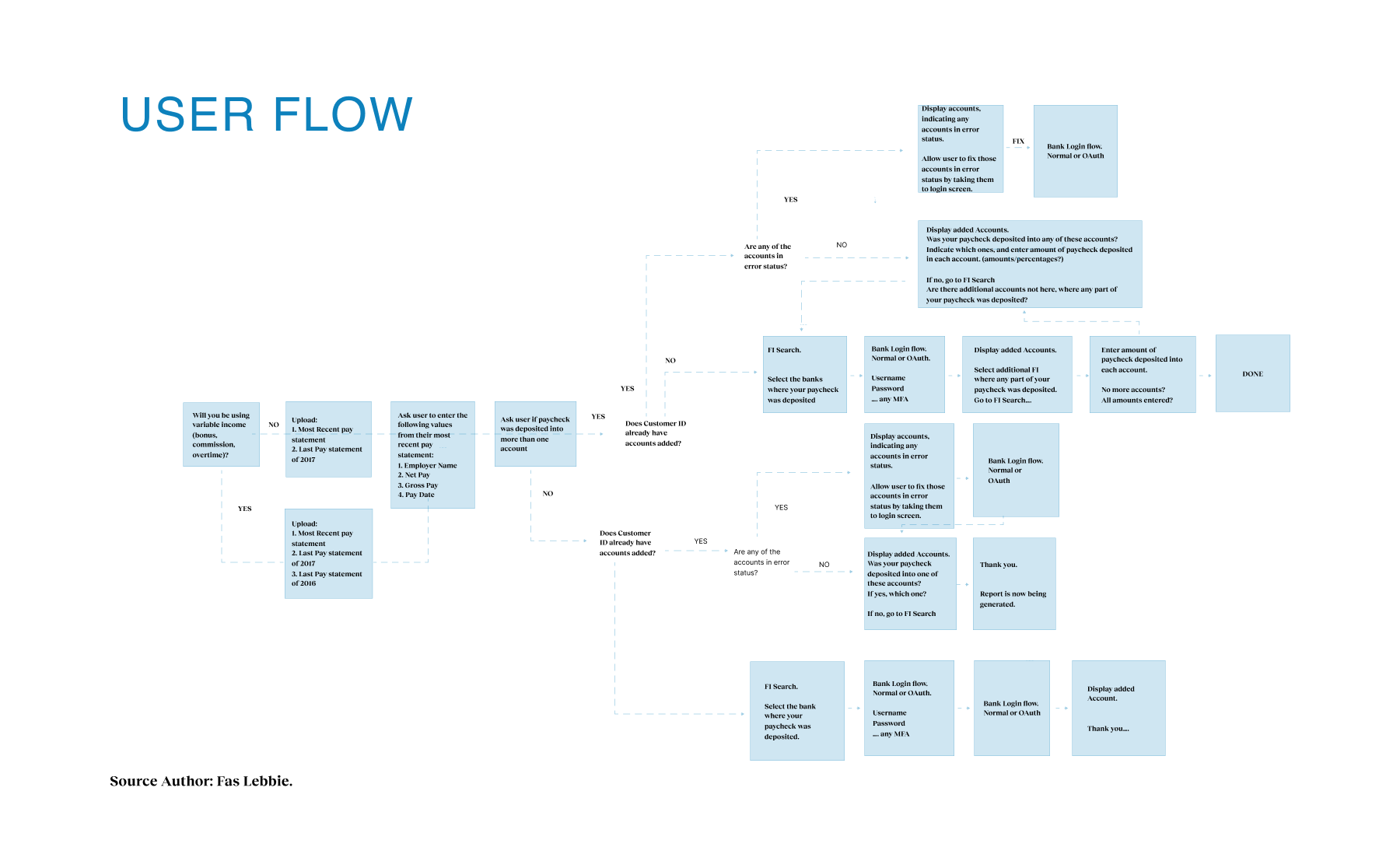
During the research, users faced existing verification methods that failed to recognize digital financial relationships. Although participants exhibited high financial responsibility, the traditional income verification processes caused substantial frustration, mainly due to cumbersome document requests. Based on these issues, my team and I identified three key use cases: single account verification, multiple account verification, and error handling during verification. The new experience design screens for the verification journey were tested and refined, ensuring high-fidelity designs aligned with Acme Lending’s visual brand style. The implementation strategy emphasized creating secure data permissioning flows that empower borrowers by allowing them control over their financial information. The MVP design for the verification experience enabled users to verify their income within seconds or minutes rather than enduring lengthy delays. To help the process, we developed a one-touch verification experience, allowing borrowers to grant access to multiple data sources — such as bank accounts and payroll providers — in a single interaction, eliminating the need for repeated document requests.
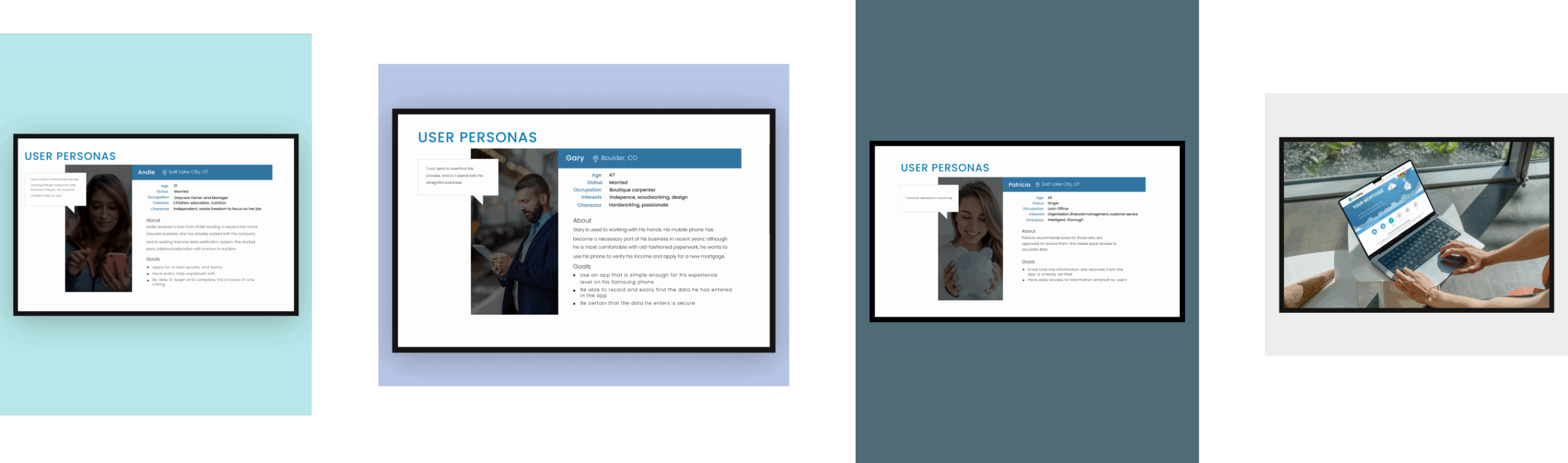
Persona-centered
Personas grounded in real stories helped shape intuitive solutions for streamlined, secure income verification experiences.
Design Interventions
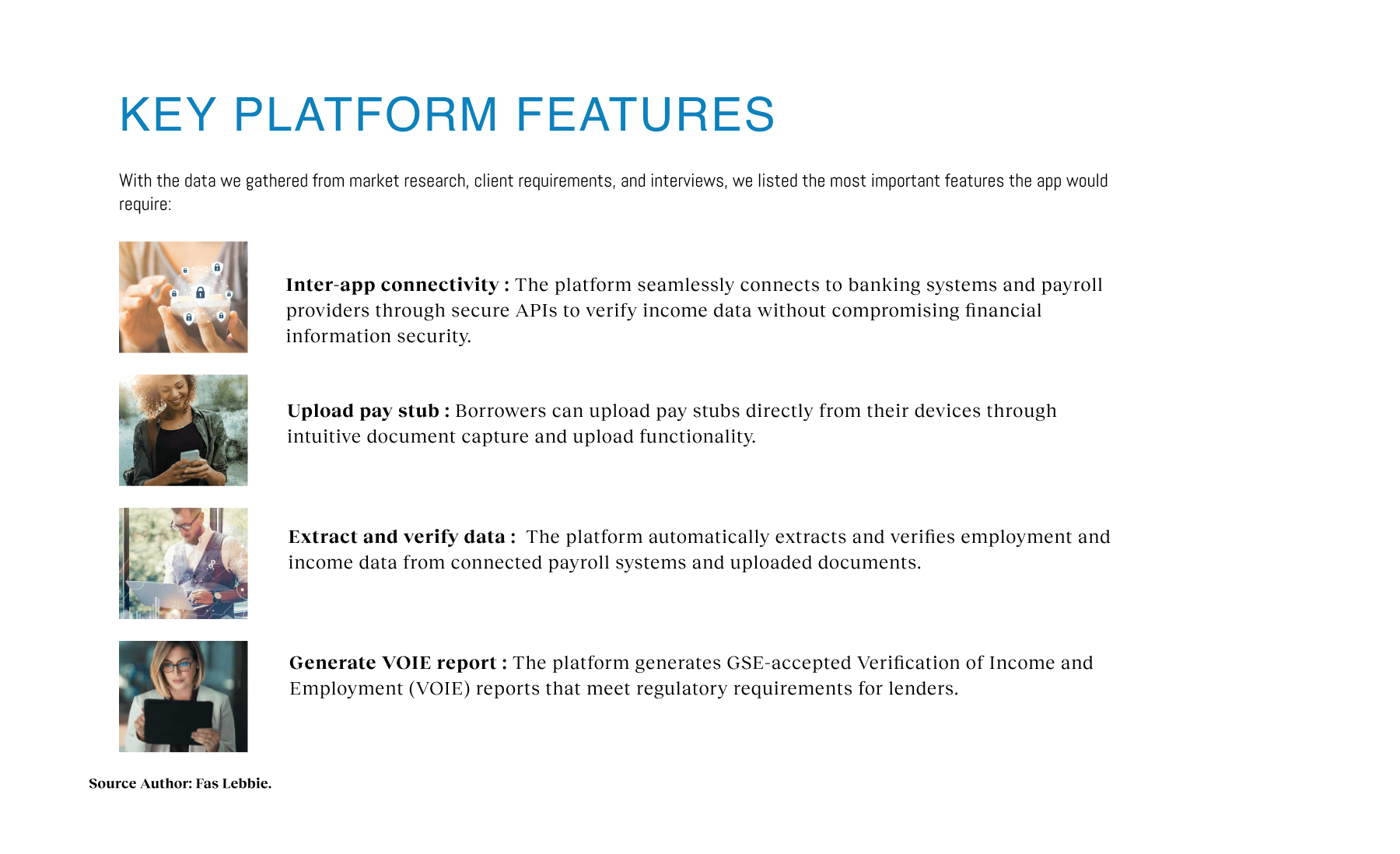
The design intervention enables users to connect their financial accounts seamlessly through secure consumer-permissioned data access, upload pay stubs directly from their devices, and generate verification reports that meet regulatory requirements. By leveraging direct deposit payroll data, which represents over 90% of American workers, we improved the success rate of automated income verification compared to traditional methods. The platform achieved a 10% increase in digital verification completion rates. It reduced the verification process by 5 minutes per application, moving closer to the industry goal of shaving 8-12 days off the entire origination process.

Toolkit, Methods & Frameworks
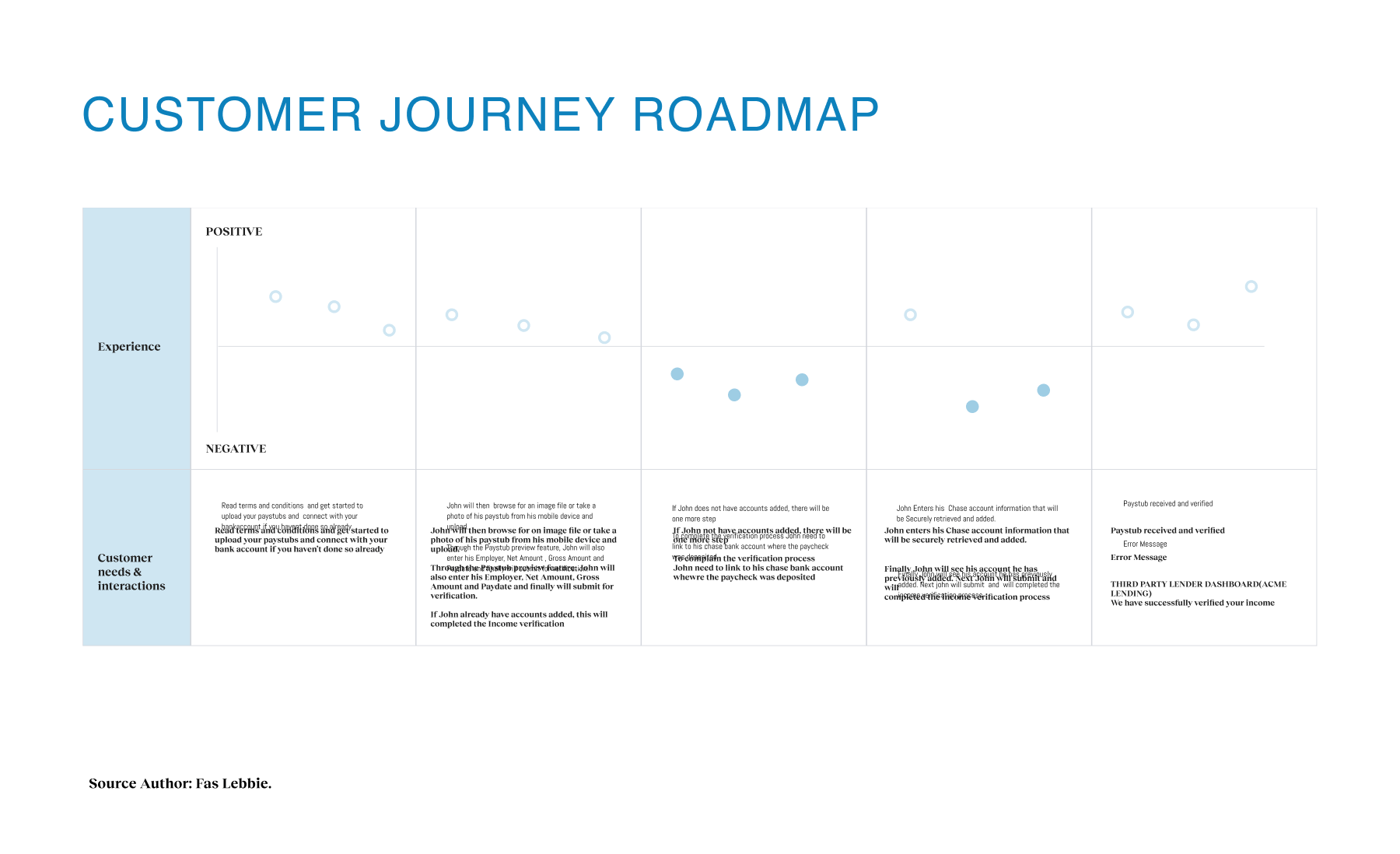
Here is a list of the research and design methods used to understand the verification challenges. From research observations to key platform features developed and defining the user journeys of some personas involves informed design decisions in redesigning the digital verification process.
Verification Time Reduction
Average processing time decreased from traditional manual verification methods, bringing Acme Lending closer to industry-leading efficiency standards.
Digital Completion Rate Increase
More borrowers successfully completed verification digitally, reducing manual intervention and improving overall loan origination throughput.
Saved Per Application
Direct time savings per verification, contributing toward the industry goal of reducing total origination timeline by 8-12 days.
Reflections & Impact
Acme Lending aims to leverage digital connections between payroll systems and banks through consumer-permissioned data access, improving the loan process with a GSE-accepted solution that dramatically reduces time-to-close. Our digital verification solution delivered immediate operational improvements for Acme Lending while creating broader industry transformation. Borrowers experienced streamlined verification with transparent data permissioning and instant confirmation, while loan officers reported fewer stipulations and reduced back-and-forth documentation requests. The GSE-accepted solution provided representation and warranty relief for lenders, establishing new industry standards for automated income verification. By leveraging direct deposit payroll data, the platform achieved significantly higher success rates than traditional methods, demonstrating how digital financial relationships could revolutionize lending verification. This implementation showcased the potential for consumer-permissioned data access to transform mortgage origination, positioning Acme Lending as an innovator in regulatory-compliant digital lending solutions.
Next Steps
- Expand integration partnerships with additional payroll providers and financial institutions.
- Pilot international verification capabilities for non-U.S. income sources.
- Develop a mobile-first verification experience for borrowers applying via smartphone.